Handō-ji Temple: A Tendai Buddhist Center on Mount Handō

Site at a Glance
- Rating
- 4.1
- Popularity
- Very Low
- Country
- Japan
- Primary era
- Medieval
- Eras represented
- Medieval
- Civilizations
- Unclassified
- Site type
- Religious
- Remains
- Monastery
On this page14 sections
History
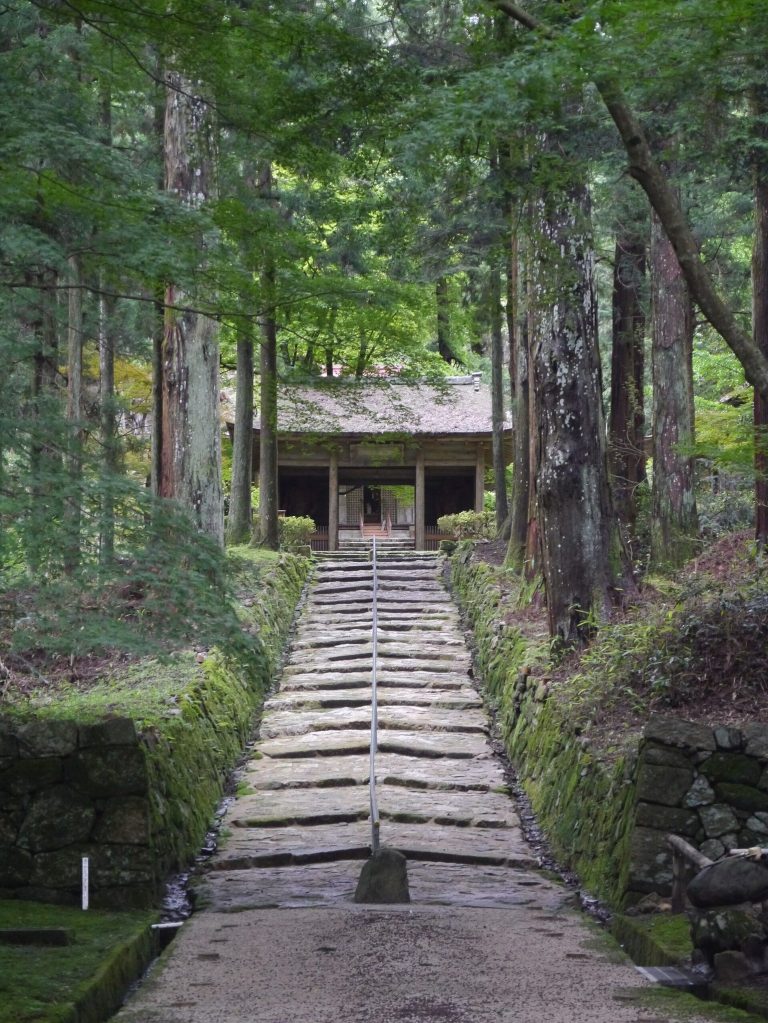
Handō-ji Temple is a Tendai Buddhist temple in Koka, Japan, formally known as Kinkizan Handō-ji. It began as a mountain temple on the summit of Mount Handō and served as the jingūji, a Buddhist temple associated with a Shinto shrine, for Handō Shrine. Tradition attributes its establishment to En no Gyōja, the semi-legendary seventh-century mountain ascetic associated with the origins of Shugendō, and its revival in 714 to a figure whose name appears in several forms. The precise beginnings of the institution remain uncertain, but its development is linked to forest ascetics, lay Buddhist practitioners, and novice monks associated with Konshō-ji.
Origins and Sacred Mountain
Handō-ji may have developed alongside the relocation of the Shigaraki Palace and the increased religious standing of Handō Shrine. Mount Handō overlooks the palace ruins and became an important Shugendō center, where mountain ascetics combined Buddhist, Shinto, and other religious practices. Beliefs about water flowing from the mountain supported local traditions of shared water use. The deity of Handō Shrine was also associated with control of the forests that supplied timber for the palace and for repairs to the Great Buddha Hall of Tōdai-ji.
The relationship between the temple and the mountain shrine formed part of a wider religious system in which Buddhist and Shinto institutions operated together before their legal separation in the modern period. The mountain also acquired a military role. During the Nanboku-chō period, an era of conflict between rival Northern and Southern imperial courts, a fortress called Handō-ji Castle was built there. In 1337, warriors serving Sasaki Dōyō performed military service at the stronghold.
Kumano Connections and Medieval Authority
The history of Handō-ji from the Heian period through the late Kamakura period is unclear. From the late Kamakura period, however, the temple developed close connections with the Kumano Three Mountains. Between 1303 and 1306, the Kumano monk Gyōhan is said to have transmitted Kumano mountain practice to Mount Handō. A later record describes a Handō-ji guide leading fifteen members of a Kumano religious confraternity from Mikumo on pilgrimage to the Kumano Three Mountains.
From the Muromachi period onward, Umemoto-in and Iwamoto-in, two of Handō-ji’s affiliated residences, were counted among the thirty-six senior temples of the Tōzan-ha, a major branch of Shugendō. They exercised authority over mountain ascetics of that branch and retained control of halls at Oshino-juku on Mount Ōmine until the early Meiji period, when the government separated Buddhism and Shinto. The two residences issued appointment certificates recognizing the religious status or office of ascetics from territories extending from Mutsu in the north to Hyūga in the south.
Expansion and Political Recognition
The mountain complex reached its greatest influence from the medieval period through the early modern period. It contained fifty-eight monastic residences in the early Muromachi period and still had fifty-five in the early Edo period. Handō-ji also held land assessed at 200 koku, a historical rice-based measure of land yield, in the neighboring village of Miyamachi.
The complex maintained an important relationship with Reikōan, a religious foundation at Kumano Shingū known as the Hongansho. In 1549, a monk from Mizumotobō served as its principal patron. After a senior leader of Umemoto-in entered the institution in 1566, its heads were appointed from Umemoto-in until the beginning of the seventeenth century. Their administrative work strengthened Reikōan, which in 1575 was entrusted with rebuilding Enryaku-ji after Oda Nobunaga’s attack. Nobunaga, a military ruler whose campaigns reshaped Japan during the late Sengoku period, entered Mount Handō with Tsuda Nobusumi in 1581 and confirmed the temple’s landholdings on November 27 of that year.
Handō-ji’s institutional authority was also recognized by Tokugawa Ieyasu, founder of the Tokugawa shogunate. In 1603, Ieyasu summoned Handō-ji as one of the temples familiar with precedent while he formulated regulations governing Shugendō.
Ascetic Networks and Decline
Mountain ascetics based around Mount Handō supported the complex through rigorous mountain-entry training, fundraising, religious talisman distribution, and patron circuits extending from Izu and Shinano to Tosa and Suō. They raised funds and distributed talismans for institutions that included Atago Shrine, Fushimi Inari Taisha, Taga Taisha, Ishiyama-dera, Hōgon-ji on Chikubushima, and Kongōshō-ji. Their activities also included distributing Mankintan, moxa, and a religious digestive remedy. These practices are regarded as an origin of the itinerant medicine-selling trade in Kōka District.
Mokujiki Ōgo, a Buddhist monk associated with the revival of Mount Kōya, died at Handō-ji in 1608 and was buried in a tomb among the monastic-residence ruins on the summit. The complex later declined sharply. By 1734, only Umemoto-in and Iwamoto-in still had resident monks.
Reorganization in the Meiji Period
The Meiji government’s separation of Buddhism and Shinto abolished the mountain temple as an institution. In 1892, Honkaku-in, a Tendai temple at Sandaiji on the northern foothills, adopted the name Kinkizan Handō-ji and inherited the former temple’s name and religious lineage.
Honkaku-in’s predecessor is identified with Fugen-in Hōjibō, which appears in a land-survey register of 1679. A document from 1726 identifies Honkaku-in as a temple-associated cleric of Sannō Gongen, suggesting that the name Honkaku-in arose between those dates. After the separation of Buddhism and Shinto, the temple lost its former role as the shrine’s administrative Buddhist representative. When the village temple Jōfuku-ji was abolished, Honkaku-in inherited its principal image. The present Handō-ji preserves three nationally designated Important Cultural Properties transmitted from Jōfuku-ji.
Remains
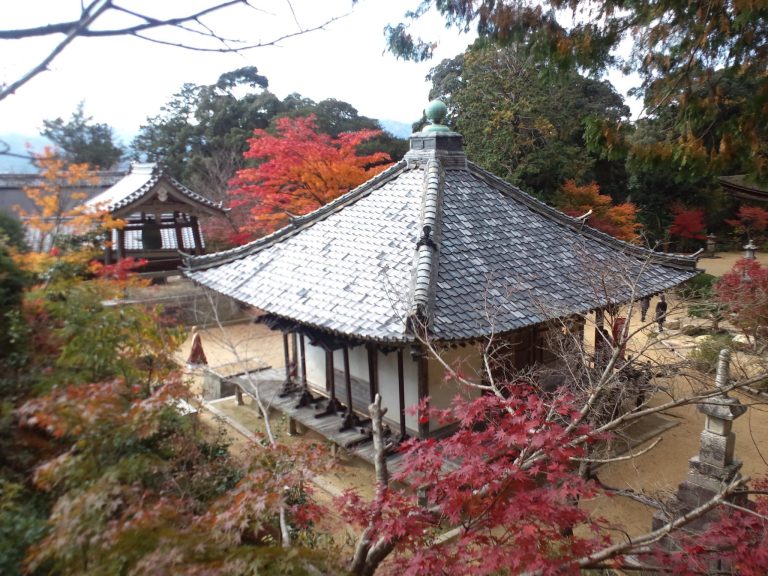
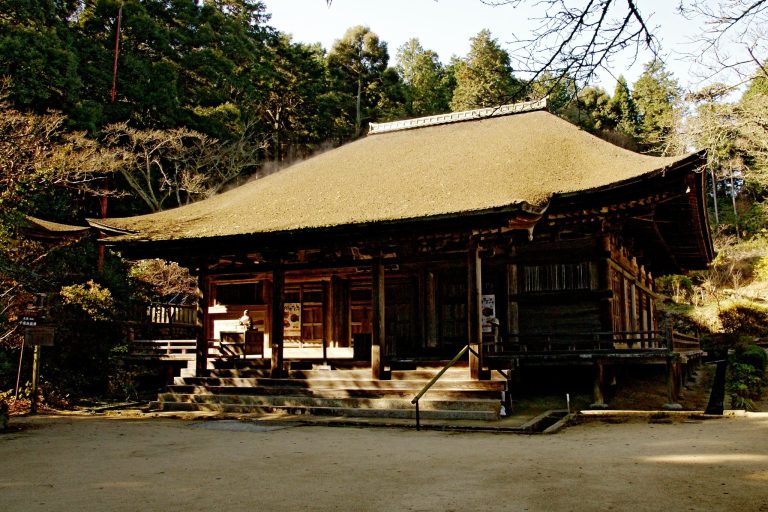
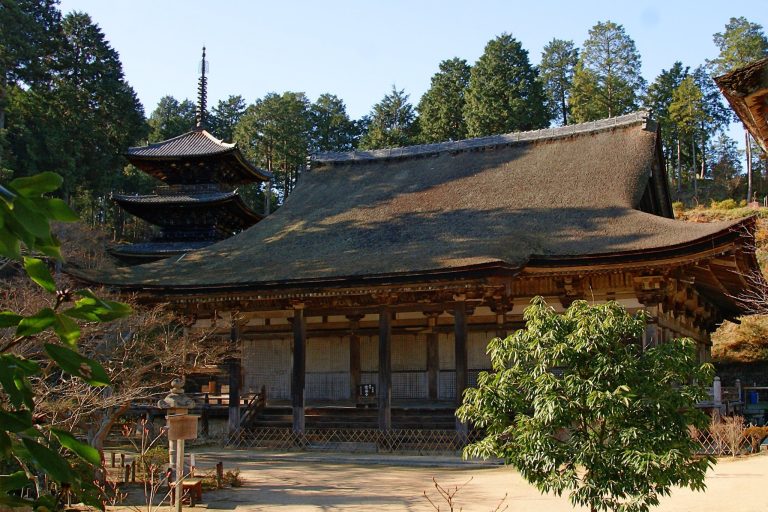
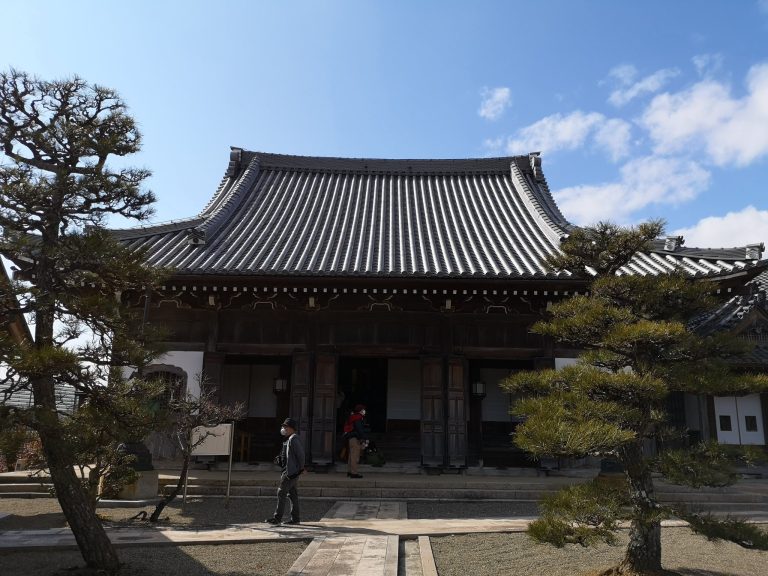
The present Handō-ji stands at Sandaiji on the northern foothills of Mount Handō, while the earlier mountain complex survives across the summit, which rises to 664 meters above the surrounding landscape. The remains include widespread traces of former monastic residences, the summit shrine that served as the mountain complex’s tutelary center, and religious images and paintings associated with the institutions that continued at the foothills.
Summit Mountain Complex
Monastic Residences and Tomb
Extensive remains of former monastic residences spread across the summit of Mount Handō. These traces represent the large mountain community that once supported ascetic training, pilgrimage, administration, and religious outreach. The tomb of Mokujiki Ōgo stands among the residence ruins, preserving the burial place of the monk who died at Handō-ji in 1608.
Handō Shrine
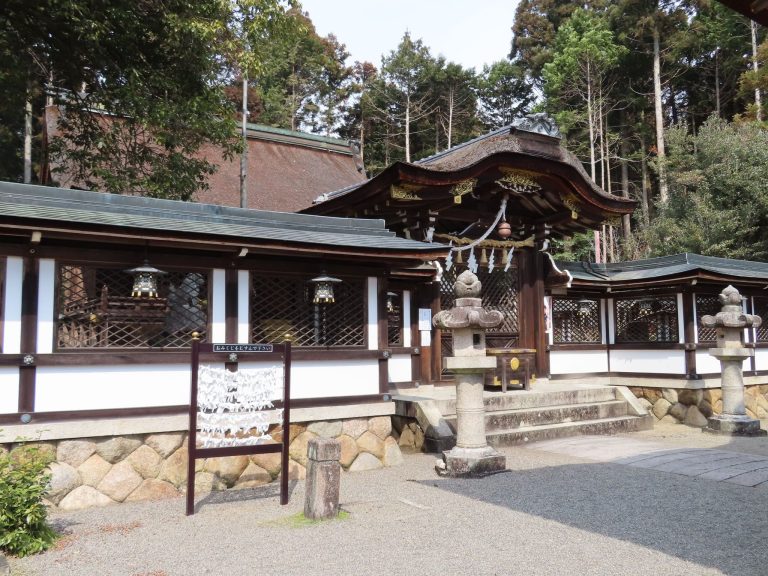
Handō Shrine survives on the summit as the former tutelary shrine of the mountain complex. It was formerly called Handō Gongen Shrine, and its syncretic identity combined Ukanomitama, a Shinto deity associated with grain and food, with Benzaiten, a Buddhist-Shinto deity associated with water, music, eloquence, and prosperity. The shrine preserves hanging Buddhist images, votive representations associated with a shrine or temple. Their principal Buddhist manifestations are predominantly Shakyamuni, Amitabha, and the Medicine Buddha, reflecting the religious character of the former mountain center.
Foothill Temple and Sacred Images
Principal Image and Cultural Properties
The principal image of the present Handō-ji is Fudō Myōō, a wrathful Buddhist guardian associated with immovable resolve. The temple also preserves three sculptures transmitted from the former Jōfuku-ji and designated Important Cultural Properties at the national level: a seated Amitabha, a standing Eleven-Headed Kannon, and a standing Jizō.
Buddhist Sculptures
The seated wooden Amitabha dates from the Heian period and measures 68.7 centimeters in height. The standing wooden Eleven-Headed Kannon also dates from the Heian period and is 104.6 centimeters high. The standing wooden Jizō dates from the Kamakura period and measures 97.6 centimeters. Together, these images connect the present foothill temple with the religious property of the former village institution.
Two-Realms Mandala
A silk painting of the Two-Realms Mandala dates from the Muromachi period and is designated a municipal cultural property. The mandala presents the paired Womb Realm and Diamond Realm diagrams, providing a visual expression of Buddhist cosmology within the temple’s surviving religious heritage.