Mitsuzuka Kofun: A Group of Three Ancient Burial Mounds in Osaka
Site at a Glance
- Popularity
- Medium
- Country
- Japan
- Primary era
- Unclassified
- Eras represented
- Unclassified
- Civilizations
- Yamato
- Site type
- Burial
- Remains
- Burial Mound
On this page6 sections
History
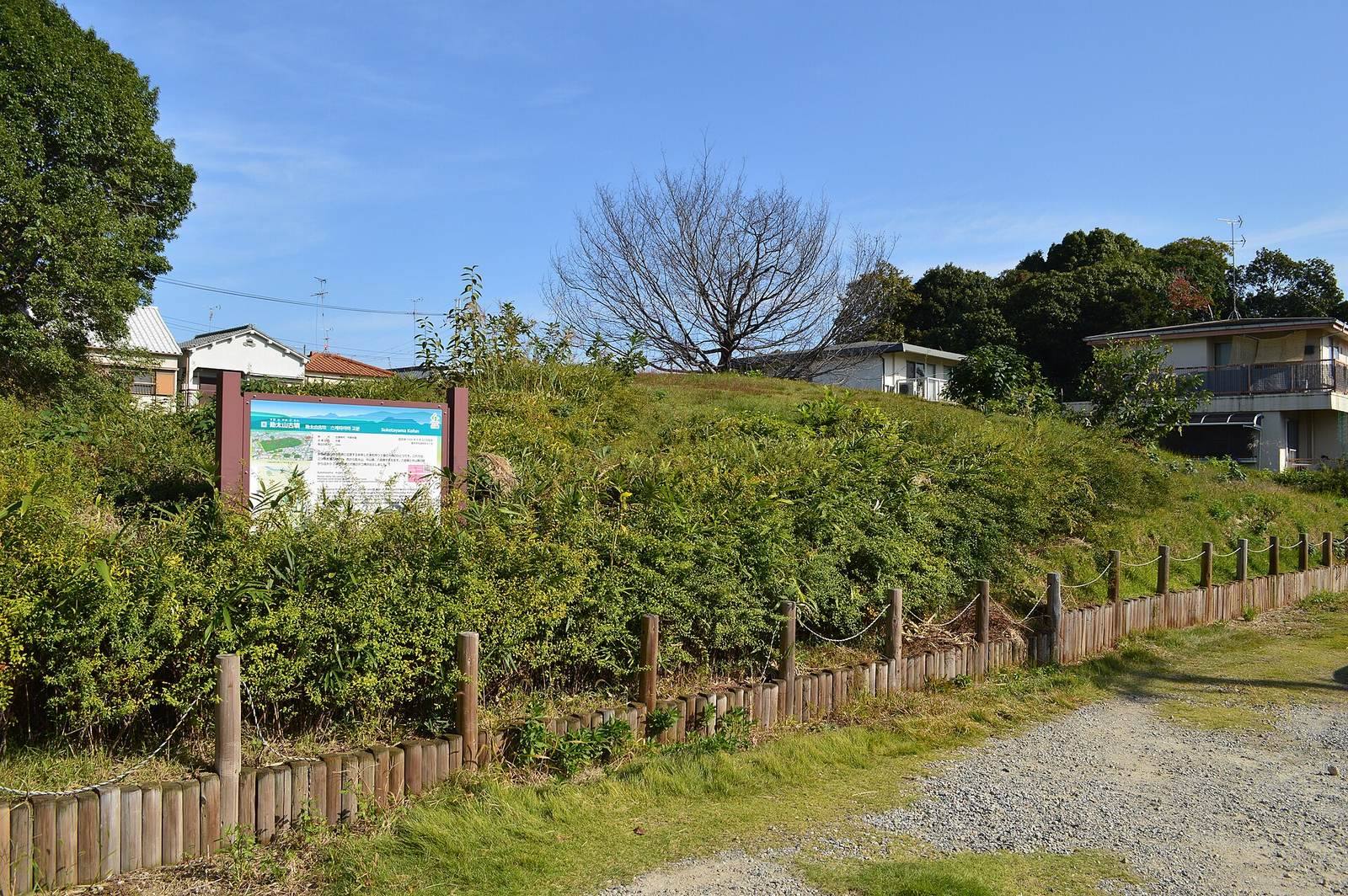
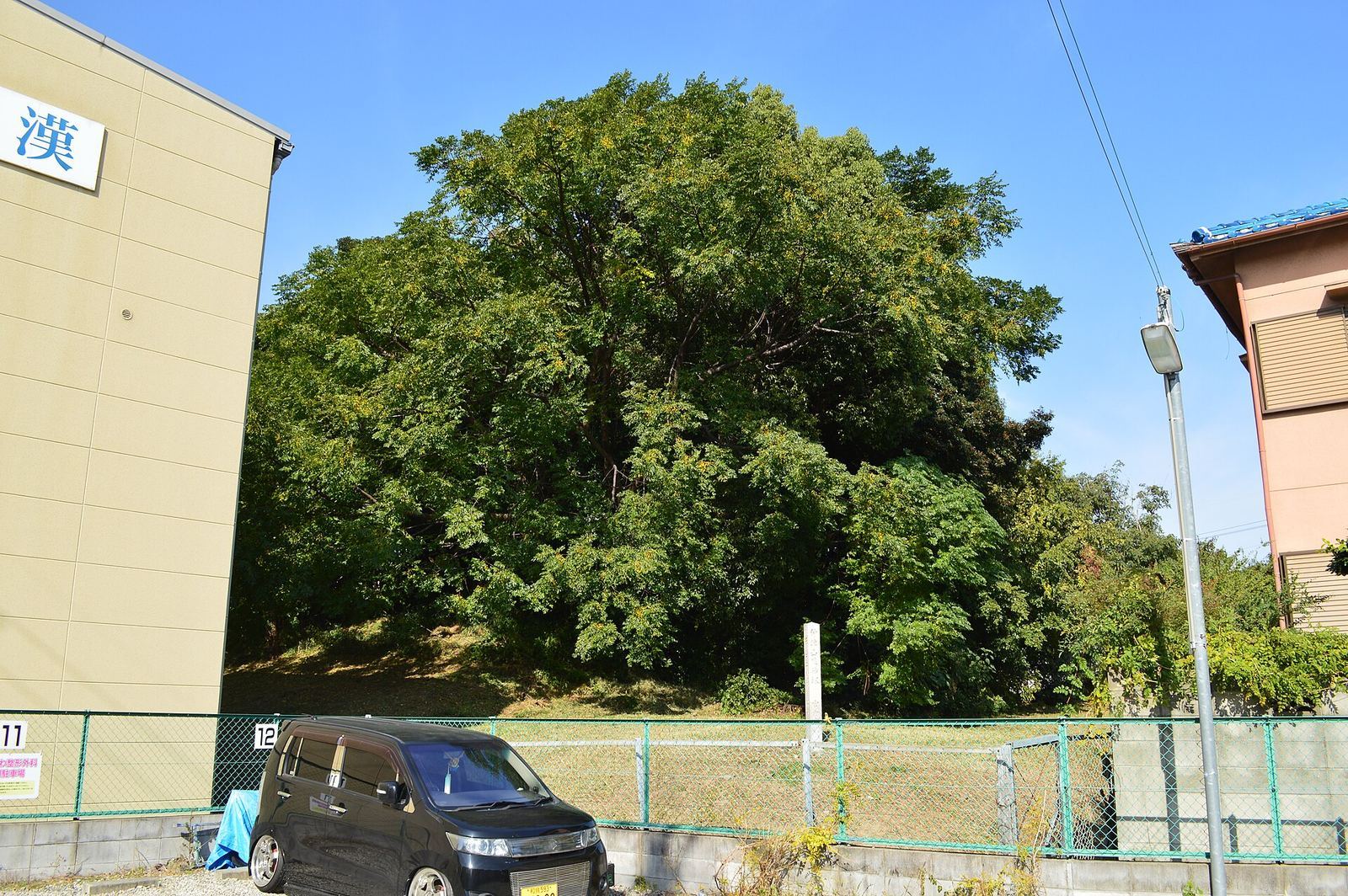
Mitsuzuka Kofun is a group of three square burial mounds in Domyoji, Fujiidera, Osaka Prefecture, Japan. The mounds have traditionally been interpreted as subsidiary tombs, meaning burial mounds associated with a larger tomb, beside a mausoleum attributed to an imperial princess. The nearby main kofun, a monumental burial mound of ancient Japan, is dated to the first half of the fifth century.
The construction date of Mitsuzuka Kofun remains disputed. The smaller mound’s plan is about two-thirds the scale of the larger pair, a feature that has supported the interpretation that all three were built together. Another interpretation places them in the seventh century. It draws on their east–west alignment, which differs from that of the main tomb, and on the smaller mound’s stonework, which resembles that of nearby late-phase burial mounds.
The two larger mounds are designated and managed by Japan’s Imperial Household Agency, the government body responsible for imperial affairs and mausoleums, as subsidiary mounds of the imperial mausoleum. The smaller mound has National Historic Site status, a Japanese heritage designation for sites. In spring 1978, two wooden sleds and a lever pole were recovered from the moat between the larger mounds. After 15 years of preservation treatment, the objects were designated Important Cultural Properties in June 2006, a Japanese heritage status for cultural objects.
Remains
Layout and mounds
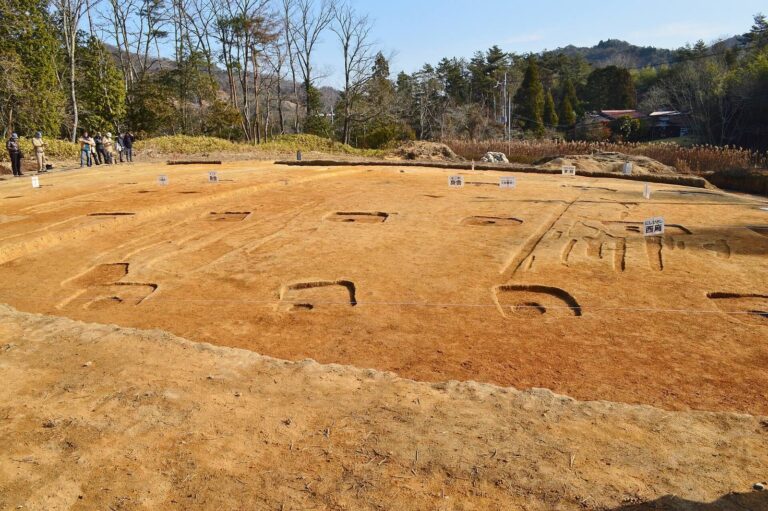
The three square mounds stand east to west on the outer embankment at the southeastern edge of the moat surrounding the main tomb. A single moat encloses the group, which measures 195 metres east to west and 80 metres north to south. Each of the larger mounds is 50 metres on a side; the smaller one is 35 metres on a side. The larger pair are 20 metres apart, while the gap between one of them and the smaller mound is 15 metres. The moat is 10 metres wide along the smaller mound’s north and west sides and 15 metres wide elsewhere. Clay funerary objects called haniwa have been collected from the mounds. Stones exposed at the smaller mound’s summit were interpreted as capstones for a pit-style stone chamber, a burial chamber built in a pit and covered from above. Their flat faces have bevelled edges on all four sides. The stones are made of tuff from Peony Cave on Mount Nijo, a material also used in nearby late-period mounds.
Wooden transport equipment
Larger sled
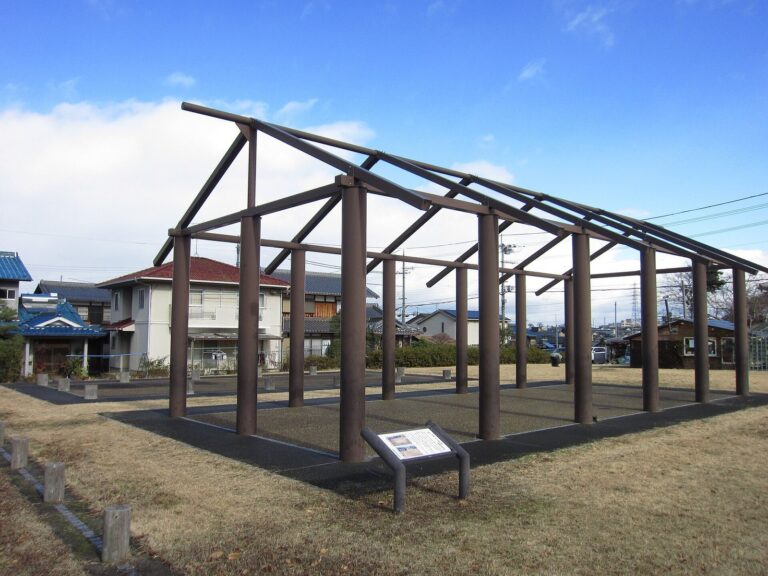
The larger sled was made from a forked section of natural oak and measures 8.8 metres long. Its front curves gently upward to a point, with a hole for a towing rope about a metre behind the tip. The hole is 23 centimetres wide and 17 centimetres high. From roughly 2.2 metres behind the tip, the upper surface is flattened to carry a load. Each of the sled’s two legs has six slanting holes along its sides, for cargo ropes or attachments for a towing rope.
Smaller sled and lever pole
The smaller oak sled is 2.9 metres long and has a transverse hole for a main rope 25 centimetres from its tip, as well as a flat upper surface. A lever pole thought to have helped move the sleds was recovered with them. The sleds’ date is uncertain because they were found without associated objects. The sixth-century date of the moat fill has led to a proposed date in that century, while comparisons with other examples have suggested the seventh century. They are thought to have carried stone coffins or large stones for burial chambers at nearby tombs. The larger sled and lever pole are held and displayed at the Osaka Prefectural Chikatsu-Asuka Museum; the smaller sled is held and displayed at Fujiidera Municipal Library.