Zensui-ji Temple: A Tendai Buddhist Temple in Konan, Japan


Site at a Glance
- Rating
- 4.3
- Popularity
- Low
- Country
- Japan
- Primary era
- Medieval
- External website
- Open
- Eras represented
- Medieval, Early Modern, Modern
- Civilizations
- Ashikaga shogunate, Japanese, Tokugawa
- Site type
- Religious
- Remains
- Monastery
On this page20 sections
History
Zensui-ji Temple is a Tendai Buddhist temple in Konan, Japan, traditionally founded around 708–715 during the Nara-period reign of Empress Genmei. Its foundation is presented as a tradition because the temple’s early records were lost. The temple is associated with Iwane, its mountain name is Iwane-san, and its formal name is Iwane-san Iō-in Zensui-ji. It is also known as Wado-ji.
Traditional Foundation and Tendai History
Tradition attributes the temple’s establishment to Empress Genmei as a religious institution intended to protect the state. The story places its origins in the Wado era, around 708–715. This period belongs to the early eighth century, when the Japanese court supported Buddhist institutions as part of its religious and political order.
Another foundation tradition connects Zensui-ji with Saichō, the monk who established the Tendai school in Japan and founded its principal center at Mount Hiei, Enryaku-ji. During an early-Heian drought, Saichō is said to have come to the area while seeking timber for Enryaku-ji. Wood cut in Kōka District had been assembled into rafts on the Yokota River, now called the Yasu River, but the low water prevented the rafts from moving.
The tradition relates that a ray of light guided Saichō from the middle slopes of Mount Iwane to a sacred place beside the temple. At Momotsute Pond, a small image of Yakushi Nyōrai, the Buddha of healing and medicine, emerged from the water. Saichō used the image in a prayer for rain, after which rain fell and the timber could be carried down the river to the foot of Mount Hiei, on the opposite shore of Lake Biwa.
Zensui-ji was later incorporated into the Tendai school and became a branch temple of Enryaku-ji. Additional halls were constructed as the institution expanded. A further tradition connects the temple’s name with Emperor Kanmu, the late-eighth-century sovereign associated with the transfer of the imperial capital to Heian-kyō, now Kyoto. When the emperor became ill, Saichō is said to have offered him water from the temple’s sacred spring. The emperor recovered immediately and bestowed the name Zensui-ji, meaning “Good Water Temple.”
Expansion and Medieval Destruction
The precinct eventually extended across Nakao, Higashio, and Iwane. It contained 26 subsidiary temples, including twelve on Mount Iwane. The mountain consequently became known as the Mountain of Twelve Subtemples, reflecting the scale of the religious community that developed around Zensui-ji.
A fire that began at the nearby Nakano-bo destroyed the Main Hall in 1360. The hall was rebuilt in either 1364 or 1366, during the Nanboku-chō period, the fourteenth-century era when rival imperial courts divided political authority in Japan. This rebuilding accounts for the date of the principal surviving structure.
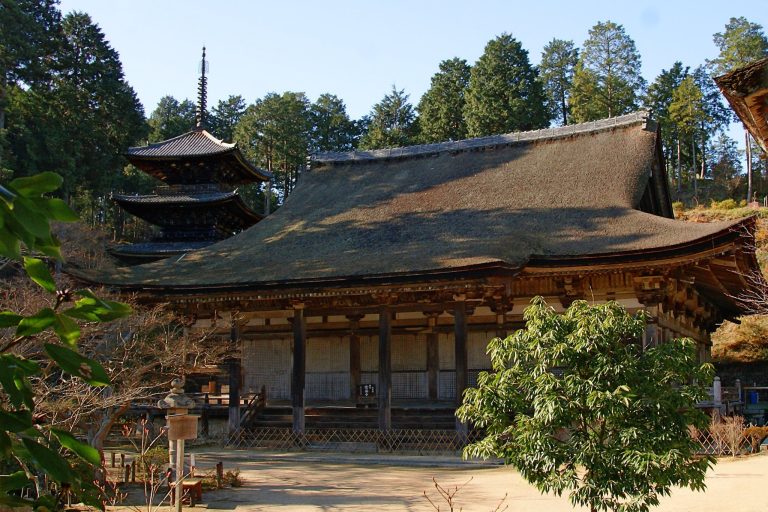
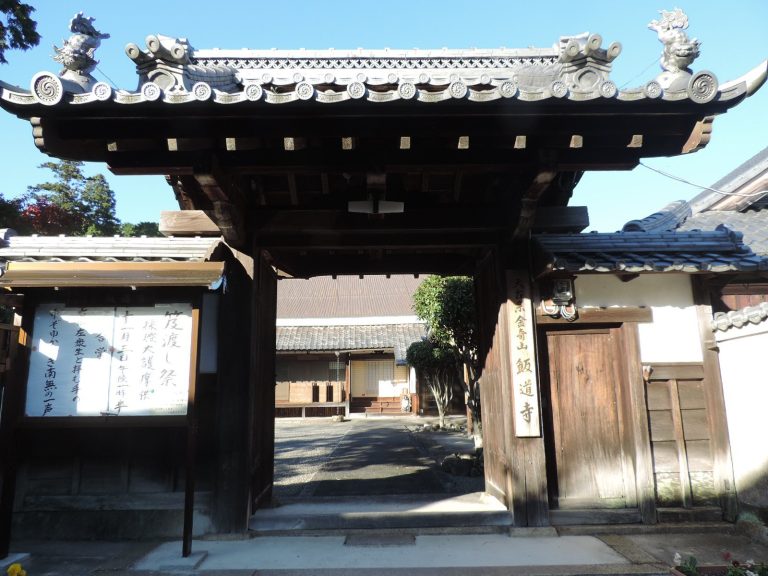
In September 1571, Oda Nobunaga attacked and burned Enryaku-ji as part of his campaign against the military and religious power of the Mount Hiei complex. Three days later, on September 15, Zensui-ji was also attacked and burned. The Main Hall, pagoda, Niō Gate, and Rokusho Gongen Shrine escaped destruction. The Main Hall is now the only surviving structure at the temple dating from before that attack.
Records, Reconstruction, and Religious Role
The temple’s historical record suffered another major loss in the nineteenth century. In 1879, documents from Zensui-ji and other local temples and shrines were gathered at the former Iwane village office. When the office burned in 1880, these records were destroyed. Several old documents from the Edo and Meiji periods remain at the temple.
Several buildings were moved, rebuilt, or remodeled during the early modern and modern periods. The Bell Tower was rebuilt in 1663, and the Gensan Daishi Hall was rebuilt in 1713. The Gyōja Hall came to Zensui-ji in 1876 from the Iwamoto-in Gyōja Hall of Hando-ji after the separation of Buddhism and Shinto led to Hando-ji’s abolition. It was moved to its present position and remodeled in 1879. Heavy rain washed away the Niō Gate in 1953.
Zensui-ji is one of the Konan Three Mountains, together with Jōraku-ji and Chōju-ji. It is also the 47th site on the Saigoku Forty-nine Yakushi Pilgrimage, the 21st site on the Kōka Saigoku Thirty-three Pilgrimage, and the 93rd site on the Biwako 108 Sacred Sites circuit. The Main Hall became a National Treasure in 1954, while the principal image and many other statues hold national or local cultural-property designations.
Remains
The precinct combines a fourteenth-century wooden Main Hall with later Buddhist halls, a guardian shrine, monks’ quarters, a garden, and sacred water features. Its buildings and images represent several periods, from the Heian and Kamakura eras to the Edo period and the nineteenth-century reorganization of religious institutions.
Main Buddhist Buildings
Main Hall
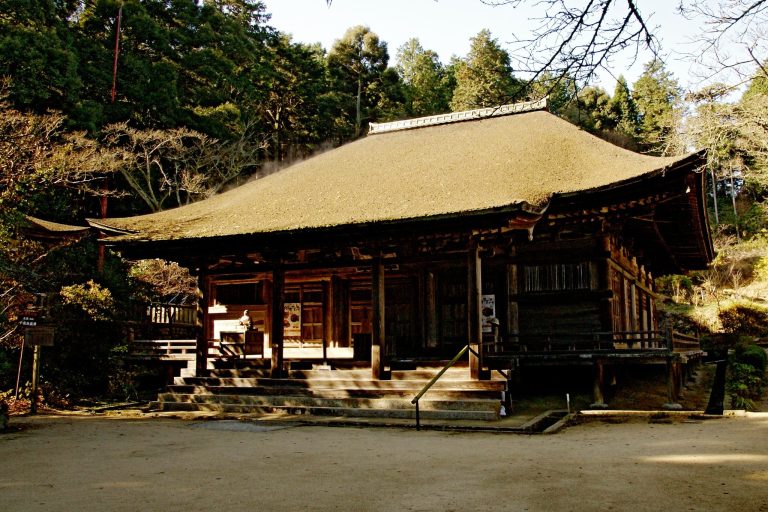
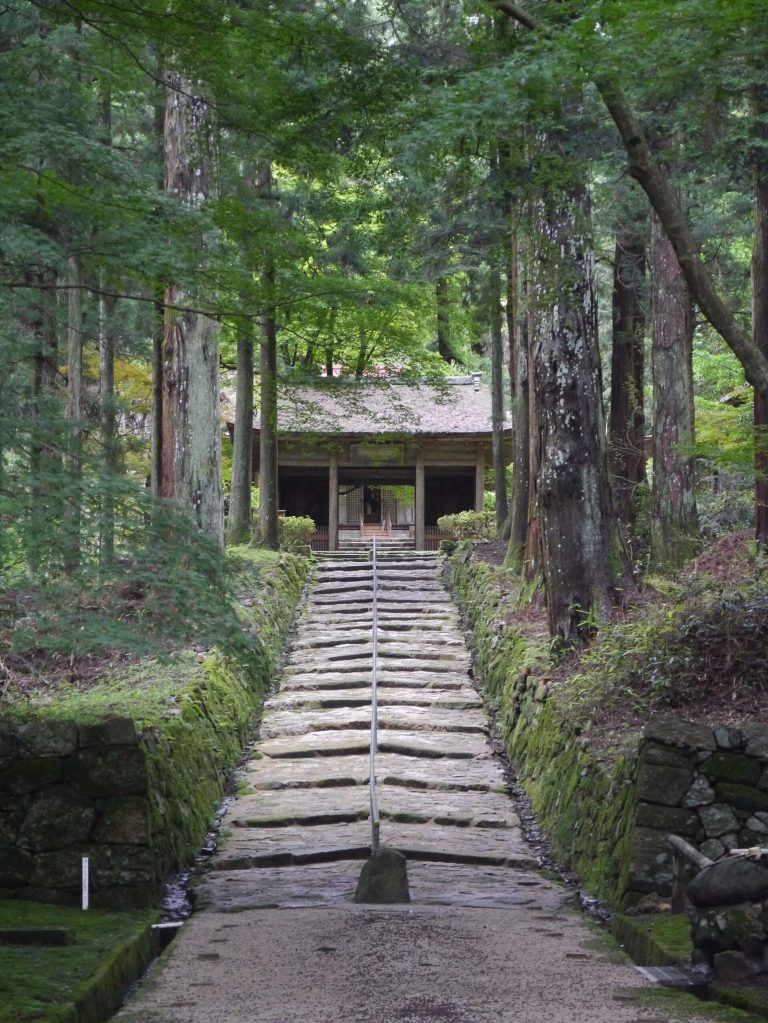
The Main Hall is a wooden Buddhist hall probably rebuilt around 1364–1366. It belongs to the Nanboku-chō period and has an irimoya-zukuri roof, a form combining a central gable with hipped sections along the lower sides. Its cypress-bark roof covers a structural grid of seven bays across the front and five bays along the side. In this description, a bay means the interval between two columns, not a linear measurement. The building is a hall for esoteric Tendai Buddhist practice. It underwent dismantling and repair in 1900 and contains the central sanctuary where the hidden principal image is enshrined.
Bell Tower and Gensan Daishi Hall
The Bell Tower was rebuilt in 1663. The Gensan Daishi Hall was rebuilt in 1713, providing two later structures within the precinct alongside the medieval Main Hall.
Gyōja Hall and Kannon Hall
The Gyōja Hall was transferred from Hando-ji in 1876, moved to its current position, and remodeled in 1879. The Kannon Hall was moved in 1696, or possibly newly built at that time, on the site of the former Iwazō-in in Nakao. It houses a Shō Kannon image more than 2.5 meters high and preserves the former principal image of the Higashio Kannon Hall.
Jizō Hall and Kuri
The Jizō Hall occupies the site of a former Fudō Hall. The precinct also includes the Kuri, the building traditionally used for the monks’ quarters and kitchen.
Shrine, Garden, and Sacred Water
Rokusho Gongen Shrine
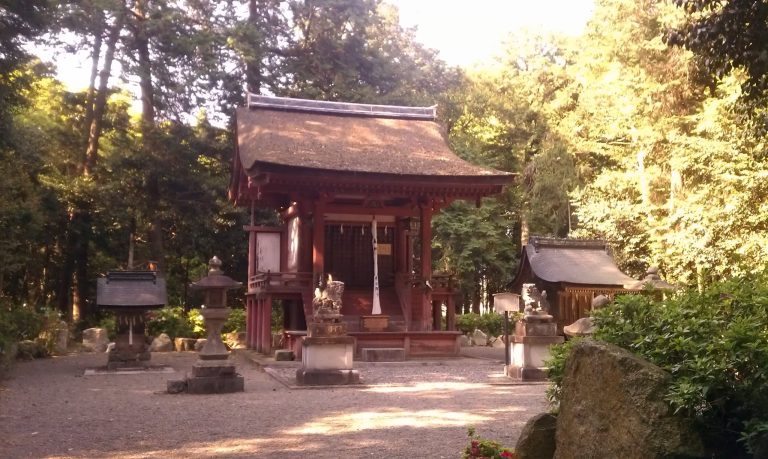
The Rokusho Gongen Shrine serves as the temple’s guardian shrine. A gongen is a deity understood in the medieval Buddhist-Shinto tradition as a local manifestation of a Buddha or bodhisattva. The shrine’s six deities are associated with Ise, Kasuga, Hachiman, Kamo, Atsuta, and Kashima.
Momotsute Pond and Garden
The grounds include a garden, the Momotsute Benzaiten installation, and Momotsute Pond. The pond is central to the foundation tradition because the small Yakushi Nyōrai image is said to have emerged from its waters before Saichō used it in a prayer for rain.
Zensui Motomizu
The sacred water called Zensui Motomizu is drawn from a well approximately 50 meters underground. Local believer Sonoda Takeo donated the well in 1999, and the water is drinkable. Its presence continues the association between Zensui-ji and healing or life-giving water expressed in the temple’s traditional name.
Principal and Guardian Images
Yakushi Nyōrai
The wooden seated Yakushi Nyōrai is the hidden principal image, or hibutsu, a sacred image kept from ordinary view and revealed only under prescribed circumstances. It is enshrined in the central sanctuary of the Main Hall. Documents placed inside the statue date its carving to 993, during the Heian period.
Heian-Period Buddhist Figures
The temple preserves wooden standing figures of Bonten and Taishaku-ten, Buddhist deities associated respectively with Brahma and Indra, together with a standing Bishamonten and four standing figures representing the Four Heavenly Kings, guardians of the four directions. Other Heian-period works include a seated Fudō-Myōō, a wrathful guardian associated with protecting Buddhist teaching, a seated Monjū Bosatsu shown in the form of a Buddhist priest, and two standing Niō, the paired guardians traditionally placed at Buddhist temple entrances.
The Monjū Bosatsu in priestly form is described as the only nationally designated example of its type in Shiga Prefecture and as one of three such examples in Japan. The seated Fudō-Myōō is described as the oldest of its type in Shiga Prefecture. The two Niō are described as the only nationally designated Heian-period examples in Shiga, within a group of five nationally designated examples from that period in Japan.
Kamakura-Period Images
The standing figures of Jikokuten and Zōjōten date from the Kamakura period, which preceded the Nanboku-chō era and generally extended from the late twelfth to the fourteenth century. They form part of the temple’s sequence of Buddhist sculpture spanning the Heian and Kamakura periods.
Infant Shaka Nyōrai
A gilt-bronze standing infant Shaka Nyōrai is cast in bronze and covered with gold. The figure has a raised protuberance on the head, ring-shaped earlobes with unusually small openings, and an upper body that leans deliberately backward. It is 23.2 centimeters high, while the distance from the tip of the right-hand finger to the end of the foot tenon is 28 centimeters.
The image is second in size only to a 47-centimeter figure at Tōdai-ji and is likewise considered second in technical finish. Its manufacture may have involved a workshop connected with the Office for the Construction of Tōdai-ji. It may also have been used at the Buddha-bathing ceremony held at Ishiyama-dera in April 762.
Amida and the Twelve Heavenly Generals
A standing bronze Amida Nyōrai made in 1206 is an early example of a Zenkoji-style Amida image. It is described as second in age only to the inscribed image made in 1195 at Kai Zenkō-ji. Zensui-ji also preserves two sets of Twelve Heavenly Generals, one dating from 1206 and the other from 1272.