Keya Kurotatsu Shrine: A Historic Water-Protection Shrine in Fukui, Japan

Site at a Glance
- Rating
- 4.4
- Popularity
- Medium
- Country
- Japan
- Primary era
- Early Modern
- External website
- Open
- Eras represented
- Early Modern
- Civilizations
- Tokugawa
- Site type
- Religious
- Remains
- Sanctuary
On this page10 sections
History
Keya Kurotatsu Shrine is a Shinto shrine in Fukui, Japan, traditionally founded in 477 during the reign of Emperor Yuryaku. Its foundation is attributed to the future Emperor Keitai, who was associated with flood-control works on the Hino, Asuwa, and Kurotatsu rivers while he was in Echizen. The shrine was established to protect the Kurotatsu River, support national protection and industrial prosperity, and enshrine the water deities Takaokami Okami and Kuraokami Okami.
Foundation and Early Tradition
The Kurotatsu River was the former name of the Kuzuryu River, and tradition connects both the river’s name and that of Kurotatsu Village with devotion to the Black Dragon deity. Kuraokami, in particular, was understood as a dragon deity associated with rain and invoked in relation to drought, excessive rainfall, and agricultural abundance. After Emperor Keitai’s death, his spirit was added to the shrine on September 20, 708, in recognition of his achievements.
The shrine is identified with the Keya Shrine listed for Sakai District in the Engishiki, a tenth-century administrative and ritual compendium whose register includes officially recognized shrines. It was first located beside the Kurotatsu River. The Black Dragon Shrine at Funabashi in Fukui is regarded as occupying that earlier site, where the Black Dragon deity continued to be revered after the principal shrine moved.
Relocation to Mount Asuwa
The original shrine was later transferred to Mount Asuwa, formerly called Kida Mountain, after a divine oracle. One tradition dates the move to 1329 and attributes it to Hagurabe Yukai after he received the oracle. Another credits Fujiwara Kunifusa, acting in Hagurabe’s place. The shrine took its present name by combining Keya, its former name, with Kurotatsu Village, its original settlement. The area at the foot of the mountain became known as Keya no Sato.
A passage in the Taiheiki describing fighting before the Black Dragon deity on May 2, 1338, is regarded as evidence that the shrine had already been transferred to Mount Asuwa by that date. Since the Heian period, it had also been regarded as one of four great protective deities placed at the four directions of Japan: Kashima in the east, Itsukushima in the west, Kumano in the south, and the Black Dragon deity of Echizen in the north.
Warfare and Fukui-Domain Patronage
The shrine was once a major regional institution, but it was burned during warfare associated with the Ikko uprisings, armed movements linked to militant communities of the True Pure Land Buddhist tradition. On January 10, 1603, Yuki Hideyasu, founder of the Fukui domain, designated it as a place of prayer for the domain. In 1690, the shrine hall was moved to the mountaintop and built there. Successive lords of Fukui thereafter gave it particular reverence as a protector of Echizen.
The shrine buildings were transferred to their present location on December 10, 1875. Historically, Keya Kurotatsu Shrine served as the local protective deity of the Jingumachi and Keya districts in Fukui’s castle town. Its festivals were held on March 7 and September 20, while its former administrator was Hoto-in, a Shingon Buddhist temple that no longer exists.
Modern Repairs and Continuing Identity
A festival marking the shrine’s 1,500th anniversary took place in 1977 and included a children’s procession, rice-cake scattering, and other commemorative events. Repair and remodeling work on the aging buildings began in 1989 and concluded in 1991 with completion of the surrounding fence and approach. The shrine is also known as Black Dragon Palace and is popularly called Kurotatsu-san. It is classified as a former village shrine, a prewar category for a locally recognized shrine below the national shrine ranks, and its crest is the triple hollyhock.
Remains
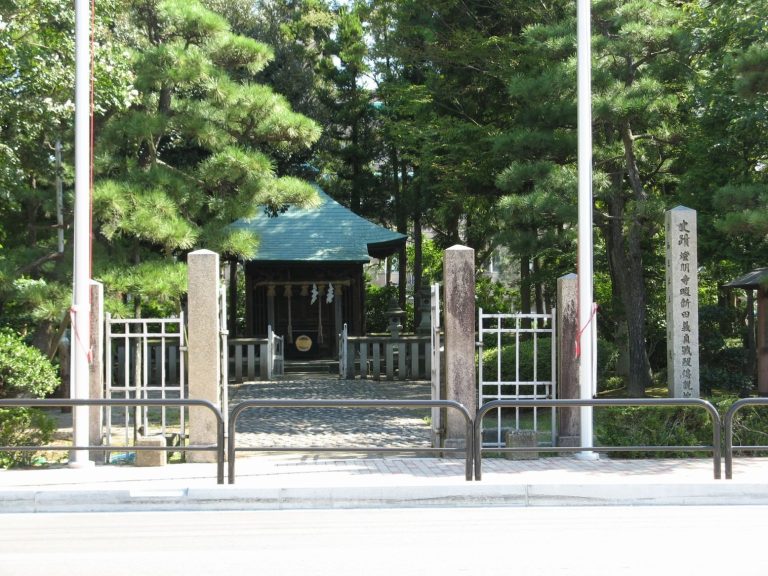
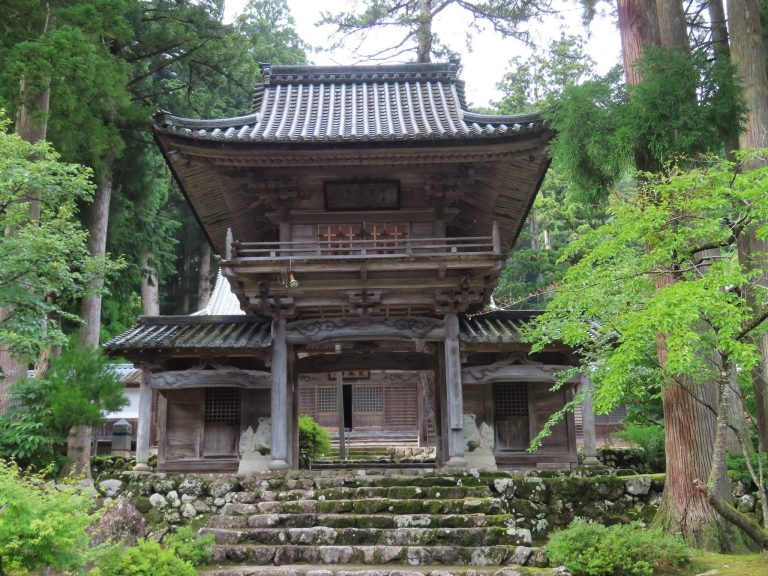
Keya Kurotatsu Shrine stands at the eastern foot of Mount Asuwa in Fukui’s Keya district. Its principal sanctuary follows the Shinmei-zukuri style, characterized by a simple raised floor, steep roof, and prominent ridge elements. The precinct also contains several associated shrines, while the present approach and enclosing boundary fence date from the repair and remodeling works completed between 1989 and 1991.
Buildings and Sacred Precinct
Principal Sanctuary
The main sanctuary is constructed in the Shinmei-zukuri style. Its position at the foot of Mount Asuwa reflects the shrine’s later setting after its transfer from the Kurotatsu River area and the mountaintop phase established in 1690.
Associated Shrines
Nishinomiya Ebisu Shrine enshrines Ebisu Okami, Kotoshironushi Okami, and Oichi-hime Okami. Ishiwata Hachiman Shrine enshrines Emperor Ojin, while Hakusan Shrine honors the tutelary deity of Shakudani-stone masons. Inari Shrine has a building transferred from within Kitanosho Castle.
Nishinomiya Ebisu Shrine was first established in Fukui’s castle town after Hideyasu brought its deity from the western shrine at Yuki in Shimosa Province in 1601. It initially stood in Ebisu district, was burned in the great fire of 1669, and later moved through the Outer Nakajima temple district before reaching the Keya Kurotatsu Shrine precinct.
Approach and Boundary Fence
The present approach and surrounding tamagaki, a fence enclosing a Shinto sacred precinct, were completed during the 1989–1991 repairs. Together they define the current approach into the shrine grounds around the sanctuary and associated buildings.