Takidan-ji Temple: A Historic Shingon Buddhist Temple in Sakai, Fukui


Site at a Glance
- Rating
- 4.4
- Popularity
- Low
- Country
- Japan
- Primary era
- Early Modern
- External website
- Open
- Eras represented
- Early Modern
- Civilizations
- Ashikaga shogunate, Tokugawa
- Site type
- Religious
- Remains
- Monastery
On this page12 sections
History
Takidan-ji Temple is a Buddhist temple in Sakai, Fukui, Japan, founded in 1377 and affiliated with the Chizan-ha branch of Shingon-shu, an esoteric Buddhist tradition established in Japan in the early ninth century. The temple began as a hermitage in its original area and was moved to its present location in 1381. Its principal image is Yakushi Ny orai, the Buddha associated with healing and medicine.
Foundations and medieval patronage
During the Muromachi period, the era of the Ashikaga shogunate from 1336 to 1573, Takidan-ji received support from the Asakura clan. In the Sengoku period, an era of warfare among competing regional powers, the temple was patronized by Shibata Katsuie, a regional warlord. Tradition also attributes the donation of the Sanmon, the temple’s main gate, to Shibata Katsuie.
Several surviving structures preserve connections with this medieval history. The Kannon-do, dedicated to Kannon, a Buddhist bodhisattva associated with compassion, belongs to the Muromachi period and was reconstructed in 1633. The Kaisan-do, or founder’s hall, was completed in 1572, while the Chinju-do, a shrine for the temple’s protective deity, dates from the late Muromachi period.
Edo patronage and later change
During the Edo period, which lasted from 1603 to 1868 under the Tokugawa shogunate, Takidan-ji was supported by the Matsudaira clan, the daimyō, or territorial lord, of Fukui Domain. The temple then possessed many sub-temples. Its scale was greatly reduced after the Meiji Restoration, the political transformation beginning in 1868 that ended the Tokugawa shogunate and reorganized Japan under imperial rule.
The temple and its surviving historic buildings now have national cultural-property protection. Its garden was designated a National Place of Scenic Beauty in 1929, and six buildings with associated components are designated Important Cultural Properties. Takidan-ji is also stop 11 on the Hokuriku Thirty-Three Kannon Pilgrimage and stop 6 on the Hokuriku Hakuju Kannon Pilgrimage.
Remains
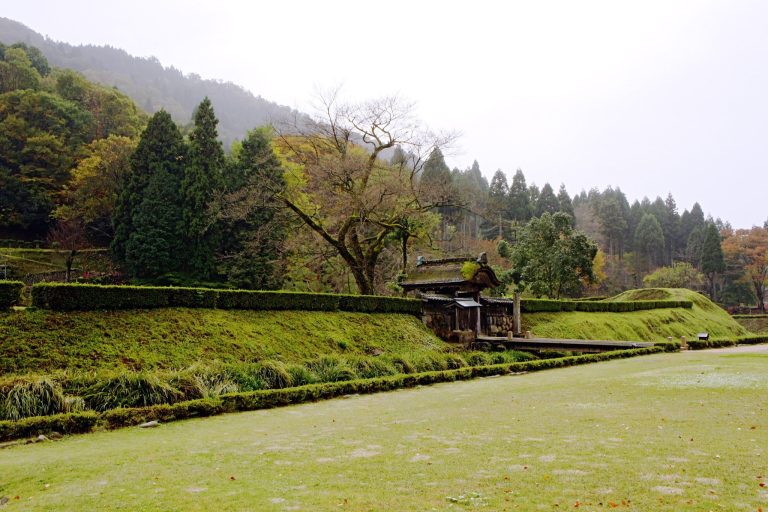
The surviving complex combines medieval and Edo-period buildings with an early Edo-period garden. The garden covers approximately 1,700 square metres beside the main hall, while the principal buildings form the architectural and religious core of the temple. Protected associated features include gates, storage buildings, shrine elements, and a small Buddhist shrine cabinet.
Main temple buildings
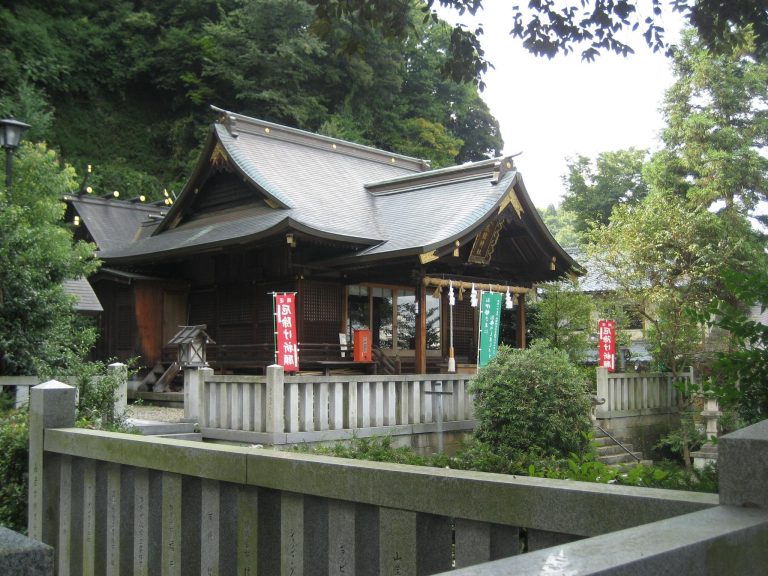
Hondo
The Hondo, or main hall, was completed in 1688 during the middle Edo period. It stands beside the temple garden and forms the principal setting for the temple’s religious activities.
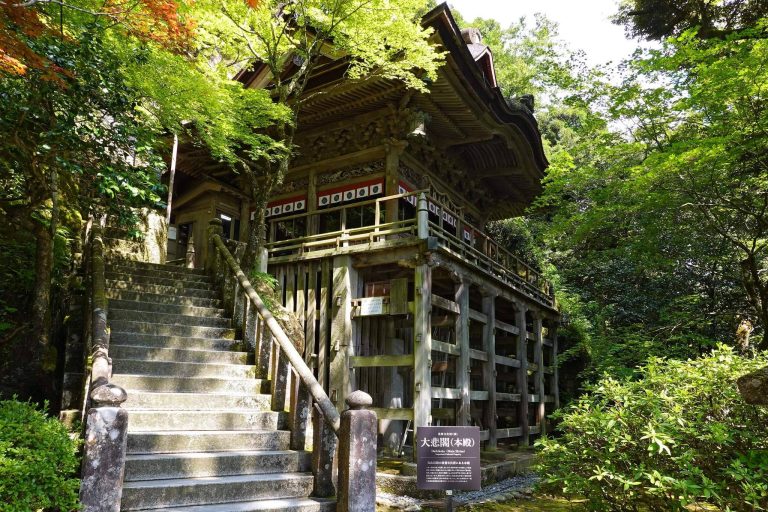
Kannon-do
The Kannon-do belongs to the Muromachi period and was reconstructed in 1633. Its protected associated component is a small Buddhist shrine cabinet. The hall is positioned beside the garden and is shown together with it in descriptions of the temple complex.
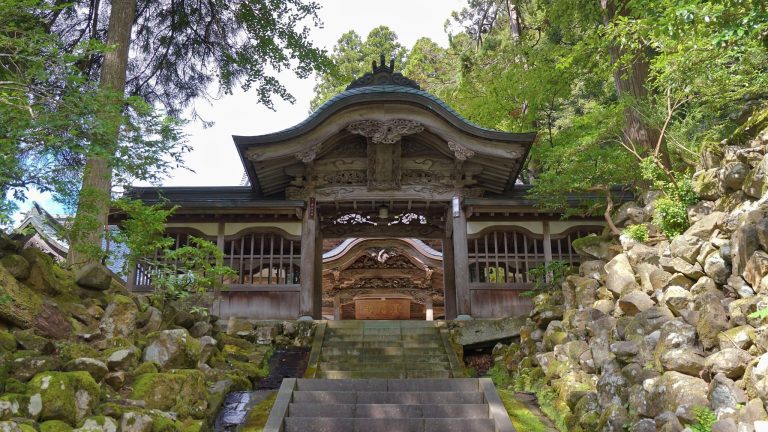
Sanmon
The Sanmon, the main gate, was reconstructed in 1698 during the middle Edo period. Its associated designated components include an outer gate and a treasure storehouse, extending the entrance and storage functions of the gate complex.
Hojo and Kuri
The Hojo and Kuri were completed in 1689. Together, they comprise the abbot’s quarters and kitchen, representing the residential and practical facilities that supported the temple community.
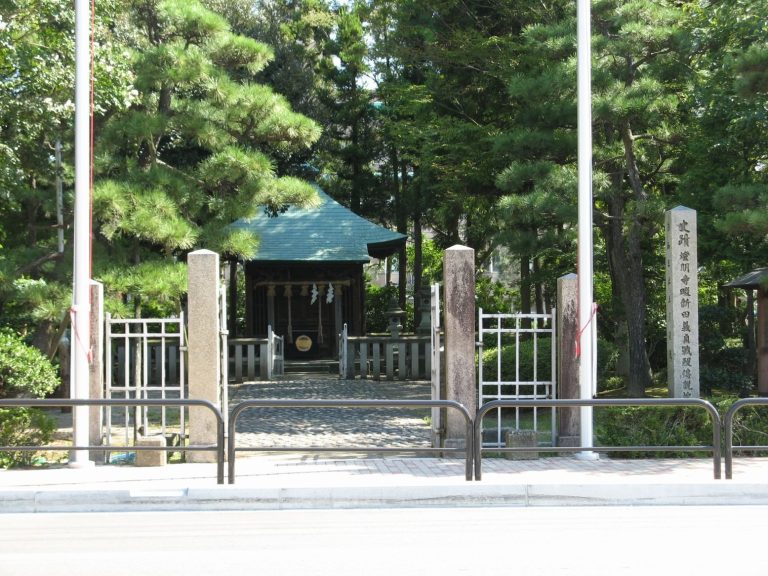
Chinju-do
The Chinju-do dates from the late Muromachi period and served as a shrine for the temple’s protective deity. Its associated features include a covered structure, a worship hall, and a stone torii.
Kaisan-do
The Kaisan-do, or founder’s hall, was completed in 1572 during the late Muromachi period. Its function preserves the memory of the temple’s founding tradition within the surviving complex.
Garden and principal image
Created in the early Edo period, the garden covers approximately 1,700 square metres and is adjacent to the Hondo. It includes a stone garden, with the Kannon-do beside it. The temple’s principal image is a statue of Yakushi Nyōrai. Takidan-ji attributes the carving to Taichō, a Nara-period monk associated with Shugendō, a Japanese ascetic tradition combining Buddhist, mountain-based, and local ritual practices. This attribution is a tradition of the temple rather than an independently established identification.