Hōkyō-ji Temple: A Sōtō Zen Monastery in Japan


Site at a Glance
- Rating
- 4.3
- Popularity
- Very Low
- Country
- Japan
- Primary era
- Medieval
- Eras represented
- Medieval
- Civilizations
- Kamakura shogunate
- Site type
- Religious
- Remains
- Monastery
On this page7 sections
History
Hōkyō-ji Temple is a Sōtō Zen monastery in Japan, located in Ono, Fukui Prefecture, and established around 1278. Founded by the Chinese monk Jakuen, it is regarded as one of Japan’s oldest Zen monasteries and, within the Sōtō school, as the second training center after Eihei-ji. It is also described as Eihei-ji’s inner sanctuary.
Foundation under Jakuen
Jakuen came to Japan because of his respect for Dōgen, the founder of the Japanese Sōtō Zen tradition and of Eihei-ji. In 1261, Jakuen left Eihei-ji and settled in solitude at the foot of Mount Ginnanpo, about 25 kilometres away. He meditated there among wild animals before the monastery was established.
Ijira Tomotoshi, a leader of the Fujiwara family responsible for the Ono District, encountered Jakuen while hunting and offered him financial support. In 1278, Tomotoshi’s son Tomanari built a temple for the monk. The name Hōkyō came from the Baoqing era of the Southern Song dynasty in China, when Dōgen studied under the Chan master Rujing. It apparently expressed Jakuen’s wish to commemorate or honor Rujing.
Disciples and Zen lineages
Giun, Jakuen’s student and recognized successor within his religious lineage, joined Hōkyō-ji in 1279. Jakuen transmitted the Dharma to him in 1296, and Giun became abbot in 1299, serving for fifteen years. In 1314, Giun became abbot of Eihei-ji and introduced Jakuen’s lineage there, remaining in that office for eighteen years.
Keizan Jōkin came to Hōkyō-ji in 1282, when he took the monastic office of ino, which involved supervising the monastery’s practice activities. He stated that he attained enlightenment there under Jakuen in 1285. Keizan later studied with Tettsū Gikai, who became his teacher, but continued to honor Jakuen as his own master.
Jakuen’s abbatial lineage eventually divided into Hōkyō-ji and Eihei-ji branches. Donki was the last Hōkyō-ji abbot to become abbot of Eihei-ji before the branches separated for about a century. He assumed the Eihei-ji abbacy in 1362. Kenkō of Hōkyō-ji later became Eihei-ji’s abbot in 1457 and served until 1468, followed by his disciple Kenzei until 1474. Kenkō’s account of Jakuen’s lineage attempted to reconcile differences between the two branches. His succession at Eihei-ji involved adopting the Jakuen lineage and relinquishing his former line of transmission.
Ijira patronage and institutional ties
Hōkyō-ji served as the principal religious institution of the Ijira family. Their patronage expressed political ties with the powerful Hatano family of Echizen and with the shogunate. In 1278 and 1299, the Ijira stated that the monastery had been built in honor of Hōjō Tokiyori, a regent of the Kamakura shogunate.
In 1346, the Ijira presented Hōkyō-ji with images of Jikokuten and Tamonten on behalf of Ashikaga Takauji, the founder and first shogun of the Ashikaga shogunate. The offering thanked the monastery for its support during the struggle against the Southern Court, the imperial court that opposed the Northern Court during Japan’s Nanboku-chō period. In 1365, the Ijira donated further land as an offering for Takauji’s future enlightenment after his death.
That same year, the Ijira ordered that Hōkyō-ji remain permanently affiliated with the Sōtō school and be led by abbots who had received face-to-face transmission from a master in Jakuen’s lineage. The family also required devotional rites for several Buddhist deities every five days and began participating in the selection of abbots, reinforcing its presence within the monastic community. Some researchers have proposed that Giun belonged to the Ijira family.
Hōkyō-ji remains a male Buddhist monastic institution associated with the Sōtō school. Its long relationship with Eihei-ji, its role in the Jakuen lineage, and its ties to the Ijira family place it within the institutional history of Japanese Zen.
Remains
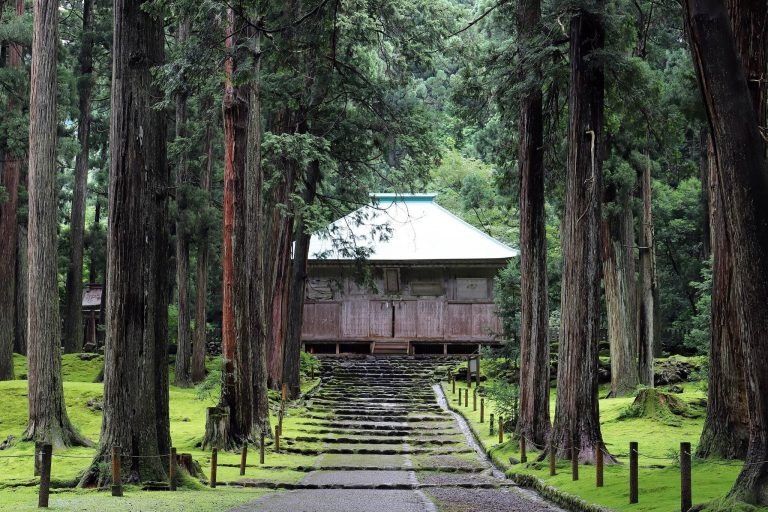
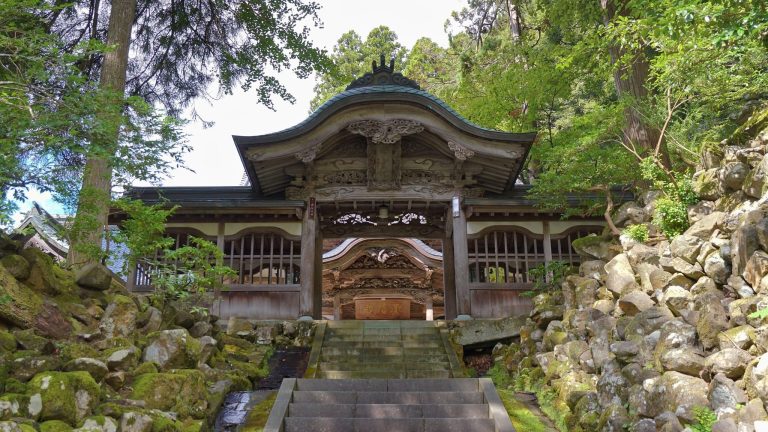
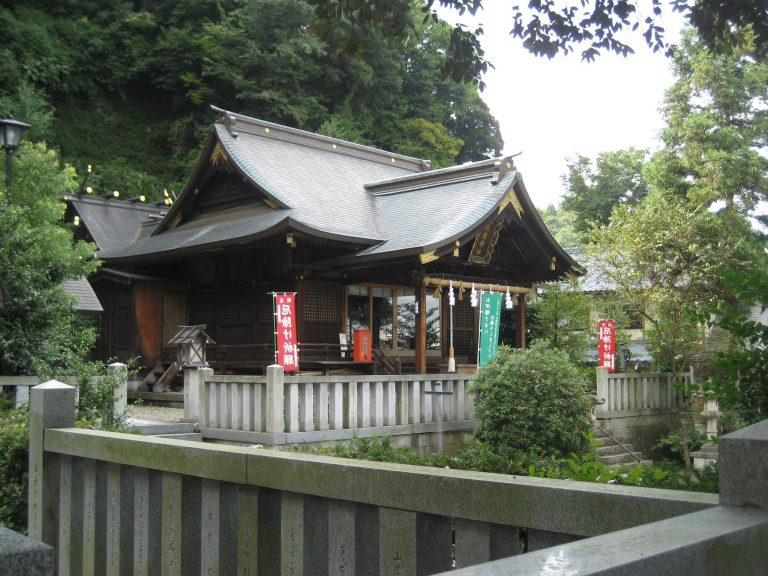
Hōkyō-ji stands at the foot of Mount Ginnanpo, at the head of the Ajimi Valley and in the upper reaches of the Kiyotaki River, about 10 kilometres southwest of central Ono. Dense cedar woodland surrounds the monastery. Its stated construction materials are wood, brick, and stone, while the mountain, valley, river, and woodland form the physical setting associated with the monastic site.
Mountain Setting and Construction
The monastery occupies a setting shaped by the lower mountain slopes, the valley, and the river’s upper reaches. Wood, brick, and stone are identified among its construction materials. The surrounding cedar stands are part of the site’s physical environment at the foot of Mount Ginnanpo.
Preserved Cultural Properties
A portrait of Dōgen is preserved at Hōkyō-ji as a cultural property designated by Fukui Prefecture. The temple also holds numerous other prefecture-designated cultural properties, including images associated with Dōgen.