Kenilworth Castle: A Historic English Fortress and Palace
Visitor Information
Google Rating: 4.7
Popularity: Medium
Official Website: www.english-heritage.org.uk
Country: United Kingdom
Civilization: Early Modern, Medieval European
Site type: Military
Remains: Castle
History
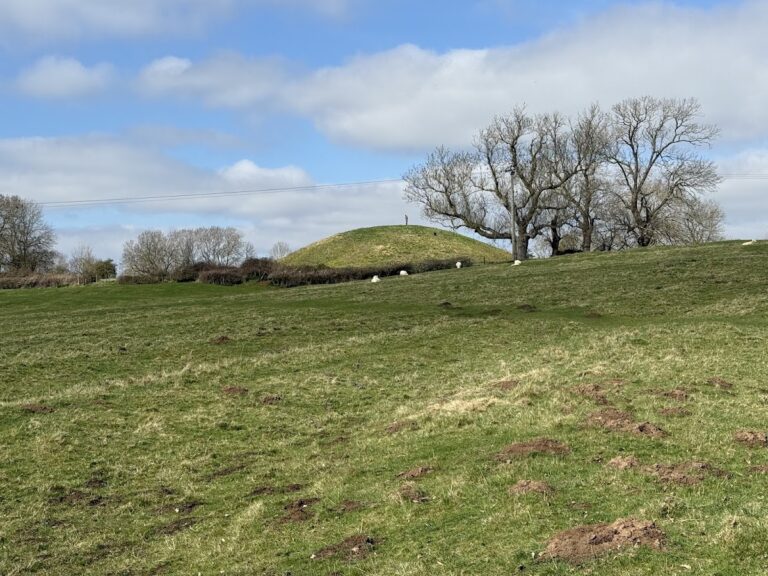
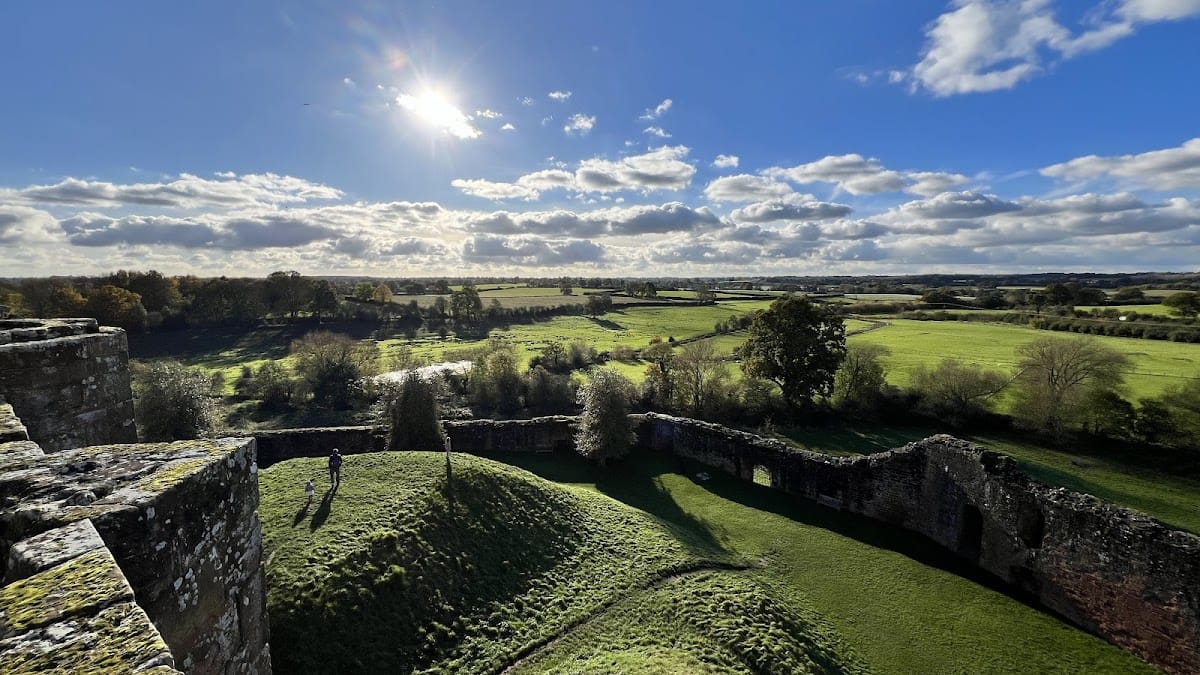
Kenilworth Castle, located in Kenilworth, Warwickshire, England, was established in the early 1120s by Geoffrey de Clinton, a key official under King Henry I. The original structure likely included a stone great tower and a motte, or earth mound, supporting wooden buildings. This early foundation marked the beginning of a fortress that would grow significantly over the centuries.
In the early 13th century, King John undertook major expansions, constructing a stone outer bailey wall and building Mortimer’s and Lunn’s Towers. He also enhanced the castle’s defenses by damming local streams to create the Great Mere, an extensive artificial lake. These water defenses made Kenilworth one of the largest and most formidable castles in England at the time.
Kenilworth played a central role during the Second Barons’ War, enduring a six-month siege in 1266, the longest in medieval English history. The castle’s water defenses helped it resist attacks by both land and water. The siege ended with the Dictum of Kenilworth, a settlement allowing the rebels to surrender under negotiated terms.
Between the 14th and 15th centuries, the castle passed through several prominent owners, including Simon de Montfort, Edmund Crouchback, Thomas, Earl of Lancaster, and John of Gaunt. During this period, it was transformed into a semi-royal palace fortress featuring perpendicular Gothic architecture. Notably, Kenilworth was the site where Edward II was deposed in 1327. It continued to serve as a royal stronghold under Henry IV and Henry V and acted as a Lancastrian base during the Wars of the Roses.
In the 16th century, John Dudley and his son Robert Dudley, Earl of Leicester, modernized Kenilworth with Tudor-style buildings and Renaissance palace features. Robert Dudley famously hosted Queen Elizabeth I in 1575 for a lavish 19-day visit, reflecting the castle’s status as a grand residence.
Following the English Civil War, Parliamentary forces partially destroyed the castle in 1649 to prevent its military use. Some sections were converted for agricultural purposes. The castle remained a ruin and farmstead through the 18th and 19th centuries, gaining cultural attention after Sir Walter Scott’s 1821 novel Kenilworth and various artistic works.
In 1937, industrialist Sir John Siddeley acquired the site and later transferred its management to the Commissioner of Works. Since 1984, English Heritage has overseen the castle, preserving it as a historic monument. Recent archaeological efforts have included restoring the Elizabethan garden and uncovering 13th-century catapult projectiles from the 1266 siege, shedding light on the castle’s military history.
Remains
Kenilworth Castle is built almost entirely from local New Red Sandstone and showcases five centuries of English military and domestic architecture. The castle’s layout includes an outer bailey, inner court, and several distinct courts and gardens, reflecting its evolution from fortress to palace.
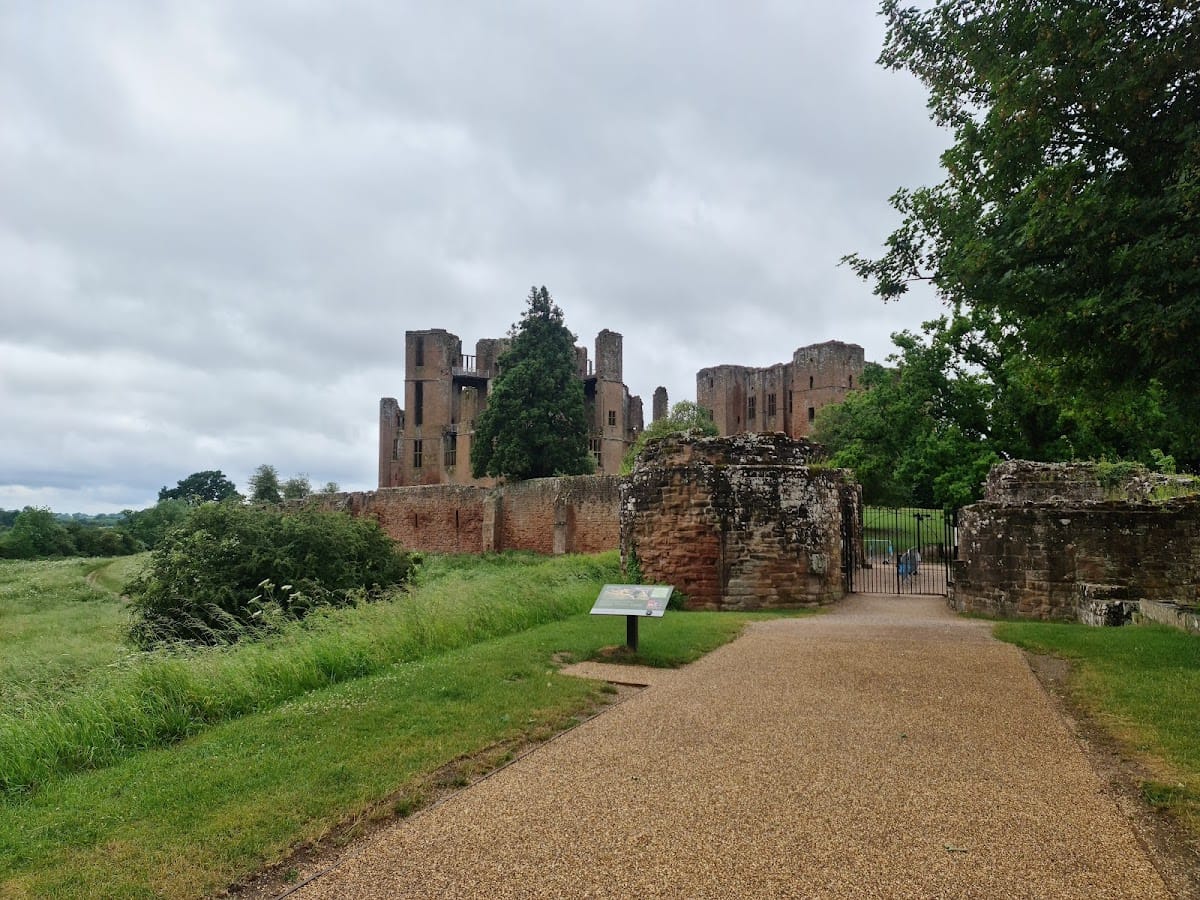
The outer bailey features the Brays, remnants of a 13th-century barbican with earthworks and masonry fragments. The Gallery Tower, a 15th-century gatehouse, guards a 152-metre-long walled causeway called the Tiltyard. This causeway served as a jousting arena and also acted as a dam for the Great Mere, originally a 100-acre artificial lake.
King John’s outer bailey wall is long and relatively low, supported by many buttresses but with few towers. It relied heavily on the surrounding water defenses. Notable towers include Mortimer’s Tower, a Norman gatehouse; Swan Tower, dating from the late 13th century with 16th-century additions; Lunn’s Tower from the early 13th century; and the 14th-century Water Tower overlooking the Lower Pool.
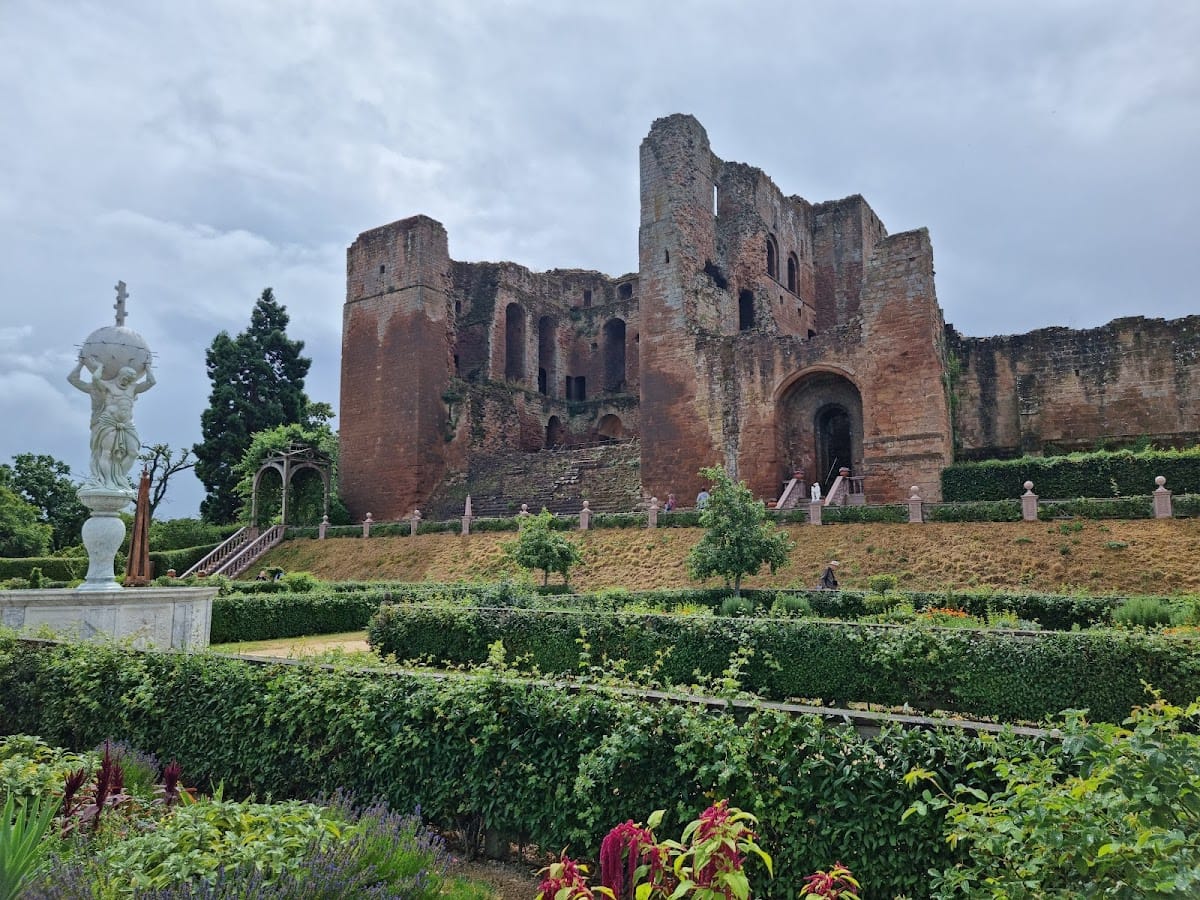
The inner court sits on a natural knoll and contains the 12th-century great tower, or hall keep, with walls five metres thick and standing 30 metres tall. Its corner turrets resemble large Norman pilaster buttresses. The lowest floor is filled with earth and protected by a sloping stone base. Tudor-era tall windows were added in the 1570s.
John of Gaunt’s late 14th-century buildings in the inner court include a grand great hall with the widest unsupported roof in England at the time, built in 1376 by William Wintringham. The hall had a ceremonial sequence of rooms accessed by a now-lost grand staircase, large windows overlooking the Great Mere or inner court, and a fully stone-vaulted Strong Tower.
Gaunt’s architectural style favored rectangular layouts, separating service areas on the ground floor from lavish upper floors. His austere exterior contrasted with richly decorated interiors. Other Gaunt constructions include the southern range of state apartments, Gaunt’s Tower, and a large kitchen measuring 19 by 8 metres, twice the size of kitchens in similar castles.
Robert Dudley added a four-storey Tudor guest wing called Leicester’s building on the south edge of the inner court, extending beyond the bailey wall. It features thin walls and large window grids designed to complement the great tower’s proportions. A loggia, or open gallery, beside the great tower leads to formal gardens laid out in a 16th-century Italianate style.
The castle’s interior is divided into the base court, left-hand court, and right-hand court. The base court, located between Mortimer’s Tower and Leicester’s gatehouse, was relatively public. The left and right courts, situated around the inner court, were more private. Leicester’s gatehouse on the north side of the base court replaced an older gatehouse and features symbolic towers and battlements. Its interior retains Elizabethan wood panelling and remains largely intact.
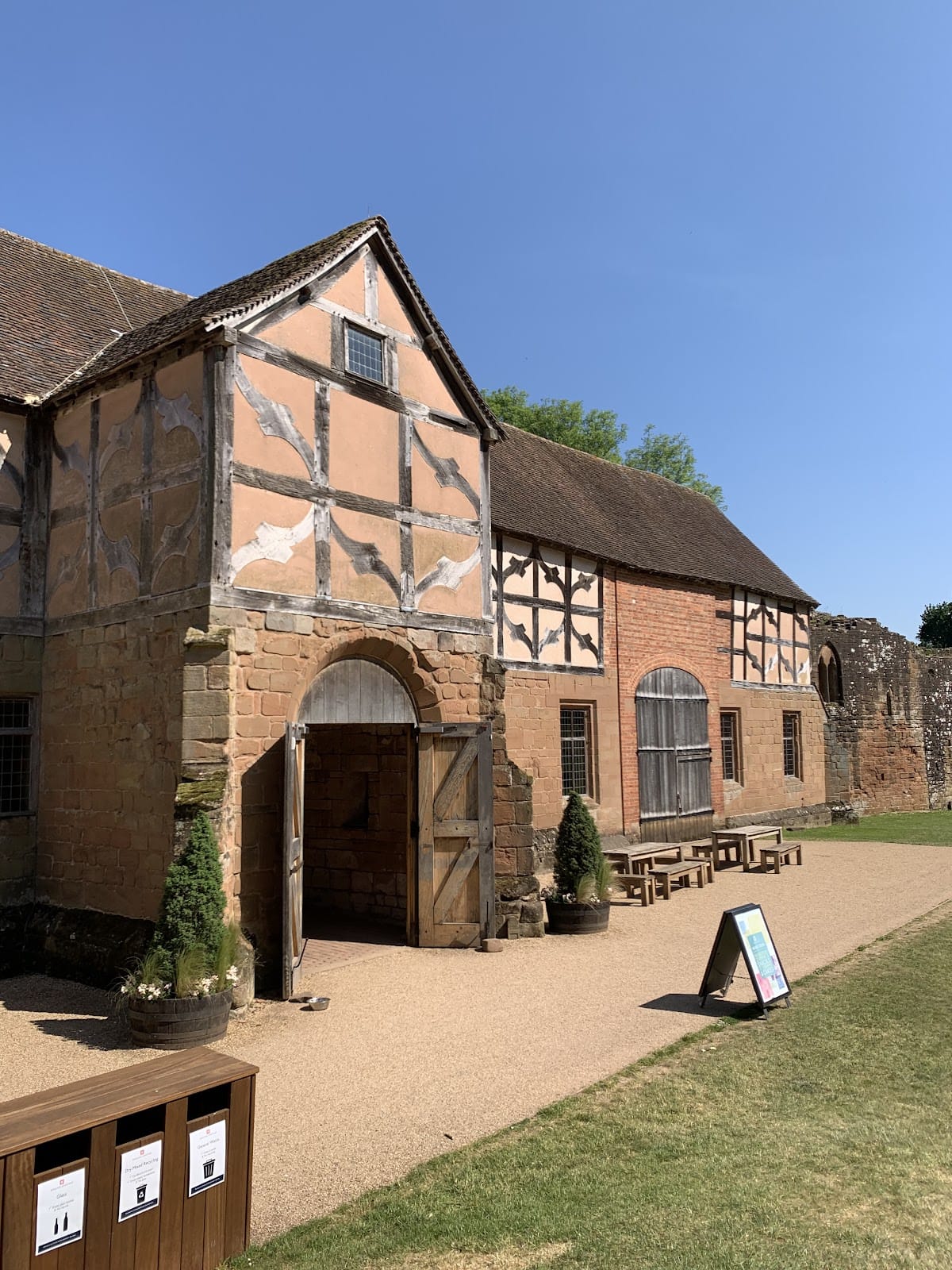
The stable block, built by John Dudley in the 1550s along the east side of the base court, is mostly stone-built with a timber-framed, decoratively panelled first storey. This vernacular style contrasts with the castle’s other buildings and is visible from Leicester’s building.
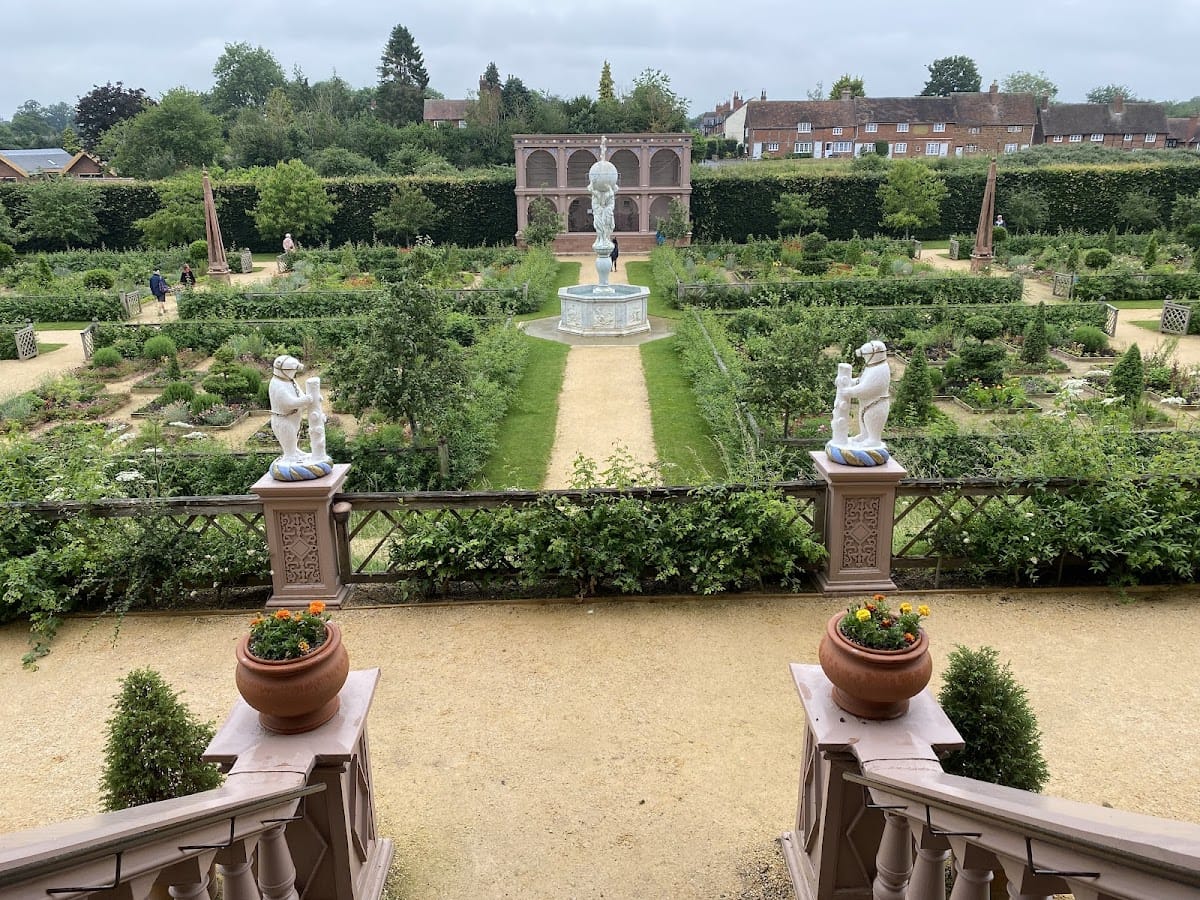
The castle garden occupies much of the right-hand court and reproduces the 1575 Elizabethan knot garden layout. It includes a steep terrace, eight square knot gardens, wooden obelisks painted to resemble porphyry stone, a marble fountain with Greek mythological figures, and a timber aviary.
To the north-west lie earthworks marking the site of the Pleasance, a 1414 banqueting house designed as a miniature castle. It was surrounded by two diamond-shaped moats and had its own dock, accessible only by boat across the Great Mere. The Pleasance was dismantled in the 16th century, partially relocated within the castle, and finally destroyed in the 1650s.
The castle suffered partial destruction in 1649, including damage to one wall of the great tower, parts of the outer bailey wall, and battlements. Before this, antiquarian William Dugdale surveyed the buildings and published his findings in 1656, preserving knowledge of the castle’s medieval form.
Nearby sites