Kawagoekan: A Medieval Fortified Residence and Administrative Center in Japan
Site at a Glance
- Popularity
- Medium
- Country
- Japan
- Primary era
- Medieval
- Eras represented
- Medieval, Early Modern
- Civilizations
- Unclassified
- Site type
- Military
- Remains
- Castle
On this page12 sections
History
Kawagoekan is a fortified residence founded in northwestern Kawagoe, Japan, in the late Heian period, the final era of classical imperial court rule before warrior governments emerged. It later served as the Kawagoe clan’s home and as an administrative center for the Kamakura shogunate, Japan’s warrior government based at Kamakura.
Foundation and estate
The Kawagoe clan, a direct branch of the Chichibu clan, developed a medieval estate in the area. Such an estate was a privately controlled landholding whose local administrators managed its revenues and obligations. The clan granted the estate to the twelfth-century Japanese emperor Go-Shirakawa, by then retired from the throne, in return for court rank and tax exemptions. The clan became the estate’s local administrators. Kawagoekan’s foundation is attributed either to the clan’s first leader or to his father.
The Kawagoe clan and the shogunate
Kawagoe Shigeyori became a trusted retainer of Minamoto no Yoritomo. Yoritomo chose Shigeyori’s daughter to marry his younger brother, the military commander Minamoto no Yoshitsune. After Yoshitsune’s downfall, Shigeyori was executed because of his association with him.
The clan nevertheless retained a leading position among the Kamakura shogunate’s vassals and Musashi’s provincial officials. Although the clan lost the office of chief supervisor in the provincial government after its connection to Yoshitsune, Shigeyori’s third son later regained it. Kawagoekan then served both as the clan’s residence and as the shogunate’s administrative center in Musashi, a historical province in the Kantō region.
Decline and later use
The clan’s power waned after the 1368 Musashi Hei Uprising. Its leader, Kawagoe Naoshige, fled to Ise, and the historical record of Kawagoekan then falls silent. During the late-fifteenth-century Chōkyō War, a conflict between rival Uesugi factions, Uesugi Akisada used the site as a field headquarters for seven years while campaigning against Kawagoe Castle, which was held by a rival branch of the family. Akisada was the shogun’s senior deputy in the Kantō region.
A local gazetteer also associates a fort at Uwado with the military commander Daidōji Masashige. The fort is thought to have continued as an outpost after Kawagoe Castle was built. It was abandoned when the castle fell in 1590 during Toyotomi Hideyoshi’s campaign against the Later Hōjō, a powerful warrior house based in the Kantō region. Jorakuji is said to have begun at Kawagoekan as a hall for a Buddhist devotional image and later flourished as a center of the Ji-shū school, a Buddhist tradition associated with itinerant preaching and reciting the Buddha’s name.
Recognition and preservation
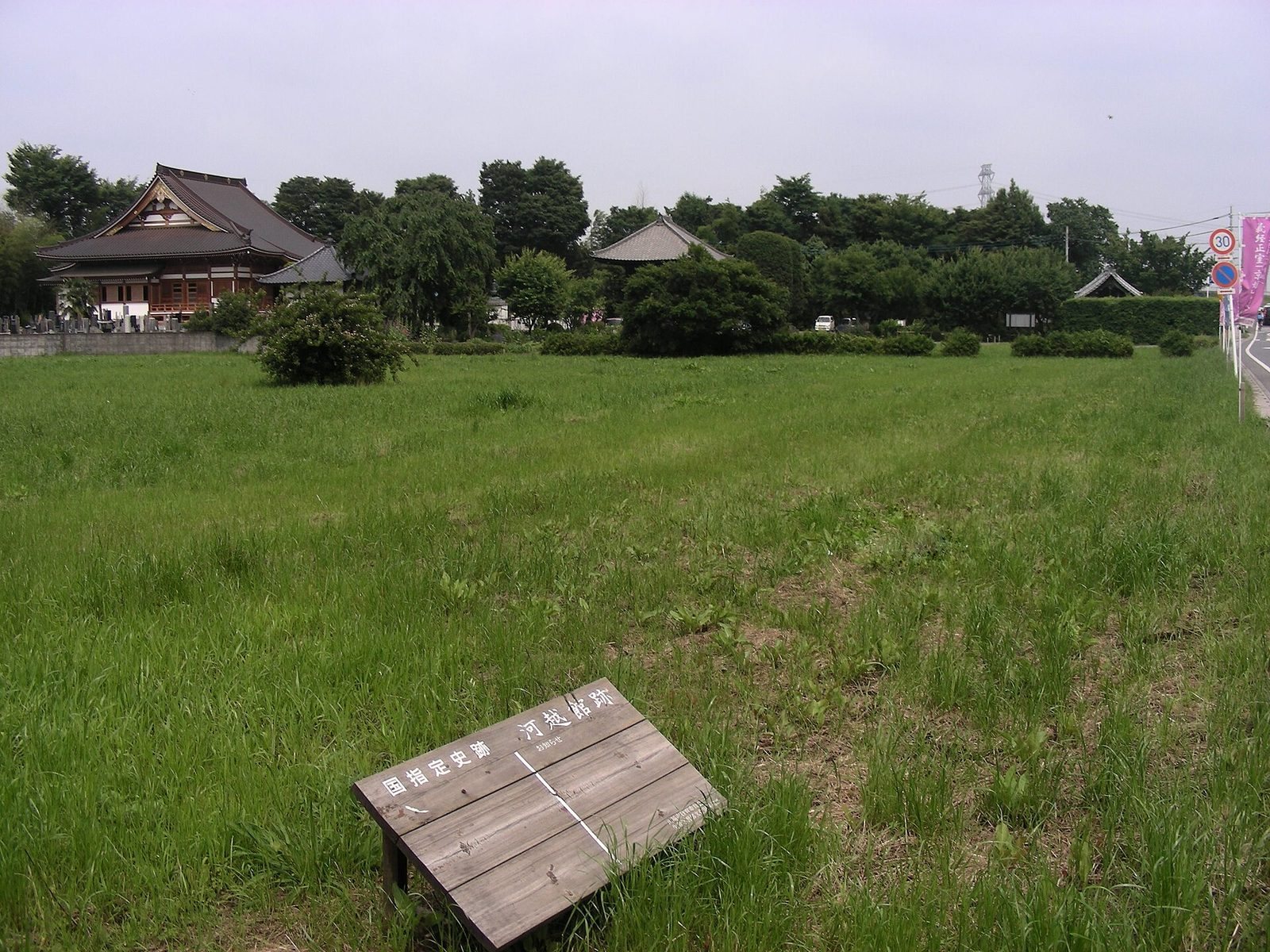
Kawagoekan was designated a National Historic Site on December 6, 1984, for the evidence it provides about medieval warrior residences in the Kantō region, especially those of the Kamakura and Muromachi periods. Kawagoe City became responsible for its management in 1989 and developed part of the site as Kawagoekan Ruins Historical Park.
Remains
Kawagoekan occupies level ground as a fortified residence, with its enclosure, earthen defenses, and dry moats defining the site. Excavated remains also reveal evidence of dwellings and wells within the former residence.
Residence and defenses
Enclosure and site dimensions
The residence is described as occupying a roughly square area about 218 meters on each side. The broader site measures approximately 240 meters from east to west and 300 meters from north to south.
Rampart and moats
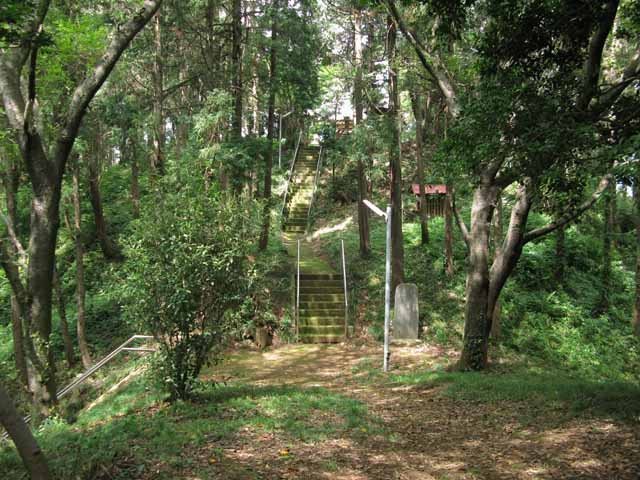
A single earthen rampart and two dry moats formed part of the defenses. Sections of the rampart remain between 1 and 3 meters high, and part of the inner moat survives. The northeastern outer moat is about 11 meters wide and 3 meters deep; it is thought to have once connected with the Iruma River.
Jorakuji and excavated features
Jorakuji precinct
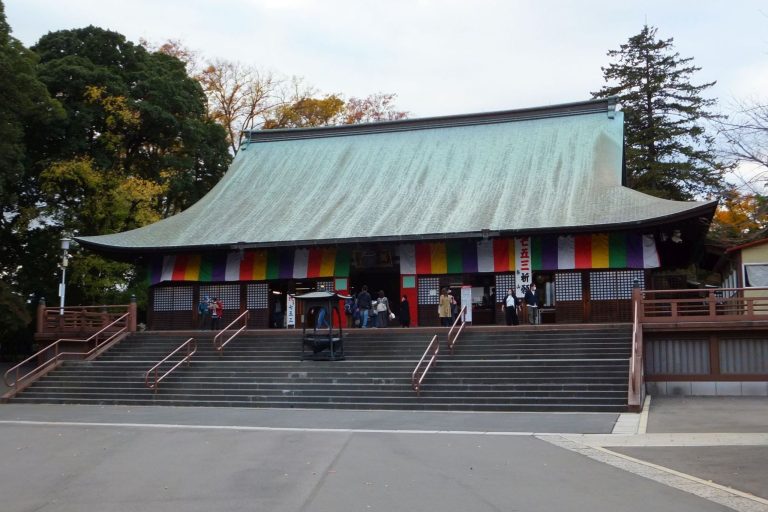
Jorakuji occupies the southeastern part of the former residence site. The remains include a roughly rectangular, enclosure-like area measuring about 150 meters east to west and 200 meters north to south. The temple precincts occupy part of Kawagoekan’s former grounds.
Wells, dwellings, and moats
Excavations have identified remains of moats, wells, and dwellings dating from the late Heian period through the Sengoku period, an era of conflict among regional warrior powers.