Nitzana: A Nabataean and Byzantine Settlement in Israel
Site at a Glance
- Popularity
- Medium
- Country
- Israel
- Primary era
- Classical
- Eras represented
- Classical, Medieval, Modern
- Civilizations
- British, Byzantine, Nabataean, Ottoman, Roman
- Site type
- Settlement
- Remains
- Town
On this page23 sections
History
Nitzana is an ancient Nabataean settlement in Israel, with a town established by the second century BCE during the Hellenistic period, the era of Greek cultural influence that followed Alexander the Great’s conquests. Human activity in the area reaches back to the Stone Age, and settlement was underway by the third century BCE. The Nabataeans were an ancient Arab people whose kingdom and trading networks extended across parts of the Near East.
Nabataean settlement and Roman rule
Nitzana grew at the meeting point of caravan and trade routes. It served a western branch of the Incense Road, a network carrying valuable goods between Arabia and Mediterranean markets, with routes connecting toward Egypt and Sinai, the Judean highlands, Rafah, and Eilat. Nitzana was also the westernmost Nabataean town in the Negev Highlands.
Wine-jar handles stamped in Rhodes, Kos, Pamphylia, and Italy, dated to the second and first centuries BCE, point to long-distance exchange. Coins found at the settlement include issues of Egyptian rulers Ptolemy IV and Ptolemy VII, the Judean ruler John Hyrcanus I, and Nabataean kings Aretas IV and Malichus II or Rabbel II. A passage in the Talmud may refer to Nitzana as a producer of high-quality pepper, though that identification is uncertain.
After Rome annexed the Nabataean kingdom in 106 CE, Nitzana declined. Coins from the reign of Septimius Severus and many from the mid-second century indicate activity in the Roman period, while occupation during the third and fourth centuries appears to have been limited.
Byzantine prosperity
The settlement revived in the late fourth century as an imperial and military center. Under Theodosius I, a Roman fortress was built on the Nabataean site, and a small garrison settlement grew around it. Nitzana later prospered under Byzantine rule, the eastern Roman Empire, and flourished particularly from the fifth to seventh centuries. Its location on routes used by Christian pilgrims traveling from the Holy Land to Mount Sinai supported the town’s growth. From the sixth century, residents built at least four churches and two monasteries.
The largely Nabataean population shifted from a nomadic to a settled way of life and adopted Christian and Roman cultural practices. Personal names and language reflect these changes. Documents also reveal local agriculture, pilgrimage, a cavalry unit, and the arrival of a Byzantine phylarch, a leader of an Arab tribal confederation serving within the empire’s political and military system. Tax records suggest that Nitzana was economically more prosperous than the regional capital, Elusa. Early estimates of its Byzantine population, at 9,000 to 10,000, were later considered too high; later estimates for the period around the Arab conquest place it at 1,000 to 3,000.
Early Islamic rule and abandonment
Nitzana continued to prosper for a time after the Arab conquest, into the late seventh century. Documents from the town record the transition from Roman institutions to Umayyad authority under Abd al-Malik, an Umayyad caliph whose rule helped establish institutions of the early Islamic state. The papyri also preserve the settlement’s ancient name, Nessana, previously unknown from another source.
The town later declined and had been abandoned by the ninth century. Heavier taxation and the diversion of major trade routes are possible explanations for its decline.
Ottoman and British administration
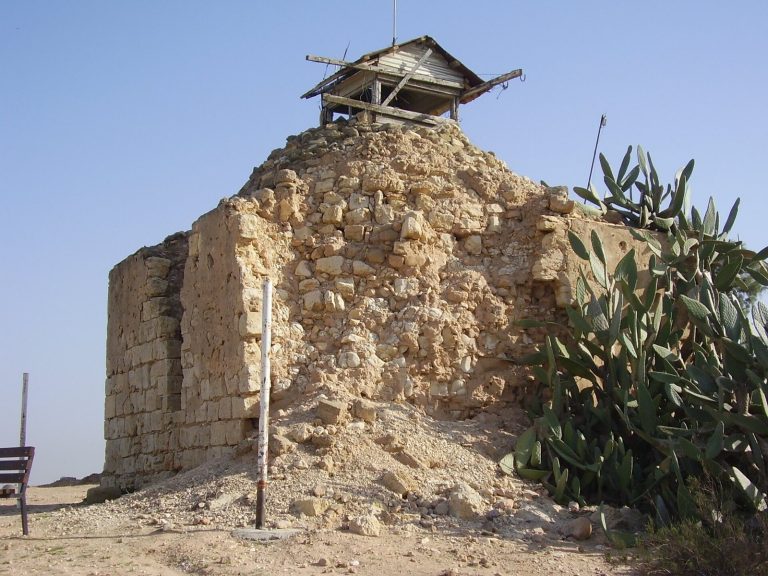
In 1902, the Ottomans began building a police station at Nitzana. After the Ottoman-British border was demarcated in 1906, the site gained importance as a frontier post. The Ottomans developed an administrative center there called Auja al-Hafir, destroying much of the ancient settlement in the process. During the First World War, Auja al-Hafir served as a supply base and departure point for Ottoman and German forces operating in Sinai. A military railway built with German assistance reached the town on 10 May 1916 and continued to Kuseima.
During the British Mandate, a police station remained at the site. Excavations led by H. D. Colt in 1935–1937 uncovered 195 papyri in a church archive, bringing the ancient name Nessana to light. The documents have since provided evidence about the town’s residents, economy, administration, and political changes.
War, armistice, and later research
Egyptian forces took the former British police station during their invasion in May 1948. Israeli forces captured the area during Operation Horev, a campaign of December 1948 to January 1949. The subsequent armistice agreement designated Nitzana a demilitarized zone, and an Israeli-Egyptian armistice commission operated there until the end of 1955. Israel established a Nahal military and agricultural pioneer outpost at Ktzi’ot east of Nitzana in September 1953, followed by the Be’erotayim outpost to the south in March 1956.
Amid armed cross-border raids, Egyptian fortification, and concern for the defense of the Negev and Beersheba, Israel ended the demilitarized arrangement. In the night battle of 2–3 November 1955, known as Operation Volcano, Israeli forces fought an Egyptian battalion, which withdrew. In September 1956, the Israeli army dismantled the Ottoman- and British-era buildings that remained. Nitzana is now designated a national park.
Edward Robinson described the ruins in 1838, identifying the acropolis, a fortress, and two churches but mistaking the site for ancient Avdat. A Ben-Gurion University of the Negev expedition led by Dan Urman and Yosef Shershevsky worked at Nitzana for seven years from 1986, uncovering residential buildings, the stairway to the hilltop, the eastern church, and a chapel. A renewed expedition led by Jana Chekhanovets began in 2022, with work focused on pilgrimage links with Sinai and the Ottoman settlement.
Remains
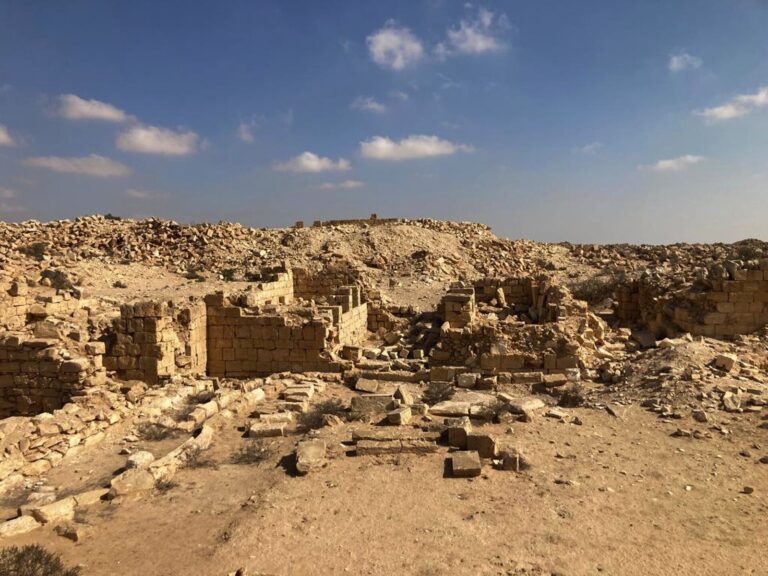
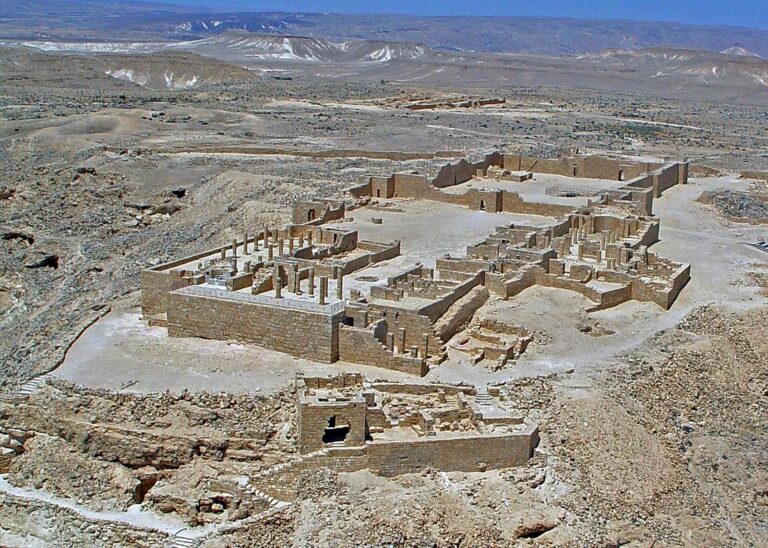
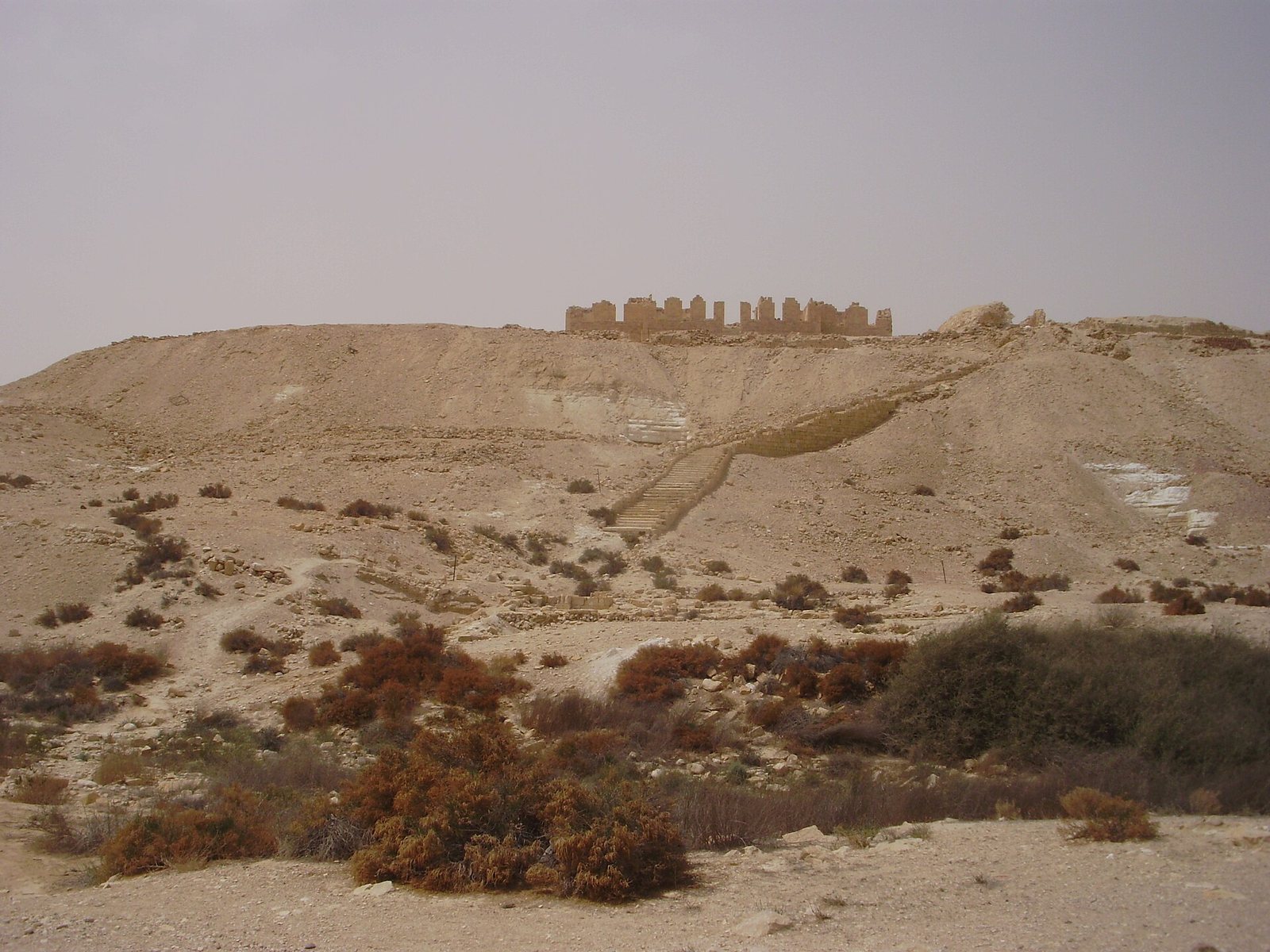
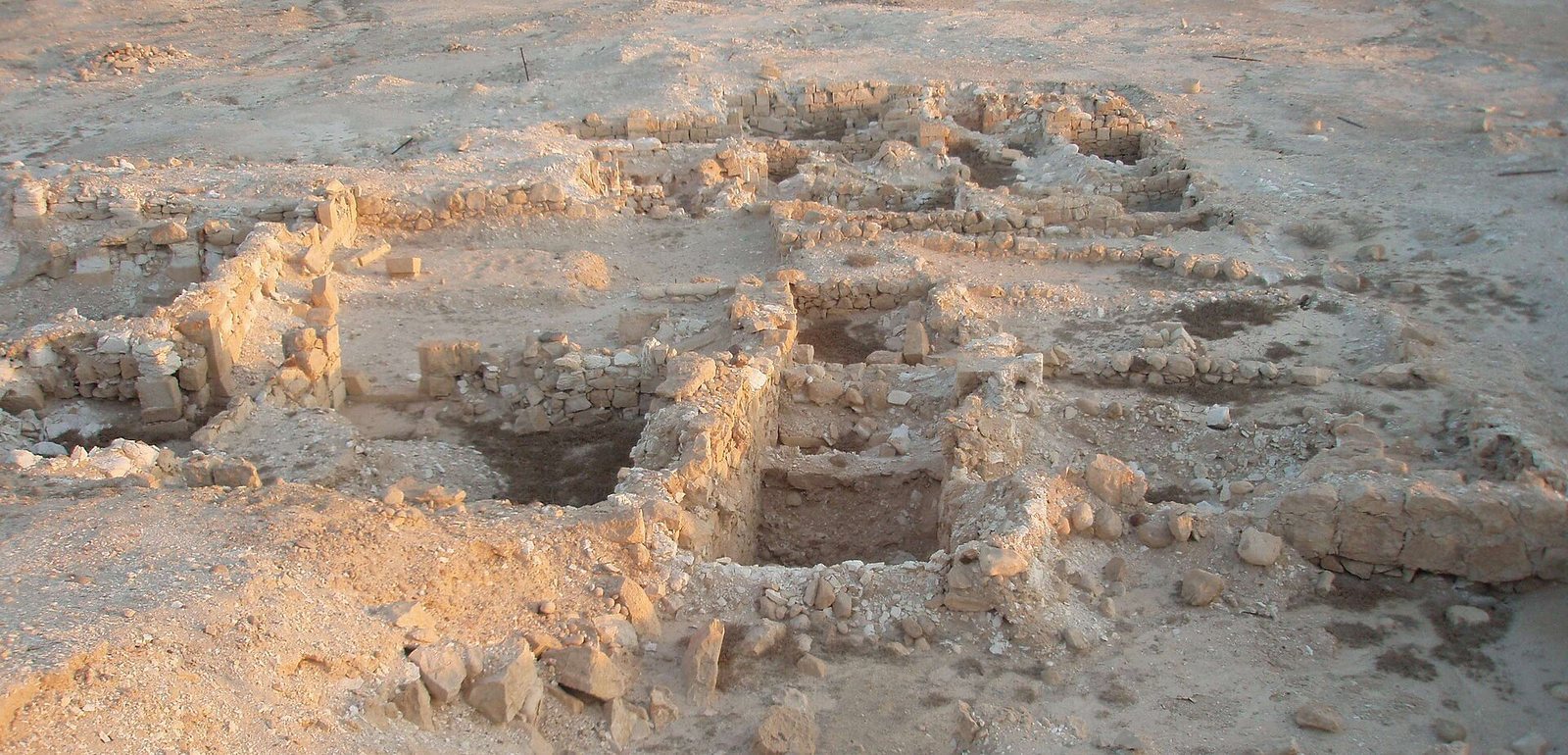
Nitzana’s remains occupy a plain about 250 metres above sea level. Nitzana Stream borders the site to the north, while Azuz Stream crosses it from southwest to north. In the northwest, an elongated natural hill rises about 35 metres above the plain and forms the settlement’s acropolis, the high, prominent part of an ancient town. The remains extend from this hilltop into the lower town.
Hilltop and fortifications
Acropolis steps and small fort
Monumental steps connect the lower settlement with the acropolis. Archaeologist Abraham Negev attributed them to the Nabataean period, around 25 BCE–50/70 CE. A small fort on the north side of the hill measures 25 by 27 metres and was also dated by Negev to that period. A Byzantine church later covered nearly all of the fort.
Fortress with round towers
A fortress with round corner towers is the oldest surviving building at Nitzana. Foundations beneath it include remains of an earlier Hellenistic-period building, possibly a temple. A Nabataean temple has also been proposed for the acropolis area later occupied by the Byzantine fortress and Ottoman buildings.
Rectangular fortress
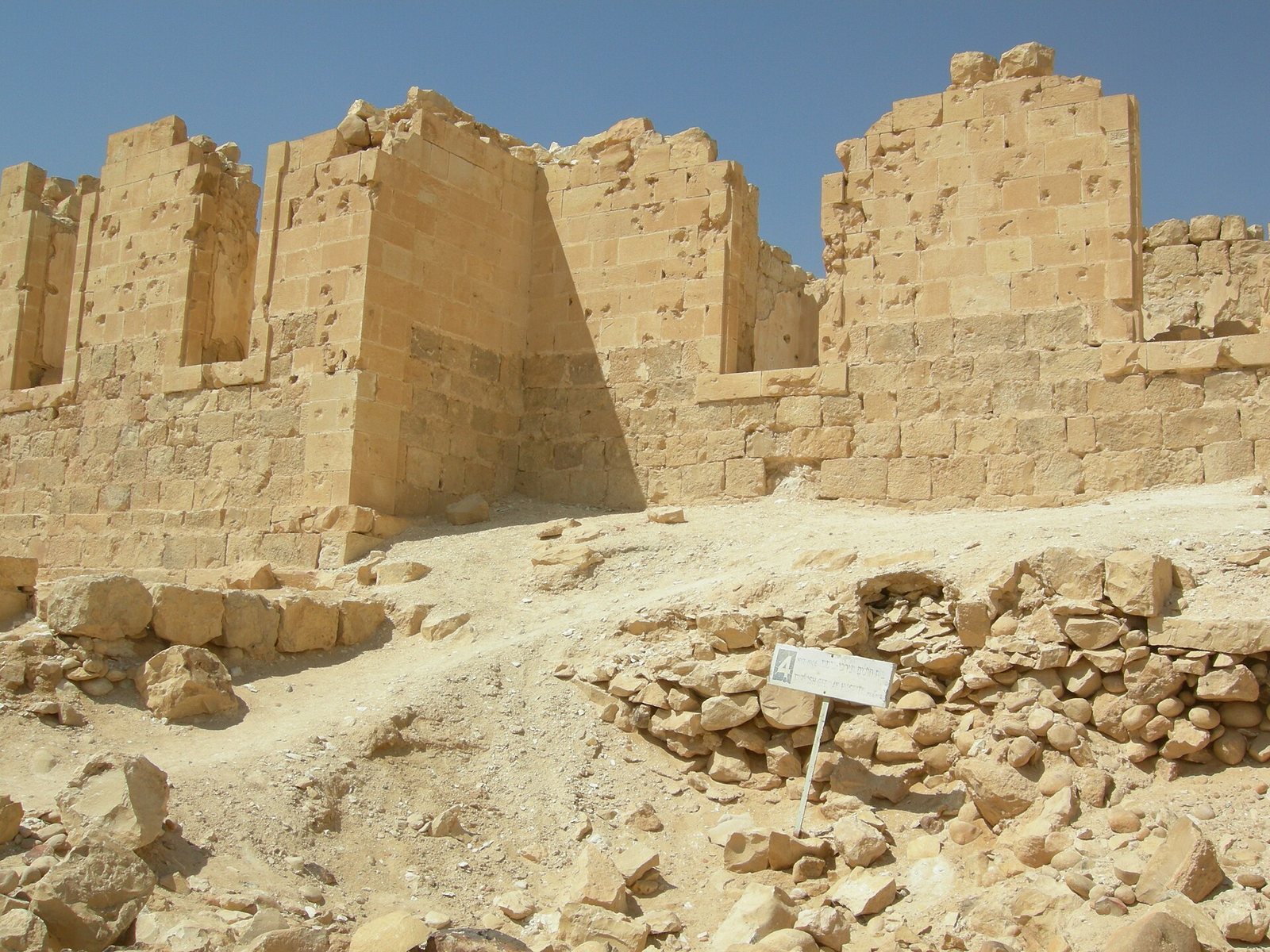
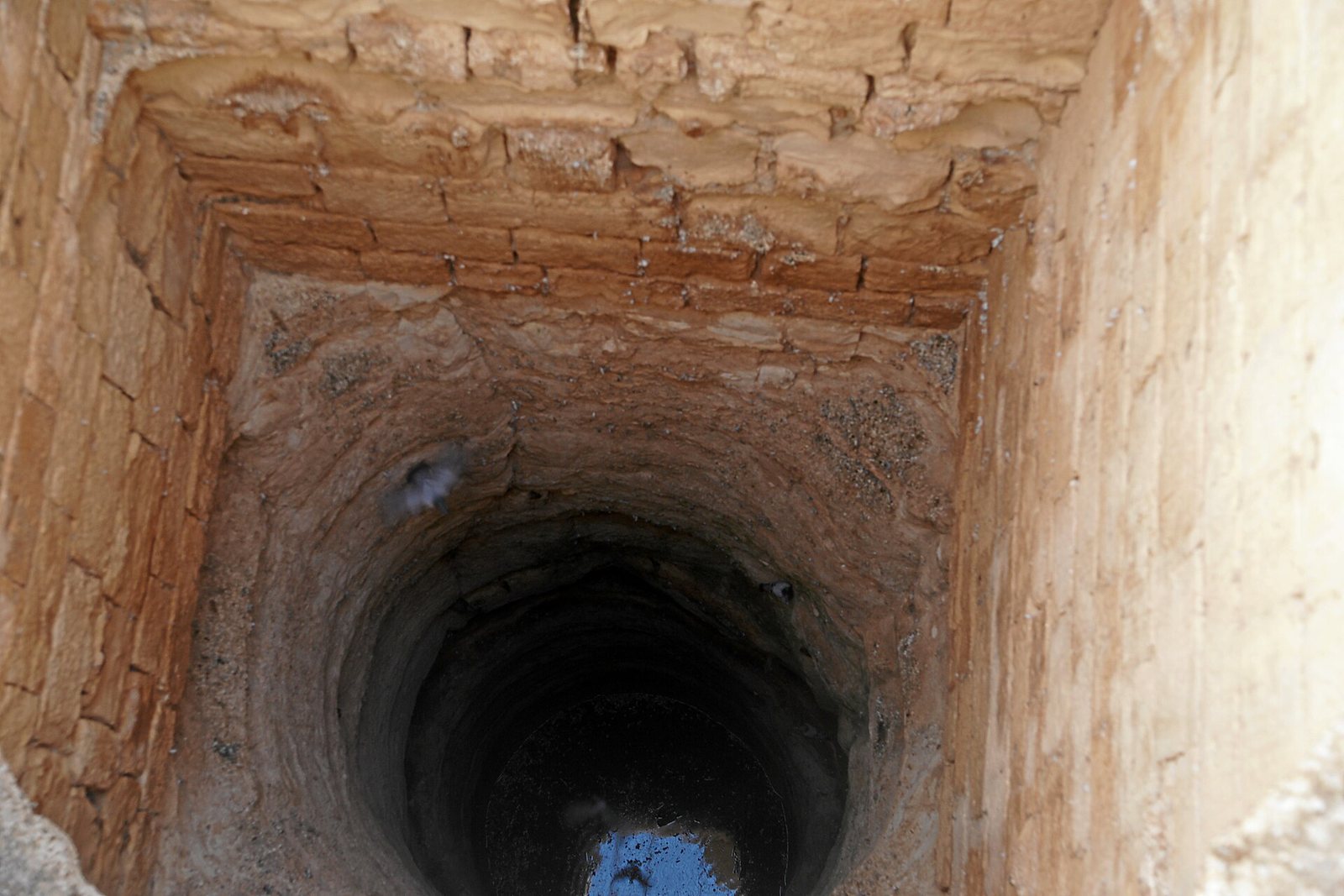
A later fortress had a rectangular plan measuring 85 by 35 metres. Its enclosing wall contained five square towers, and an arched roof covered the water cistern in the inner courtyard.
Churches
Northwest plateau churches
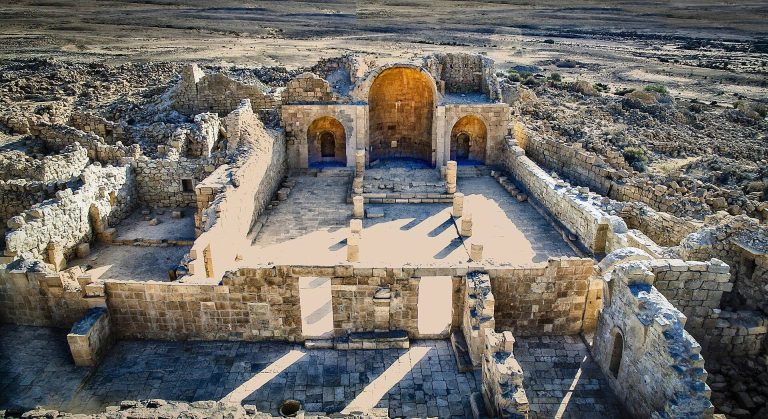
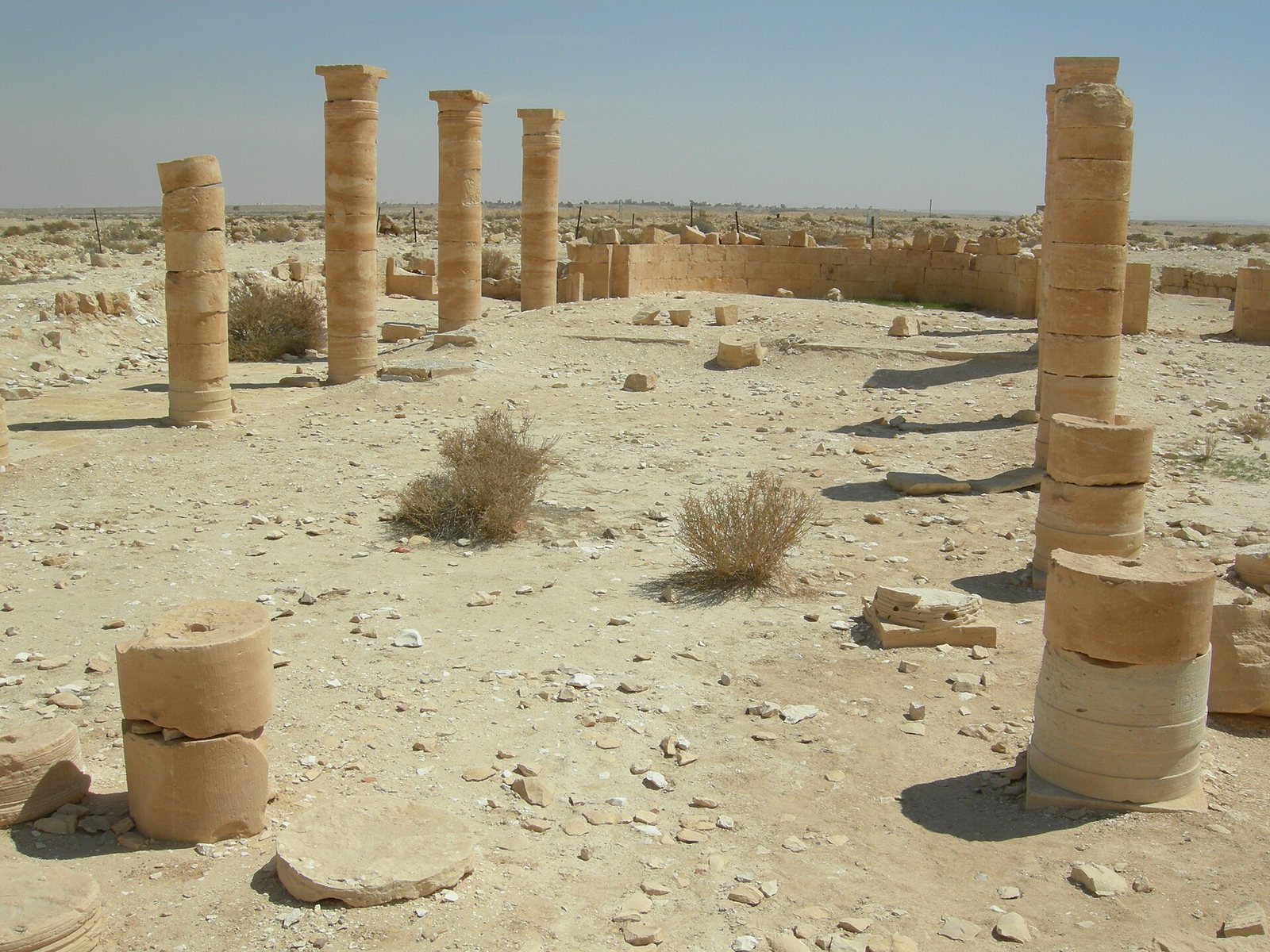
The northwest plateau held the Byzantine fortress and two principal churches. The northern church is also known as the Church of Saints Sergius and Bacchus. Five churches have been identified across the site. The architecture of one combines an imitation of Jerusalem’s Church of the Holy Sepulchre, a major Christian shrine, with classical ideas associated with the Roman architectural writer Vitruvius.
Central and eastern churches
Another large church stood in the town center, and a further church lay to the east. Excavations in the late twentieth century revealed the central church; records from before the First World War provide much of the information about the eastern church. Excavations also uncovered a chapel.
Written and inscribed finds
Church papyri
Papyri, documents written on sheets made from the papyrus plant, were recovered from church storage and archival spaces, including deposits associated with two churches. One church was dedicated to Mary, Mother of God. The texts span the mid-fifth to late seventh centuries and are written in Greek, Latin, Arabic, Nabataean, and Syriac. They include private papers, wills, legal and economic records, official documents, literary works, and theological texts. Among them are fragments of Virgil and the Gospel of John, personal papers belonging to George son of Patrick, and records concerning a military unit called the Most Loyal Theodosians.
Copies of books II–IV of the Aeneid, accompanied by a Greek-Latin glossary, show that the poem was used to teach Latin. The finds also include a complete copy of the legendary correspondence between Abgar of Edessa and Jesus of Nazareth.
Inscriptions and tombstone
Inscriptions and graffiti at Nitzana use Greek, Aramaic, Armenian, and Georgian. A tombstone found in the national park in 2021 commemorates Maria, a Christian woman. Its Greek inscription reads, ‘Blessed Maria who lived an immaculate life,’ and the stone is about 1,400 years old.
Ottoman buildings and railway
Hospital and railway structures
Part of the Ottoman hospital built at Auja al-Hafir survives. Railway remains include a water tower used to fill steam locomotives, a wall from the station manager’s building, and sections of embankment. The railway line divided into eight branches.
Railway bridges
An eight-arched railway bridge crossed Nitzana Stream; its stone piers survive near the remains of a later bridge from the British Mandate period.
Armistice-era buildings and memorial
Guard posts and commission headquarters
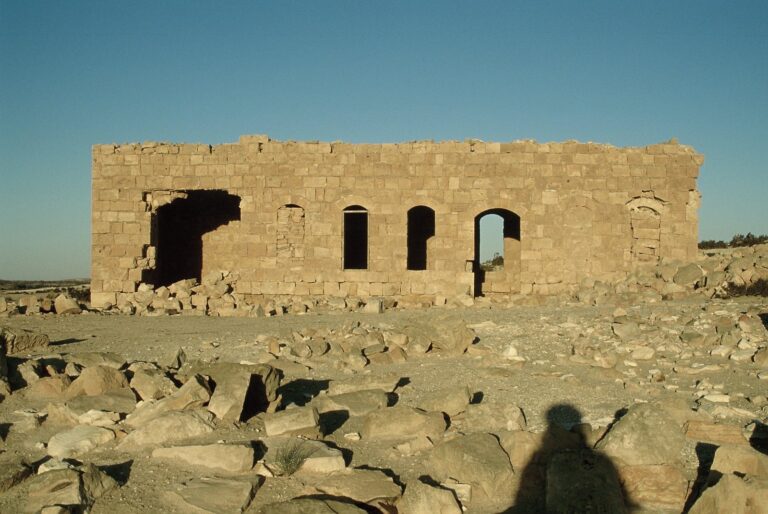
Three two-storey stone buildings served as Israeli and Egyptian guard posts and as the United Nations headquarters where the armistice commission met.
War memorial
A memorial in the national park commemorates those killed in Israel’s War of Independence. Over the centuries, ancient stones from Nitzana were reused in buildings in Gaza.