Kashifune Shrine: A Local Tutelary Shrine in Japan

Site at a Glance
- Rating
- 3.9
- Popularity
- Very Low
- Country
- Japan
- Primary era
- Medieval
- External website
- Open
- Eras represented
- Medieval
- Civilizations
- Kamakura shogunate
- Site type
- Religious
- Remains
- Sanctuary
On this page7 sections
History
Kashifune Shrine is a Shinto shrine in Japan, founded in 1222 by residents of Tanono Estate in the former Tamba Province. Guided by the monk Jozei, the community arranged for the shrine buildings to be constructed and for divine and Buddhist images to be made. The buildings were completed in September 1222, and the images followed in March 1223. The shrine now serves as the chinju, or local guardian shrine, of the Tanono area.
Foundation and Religious Tradition
The shrine venerates Okuninushi no Mikoto, a major Shinto deity associated with land, community formation, and the establishment of order, together with Kashifune Myojin. The word Myojin is an honorific for a revered kami, often translated as “great deity.” Kashifune Myojin was identified as the local deity who made the oak ship used in the legendary cutting of the Hozu River channel.
According to local tradition, Okuninushi proposed draining the former lake in the Kameoka Basin toward the Kyoto Basin by cutting through the eastern mountains. Kashifune Shrine was established at the place believed to be where the oak ship for this work was built. The shrine’s religious identity therefore joined the community’s local landscape with a tradition about transforming the surrounding waterways.
The Shrine and Jinguji
Kashifune Shrine was closely connected with Jinguji, a temple founded around the same time on the east side of the Tanogawa River. The two institutions shared a religious relationship in which Shinto deities were associated with Buddhist figures, a common premodern practice in Japan. Residents continued to preserve the festivals of both institutions through later changes in local administration.
The community’s role in the shrine’s foundation remained important to its historical identity. The Amida image made for Kashifune Shrine was financed jointly by all members of Tanono Estate and their relatives, an arrangement that reflects the collective organization of the medieval estate, a rural landholding and administrative unit.
Administrative Changes and Local Identity
In 1889, Tanono Village merged with neighboring villages to create Kashida Village in Minami-Kuwata District, Kyoto Prefecture. The name Kashida combined “Kashi,” taken from Kashifune Shrine, with “Ta,” taken from Tanono Village. Kashifune Shrine thus contributed to the name of the wider Kashida area.
In 1958, Kashida Village became part of Takatsuki in Osaka Prefecture. Kashifune Shrine is a village shrine without a resident priest, and shrine matters are handled through Kuwayama Shrine in Kameoka. That shrine venerates the deity associated with the legendary cutting of the Hozu River channel and also has a subsidiary Kashifune Shrine where the same deities are enshrined. The festivals and religious traditions linked to Kashifune Shrine and Jinguji remain part of the area’s communal heritage.
Remains
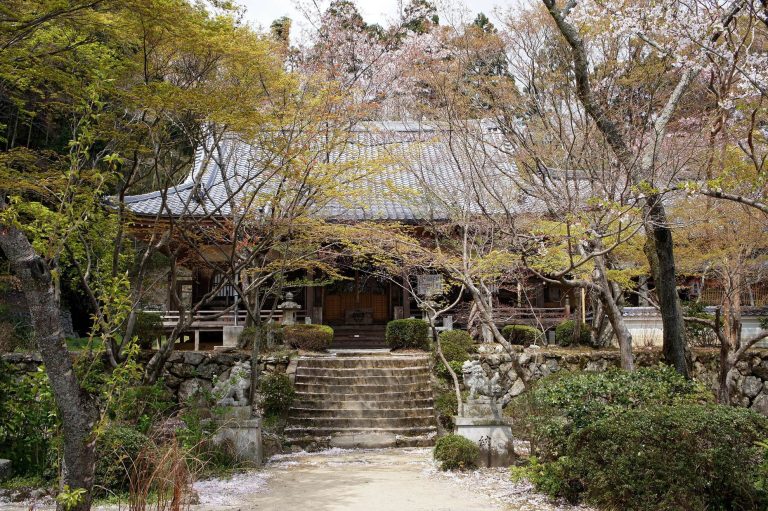
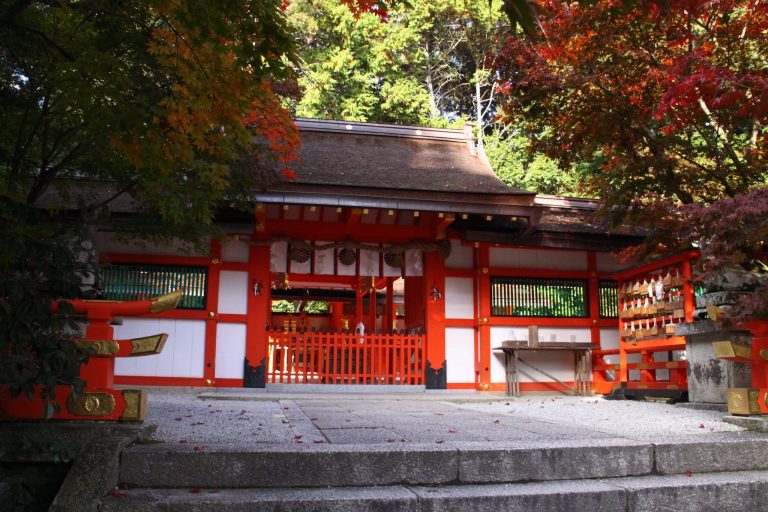
Kashifune Shrine stands at about 360 meters above sea level in the innermost part of the Kashida Basin. It occupies the lower section of a ridge leading toward Mount Myojingatake on the boundary between Osaka and Kyoto prefectures. The Hokusetsu mountains enclose the shrine’s setting, while the Tanono area lies within present-day Takatsuki. The principal enshrined deities are Okuninushi no Mikoto and Kashifune Myojin.
Sacred Images
Three of the five images completed in 1223 were installed at Kashifune Shrine. They comprise a male divine image identified as a great deity, a female divine image known as Nyotai Gozen, and an Amida Buddha image serving as the Buddhist counterpart of a goddess. Amida is the Buddha of the Pure Land tradition. Their association reflects honji-suijaku, the premodern practice of understanding Shinto kami through corresponding Buddhist figures.
The two related Buddhist images, Kannon and Dainichi, were placed at Jinguji. Kannon is a bodhisattva associated with compassion, while Dainichi is the central Buddha of esoteric Buddhism and is identified with the cosmic Buddha. The Dainichi image preserved at Jinguji is designated a tangible cultural property by Takatsuki City. Together, the images at the shrine and temple express the close religious relationship between the two institutions.
Associated Religious Site
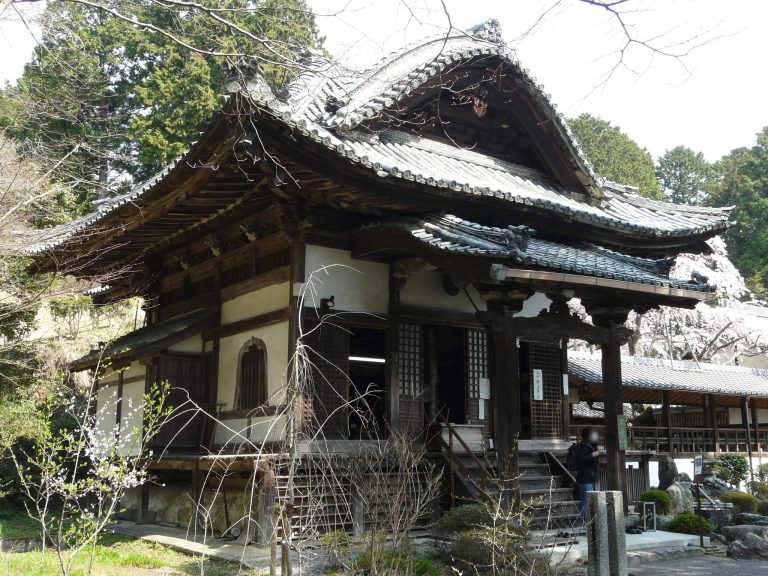
Jinguji stands east of the Tanogawa River and forms the associated temple counterpart to Kashifune Shrine. Its connection with the shrine rests on their near-contemporary foundations, the placement of related Buddhist images at the temple, and the continued preservation of shared religious observances. The surviving arrangement of the images and institutions gives physical form to the religious relationship that shaped Tanono’s communal traditions.