Shōji-ji Temple: A Tendai Buddhist Temple in Kyoto


Site at a Glance
- Rating
- 4.2
- Popularity
- Low
- Country
- Japan
- Primary era
- Early Modern
- External website
- Open
- Eras represented
- Medieval, Early Modern
- Civilizations
- Unclassified
- Site type
- Religious
- Remains
- Temple
On this page7 sections
History
Shōji-ji Temple is a Tendai Buddhist temple in Kyoto, Japan, on Mount Oshio in Oharano. Tendai is a major Japanese Buddhist school founded by Saicho in the early ninth century, whose teachings draw on the Chinese Tiantai tradition and emphasize the Lotus Sutra. The temple is traditionally said to have been founded in 679 by En no Ozunu at the imperial command of Emperor Tenmu, and its principal image is the Medicine Buddha, a healing deity associated with the treatment of physical and spiritual suffering.
Foundation and imperial patronage
After Oharano Shrine was founded in 784, Shōji-ji became its associated Buddhist temple. In 791, Emperor Kanmu ordered Saicho to rebuild the temple halls and compound. Saicho is traditionally credited with carving the temple’s principal Medicine Buddha, using a ritual practice in which he made three bows with each cut. In 838, Emperor Nimmyo ordered the establishment of forty-nine subsidiary temples at Shōji-ji, reflecting the institution’s continuing importance within the religious landscape of Oharano.
Saigyo and the medieval temple
Shōji-ji is closely associated with Saigyo, the twelfth-century Buddhist monk and poet who had previously served as a warrior-court official under the name Sato Norikiyo. In October 1140, Sato Norikiyo entered religious life at the temple and took the name Saigyo.
The temple was burned during the Onin War, a civil war fought mainly in Kyoto from 1467 to 1477 that caused widespread destruction in the capital. The Nio-mon survived the destruction, and Shōji-ji was rebuilt during the Tensho era, from 1573 to 1592. During the Edo period, the temple received the devotion of Keishoin, the mother of shogun Tokugawa Tsunayoshi.
Later religious associations
The institutional relationship between Shōji-ji and Oharano Shrine ended during the Meiji-period separation of Buddhism and Shinto, a government policy that formally divided the two religious traditions and dissolved many temple-shrine relationships. The temple is known as the “Temple of Flowers.” Its grounds were associated with the protection of flowering trees by the medieval period, and it remains noted for cherry blossoms and autumn foliage. Shōji-ji is the forty-second temple in the Saigoku Forty-Nine Medicine Buddha pilgrimage and is also associated with the “Temple of Flowers” group of pilgrimage sites.
Remains
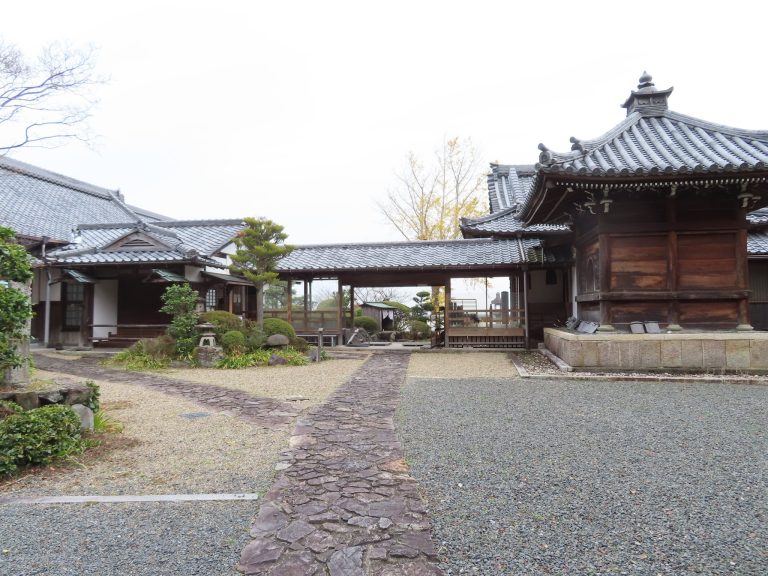
Shōji-ji’s surviving features include temple halls, the Nio-mon, and Buddhist images connected with the institution’s long religious history. The architectural remains are understood alongside the temple’s setting on Mount Oshio and its association with flowering trees, while the surviving images provide particularly important evidence of its devotional traditions.
Temple buildings
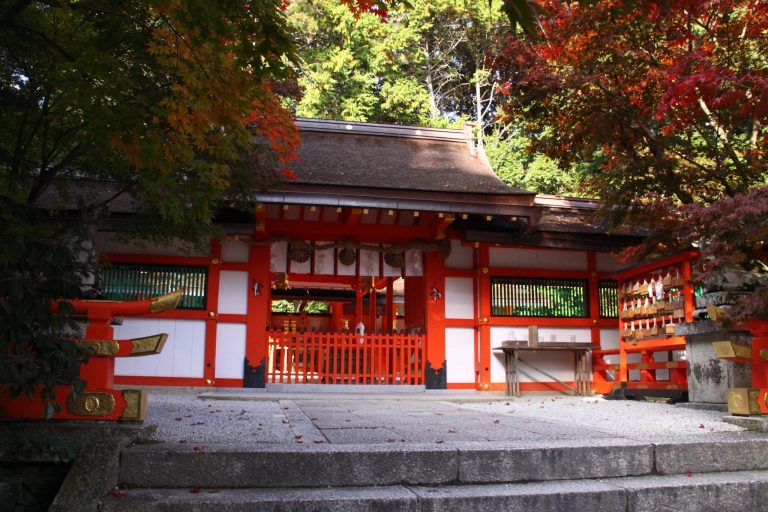
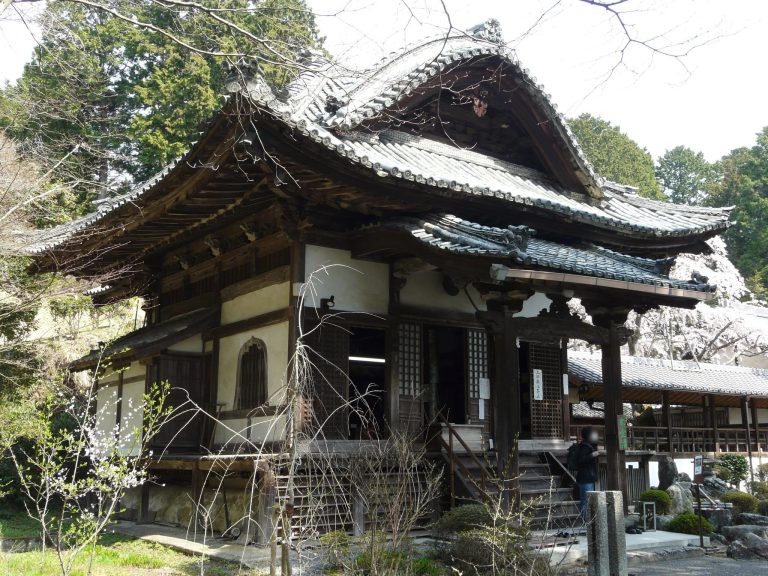
The site includes an Amida Hall, a hall dedicated to Amida Buddha. Its Nio-mon, or gate guarded by the two Nio figures, survived the burning of the temple during the Onin War. The gate therefore preserves a physical element from the pre-rebuilding temple, while the wider compound reflects the reconstruction carried out during the Tensho era between 1573 and 1592.
Buddhist images
The principal image is a wooden seated Medicine Buddha from the Kamakura period, measuring 85.1 centimetres in height. It holds a medicine jar in the left hand and uses the right hand to take medicine from the jar, an unusual pose in representations of the deity. A smaller wooden Medicine Buddha, 9.1 centimetres high, was discovered inside the principal image. This inner statue dates to the early Heian period and has an elaborate halo showing the Seven Medicine Buddhas and the Twelve Divine Generals, protective attendants traditionally associated with the Medicine Buddha.