Ōnominato Shrine: A Historic Shinto Harbor Shrine in Kanazawa


Site at a Glance
- Rating
- 4.3
- Popularity
- Low
- Country
- Japan
- Primary era
- Early Modern
- External website
- Open
- Eras represented
- Early Modern
- Civilizations
- Tokugawa
- Site type
- Religious
- Remains
- Sanctuary
On this page13 sections
History
Ōnominato Shrine is a Shinto shrine in Kanazawa, Japan, dedicated principally to Sarutahiko Ōkami and traditionally founded in 727. Sarutahiko Ōkami is a Shinto kami associated with guidance, crossroads, and the safe passage of travelers. According to tradition, a person named Sana from Mutsu Province encountered the deity during a voyage and established a small sanctuary beside an existing Shinmei Shrine dedicated to Amaterasu Ōkami at Masagoyama in Ono Estate. Amaterasu Ōkami is the Shinto sun kami traditionally regarded as the ancestral deity of the Japanese imperial line. The combined sanctuary became the guardian shrine of the harbor of Ono Township, formerly Miyakoshi and now associated with Kanaiwa.
Early foundation and religious connections
In 729, the shrine received the title Sanatake Daimeijin. It appears in the Engishiki register of 927 as a Shikinaisha of Kaga District and was counted among the minor national shrines. The Engishiki was a tenth-century compilation of imperial regulations and officially recognized shrine names, while a Shikinaisha was a shrine included in that register. Historical names included Sanatake Ōmiya Daimeijin and Saradake Myōjin. By the late Heian period, Sanatake Shrine had replaced Ōnominato Shrine in some records.
During the late Heian period, Ōnominato Shrine was an important subordinate shrine of Hakusan, a sacred mountain and religious tradition of central Japan. The present Sanatake Hakusan Shrine is regarded as a survival of this relationship. The shrine’s connection with Hakusan has also been explored through interpretations linking the names Sanatake, Saradake, and Sara. These explanations remain theories rather than established facts.
Relocation and restoration
A fire destroyed the original sanctuary at Old Ono in 1252. The shrine was then moved about eight cho east, to the former site of Rikyū Hachiman Shrine in Teranaka. The original location reportedly stood near the coast at the foot of a sand-dune area called Saradake. Repeated storms and large waves were said to have eroded the dunes and carried the shrine site into the sea. The former coastal setting was associated with the southern bank of the Sai River estuary around present-day Kanaiwa.
Ōnominato Shrine declined during the Sengoku period, an era of prolonged political conflict and warfare in Japan. The Ikko-ikki disturbances, uprisings involving religious communities and their allies, left the shrine destroyed or in ruins. Maeda Toshiie restored it in 1586. The Maeda family ruled the Kaga domain, and from 1604 Maeda Toshinaga established the recurring dedication of ritual Noh at the shrine. Ritual Noh is Noh theater presented as a religious offering rather than solely as secular entertainment. This tradition has continued for more than four centuries.
In 1639, Maeda Toshitsune, the third lord of the Maeda domain, constructed the shrine buildings and three principal sanctuaries within the precincts. This work established the central arrangement that survives at the shrine today.
Modern recognition and continuing observances
The shrine was classified as a village shrine in 1872 and later received prefectural-shrine status during the nineteenth century. In 1966 it became a Beppyo shrine, a shrine included in a special listing maintained by the Association of Shinto Shrines. In 1982, it was designated a cultural property of Ishikawa Prefecture. The sacred forest, former worship hall, and associated documents have also received cultural-property recognition. The ritual Noh performed during the summer festival was designated an intangible folk cultural property of Kanazawa.
The annual summer grand festival lasts three days and traditionally begins on August 1. It commemorates the shrine’s 525 years at its former location in Ono Township, and the portable shrine is transferred to a temporary sanctuary on the coast. The current schedule uses three days ending on the first Sunday of August. Ritual Noh is also listed for May 15. Ōnominato Shrine has been associated with Shirayama Hime Shrine, the principal shrine in the Hakusan tradition, and is now an independent shrine affiliated with the Association of Shinto Shrines.
Several interpretations have been offered for the shrine’s historical names and origin. Sana has been connected linguistically with a bell and with the transmission of ironmaking technology from northeastern Japan, while Saradake has been treated as the name of the former coastal dune area. These proposals remain explanatory theories.
Remains
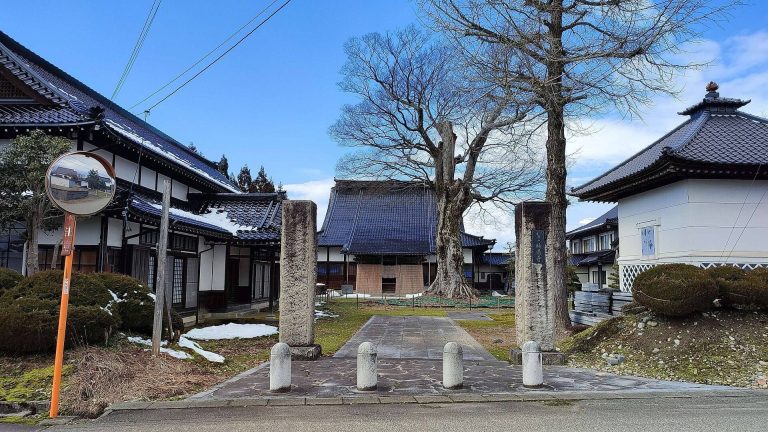
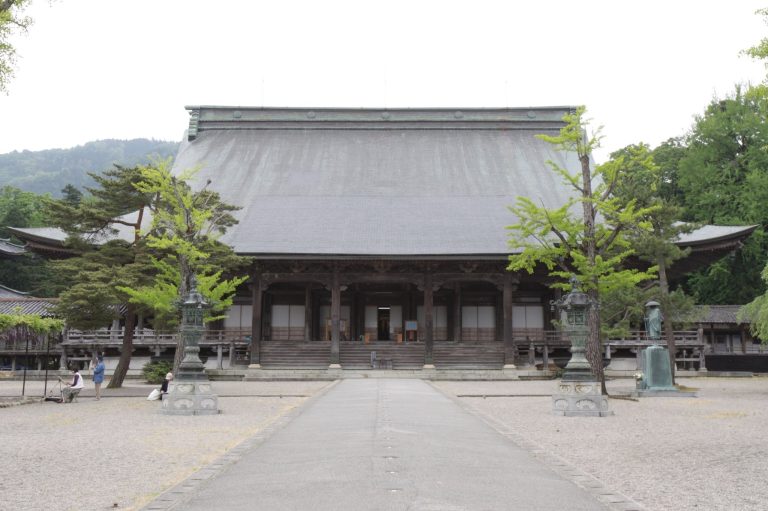
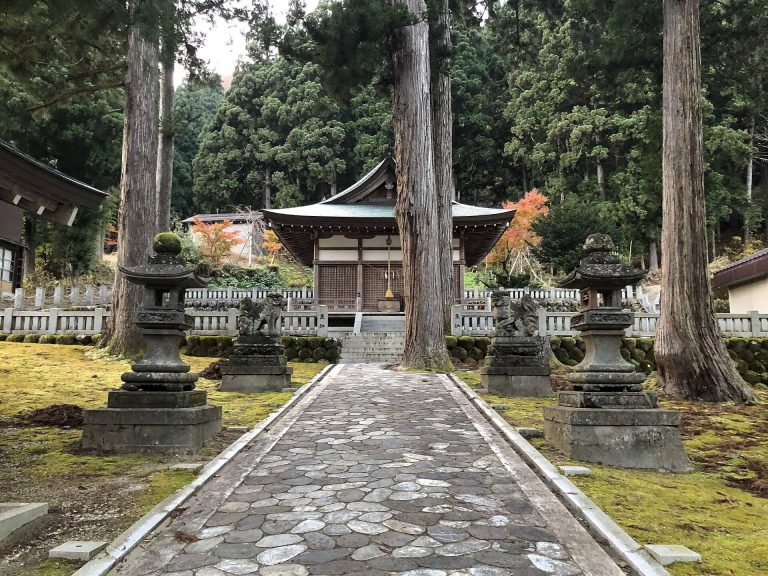
Ōnominato Shrine now occupies the former site of Rikyū Hachiman Shrine in Teranaka, where it was transferred in 1252. The precinct contains three principal sanctuaries, additional associated shrines, a sacred forest, and the former worship hall. The buildings and wooded precinct preserve the shrine’s long development from a harbor guardian to a major local religious institution.
Principal sanctuaries
Shinmei Shrine
The Shinmei Shrine stands on the right side of the three principal sanctuaries. It is dedicated to Amaterasu Ōkami and forms one part of the arrangement created within the precinct in 1639. Its dedication preserves the connection between Ōnominato Shrine and the earlier Shinmei Shrine at Masagoyama.
Sanatake Shrine
The Sanatake Shrine stands on the left and venerates Sarutahiko Ōkami under the Sanatake name. Together with the Shinmei Shrine and the third principal sanctuary, it belongs to the group of buildings constructed in 1639. The Sanatake name reflects one of the shrine’s historical identities, which appeared in records alongside names such as Sanatake Ōmiya Daimeijin and Saradake Myōjin.
Hachiman Shrine
A Hachiman Shrine within the precinct houses Hachiman, identified here with Emperor Ōjin. Hachiman is a widely venerated Japanese deity historically associated with warfare, protection, and the imperial figure Emperor Ōjin. The shrine occupies the former site of Rikyū Hachiman Shrine, whose location became the new setting for Ōnominato Shrine after the 1252 transfer.
Subsidiary shrine and coastal ritual space
Sanatake Hakusan Shrine
The subsidiary Sanatake Hakusan Shrine preserves the physical expression of Ōnominato Shrine’s historical relationship with the Hakusan religious center. Its name combines the Sanatake identity with Hakusan, the sacred mountain tradition with which the shrine was connected during the late Heian period.
Former coastal setting
The shrine’s original setting was associated with Saradake, a sand-dune area near the southern bank of the Sai River estuary around present-day Kanaiwa. Storms and high waves reportedly damaged the dunes, and tradition holds that the original sanctuary was eventually submerged. During the summer grand festival, the portable shrine is transferred from the present precinct to a temporary sanctuary on the coast, maintaining a ritual link with the earlier harbor setting.
Recognized historic components
The sacred forest, former worship hall, and three principal sanctuaries are recognized as cultural-property components of the shrine. The associated documents and the summer festival’s ritual Noh tradition also preserve evidence of the institution’s religious and cultural history, while the surviving precinct embodies the relocation and rebuilding that shaped Ōnominato Shrine after the medieval destruction.