Hypogeum of the Volumnus Family: An Etruscan Family Tomb near Perugia
Site at a Glance
- Popularity
- High
- Country
- Italy
- Primary era
- Classical
- Eras represented
- Classical, Modern
- Civilizations
- Etruscan, Italian
- Site type
- Burial
- Remains
- Tomb
On this page10 sections
History
The Hypogeum of the Volumnus family is an Etruscan family tomb at Ponte San Giovanni, near Perugia, Italy. The Etruscans were an ancient people of central Italy. The tomb was built for the family of Arunte Volumnio, whose Etruscan name was Arnth Velimna Aules. Inscriptions on urns and the entrance doorjamb identify the family and commemorate the Velimna brothers as founders. The Volumnia were an ancient patrician family, part of Rome’s hereditary elite. The tomb’s date is uncertain, but it is generally placed in the second half of the 2nd century BC. It remained in use until the 1st century AD.
The Palazzone necropolis
The tomb belongs to the Palazzone necropolis, a burial ground containing about 200 tombs. Most are Hellenistic, from a period that followed Alexander the Great’s conquests and extended across the eastern Mediterranean and parts of Italy. Some are Archaic, from an earlier period of Etruscan history.
Rediscovery and later history
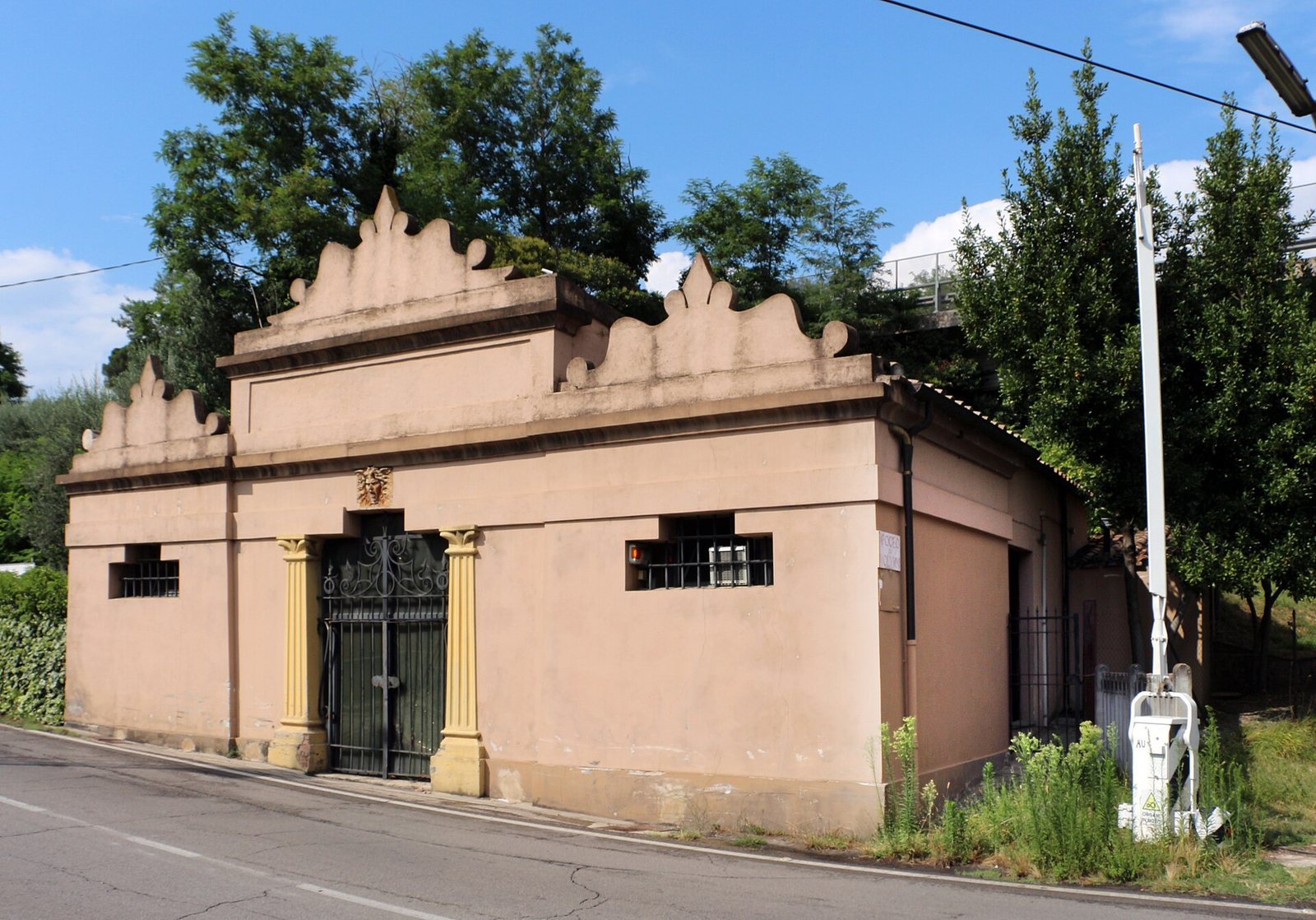
Work on the Via Assisana, the road between Ponte San Giovanni and Perugia, led to the tomb’s rediscovery on 5 February 1840. The Perugian archaeologist Giovan Battista Vermiglioli documented the excavation, and work in the area continued in later years. A protective building was erected over the entrance and served as a small museum. In the 1970s, it was strengthened with reinforced concrete after construction of the Perugia–Bettolle highway viaduct. A full-scale replica of the tomb and its antiquities was also made for the 1900 Universal Exhibition in Paris, in former quarries beneath the Palais de Chaillot.
Remains
Layout and chambers
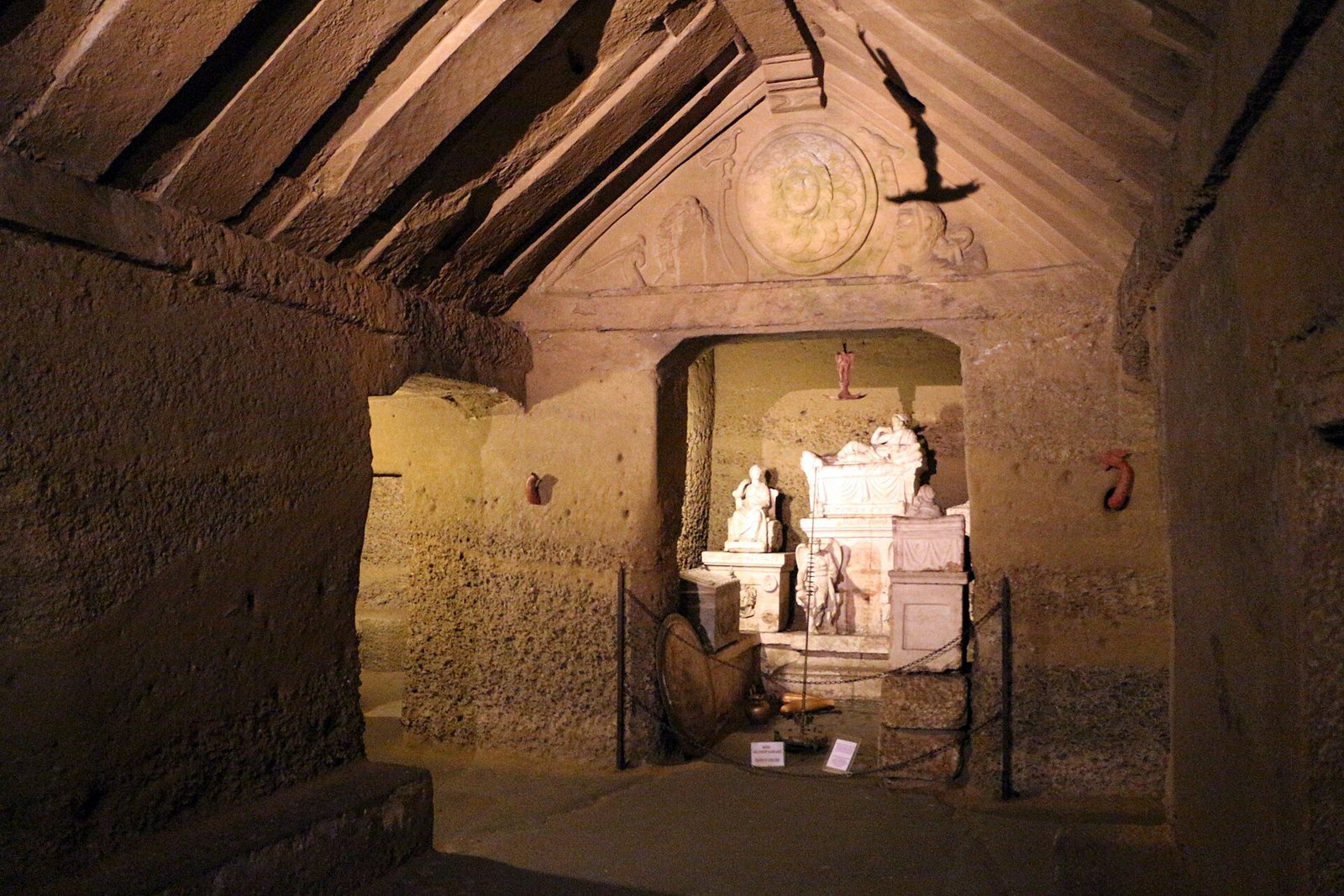
The underground tomb follows the plan of a Romano-Italic house, with rooms arranged around an atrium, or central hall. A stepped passage called a dromos descends several metres to the entrance and a large vestibule. The vestibule opens onto four small side chambers and three larger central chambers; the tomb as a whole is divided into ten chambers. One of the larger central rooms held the principal family burials. The main room, or tablinum (a principal room in a Roman house), contained seven funerary deposits. The hypogeum held eight urns.
Ceilings and wall decoration
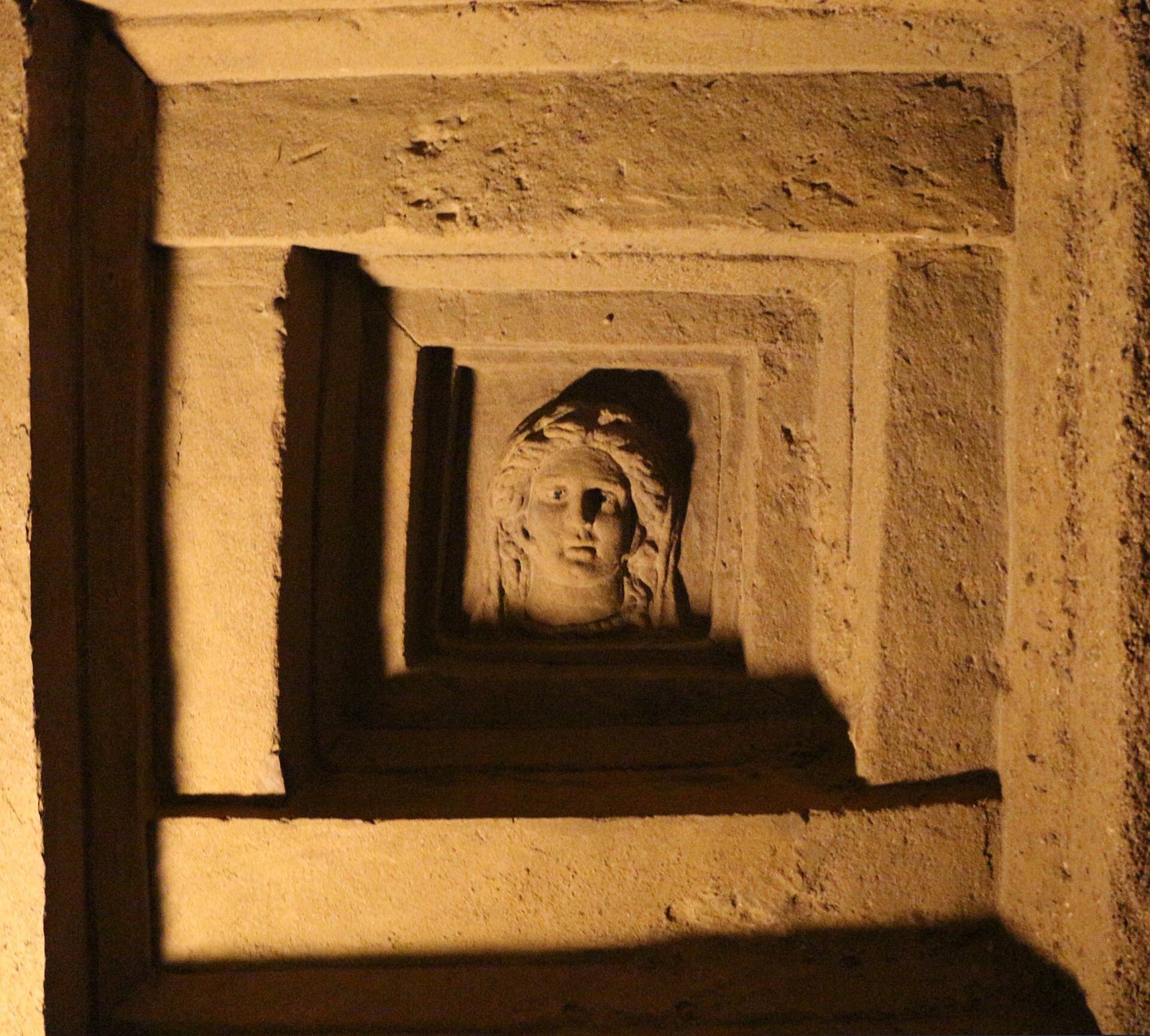
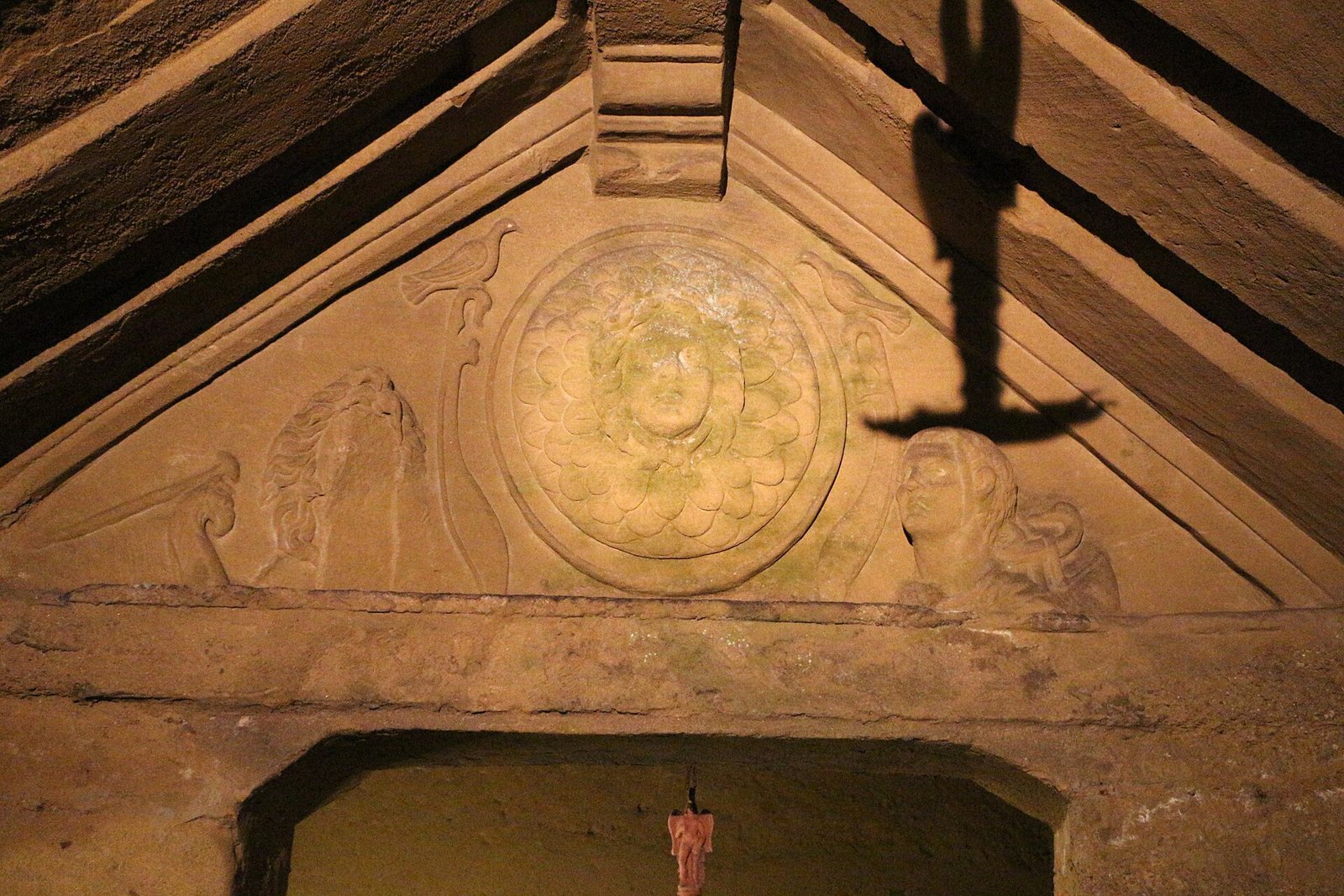
The ceiling of the central chamber imitates a roof with two slopes and wooden framing. Other chamber ceilings carry carved medallions with Medusa heads, while mythological reliefs and scenes of the afterlife decorate the walls and ceilings. Medusa was a Gorgon in Greek mythology, traditionally shown with snakes for hair.
Funerary urns
Urn of Arnth Velimna Aules
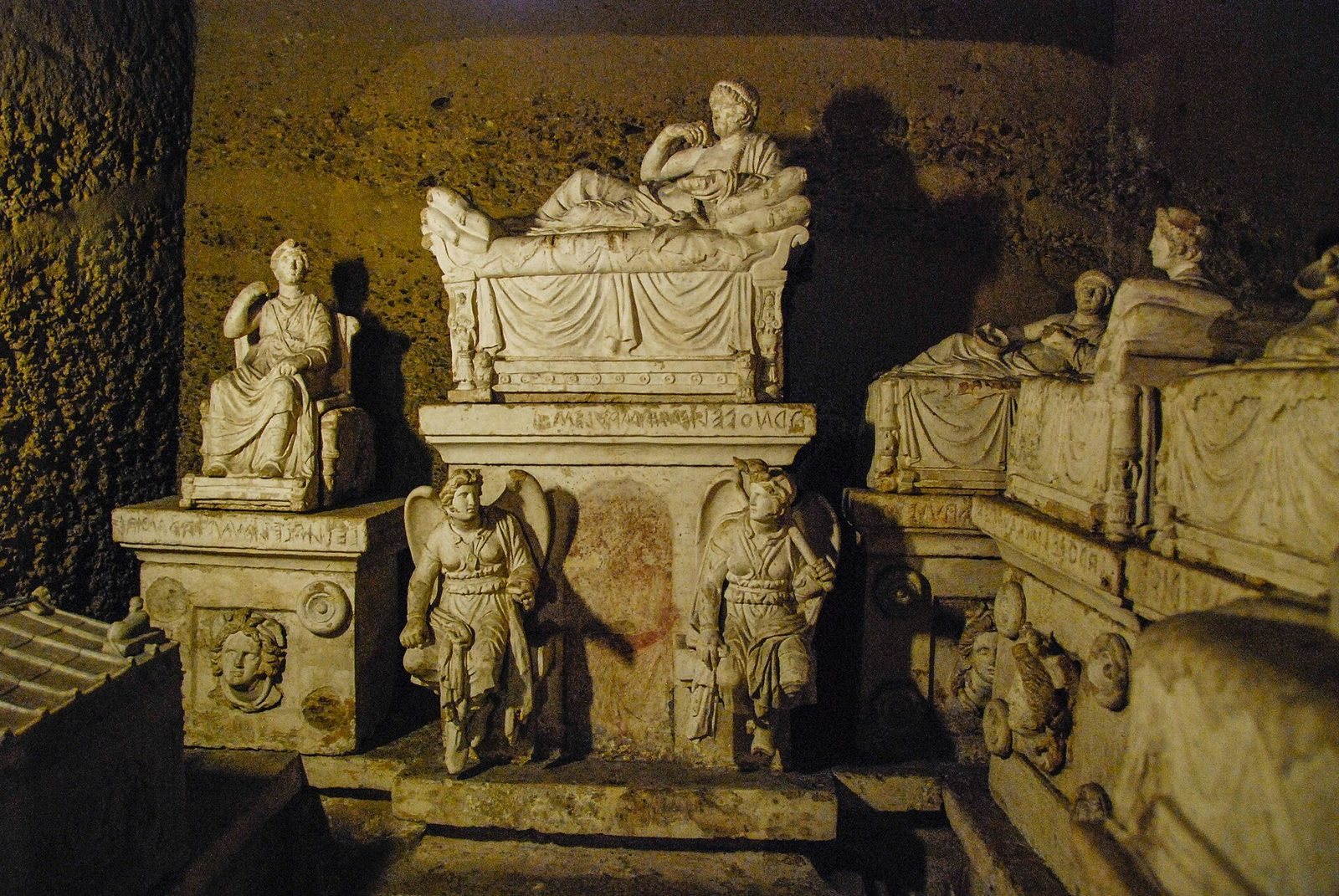
The most imposing urn belonged to Arnth Velimna Aules. Made of stuccoed and painted travertine, it has a cubical base with an inscription along an upper moulding. A double-backed triclinium, or dining couch, surmounts the base. Arnth reclines on cushions, holding a patera, a shallow dish used in ritual, in his left hand. Two winged Lase, spirits in Etruscan religion associated here with the underworld, sit on suspended stools on the base, flanking the remains of an illegible fresco. The fresco shows the underworld entrance as a niche.
Other family urns
Four travertine urns to the right show reclining figures and Medusa heads on their fronts. They are identified with the family’s grandfather, father and brothers. To the left, an urn for the daughter Veilia depicts her seated. A marble urn belonging to the last person buried in the tomb shows a Roman building decorated with relief garlands.
Finds from the surrounding necropolis
Numerous Hellenistic funerary urns from the surrounding burial ground were placed in the entry hall of the protective building. A museum in the wider archaeological area displays urns and other finds from excavations.