Watermill at Kollen: A Historic Gristmill and Oil Mill in Eindhoven, Netherlands
Site at a Glance
- Popularity
- Low
- Country
- Netherlands
- Primary era
- Modern
- Eras represented
- Modern
- Civilizations
- Dutch
- Site type
- Economic
- Remains
- Watermill
On this page8 sections
History
The Watermill at Kollen is a water-powered mill complex on the Kleine Dommel in Eindhoven, Netherlands. Its exact age is uncertain, although pottery fragments dating to 1200–1250 have been found around the mill.
Medieval ownership and milling rights
In the fourteenth century, the mill belonged to the Duke of Brabant, who granted it to Rudolfus Rover van Hoescoet as a fief, property held in return for obligations. The earliest known written reference to the mill dates to 1337, when Rover van Hoescoet sold it to the Lord of Cuijk and Mierlo.
The mill remained a ban mill until the French period (1795–1813), the era of French rule and influence in the Netherlands. A ban mill enforced a local monopoly, requiring farmers in its district to have their produce ground there. The mill was leased to a miller, who could pay rent in money, goods, or services.
Fire and industrial use
A fire destroyed the mill in 1680, but it was operating again the following year. During the industrialization of the second half of the nineteenth century, its work expanded to include pressing oilseed and making cigar boxes. The waterwheel system powered a gristmill on the Eindhoven side and an oil mill on the Nuenen side.
Van Gogh and the mill’s restoration
Dutch painter Vincent van Gogh lived in nearby Nuenen from 1883 to 1885 and painted the mill around 1884. His work, Water Mill at Kollen Near Nuenen, was sold at auction in 1966 for 95,000 Dutch guilders and passed into private ownership. By 2003 it was part of the LeFrak Collection in the United States. In November 2017, the Noord-Brabants Museum bought the painting at a Sotheby’s auction in the United States for €3 million.
The oil mill pressed rapeseed oil until it ceased operating around 1920, then eventually disappeared; the gristmill also fell into disrepair. Eindhoven municipality bought the mill in 1960, but not the miller’s house across Collseweg. The mill became a national monument in 1972. A restoration initiative began in 1975, and Van Gogh’s painting provided a model for reconstructing the oil mill. Restoration and reconstruction were completed in 2003, and on 24 August that year Eindhoven mayor Rein Welschen formally returned the oil mill to operation.
Since 2003, the municipality has leased the mill to the Eindhoven Mills Foundation. Volunteer millers operate it for educational purposes, and it also trains millers with support from the Friends of the Collse Watermill working group. It is one of two working water-powered oil mills in North Brabant, alongside the mill at Kilsdonk.
Remains
Site layout and water control
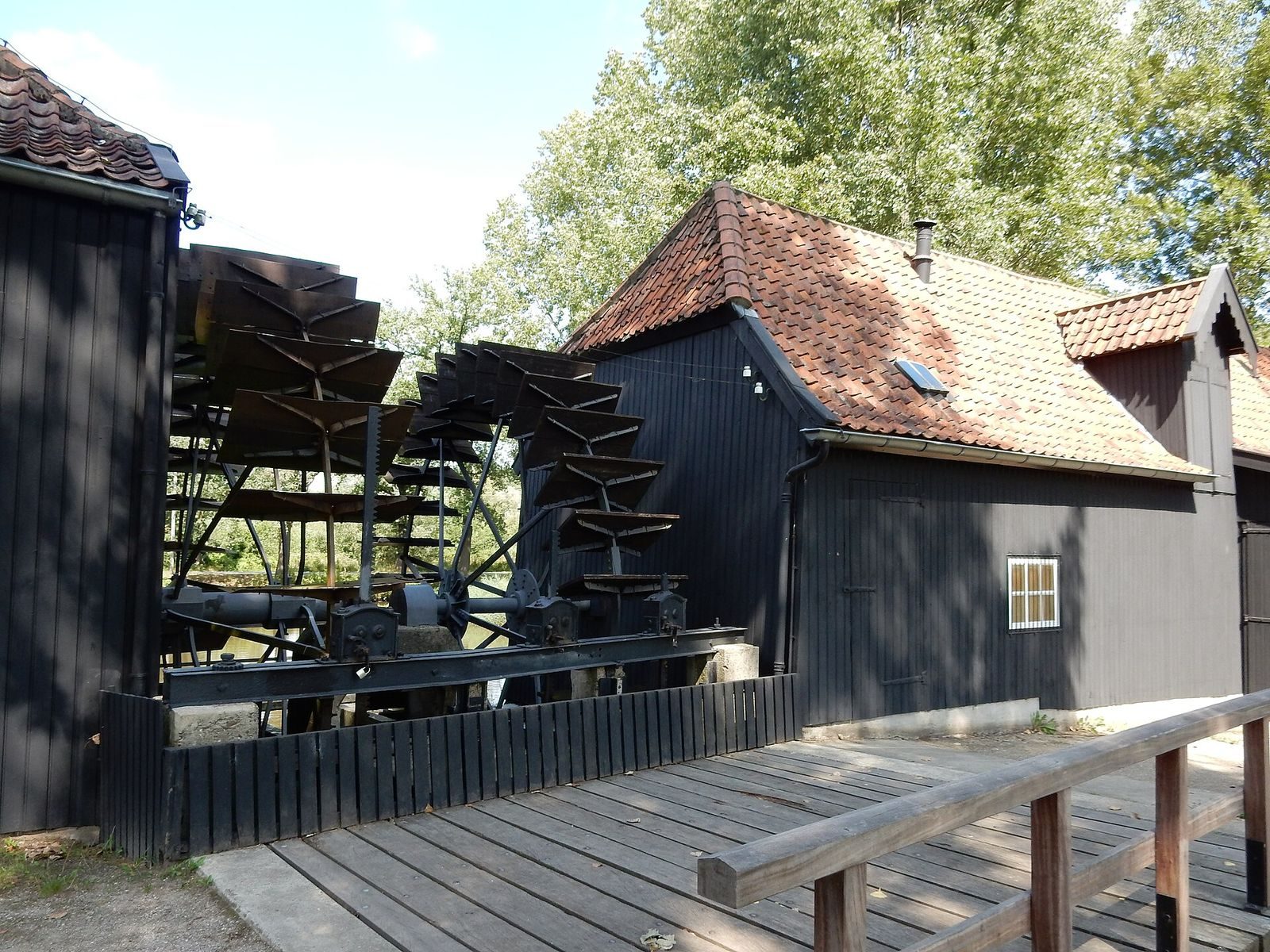
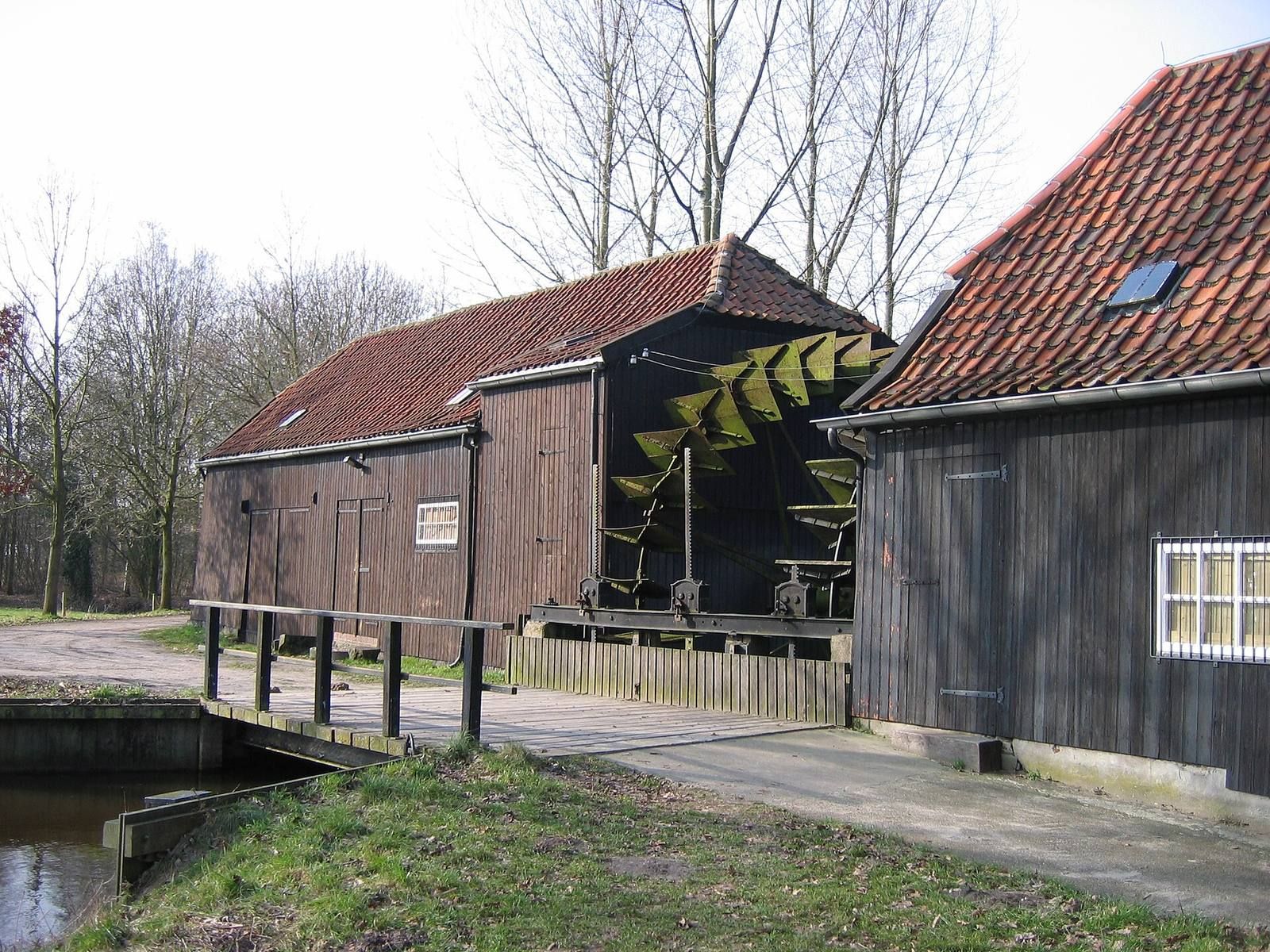
The complex stands in the hamlet of ’t Coll, within Eindhoven’s Urkhoven neighborhood and Tongelre district, near the boundary with Nuenen and close to Eeneind. It comprises two buildings, a gristmill and an oil mill, each with an undershot waterwheel, turned by water flowing beneath it. From the north, the gristmill is on the right and the oil mill on the left; their positions appear reversed when viewed from the south. Marshland in the De Zeggen nature area lies south of the mill along the river. The area is also known as Urkhoven Zeggen or Collse Zeggen. Water is held back to keep the mills working. The level is maintained at the summer setting of 15.76 m throughout the year; a winter level of 16.16 m was formerly used. The roofs have tiles secured with straw pegs.
Gristmill machinery
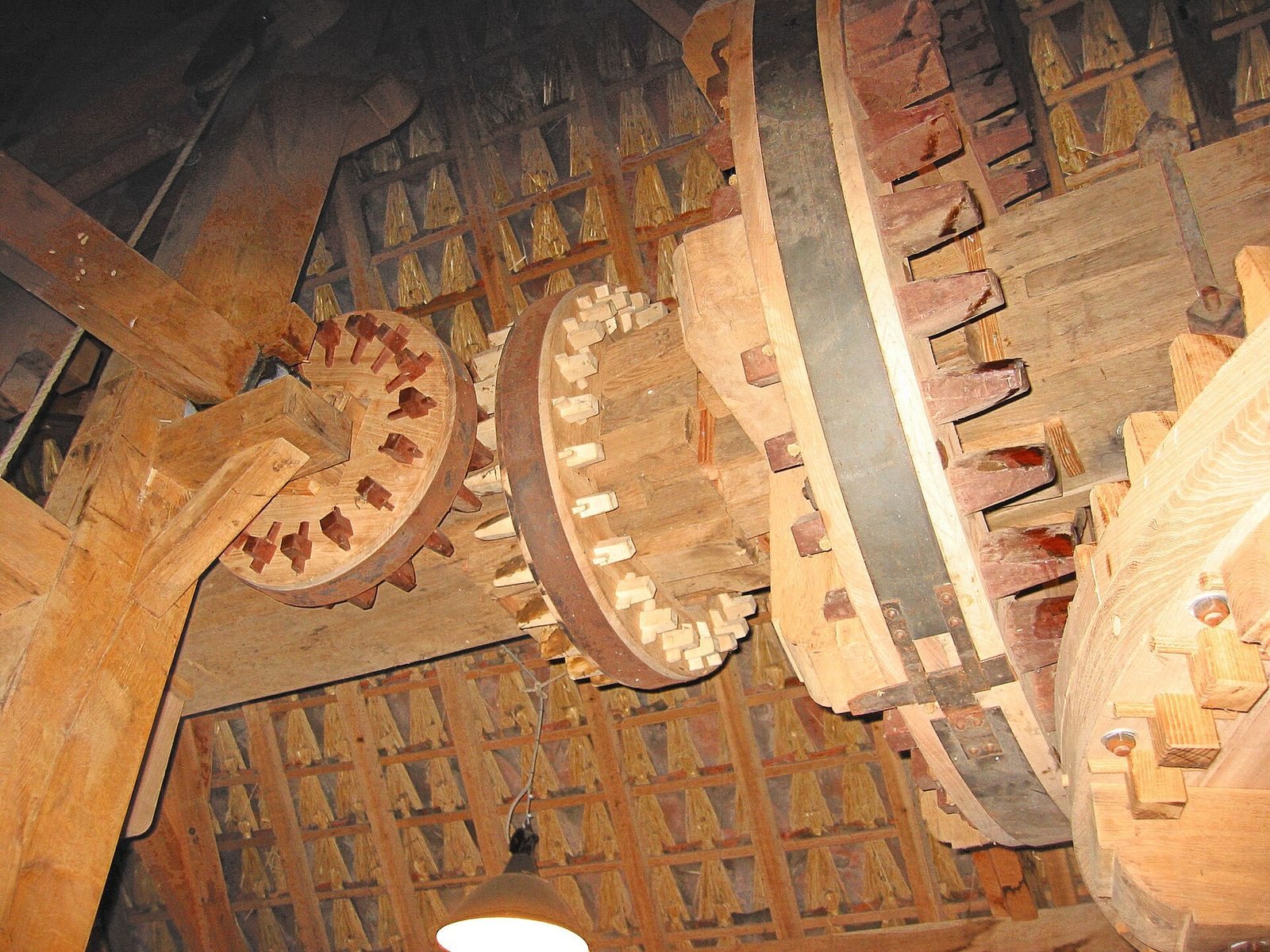
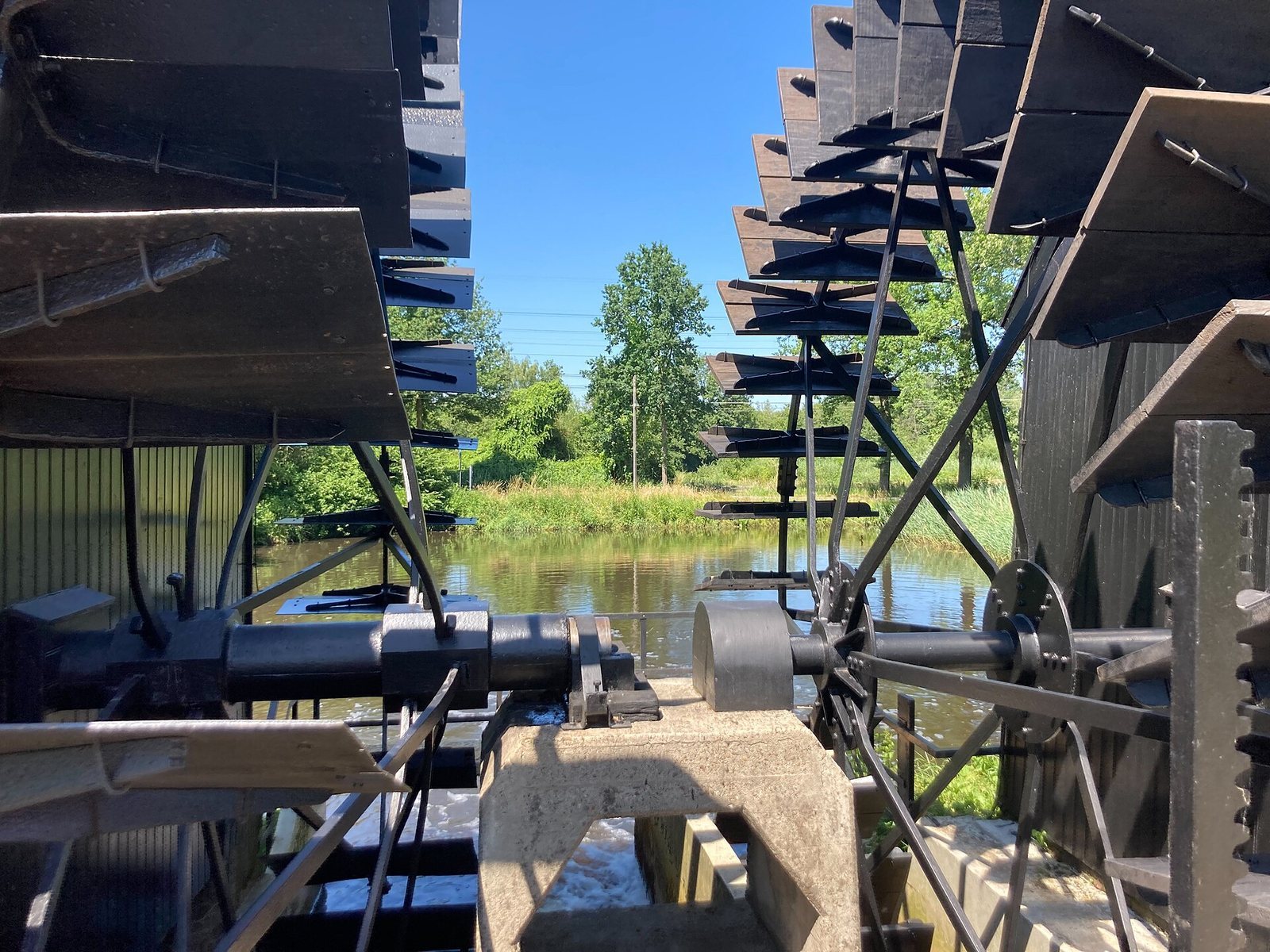
The gristmill has two pairs of artificial-stone millstones, one pair 150 cm in diameter and the other 120 cm. An iron waterwheel turns a cast-iron shaft carrying a drive wheel. The wheel measures 6.56 m across and is 1.25 m wide, with 32 iron paddles; both wheel and paddles were originally made of wood. Its drive train also uses a bevel gear, a vertical power-transmitting shaft, a toothed transfer wheel, and a spindle that turns the millstones.
Oil mill machinery
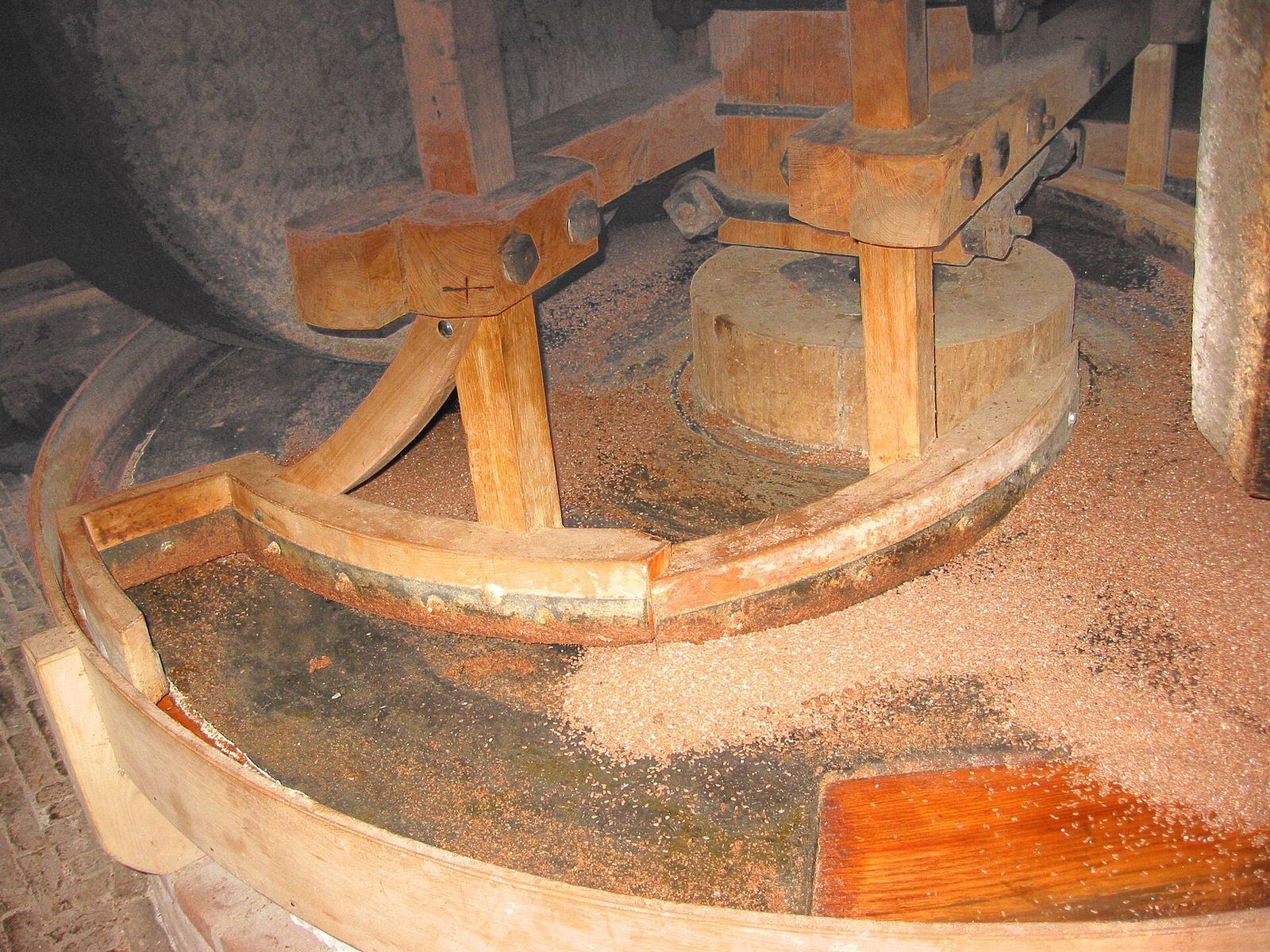
The oil mill’s waterwheel measures 5.64 m in diameter and has wooden paddles. It turns a steel shaft and drive wheel, which engages a wheel on the turning shaft. An iron band and simple brake around the drive wheel can stop the machinery. Gearing drives the stone wheel and edge stones, while a bedstone and runner stone process the seed. Cranks raise the pressing and release hammers. The first-press block is about 2.50 m long and 50 cm high and wide. A hearth on its south side heats the meal, moved by a gear-driven stirrer; scrapers and a discharge slide serve the bed. The press includes hair packing, side pieces, chisels for striking and releasing, and a loading assembly with the release chisel suspended from a rope. The mill produces hot- and cold-pressed linseed oil.