Hradisko svatého Klimenta: A Moravian Hillfort and Pilgrimage Site
Site at a Glance
- Popularity
- Medium
- Country
- Czechia
- Primary era
- Medieval
- Eras represented
- Medieval, Modern
- Civilizations
- Great Moravia, Holy Roman Empire, Margraviate of Moravia
- Site type
- Military
- Remains
- Fortified Town
On this page14 sections
History
Hradisko svatého Klimenta is a fortified settlement and pilgrimage site on the southwestern summit of the Chřiby hills in Czechia. A Slavic hillfort was established here in the first half of the ninth century, during the era of Great Moravia, a major Slavic polity in Central Europe. The site is associated with Moravian history and the tradition of Cyril and Methodius, Christian missionaries linked to the conversion of Slavic peoples.
Early settlement and religious tradition
The hill may have been visited in the Late Bronze Age, although a few pottery fragments not tied to a secure archaeological layer leave earlier activity uncertain. In the ninth century, the fortified settlement became a permanent, self-sustaining Slavic community. Local religious tradition says that Cyril and Methodius brought relics of Clement I, an early pope traditionally regarded as a martyr, from Chersonesus to the site.
A folk account recorded around 1700 by the priest and chronicler Jan Jiří Středovský placed a church’s construction here in 864. In that story, Cyril feared that war might endanger the relics, so he secured a ruler’s permission to build a church in a secluded, wooded place where they could be hidden. This tradition also gave the site its association with the name Mountain of St Clement. Another local tradition connects it with a so-called St Clement tax, attributed to the Great Moravian ruler Rostislav and intended to support the shrine and Buchlov Castle.
After Great Moravia fell, the hillfort served local people as a refuge during conflict and as a lookout over a trade route. Finds indicate occupation in the tenth and early eleventh centuries, when the remaining Slavic monks, sometimes called Moravian black monks, administered the site.
Medieval religious use
The settlement was abandoned in the first half of the twelfth century and occupied again during the fourteenth and fifteenth centuries. An additional building phase is dated uncertainly either to the eleventh century or to the final years of the first third of the fourteenth century; it may have been connected with the construction of nearby Cimburk Castle.
The earliest surviving written record is dated 18 April 1358. In it, Bishop John Očko of Vlašim confirmed that John Henry of Luxembourg, Margrave of Moravia, had given the Brno Augustinians a chapel dedicated to Blessed Clement, pope and martyr. The chapel was described as an old building near Cimburk Castle that had gone without religious services for many years. The gift also included an adjoining building enclosed by ditches. The Augustinians, members of a religious order following the Rule of St Augustine, restored the religious community and rebuilt and enlarged the church. Their Gothic church remained until 1421.
In April 1421, Hussites, followers of a religious reform movement associated with Jan Hus, unsuccessfully attacked Kyjov. On their return, they may have destroyed the Augustinian community at Osvětimany. Damage forced its provost, the officer who headed the community, Petr, to flee with several monks to nearby Vřesovice. Tradition says they stayed for a time at the local fortress, hoping to repair the site and return. Wartime financial levies on the Augustinians prevented the monastery’s restoration, and religious life at Hradisko svatého Klimenta ended after the raid.
Abandonment and later use
Economic activity declined after the religious community departed. Hermits later lived at the site. Around 1500, one of them was the knight Jiřík Smetana of Osvětimany, born around 1450. He had no children, left his property to Protivec of Zástřizly, lord of Buchlov, and withdrew to a woodland retreat. In 1564 the site was pledged to Kyjov, and the monastery ruins were no longer permanently inhabited during the sixteenth century.
From the seventeenth century, local lords took building stone from the ruins for Cimburk Castle, Buchlov Castle and nearby houses. Treasure seekers also repeatedly dug over the central elevated area of the settlement. Despite this disturbance, the place continued to draw pilgrims. In 1770 Středovský visited and described the site. He also reported that substantial church walls still rose above the summit after 1700, and recorded the tradition of a ninth-century church.
Excavation and renewed religious activity
Treasure-seeking excavations by the Petřvald barons, then owners of the Buchlov estate, took place in 1770, and worked stone was removed for reuse. In 1837, Osvětimany parish priest Vavřinec Jugan uncovered church foundations and arranged recovered stones in low walls to indicate the building’s outline. Church paving he found was apparently taken for use in the stables at Buchlovice. Earlier explorations by Vavřinec Sigmund and Josef Fait were followed by investigations by František Přikryl in 1878 and Jan Studeník in 1880; their finds went to archaeologist and speleologist Jindřich Wankel. From 1885 to 1888, the Patriotic Museum Society in Olomouc investigated the hillfort and uncovered masonry from a church-like building. Wankel then attributed it to a monastery of the Cyril-and-Methodius era.
Robert Čechmánek led the first systematic excavation, from 1903 to 1905, seeking the monastery associated with Cyril and Methodius. A burial found behind the altar was locally identified as Methodius’s grave, but an examination in 1950 dated the skeleton to the thirteenth through fifteenth centuries. Tiles and pottery from the excavation also pointed to the fourteenth century. Further investigations included work by the Starý Velehrad Archaeological Society, a 1915 survey by Inocenc Ladislav Červinka, private excavations by Vítězslav Gloza in 1922–1923 and research by the St Clement Association in 1930. In 1942, Vilém Hrubý found Great Moravian pottery near the eastern rampart.
Hrubý began systematic archaeological excavation in 1958 and established that the hillfort dated to the first half of the ninth century. Investigations by Vladimír Ondruš of the Moravian Museum in Brno in 1961–1962 identified several church-building phases and supported the interpretation that its chancel incorporated the earlier chapel. Later work by Robert Snášil and the Dominican priest Jiří Maria Veselý continued the research. In 1989, archaeologist Luděk Galuška uncovered part of a sunken dwelling with a hearth and iron slag, probably a metalworking workshop. Hradisko svatého Klimenta has been a Czech National Cultural Monument since 1999.
In the 1990s, the Community of St Gorazd and Companions, Living Heritage, established the Gorazd School, a Cyril-and-Methodius tradition held during the week around 27 July, the feast of St Gorazd and Companions. An annual pilgrimage takes place at Pentecost, the Christian feast commemorating the descent of the Holy Spirit upon the apostles.
Remains
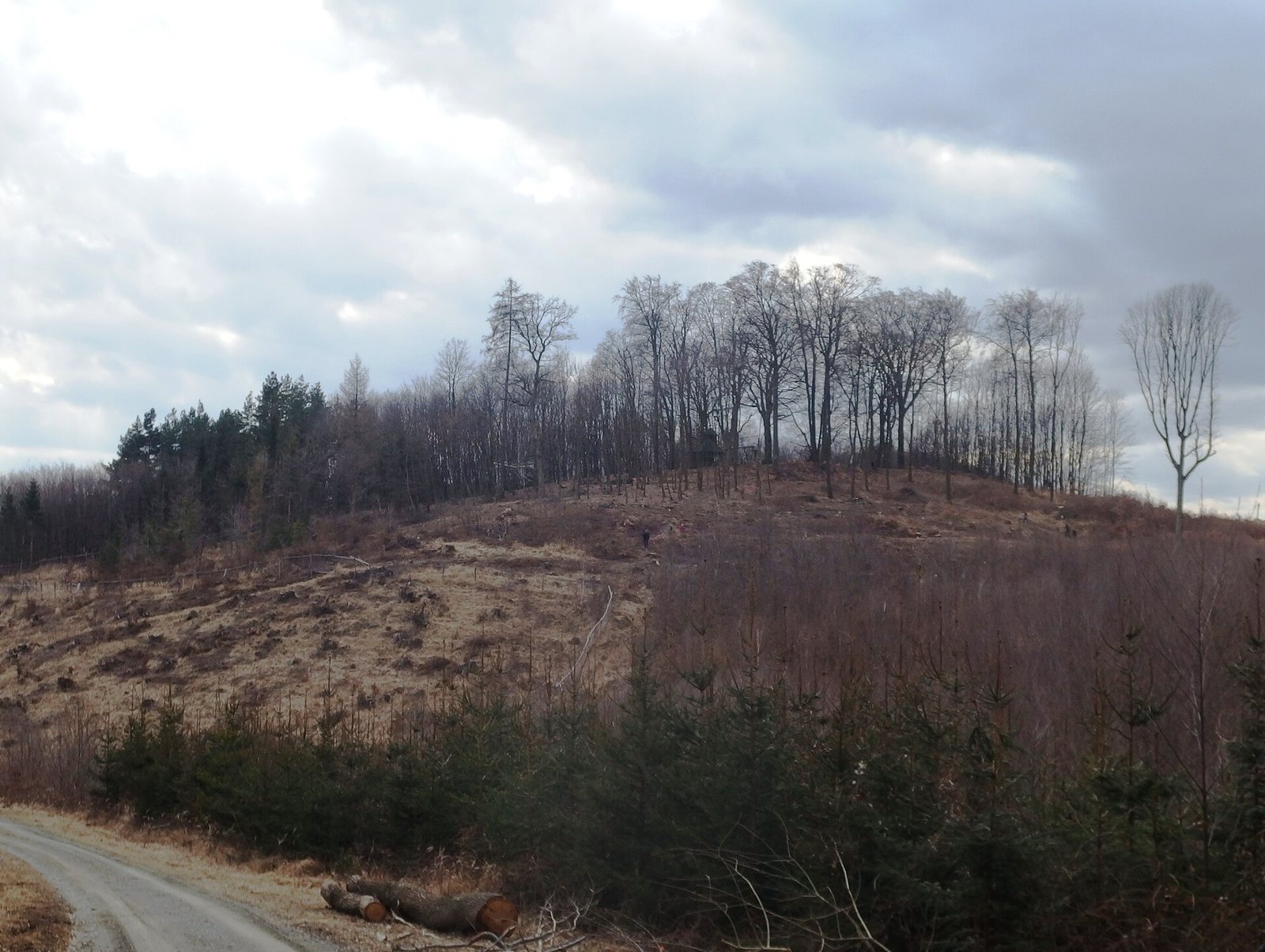
The hillfort occupies a tongue-shaped spur extending from the main ridge and joined to it by a narrow neck. It lies about 4 kilometres northwest of central Osvětimany, at an elevation of 461 metres. The spur is approximately triangular and 1.4 kilometres long. Its position is sheltered by mountain barriers to the east and west, steep slopes leading to the deep valley of the Klimentský Stream, and ravines cut by smaller tributaries. The site also overlooks an old trade route linking the central Morava region with the upper Dyje–Svratka basin.
Hillfort layout and defenses
The spur’s broad central area is fairly level and slopes gently southward, while a conical rise occupies its highest northeastern end. The summit was probably levelled to form an oval platform. An artificial terrace reinforced with sandstone blocks defines its perimeter.
A substantial double rampart, a defensive embankment or wall, enclosed the settlement, with a third defensive line on the eastern side. The inner enclosure covers about 8 hectares, while the outer rampart surrounds about 22 hectares.
Church complex and chapels
Medieval church and earlier chapel
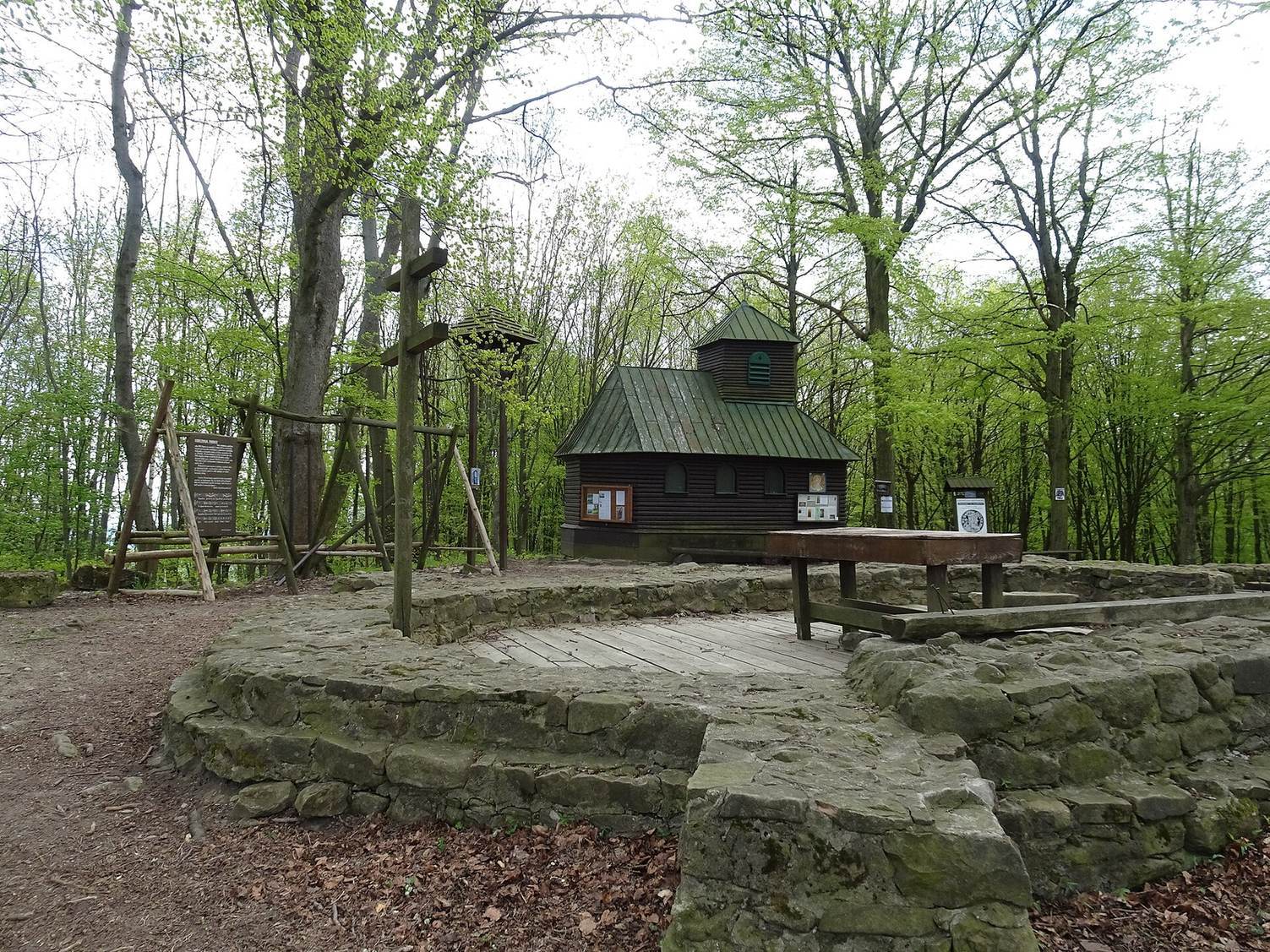
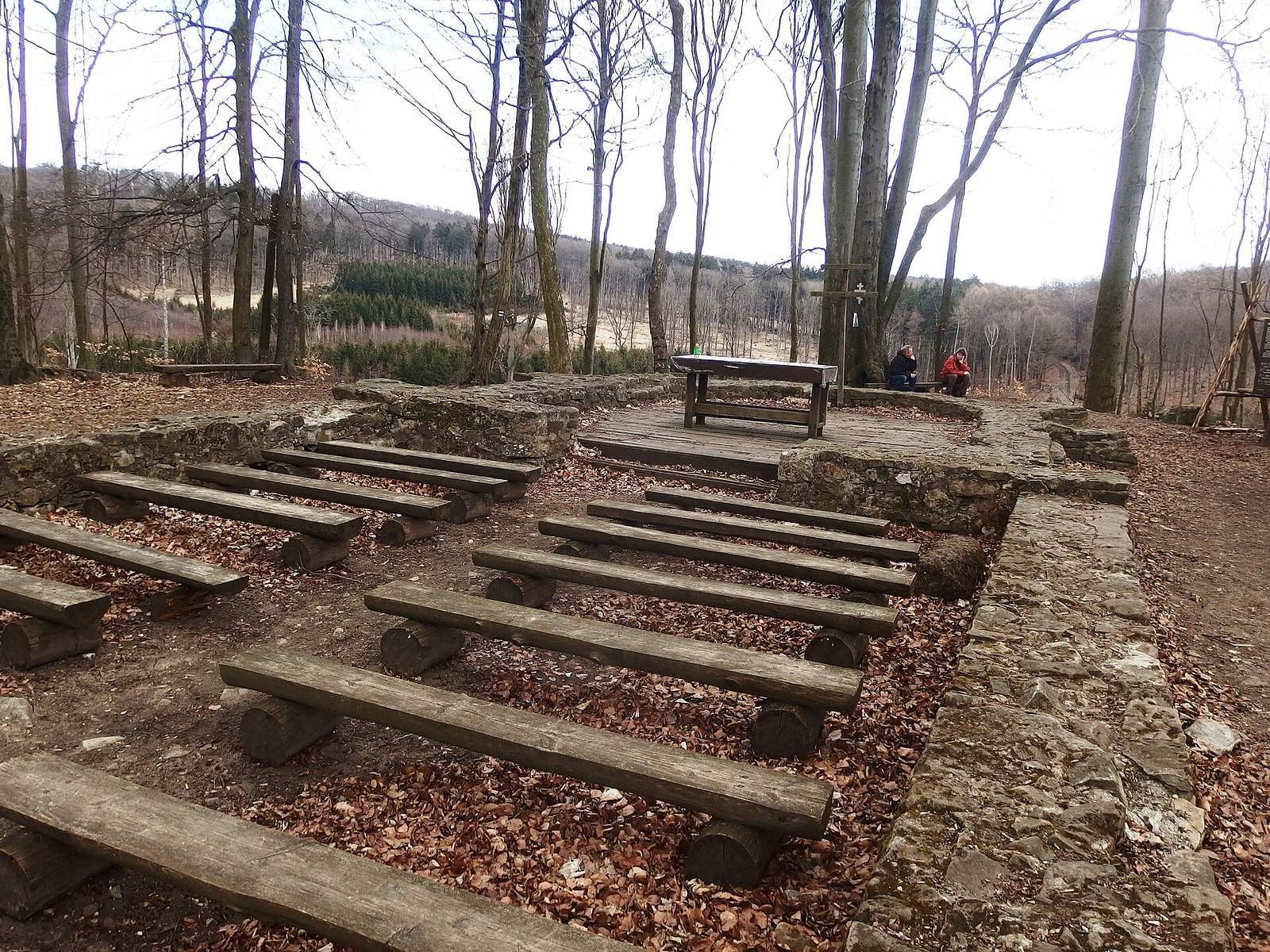
The central elevated area, or acropolis, contains the marked foundations of the medieval church, built over an earlier chapel. Excavations identified several building phases. Six exterior buttresses were made of stone and mortar different from the church wall and were not bonded into it. The chancel, the part of a church around the altar, is interpreted as the surviving portion of the ninth-century chapel dedicated to St Clement. White plaster made with fine mortar and dated to the second half of the ninth century came from the chancel, not from the wider building complex.
Wooden chapel and bell tower
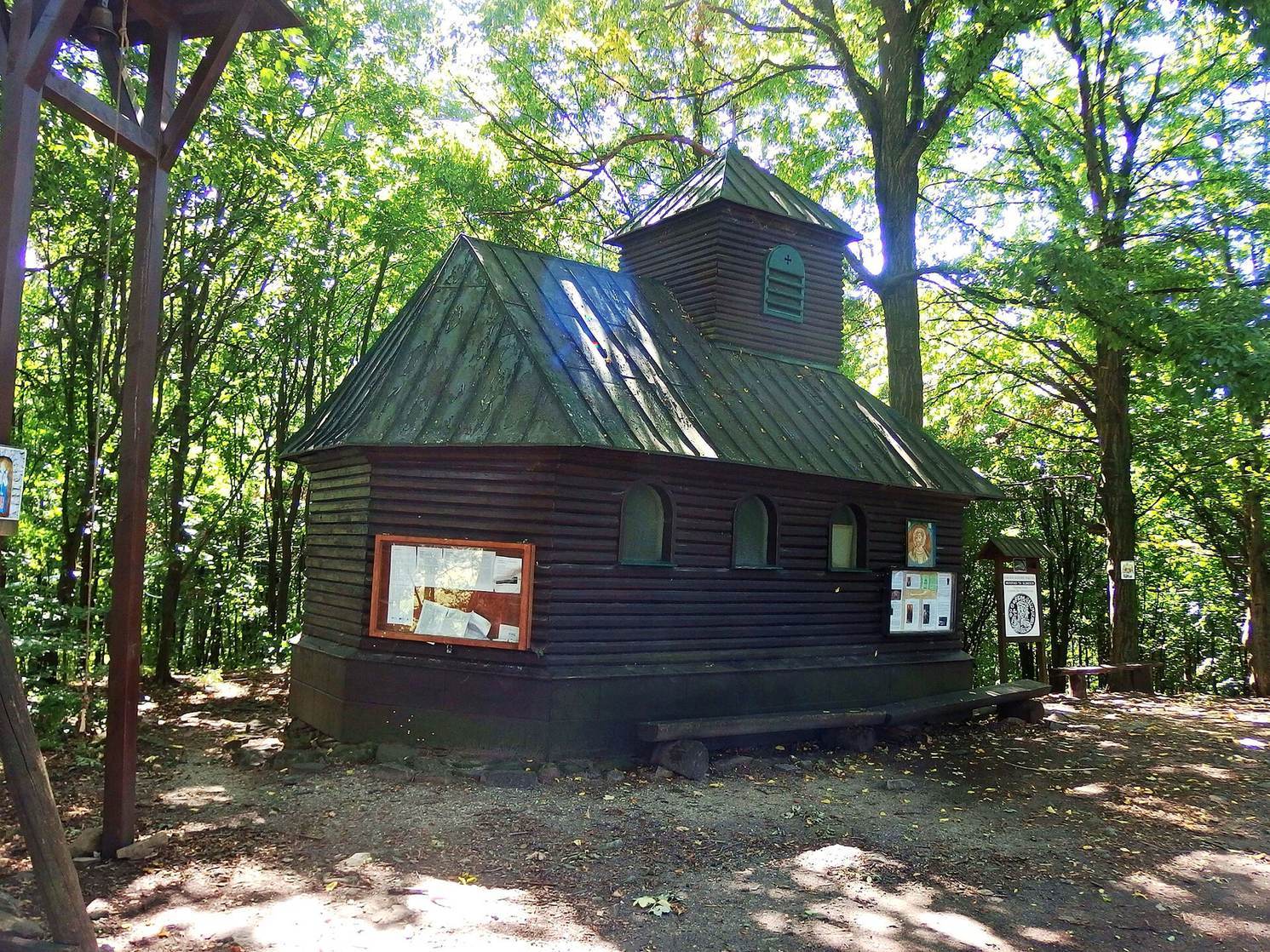
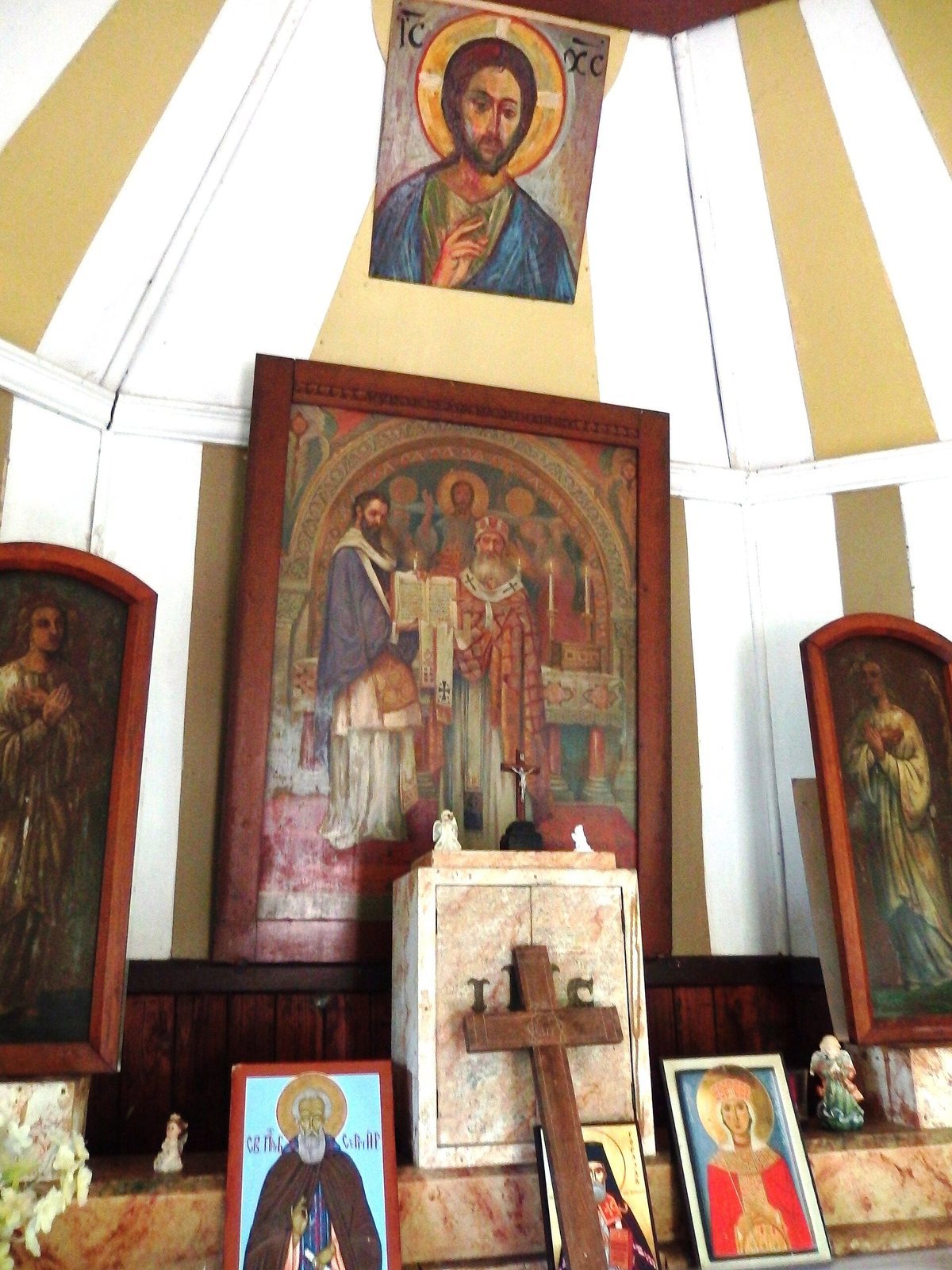
A wooden chapel was built at the site in 1838. From 1880, another chapel stood within the church chancel. Residents of Koryčany, led by Father Stanislav Straňák, built a wooden chapel beside the church foundations in 1964 to replace the one in the chancel. The bell tower of St Gorazd was erected behind it in 1985.
Excavated features and finds
Dwelling and rampart wall
The dwelling partly uncovered in 1989 had a hearth and iron slag, features that suggest it was used for metalworking. About 900 pottery fragments from an earlier phase of the Great Moravian period came from the excavation. Within the rampart, archaeologists also found a stone wall about 80 centimetres wide, probably a stone facing.
Burials
Seven burials were found in the church nave. An eighth, discovered behind the altar on 15 June 1905, contained a small piece of darkened oak that Čechmánek thought might have belonged to a bishop’s crozier, a ceremonial staff. The skeleton was later dated to the thirteenth through fifteenth centuries, rather than identified as the remains of Methodius.
Other archaeological finds
Excavations yielded large quantities of Great Moravian pottery, bones of domestic sheep, goats, cattle and pigs, bone weaving tools, and stone whetstones. Other finds included vessel fragments and pieces of iron. Underground spaces at the site have been interpreted as possible wine cellars.
A gold Byzantine solidus, a coin used in the Byzantine Empire, featuring Emperor Theophilos was found during Gloza’s excavations in 1922–1923. A bell cast in 1521 was discovered in 1691 in the former monastery well, which has since been filled in.