Church and Convent of La Merced: A Mercedarian Basilica in Jerez
Site at a Glance
- Popularity
- Medium
- Country
- Spain
- Primary era
- Early Modern
- Eras represented
- Medieval, Early Modern, Modern
- Civilizations
- Crown of Castile, Habsburg, Habsburg Spain, Spanish
- Site type
- Religious
- Remains
- Basilica
On this page13 sections
History
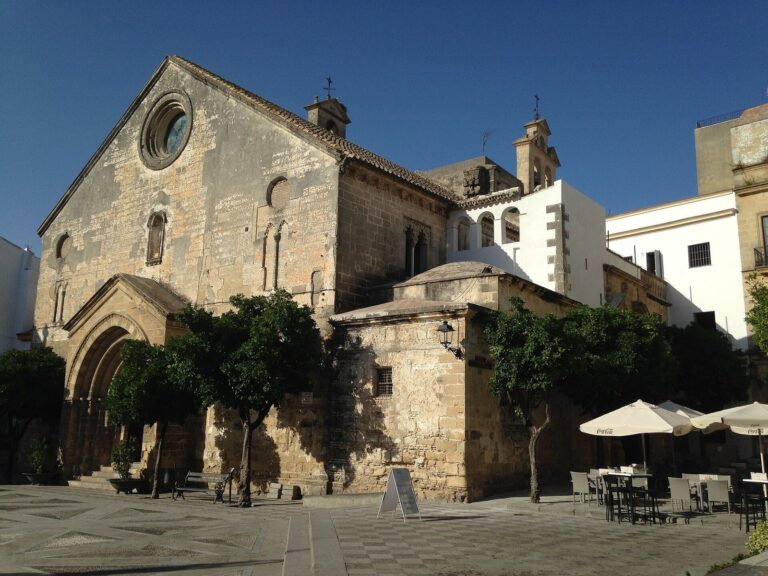
The Church and Convent of La Merced is a Mercedarian church complex in Jerez, Spain, built mainly from the late fifteenth through the sixteenth century in the late Gothic tradition. The Mercedarians, a Catholic order whose work historically included seeking the release of Christians held captive, established a community in Jerez after the city joined the Crown of Castile. Devotion to Our Lady of Mercy later became closely associated with the city.
Mercedarian settlement and Marian devotion
The order’s establishment in Jerez is placed between 1317 and 1345. After the Battle of Salado in 1340, Mercedarians began settling outside the city walls as peacetime made the walls less necessary for protection. Their community was near the former Santiago hermitage, and the monastery is firmly recorded by 1348.
Local tradition gives the convent an earlier foundation, crediting Saint Peter Pascual with promoting it in 1268. In the best-known version, the first building work took place at a former tileworks, where workers found a smoke-darkened image of the Virgin and Child in a niche in a kiln. The discovery was regarded as miraculous. The image became known as Our Lady of Mercy, and the Virgin it represents later became Jerez’s patron. By the early fifteenth century, devotion to her was prominent; around 1410 she was part of religious events in the city.
Occupation and changing uses
During the Spanish War of Independence (1808–1814), Napoleonic troops occupied the convent complex and used it as a barracks. The Mercedarians fled, worship in the church stopped, and its images were transferred to the nearby Church of Santiago for protection.
The convent closed again after the Liberal Triennium of 1820–1823, a period of constitutional liberal rule begun by Rafael del Riego’s uprising. The closure disrupted worship, and the 1836 confiscation of church property led to the Mercedarians’ permanent expulsion. In 1841 the complex became the Municipal Hospital of Saint Elizabeth of Hungary, named in homage to Queen Isabel II and also known as the Hospital of Mercy. The church continued to serve as the hospital chapel, and the Mercedarians later returned to the complex.
Hospital use declined after the General Primo de Rivera Hospital opened and the building suffered structural deterioration, including an internal collapse. The hospital closed in the 1970s, and the complex was subsequently converted into the Santa Isabel de Hungría secondary school.
Basilica status and later history
In 1949 Pope Pius XII elevated the church to Minor Basilica, an honorary status conferred by the Catholic Church. That year, Our Lady of Mercy’s patronage over Jerez and its inhabitants was officially confirmed. Her image was crowned in 1961 after a long procession; its crown was lent in 1968 and later recovered. The church belongs to the Mercedarian monastery and the Diocese of Asidonia-Jerez, and is protected as a Historic-Artistic Monument.
Remains
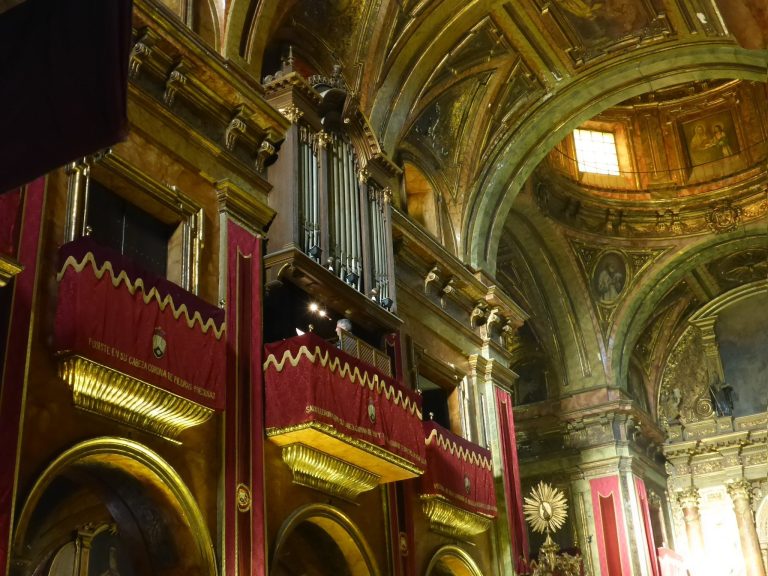
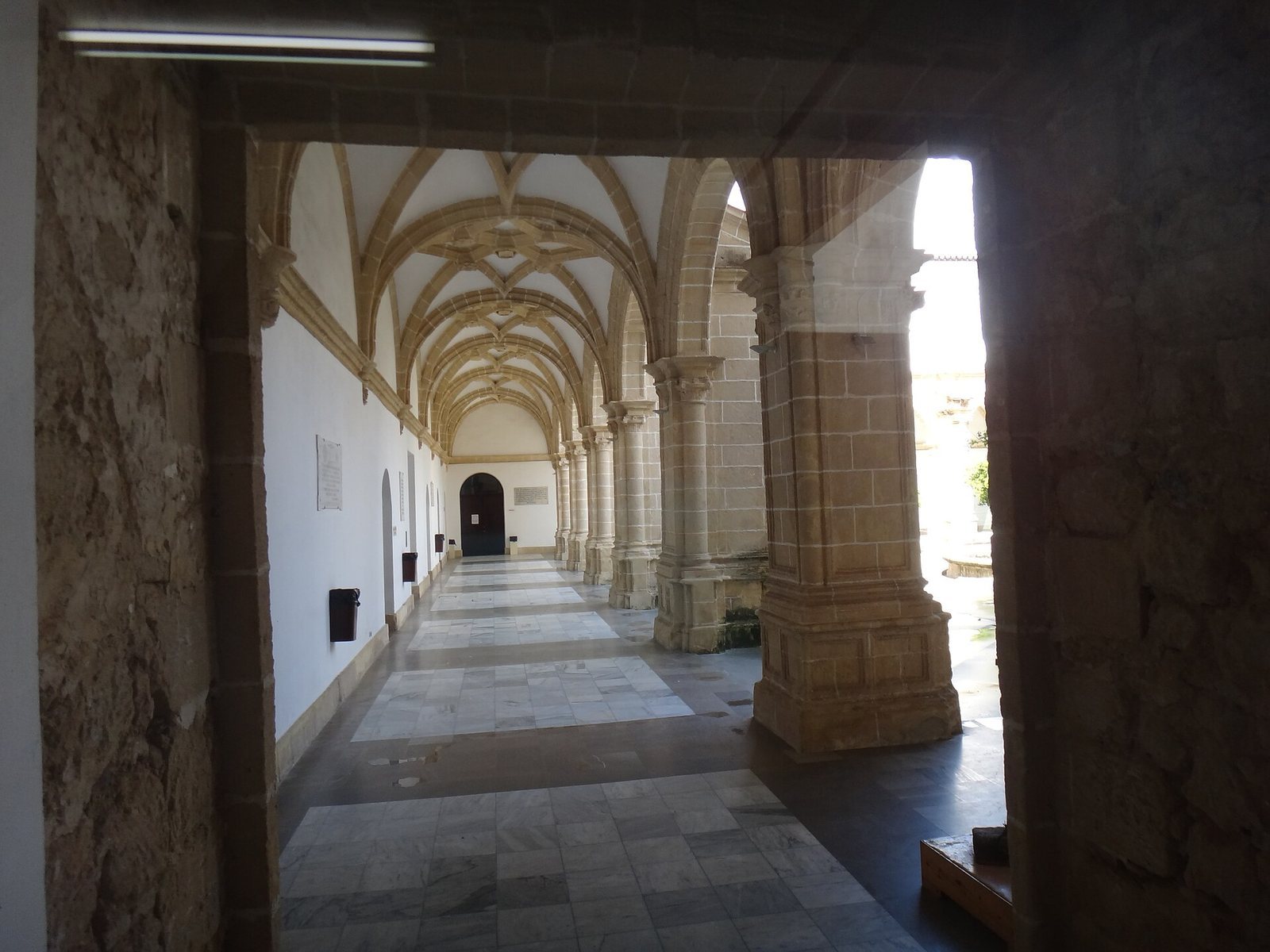
The complex includes a single-nave church in the late Gothic tradition and a main cloister whose vaults retain Gothic features while its supports use Renaissance forms. The church’s chapels, choir, façade, and decorated furnishings reflect later phases of construction and alteration.
Church plan and vaulting
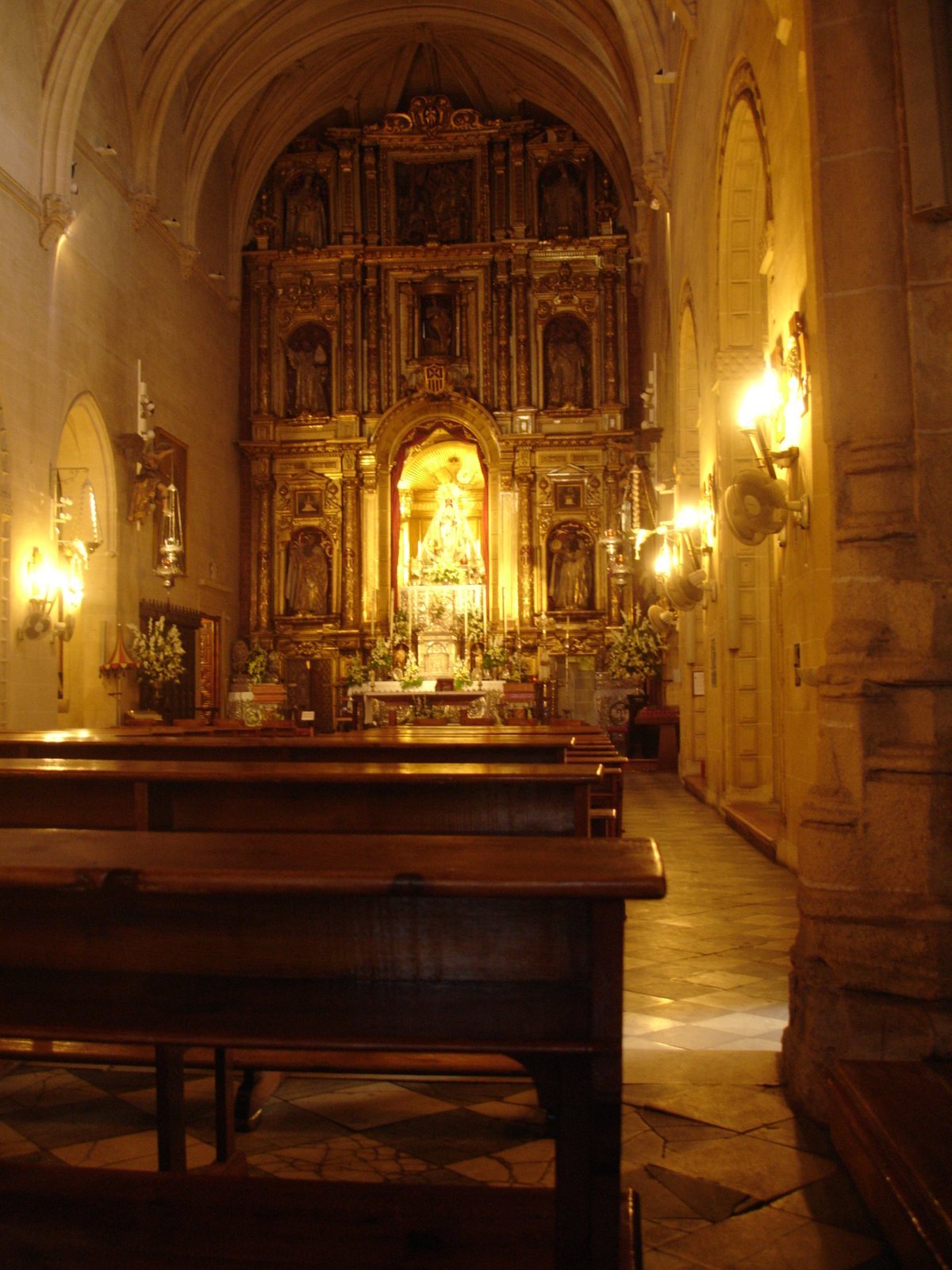
The church has one lengthwise nave, its main interior space, without a cross-arm. Five sections are covered by pointed, sail-shaped vaults. Between the buttresses, six square-plan chapels on each side have ribbed ceilings, formed by intersecting structural ribs. The sanctuary ends in a many-sided space supported at its corners by squinches, structures that bridge corners beneath an upper construction. At the foot of the church, an elevated choir rests on a shallow arch and has a ribbed vault.
Cloister and staircase
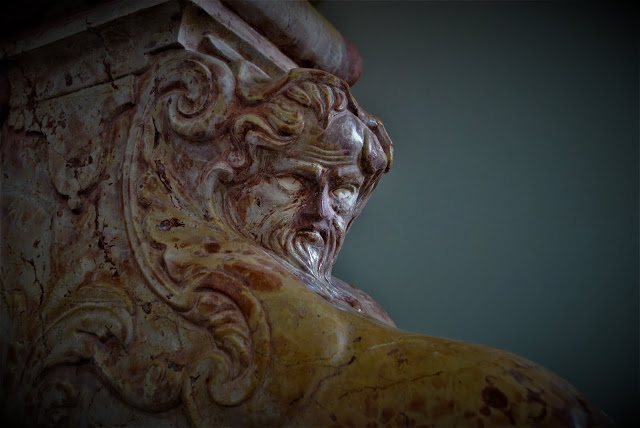
Work on the main cloister began in 1548. It was initially expected to be finished by 1 November 1549, but construction continued after its architect’s death until 1614. The stated cost was 60,000 maravedis, a Spanish monetary unit. The cloister’s combination of Gothic vaulting and Renaissance supports made it the first monastery in Jerez to incorporate Renaissance elements. An additional storey was added in the eighteenth century. Its Baroque staircase was begun in 1749 and completed in 1750, using fossil-rich red limestone; a male sphinx decorates the upper part of its handrail.
Façade and bell structures
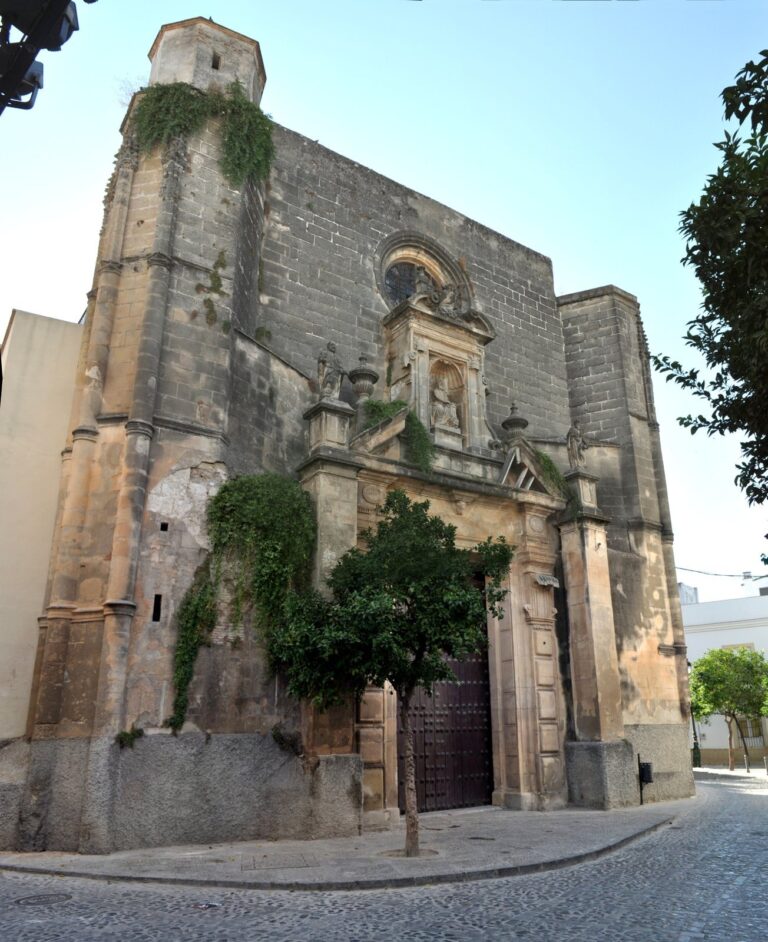
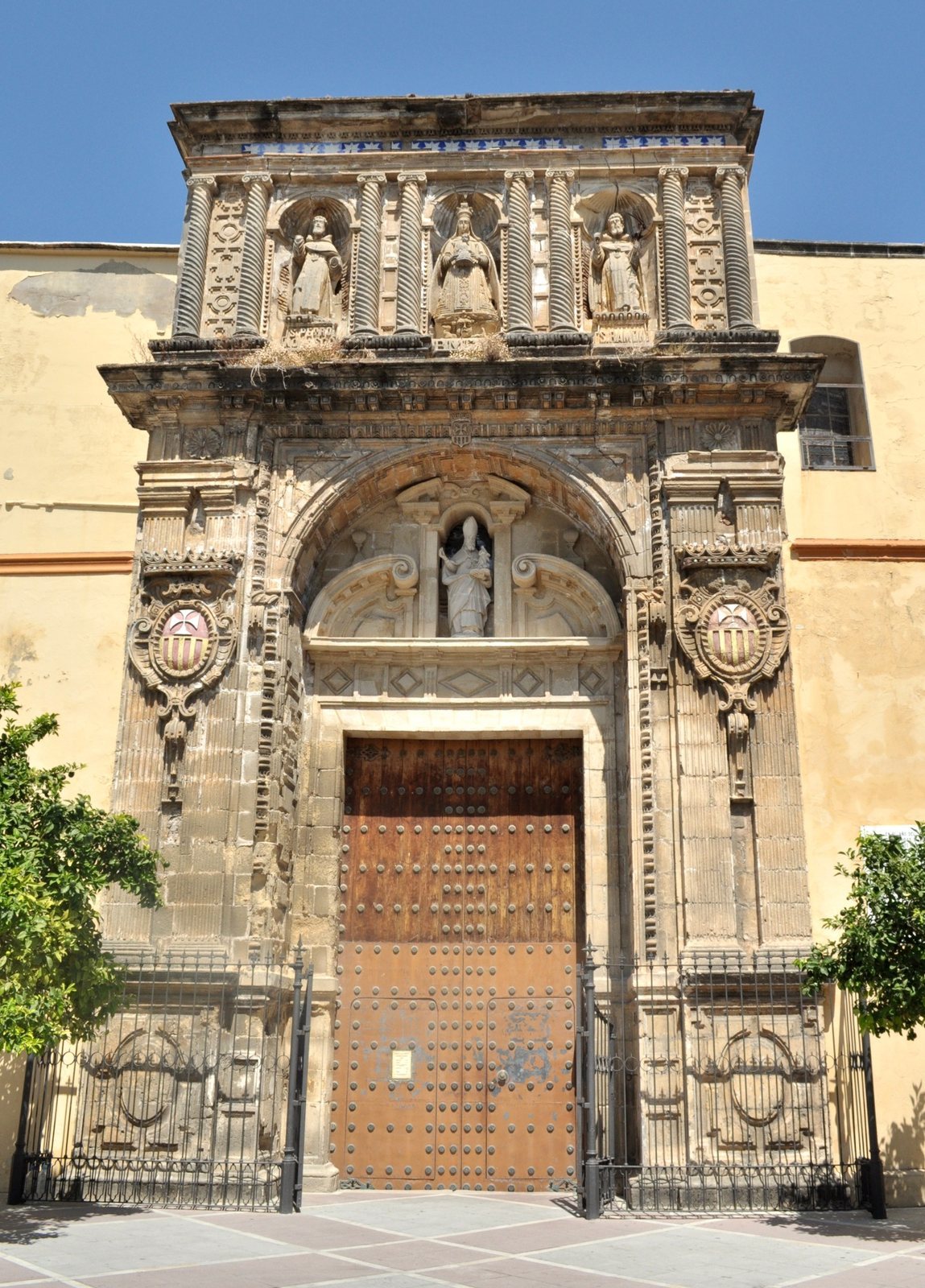
The principal façade faces the Plaza de la Merced from the church’s Epistle side, traditionally the side associated with the reading of the Epistle during Mass. Its underlying structure draws on Renaissance forms, while its decoration is Baroque. In the lower section, large relief medallions with Mercedarian imagery are set between Tuscan-style pilasters, flat columns attached to the wall, on tall bases. The portal has two levels. A recessed doorway sits beneath a curved pediment interrupted at its centre; above it, three niches hold images of the Virgin of Mercy, Saint Peter Nolasco, and Saint Raymond Nonnatus.
A bell gable designed in 1743 once crowned the façade but was removed in the twentieth century. A separate bell tower rises above the roof and is concealed from the adjoining streets. The façade was restored in 2016.
Altarpieces and chapels
Main altarpiece
Francisco Dionisio de Ribas made the main altarpiece between 1654 and 1664, and it was gilded in 1728. The structure has a base, two tiers, and an attic, its uppermost section, framed by richly decorated Corinthian columns with plant motifs. Its central shrine chamber, a dedicated space for a venerated image, contains the Gothic figure of Our Lady of Mercy Crowned. The Virgin holds the Christ Child, who blesses with his right hand and carries an orb in his left.
The altarpiece also includes a tabernacle and figures of Mercedarian saints. Saint Lawrence and Saint Anthony the Abbot stand at the base; Saint Peter Nolasco and Saint Raymond Nonnatus occupy the first tier; and Saint Peter Pascual and Saint Peter Armengol appear in the second. The attic depicts the Virgin’s apparition to James I of Aragon, a thirteenth-century king, with Saint Natalia and Saint Mary of Cervelló at either side.
Riquelme Chapel
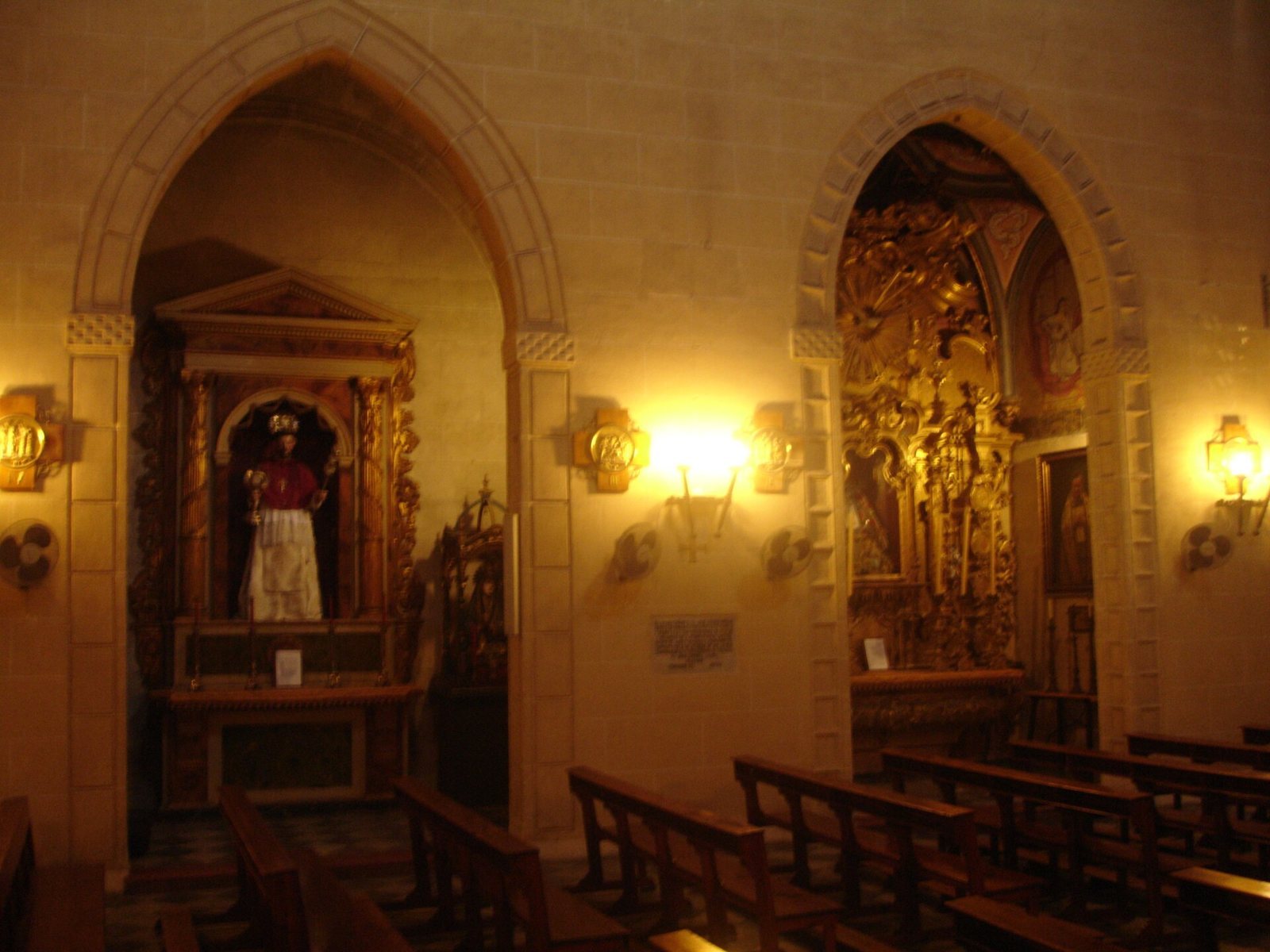
The sixteenth-century Riquelme Chapel served as the burial place of the local aristocratic family of that name. Its nineteenth-century altarpiece is centered on an image called the Mother of God of Mercy, also known as the Queen of Transport and the Transport Brotherhood’s image of Our Lady of Sorrows. The chapel contains a crucifix attributed to Ramón Chaveli Carreres, with the tomb of Miguel Primo de Rivera y Orbaneja at its foot.
Other side chapels
One chapel originally associated with Saint Serapion has an eighteenth-century Rococo altarpiece, an ornate style of that century, presided over by an image of Jesus of Consolation attributed to Jácome Vaccaro. Images of Saint Bartholomew and the Archangel Michael are also present. Saint Serapion’s image is now in another chapel.
A separate chapel has a nineteenth-century Neoclassical altarpiece, a style drawing on classical forms, with Saint Peter Nolasco between Saint Elizabeth of Hungary and the Archangel Raphael. Another nineteenth-century Neoclassical altarpiece is centered on a carving of Saint Raymond Nonnatus by Francisco Camacho de Mendoza. The image of Saint Serapion formerly venerated in his chapel stands to its left.
Relics and processional images
An eighteenth-century altarpiece also serves as a reliquary. It contains a copy of the Shroud of Turin, brought to Jerez in 1572, and is presided over by a small eighteenth-century image of Our Lady of Mercy. Ten other relics arrived in the same year. The church’s image of Our Lady of Mercy is carried in a gold-and-silver shrine made by Juan Díaz de Mendoza in 1648. An image of Our Lady of the Rosary, associated with procession leaders and bearers, is also kept in the church.