Nové Zámky Castle: An Unfinished Renaissance Residence
Site at a Glance
- Popularity
- Medium
- Country
- Czechia
- Primary era
- Early Modern
- Eras represented
- Early Modern
- Civilizations
- Habsburg, Holy Roman Empire, Margraviate of Moravia
- Site type
- Domestic
- Remains
- Castle
On this page5 sections
History
Construction and interrupted work
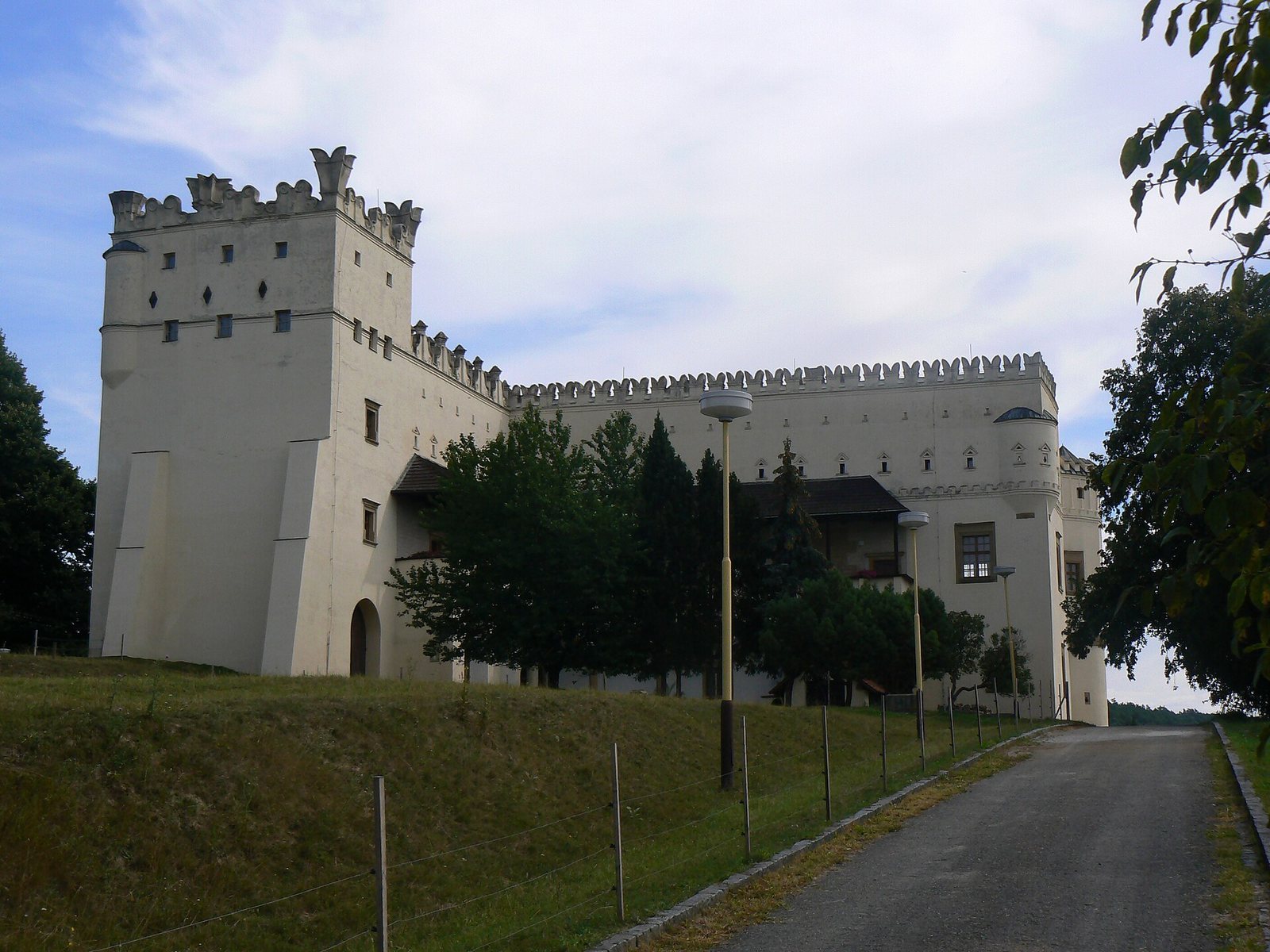
Nové Zámky Castle is an unfinished Renaissance residence east of Nesovice in Czechia. Construction began in 1561 for Záviš von Víckov and Bolerady and his wife, Johanka von Háj. The Renaissance was a European cultural and architectural movement drawing on classical forms and models, which began in Italy. The couple intended the castle to replace Dobročkovice Fortress as the seat of their estate.
Záviš died in 1569, when about a quarter of the castle had been completed. His successor, Přemek von Víckov, carried on the work, but a lack of funds brought the project to a halt. In 1575, Přemek sold the unfinished property to Heinrich and Sigismund von Zástřizl. The brothers soon resold it to the Martinovský von Rozseč family. Ownership changed repeatedly afterward, but construction was never completed.
War and changes of ownership
During the Thirty Years’ War, a major central European conflict from 1618 to 1648, the castle belonged to Adam Kravařský von Šlejvice, a Moravian nobleman who joined the Bohemian revolt against Habsburg rule. After the Battle of White Mountain in 1620, an important early battle in Bohemia during the war, the property was confiscated and sold to Nikolaus Nusser von Nußeck, an imperial chamberlain and court favorite. Swedish forces plundered and devastated the castle in 1645.
Nusser later lost his property and offices for embezzlement. Karl Kaspar von der Leyen received his estates in 1660, and Georg Ludwig von Sinzendorf succeeded him in 1664. Sinzendorf soon sold the castle to Alexander Heinrich von Schleswig-Holstein-Gottorf, commander of the fortress at Uherské Hradiště. Following further ownership changes, Josef Leopold von Petrasch acquired the property in 1750. Petrasch founded the Societas incognitorum, an eighteenth-century learned society in the Habsburg lands, and used the castle for games based on the ancient world. In 1798, Alois Joseph von Liechtenstein bought the estates for 135,000 gulden and incorporated them into the Butschowitz estate, ending the castle’s role as an estate seat.
Later uses and preservation
The castle was later used as a depot and residence, and began to deteriorate. During Liechtenstein ownership, the western part of the north wing was demolished. The Liechtensteins subsequently transferred the property to E. Seidl, owner of the Austerlitz sugar factory. During land reform in the 1920s, the legionnaire Alois Cigánek acquired the castle and estate. A legionnaire was a veteran of the Czechoslovak Legions, volunteer forces formed during the First World War in support of Czechoslovak independence.
A local agricultural cooperative owned the castle during the second half of the twentieth century, when it fell into severe disrepair. Renovation began in the 1970s at the initiative of state monument-preservation authorities, with the aim of preventing its complete decay. After 1990, the regional monument-preservation center took ownership. Following restitution, the Florián family owned the castle from 2002; it was sold in 2004 and serves as a residence.
Remains
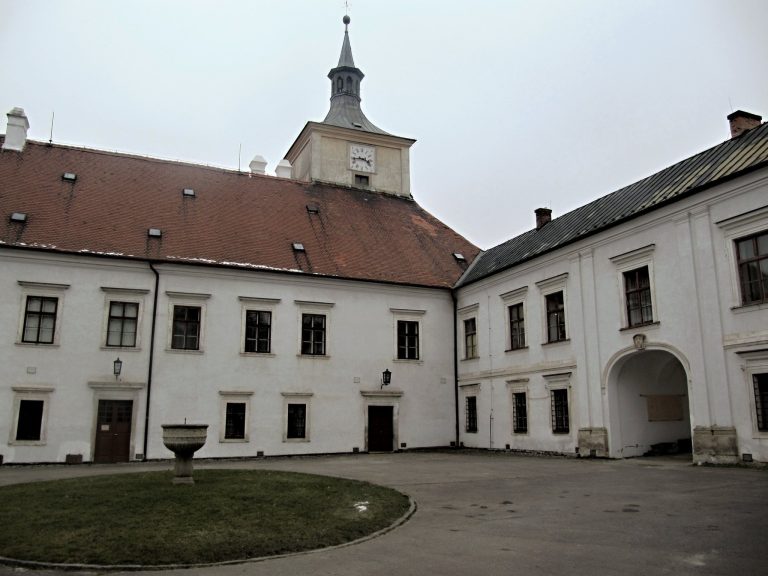
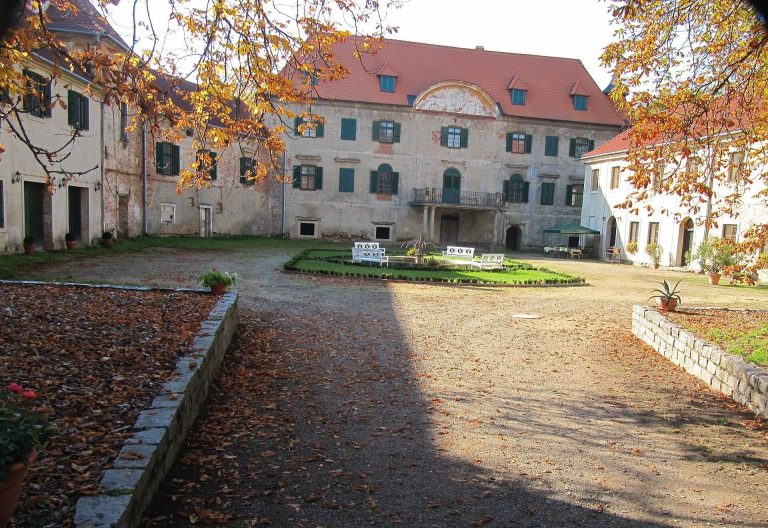
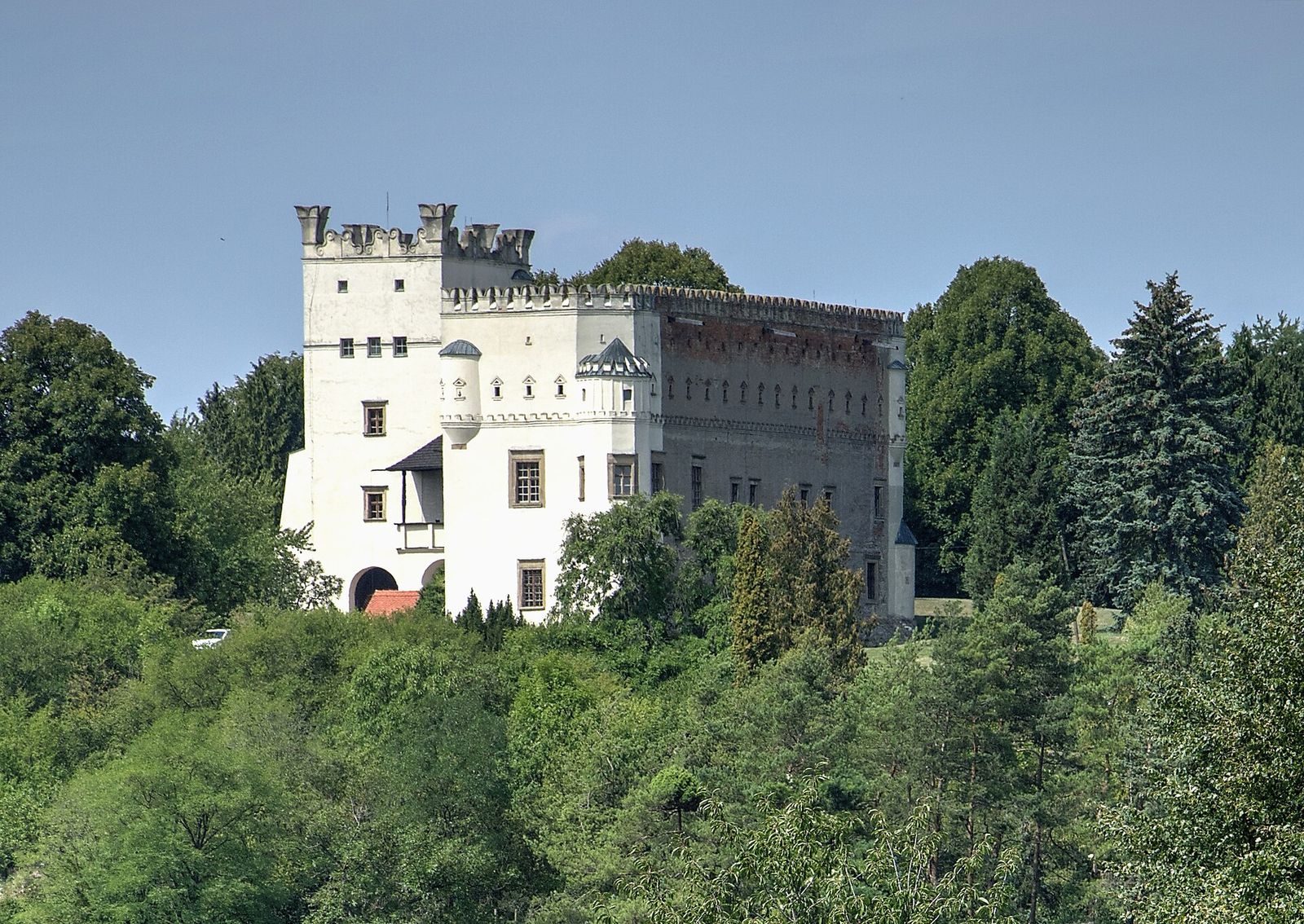
The castle stands on a terrace on the right bank of the Litava River, east of Nesovice. The Litenčické Hills lie to the northeast, the Mars Mountains to the southeast, and the Ždánický Forest to the south. The planned Renaissance complex was to have two storeys and four wings arranged around a rectangular courtyard, with a polygonal, prism-shaped tower. The built work comprises the east wing and half of the north wing. The design is attributed to a builder from northern Italy known as Vlach. He may have been Antonio Ericer, who worked in South Bohemia and South Moravia and was sometimes also called Antonio Vlach, but that identification is uncertain.