Holy Trinity Church in Czaplinek: A Roman Catholic Parish Church
Site at a Glance
- Popularity
- Low
- Country
- Poland
- Primary era
- Medieval
- Eras represented
- Medieval, Early Modern, Modern
- Civilizations
- Holy Roman Empire, Kingdom of Poland, Kingdom of Prussia
- Site type
- Religious
- Remains
- Church
On this page10 sections
History
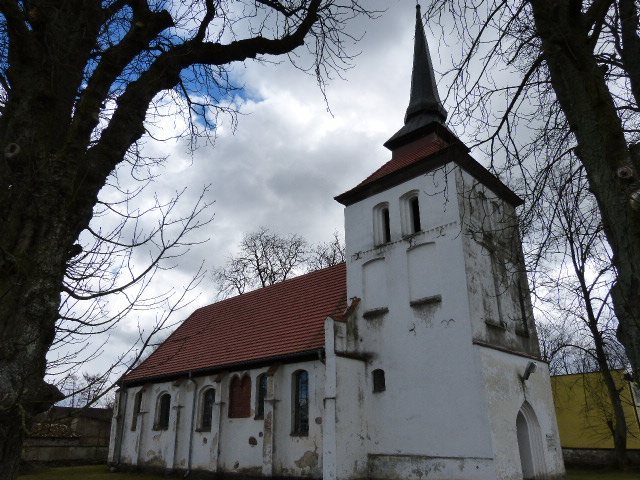
Holy Trinity Church in Czaplinek is a Roman Catholic parish church in Poland. Built around the turn of the fourteenth and fifteenth centuries, it combines Gothic and Romanesque, two medieval architectural styles. The church serves the Holy Trinity parish, within the Barwice deanery (a group of parishes), the Koszalin-Kołobrzeg diocese (a bishop-led church jurisdiction), and the Szczecin-Kamień ecclesiastical province (a grouping of dioceses). Its liturgical feast, the Solemnity of the Holy Trinity, celebrates the Christian doctrine of one God in three persons, Father, Son, and Holy Spirit.
Before the church was built, the site may have held a wooden castle associated with the Templars and Hospitallers, medieval Catholic religious-military orders. A Slavic stronghold may have occupied the site earlier still.
Fires led to repeated rebuilding. In 1725, fire destroyed the church and its former tower. The church was rebuilt in 1726, but the tower was not reconstructed. Local residents call the building the “little church.”
Remains
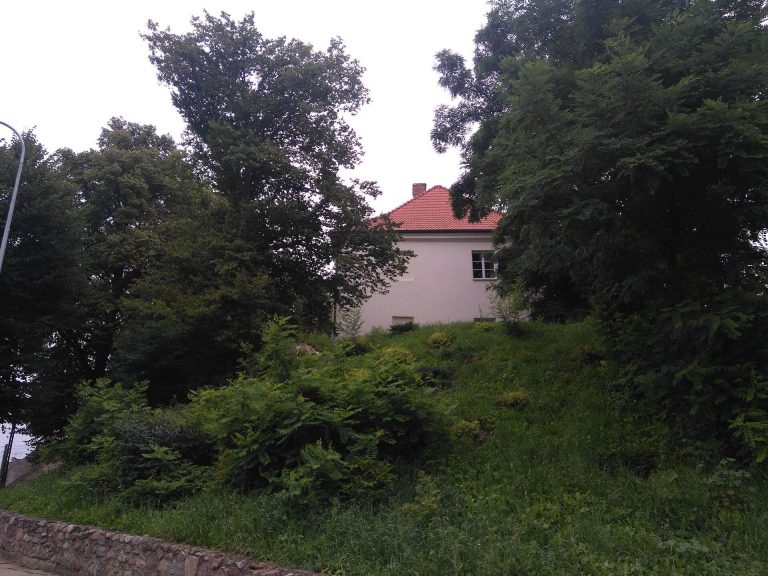
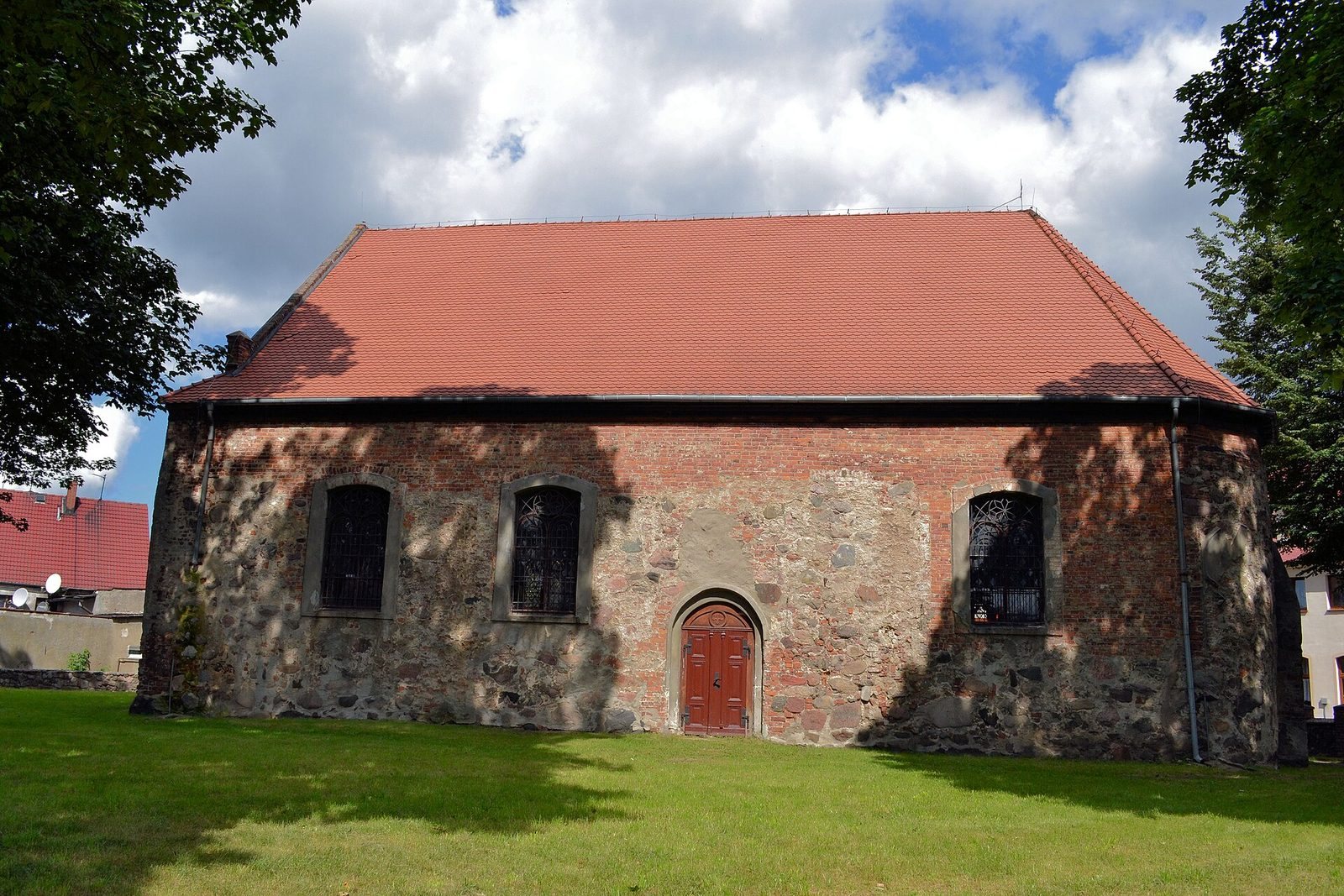
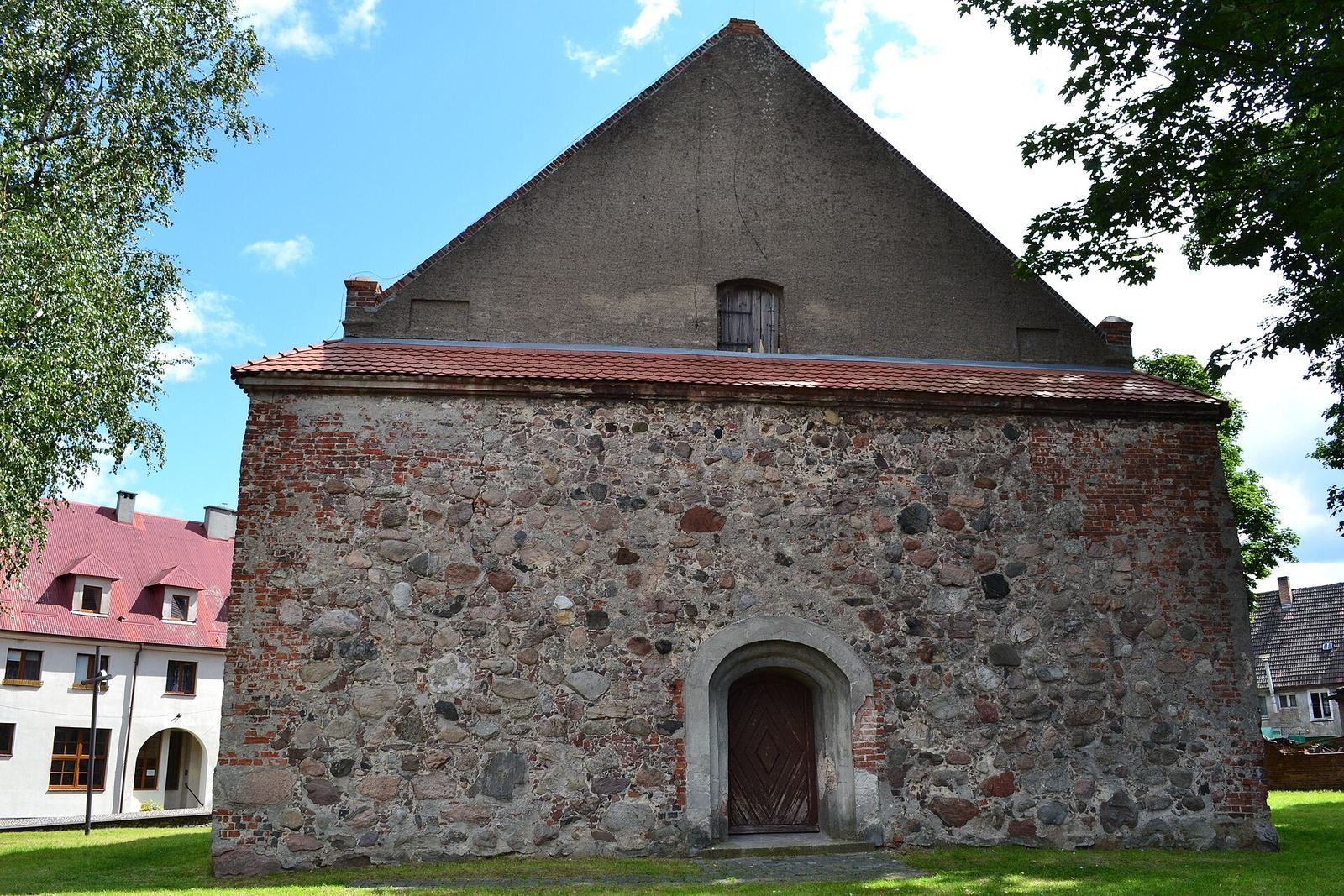
On the Kazimierzowski rise, the compact church is a single-nave fieldstone building, with a separate bell frame beside it.
Church fabric and bell support
Main building
Its plan follows a liturgical axis, the line organizing the building for worship. Repeated rebuilding has obscured the church’s original form.
Bell tower
A framed bell tower beside the church supports an eighteenth-century bell.
Interior furnishings
Altars
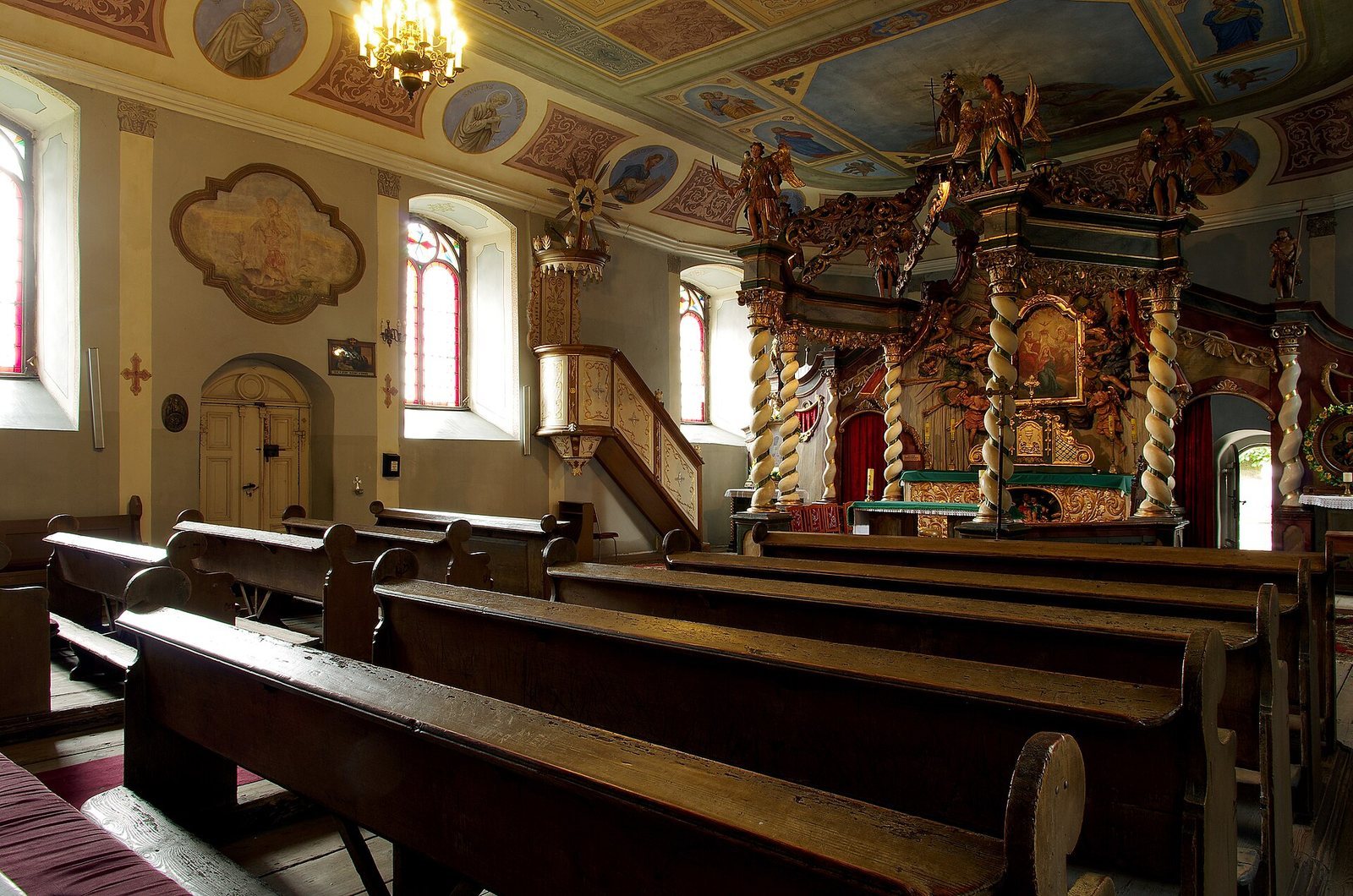
The church has three altars. One is a Baroque-style canopy altar, with a gilded wooden cover resting on six columns and decorated with angel figures. Wings were added at its sides in the nineteenth century.
Pulpit
A wooden pulpit in the Classical style was made in 1823.
Painted decoration
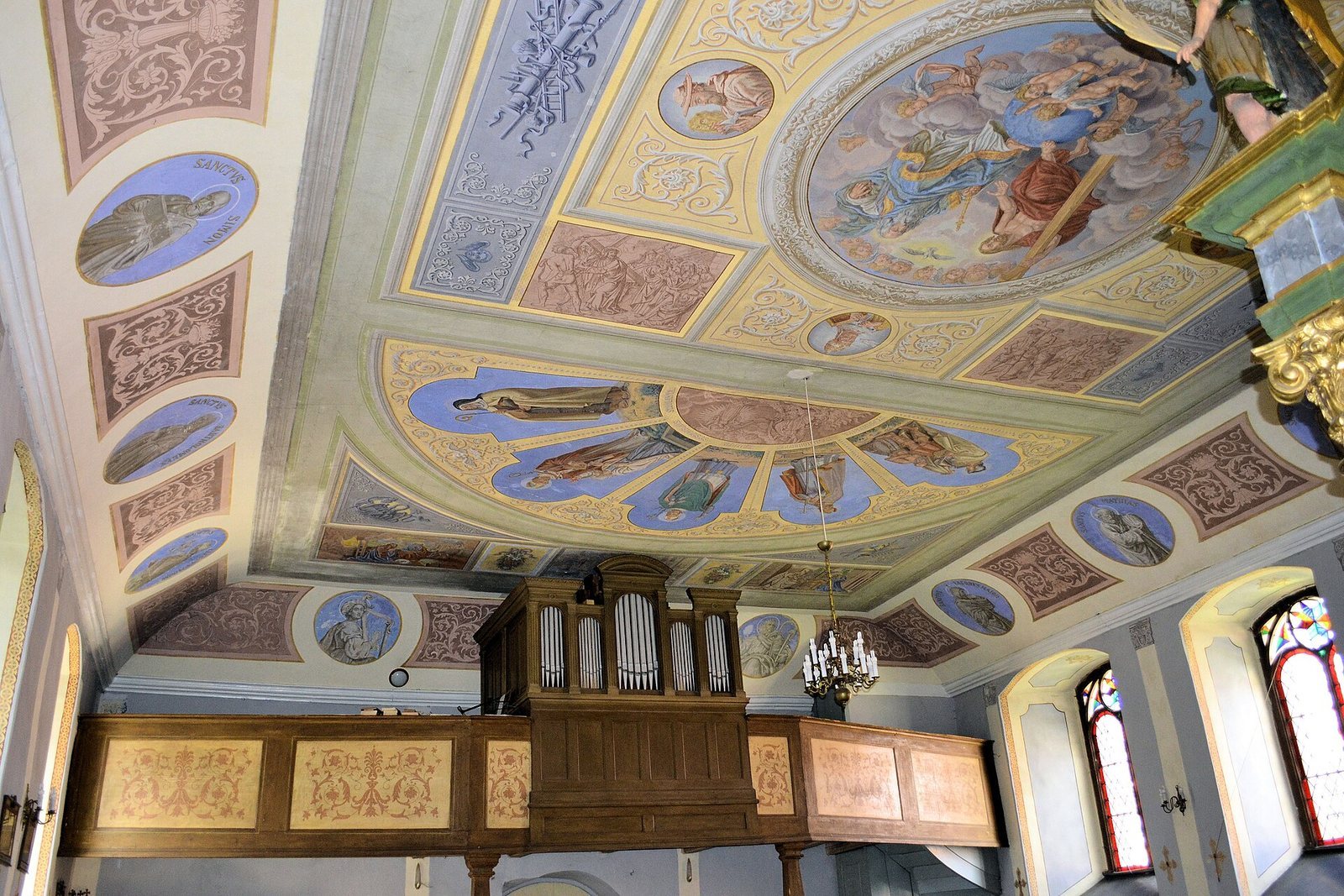
A copy of Peter Paul Rubens’s painting Holy Trinity is displayed inside the church. Multicolored paintings from the early nineteenth century depict saints, including figures formally recognized by the Catholic Church for their teaching and writings, as well as the Annunciation to Mary and the Nativity, or birth of Jesus.
Organ
A nineteenth-century organ by the German Sauer firm stands above the main entrance. It has seven stops, controls that select sets of pipes or sounds.