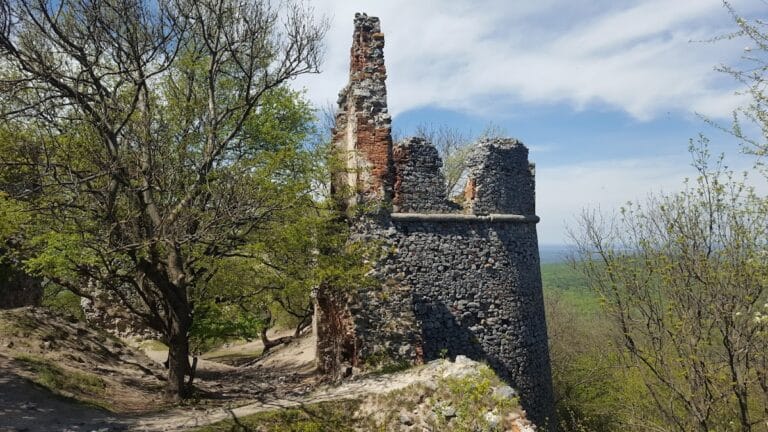
Habsburg-Lothringen Castle in Magyaróvár: A Historic Fortress in Hungary
Visitor Information
Google Rating: 4.5
Popularity: Medium
Official Website: ovarivar.hu
Country: Hungary
Civilization: Medieval European, Modern, Roman
Site type: Military
Remains: Castle
History
Habsburg-Lothringen Castle in Magyaróvár is located in the town of Mosonmagyaróvár, Hungary. This site began as a fortification constructed by King Stephen I of Hungary on a small hill now known as Király-domb, serving as the administrative and defensive center of the Moson region. The original structure consisted of wooden piles filled with earth, offering basic protection while accommodating the county officials’ residences within its enclosure.
Following the devastating Mongol invasion of the 13th century, the wooden fortifications were replaced with a stone fortress to better withstand threats from the west. Throughout the 14th century, the castle exchanged hands several times, beginning with ownership by the Kőszegi noble family and later passing under the control of King Charles of the Anjou dynasty. Subsequent transfers involved prominent noble houses, such as the Lackfi barons, reflecting the shifting political landscape of medieval Hungary.
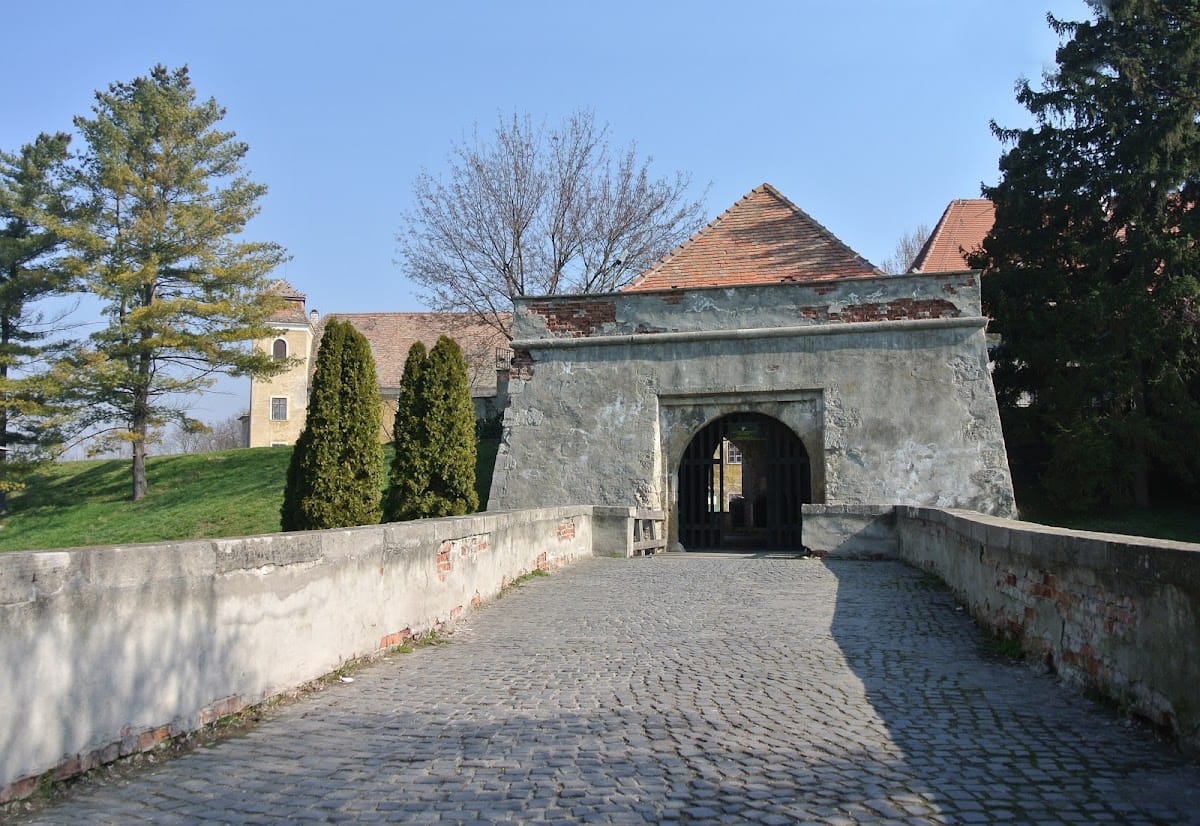
From the 16th century onward, the fortress assumed a critical role in defending against the Ottoman Empire’s incursions into Hungarian territory. It underwent extensive modernization guided by Italian military engineering principles, which introduced artillery bastions and fortified walls around both the original medieval stronghold and the adjoining town, surrounded by a water-filled moat supplied by the Mosoni-Duna river. Despite these improvements, the castle faced several sieges: it withstood an attack by Stephen Bocskai’s hajduks in 1605 but surrendered to Gabriel Bethlen’s forces in 1619 without artillery engagement. Later, during the 1683 Ottoman campaign led by Grand Vizier Kara Mustafa, it fell again amid the wider conflict surrounding the siege of Vienna.
During the War of Independence led by Francis II Rákóczi in the early 18th century, the fortress remained secure under Habsburg authority. As its military importance declined, the outer defenses were dismantled later that century. In 1818, the castle’s interior was transformed into an agricultural academy, which eventually evolved into the modern Faculty of Agriculture and Food Sciences of the University of West Hungary. Archaeological investigations have since unearthed new information about the fortification’s medieval phases and its architectural evolution through centuries of reconstruction and adaptation.
Remains
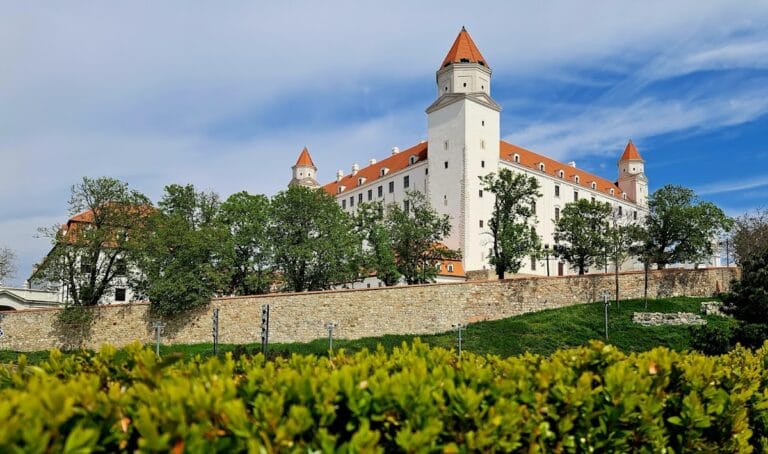
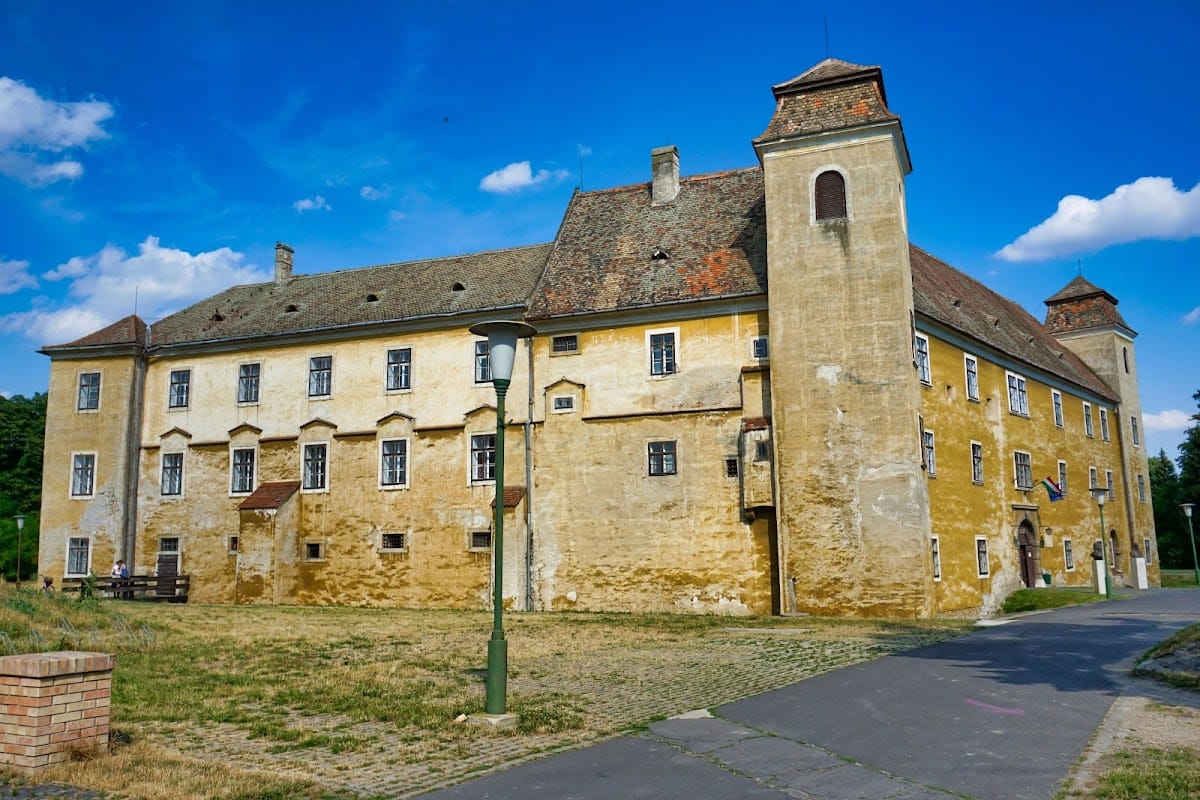
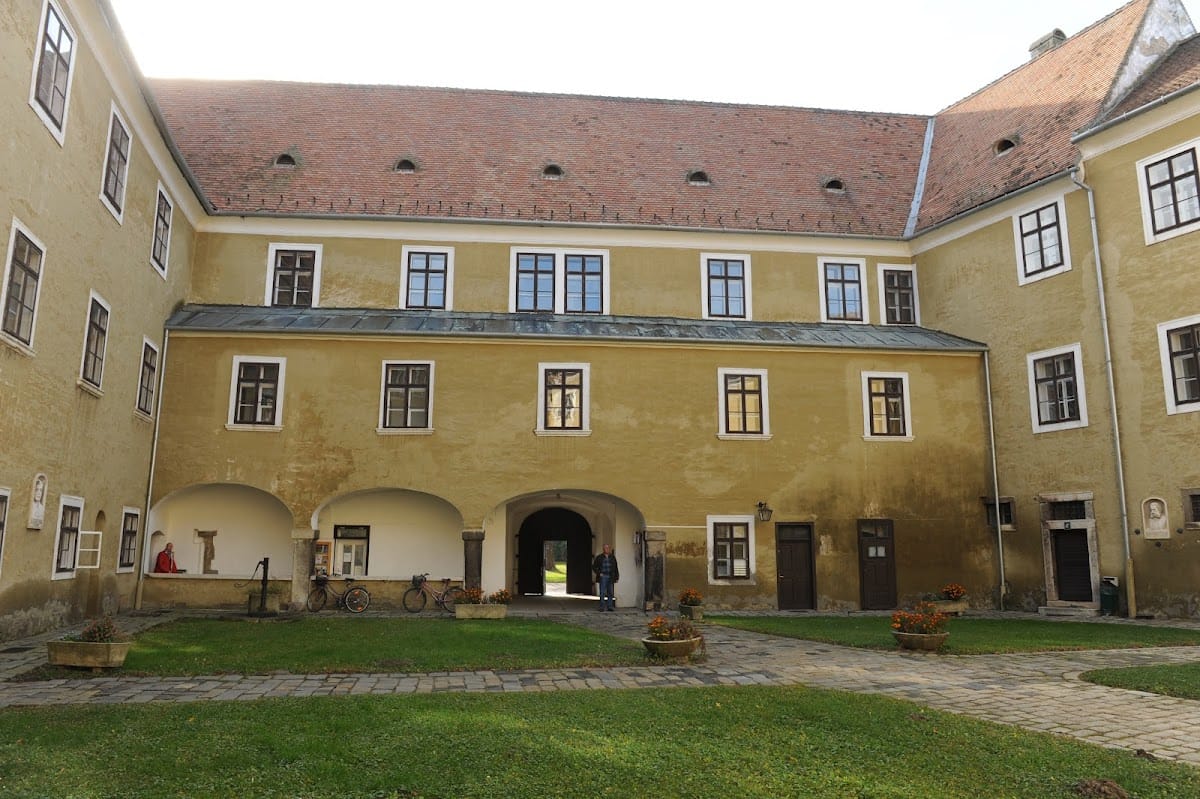
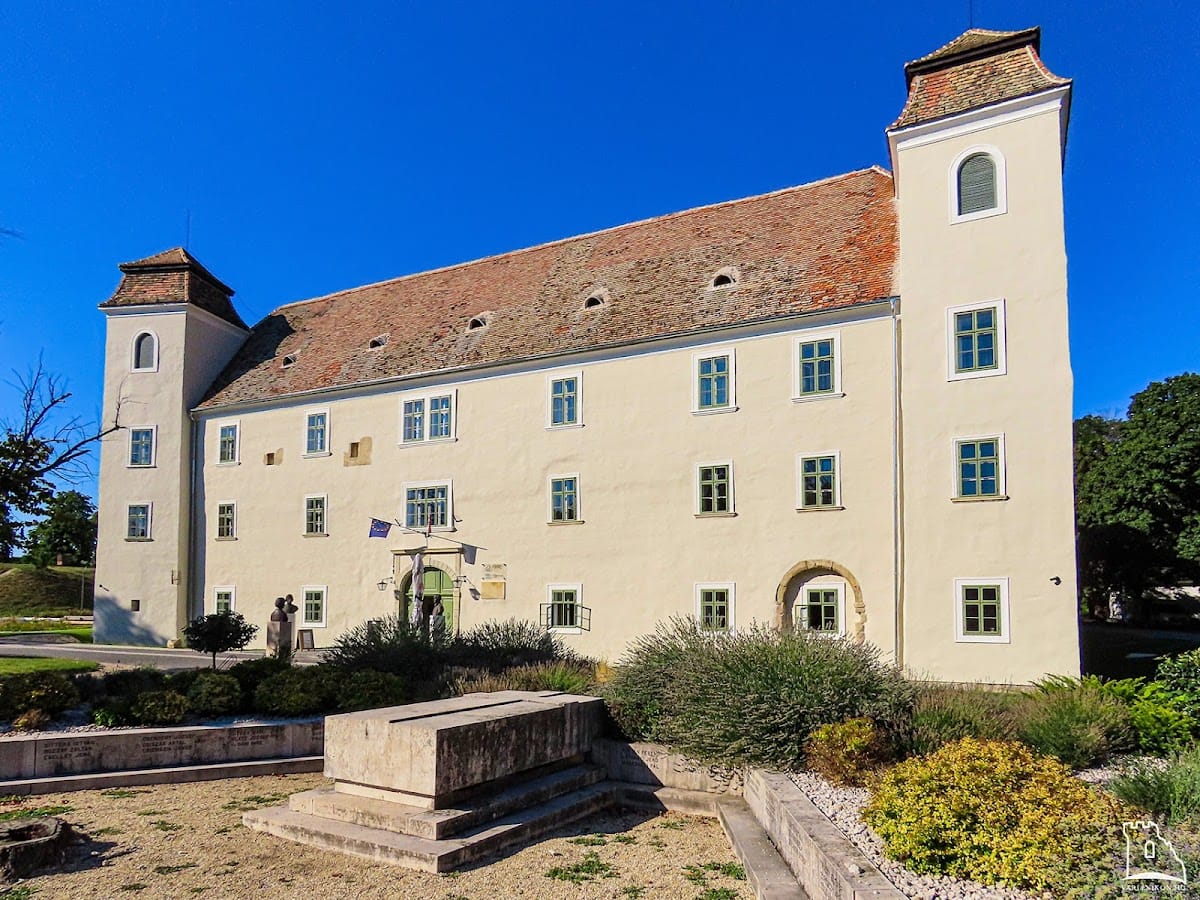
Today, the castle presents an irregular quadrilateral layout featuring two-story wings that enclose a central courtyard. Originally, four small towers marked each corner of the fortress, though only two towers remain visible after two were integrated into a second floor added around 1810. Constructed mainly from durable stone, these walls date back to medieval times and reflect later modifications that enhanced the fortress’s defensive capabilities.
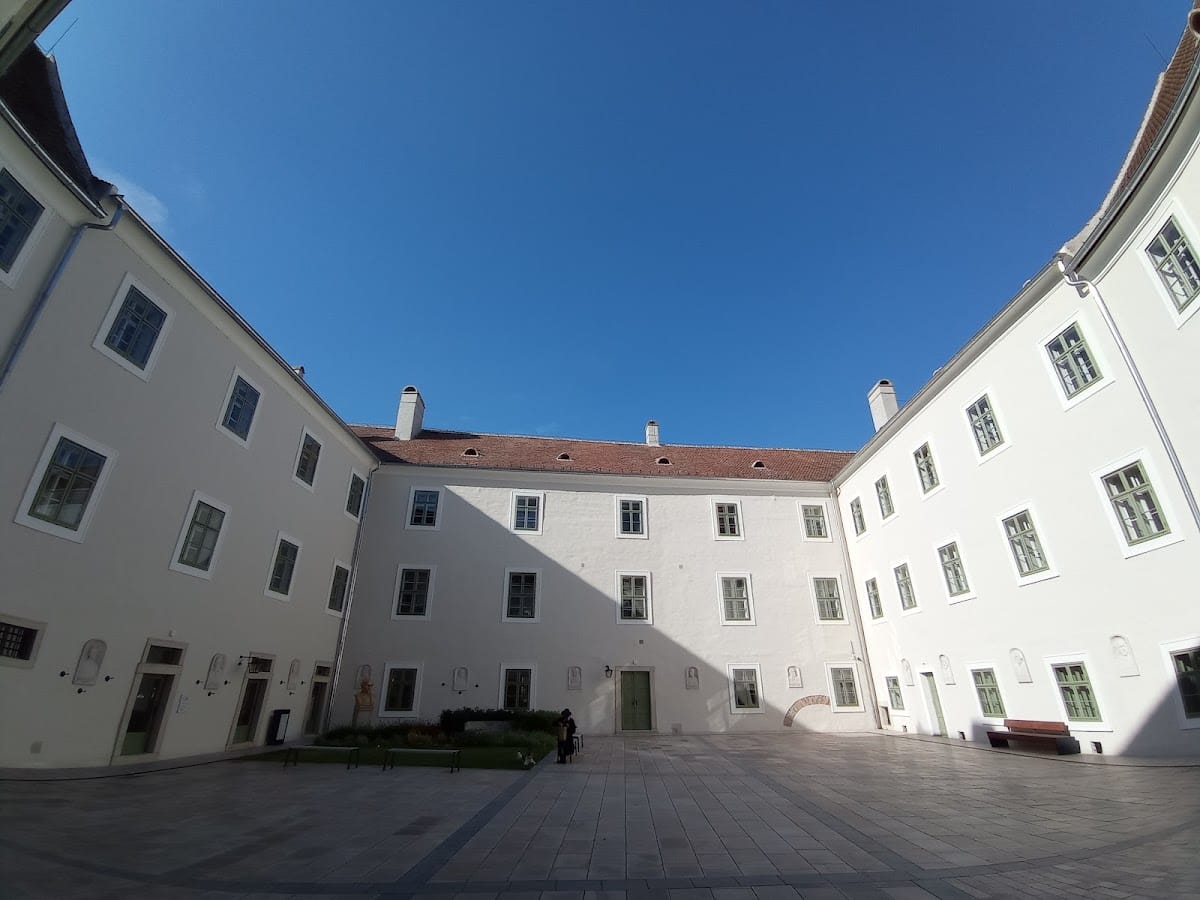
Embedded within the castle walls are Roman tombstones, which provide tangible evidence of the site’s earlier occupation during Roman times. Inside, the courtyard has been renovated to function as a reception and event area. Various relief sculptures honoring distinguished professors of the agricultural academy decorate parts of the building, linking its historical educational role with its physical fabric.
The interior now houses classrooms along with a museum space that chronicles the site’s layered history. In the forecourt, monuments commemorate both World Wars and the 1956 Hungarian Revolution, connecting national history with the castle’s enduring presence. Recent restorations, funded by the European Union, have focused on renewing the exterior facade, remodeling the courtyard, and installing modern museum facilities such as a shop, projection room, and educational workshop spaces, ensuring that the castle continues to serve as a center for learning and cultural heritage.
Nearby sites