Grćka Glavica Necropolis: The Sanković Family Cemetery
Site at a Glance
- Popularity
- Low
- Country
- Bosnia and Herzegovina
- Primary era
- Medieval
- Eras represented
- Medieval
- Civilizations
- Unclassified
- Site type
- Burial
- Remains
- Necropolis
On this page9 sections
History
Grćka Glavica necropolis is a 14th-century burial ground near Glavatičevo in Bosnia and Herzegovina, associated with the Sanković noble family of medieval Hum, a historical region.
The Sanković family and its last ruler
The Sanković family was active in the Nevesinje area from the early 14th century. Its members extended their authority into Zagorje after 1335, and later held power in Dabar, Popovo, Primorje, and Konavle. Records trace the family from 1306 to 1404 and also use the names Bogopanac, Draživojević, and Miltenović.
As representatives of Hum, family members regularly attended the Stanak, the assembly of Bosnian nobles, particularly between 1330 and 1404. The family held a leading position in Hum during the 14th century, and its cemetery lay within Kom župa, a territorial district.
Radič Sanković, the family’s last member, first held the title of knez, meaning a noble or local ruler, and later became a vojvoda, a high-ranking military leader and noble. His seat was at Zaborani, north of Biskup on the northern edge of the Nevesinje Plain. In 1404, the Bosnian magnate Sandalj Hranić Kosača captured Radič and seized his territory.
Archaeological study and heritage recognition
Archaeologist Marko Vego researched the necropolis in 1954 and 1955. His principal conclusion was that it had served as the Sanković family cemetery.
Bosnia and Herzegovina designated the site a National Monument on May 7, 2004, formally recognizing its cultural heritage. In 2016, it became part of a UNESCO World Heritage property comprising 28 medieval cemeteries of monumental tombstones from the western Balkans. The property includes 20 sites in Bosnia and Herzegovina, three each in Serbia and Montenegro, and two in Croatia. UNESCO is the United Nations body that coordinates the World Heritage program.
Remains
Cemetery and tombstones
Layout and decoration
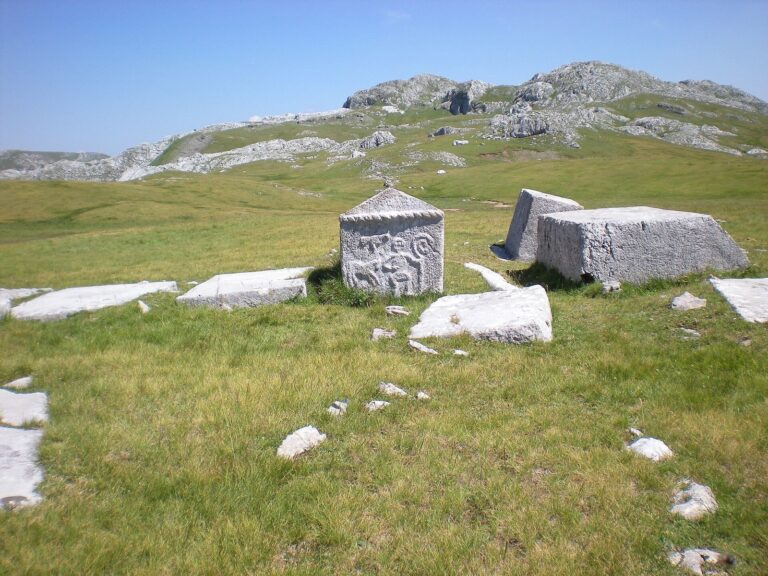
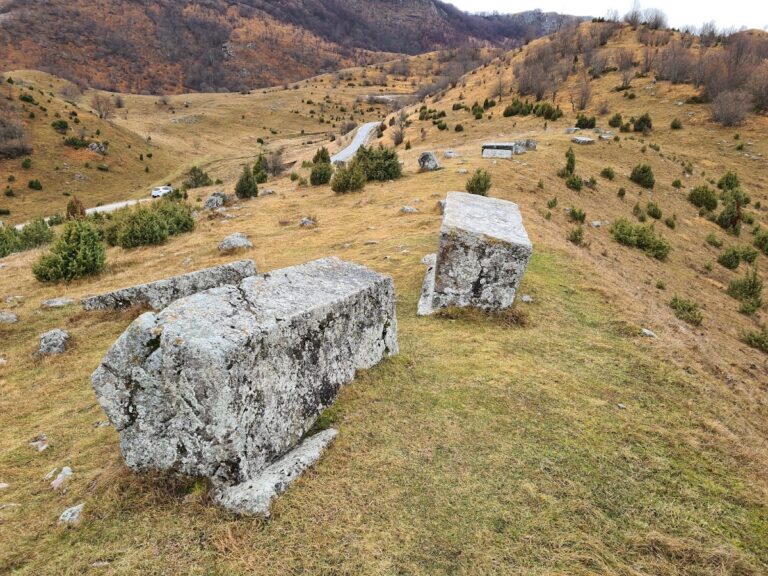
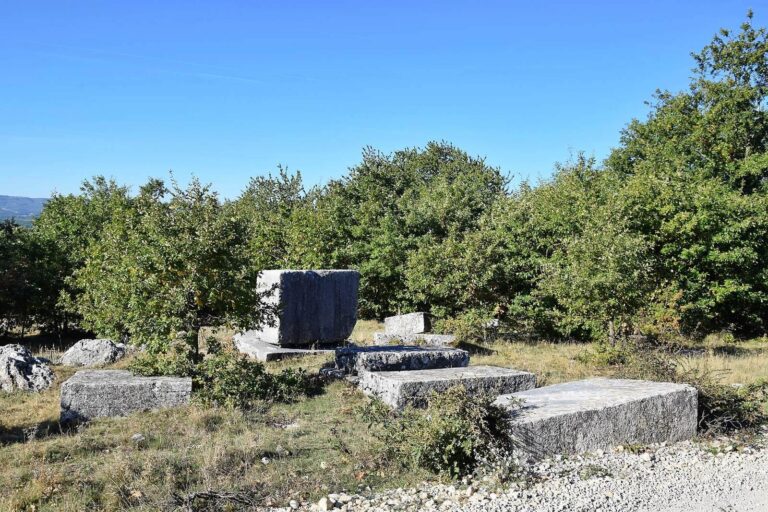
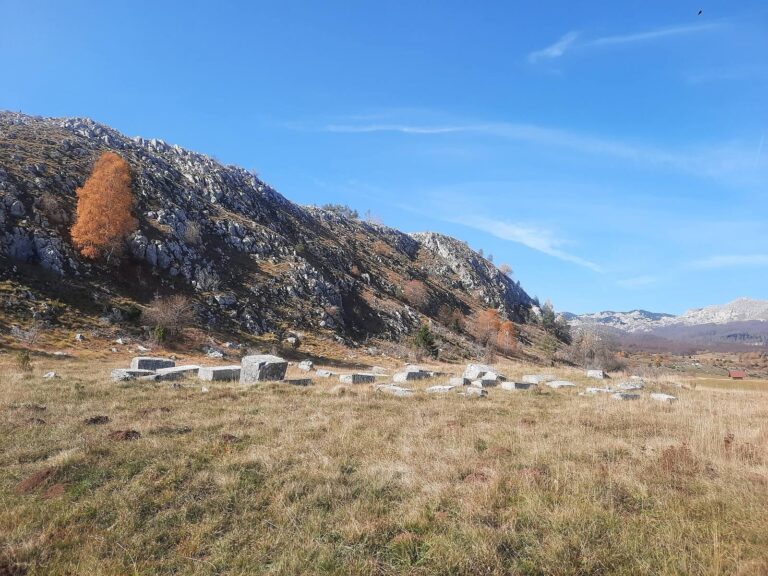
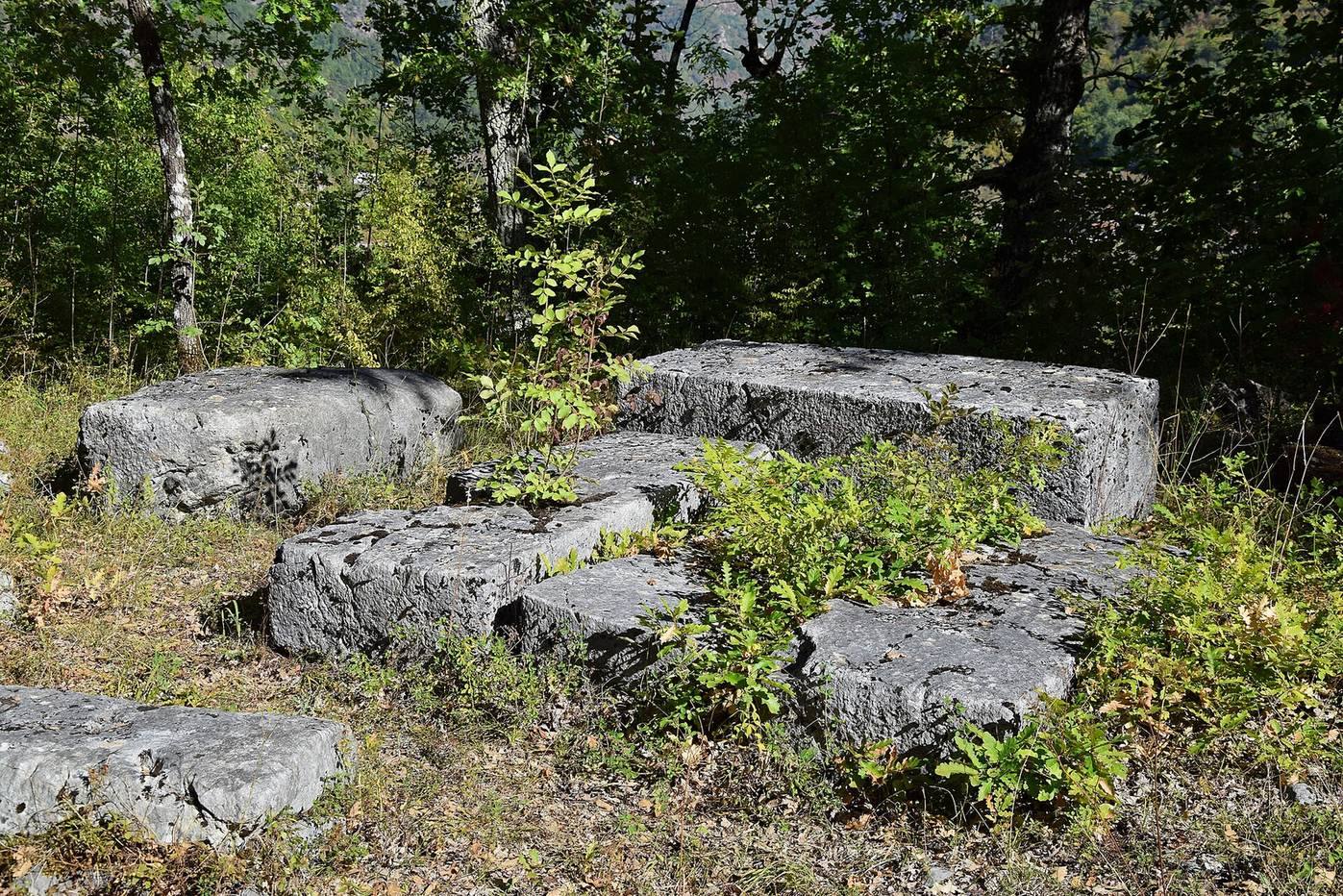
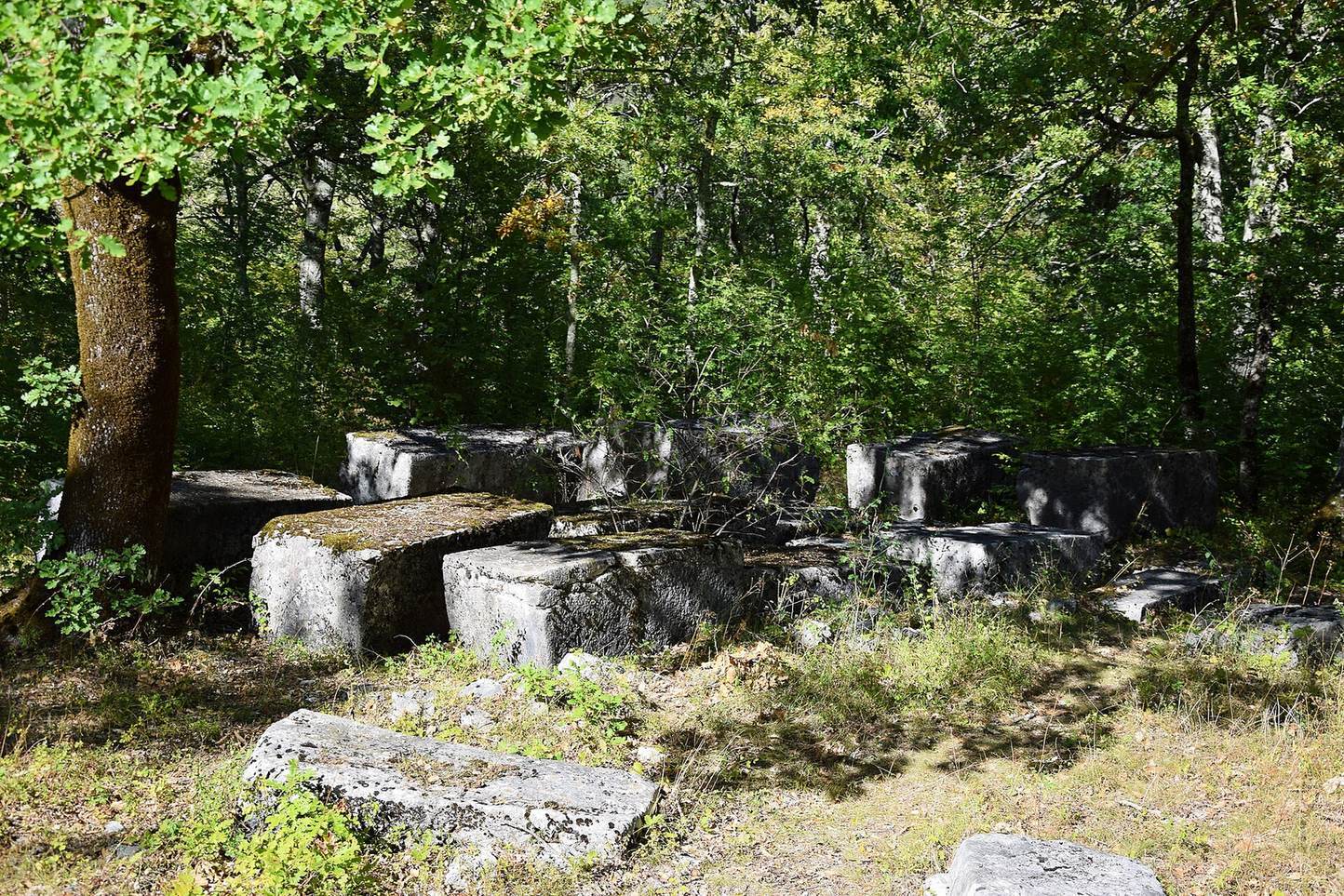
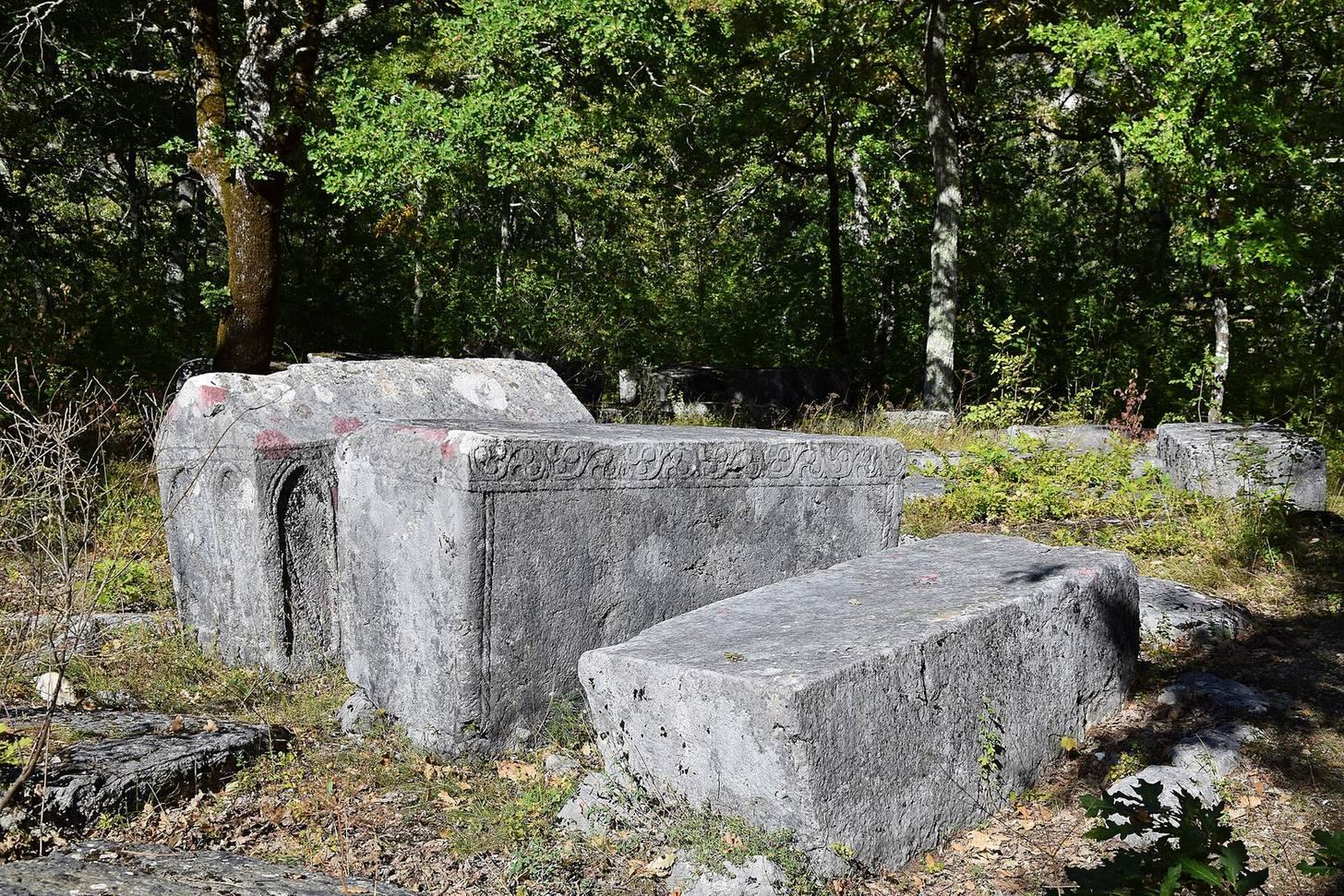
The cemetery covers about 1,700 square metres on Grćka Glavica, a small hill beside a gravel road in Biskup hamlet. The site is near Glavatičevo, about 30 kilometres southeast of Konjic in the Upper Neretva valley. It contains 172 stećci, monumental medieval tombstones of the western Balkans, as well as many other graves. One tombstone has a gabled form with a roof-like ridge; the others are slabs or chest-shaped forms. Two are decorated. The gabled stone has a band of slanting parallel lines near its top and rows of arches along its sides. A chest-shaped stone bears a top band of curving vines and three-lobed leaf designs.
Goisava’s inscribed tomb
A chest-shaped tombstone carries a 14th-century inscription in Bosnian Cyrillic, a medieval script used in Bosnia. It identifies Lady Goisava as the daughter of Đurđ Balšić and wife of Radič, and says that she married into the household of financial official Sanko and district head Bjeljak, honoring her faith and heavenly glory. The inscription identifies her grave and is regarded as an especially valuable example of its kind in Bosnia and Herzegovina.
Burial finds
Goisava’s grave contained an intact skeleton, silk ribbons understood as remnants of her dress, and a Ragusan dinar in the skeleton’s mouth. The coin, minted around 1337, bears an image of Saint Blaise, patron saint of Dubrovnik, historically known as Ragusa. A neighboring tomb contained a skeleton with a similar coin in its mouth and may be Radič Sanković’s grave. Movable archaeological finds from the site are held in the Archaeological Department of the National Museum of Bosnia and Herzegovina.
Church ruins and condition
The hill also contains the ruined walls of a church, with tombstones within the church remains. Moss and lichen cover the wall remains and these tombstones. Before protection work began, leaves and wild plants covered the site. Many tombstones had shifted from their original positions, sunk into the ground, or slid down the slope.