Kalufi Necropolis: A Medieval Stećak Cemetery in Bosnia and Herzegovina
Site at a Glance
- Country
- Bosnia and Herzegovina
- Primary era
- Medieval
- Eras represented
- Medieval, Early Modern
- Civilizations
- Kingdom of Bosnia, Ottoman
- Site type
- Burial
- Remains
- Necropolis
On this page10 sections
History
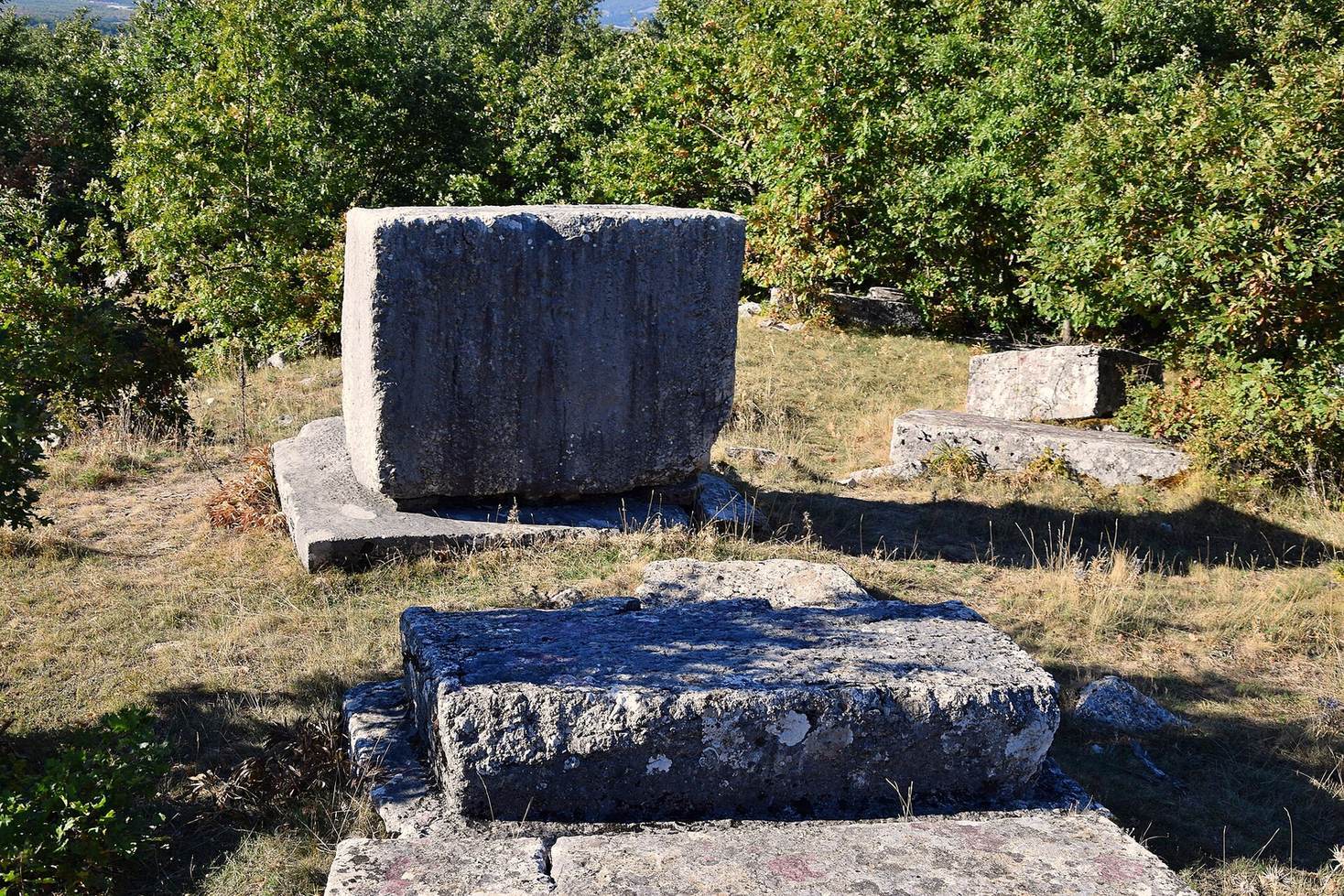
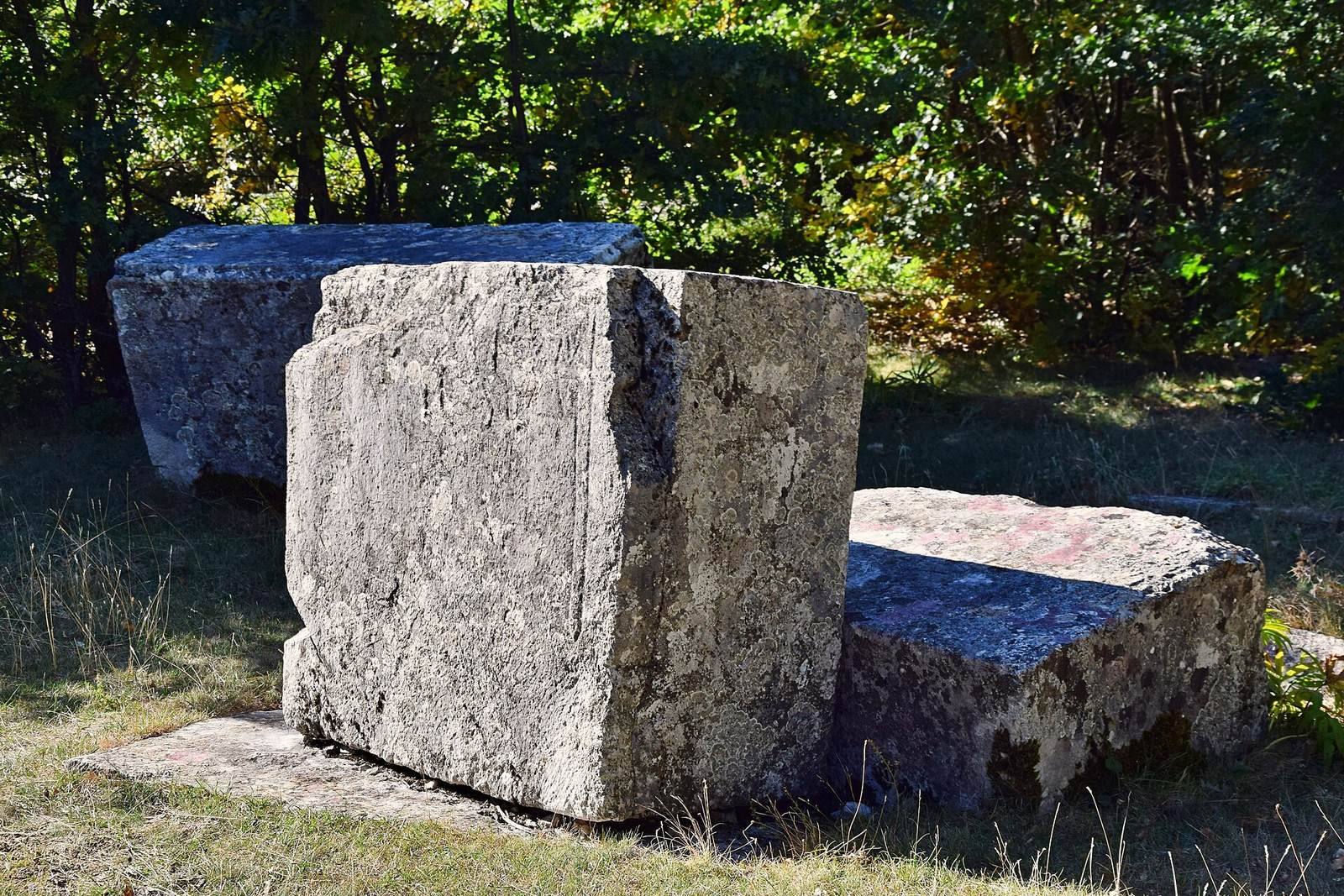
The Kalufi necropolis is a medieval cemetery in Krekovi, in the Nevesinje area of Bosnia and Herzegovina. Its monuments are stećci (singular stećak), monumental medieval tombstones characteristic of the western Balkans. Their decorative style aligns with examples from the fourteenth and fifteenth centuries in the Nevesinje Field and eastern Herzegovina.
Regional setting and continued use
The cemetery probably remained in use into the early sixteenth century, with nearby cross-shaped tombstones among the evidence for this dating. The Nevesinje Field, a broad natural basin, formed part of an important route between the Adriatic coast and the interior from prehistoric times through the medieval period. The Neretva canyon between Konjic and Salakovac was impassable, and an ancient route crossed the basin diagonally from southeast to northwest. The modern road follows its line; Krekovi and the necropolis above the village lie slightly east of it.
Survey and heritage recognition
Historian Šefik Bešlagić, a leading researcher of stećci, surveyed the area in 1957 and completed work documenting its necropolises between 1964 and 1966. He published the results in 1972. Kalufi came under state protection in 1999 and is a national monument of Bosnia and Herzegovina. Since 2016, it has formed part of a UNESCO (United Nations Educational, Scientific and Cultural Organization) World Heritage property comprising 28 medieval stećak necropolises. The World Heritage List recognizes places considered to have outstanding universal value.
Remains
Layout and stone forms
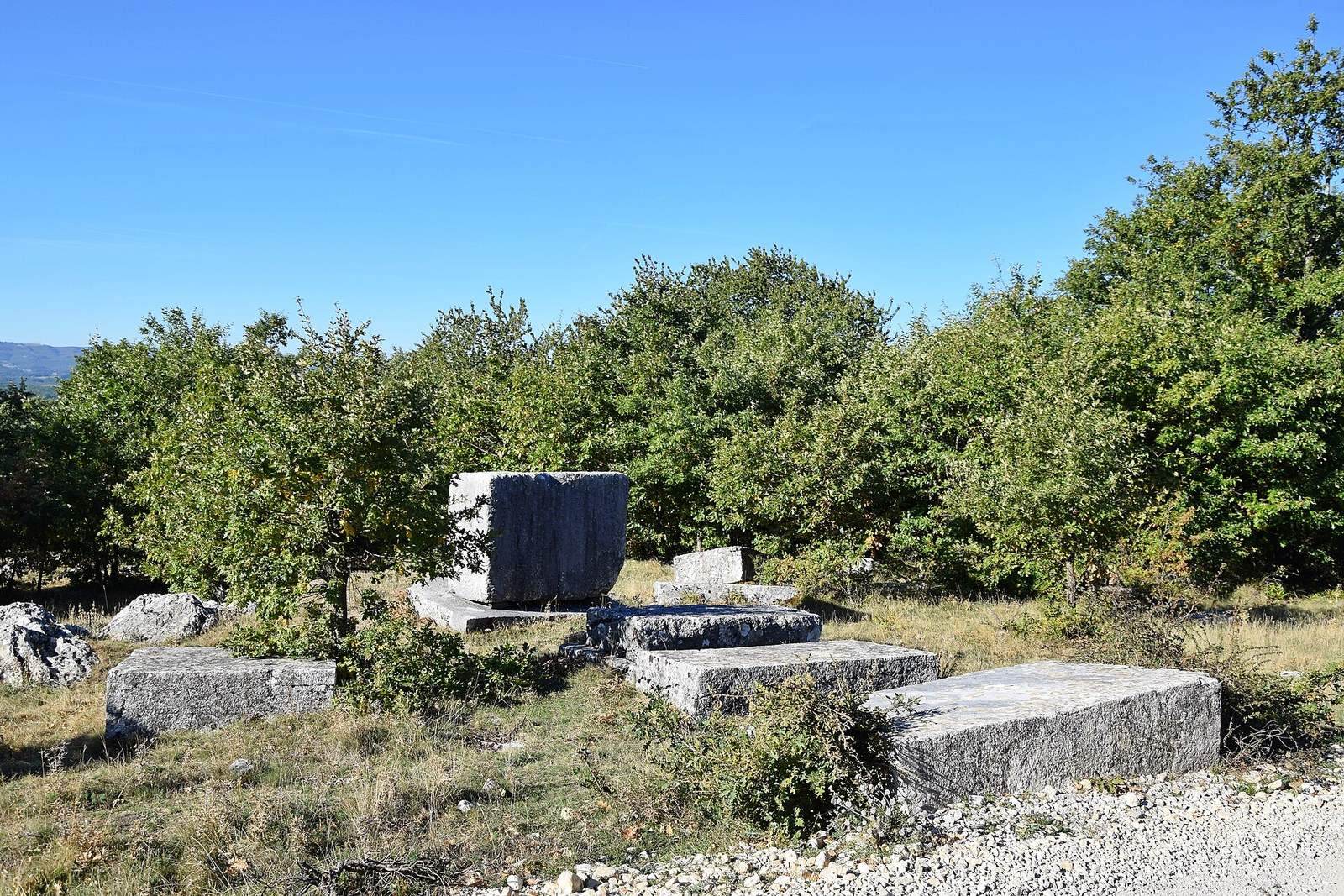
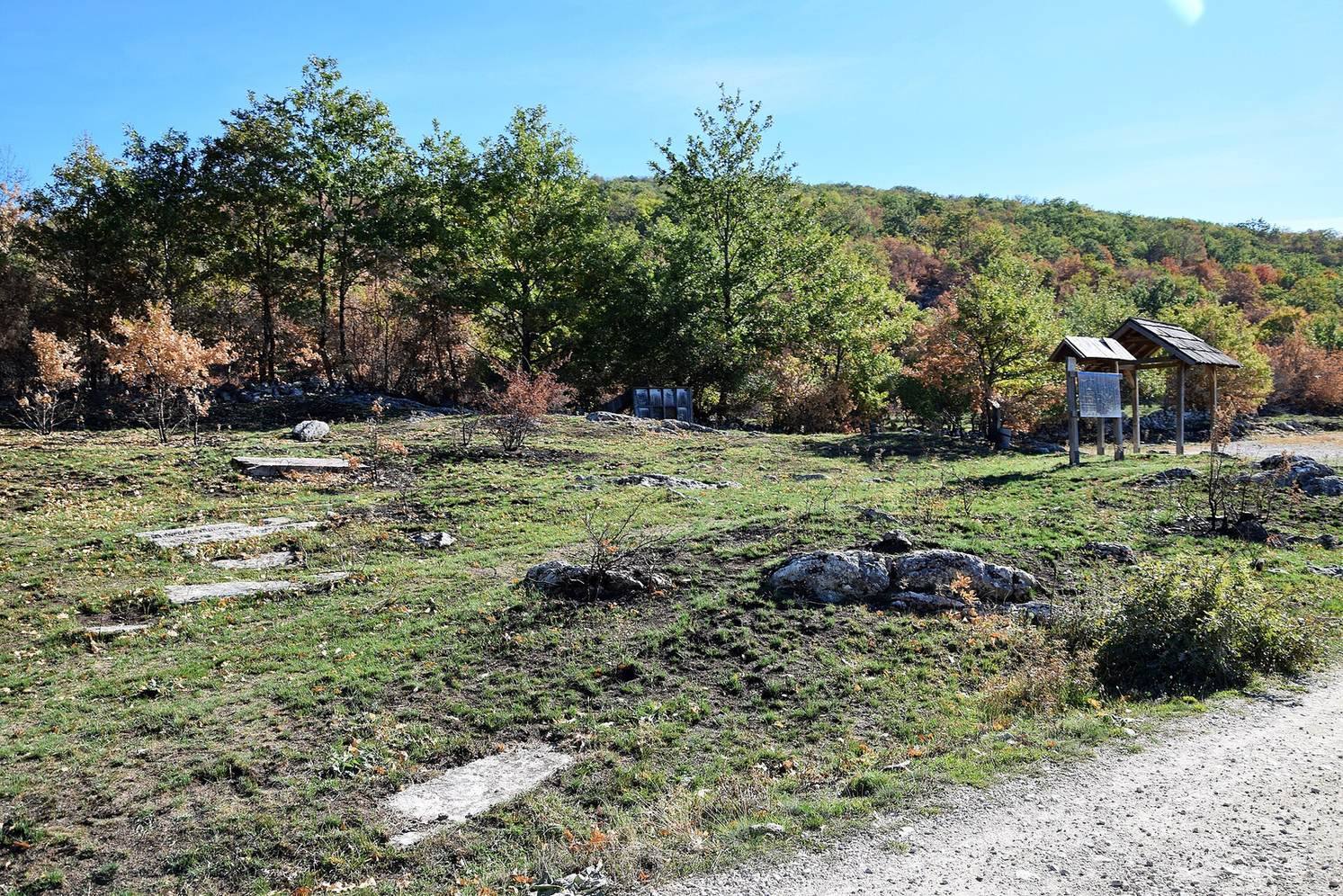
The necropolis covers about 18,000 square metres and contains 462 monuments. These include 295 slabs, 150 chest-shaped stones, three gabled stones, and 14 ancient architectural fragments reused in the cemetery. The monuments are made of limestone. Most are regularly shaped, while others are roughly worked or irregular. Most lie on an approximate west-to-east alignment, with some deviation toward northwest–southeast that follows the terrain. Seven are aligned north–south or northeast–southwest.
Carved decoration
Symbols and ornament
Forty-four monuments carry decoration: 14 slabs, 28 chest-shaped stones, and two gabled stones. Carvings include swords, shields used as heraldic emblems, and swords paired with staffs, alongside rosettes, crescents, sculpted half-apples, and several forms of cross. Twisted wreaths and circles recur, while borders include twisted bands and winding vines with trefoil leaves. Designs usually appear singly on the upper face of a slab or chest-shaped stone, though some combine two or three. One chest-shaped monument has rows of arches carved across all its vertical faces.
Figures and carved scenes
Monuments 13 and 41 show male figures carrying shields and swords. Chest-shaped stone 43, the most elaborately decorated example, bears scenes of a tournament, a duel, hunting, and a kolo, a traditional South Slavic circle dance. In 1960, stones 43 and 44 were transferred to the Military Museum of the Yugoslav People’s Army, the armed forces of socialist Yugoslavia, in Belgrade.
Reused ancient fragments
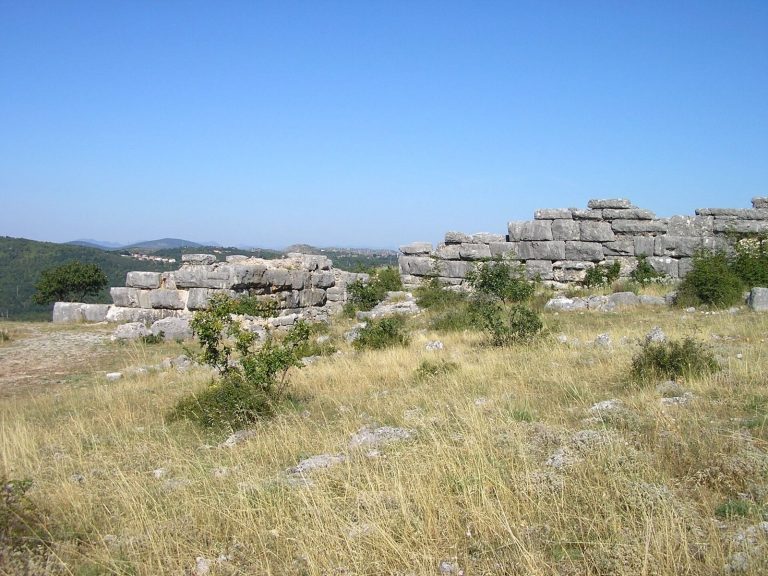
Fourteen ancient architectural fragments lie at the eastern edge of the cemetery. They include a cippus, an upright stone marker used in antiquity, seven grooved slabs, blocks with holes for clamps or lead, and slabs with damaged profiles. Their precise workmanship and use of Roman measurements suggest that the fragments are Roman in origin.
Condition
Many stones are weathered or have sunk into the ground. Several tall chest-shaped and gabled monuments have toppled; some slabs and chest-shaped stones are chipped or cracked, and some slabs are broken into multiple pieces. Compared with their condition in the 1960s, the monuments are now more heavily covered with lichen, making some decoration difficult to distinguish. Burnt rubbish is visible near monument 21. More recent cuts trace sword designs on monuments 16 and 17, alongside initials.