Dolovi Cultural Landscape: Medieval Burial Monuments at Umoljani


Site at a Glance
- Rating
- 4.8
- Popularity
- Low
- Country
- Bosnia and Herzegovina
- Primary era
- Medieval
- Eras represented
- Medieval, Early Modern
- Civilizations
- Kingdom of Bosnia
- Site type
- Burial
- Remains
- Necropolis
On this page7 sections
History
Dolovi cultural landscape is a medieval funerary landscape at Umoljani in Bosnia and Herzegovina, containing burial monuments associated with the history of the country. Its remains belong chiefly to the late medieval period and include distinctive stećci, medieval stone grave monuments found mainly in Bosnia and Herzegovina and neighboring parts of the western Balkans, together with later upright Muslim grave markers known as nišans.
The Neretva župa in the late Middle Ages
In the late Middle Ages, the area between the Rakitnica River, from its eastern source, and the Trešanica stream to the west formed part of the Neretva župa, a medieval territorial and administrative district. During the fifteenth century, the territory was divided into Bosnian and Herzegovinian sections along the Neretva. The Bosnian part extended to the river’s right bank and belonged to the Kraljeva Zemlja, or King’s Land, a territorial designation associated with the authority of the Bosnian king. The Herzegovinian section on the left bank was ruled by the Kosača, a powerful medieval noble family whose lordship included parts of Herzegovina.
The makers of most of the tombstones have been proposed by some Bosnian and English researchers to have been Vlachs. This attribution remains a proposal rather than a certainty.
National and World Heritage recognition
Dolovi was declared a national monument of Bosnia and Herzegovina during a decision session held from 12 to 18 May 2009. In 2016, its necropolis was inscribed as part of the UNESCO World Heritage grouping of medieval stećak necropolises, a multinational inscription that includes selected sites associated with this medieval funerary tradition.
Remains
The physical remains are arranged in several units across the Dolovi and Crkvina localities on both sides of the road before the entrance to Umoljani. They include stone tombstones, an earth-covered structure, and medieval burial areas positioned in places that include high rocky outcrops. Most of the stećci were made from local stone and shaped as slabs, chests, or gabled tombstones.
Stećak necropolises
One necropolis contains 47 stećci, while another contains five, and a further stećak stands separately. Their decoration combines realistic and symbolic imagery. Motifs include twisted bands, double zigzag bands, raised and recessed relief lines, vines with trefoils, spiral vines, stylized and Latin crosses, shields, swords, circles, and rosettes. Figural scenes include the kolo, a funerary ritual dance, while another design presents a stylized tree with two pairs of spirals bending symmetrically.
Nišan necropolis
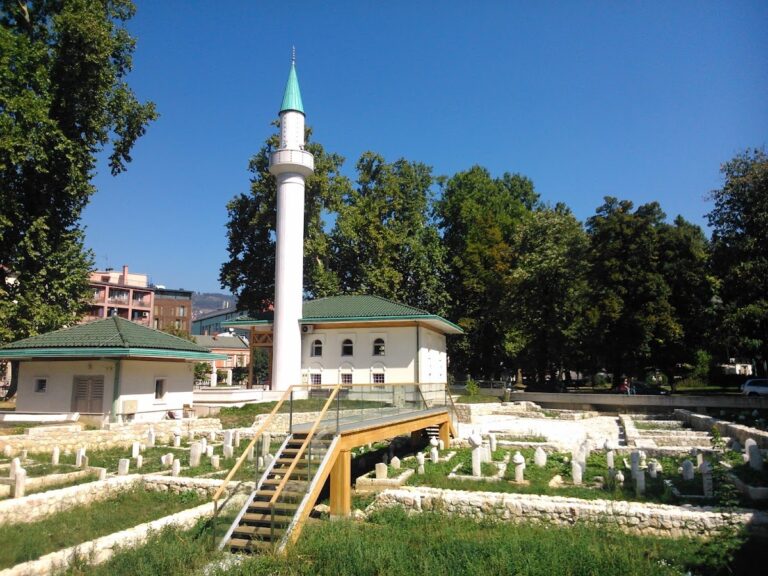
A separate necropolis contains 11 nišans, upright Muslim grave monuments. The examples at Umoljani include rectangular stones with pyramidal tops and stele-like forms, decorated with bands and half-spherical motifs. They date from the second half of the fifteenth century to the first half of the sixteenth century, a period associated with the end of the stećak tradition and the emergence of the earliest nišans in Bosnia and Herzegovina.
Crkvina structure
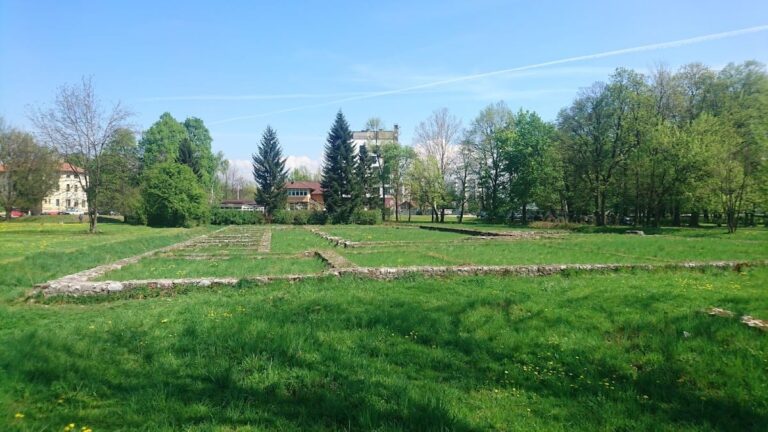
At Crkvina, the monument includes the earth-covered remains of a structure. This feature forms part of the wider group of archaeological remains distributed through the Dolovi and Crkvina localities, alongside the burial monuments and the isolated stećak.