Poljice-Dolovi Necropolis: A Medieval Burial Ground in Bosnia and Herzegovina
Site at a Glance
- Popularity
- Very Low
- Country
- Bosnia and Herzegovina
- Primary era
- Medieval
- Eras represented
- Medieval, Early Modern
- Civilizations
- Ottoman
- Site type
- Burial
- Remains
- Necropolis
On this page10 sections
History
Medieval political setting
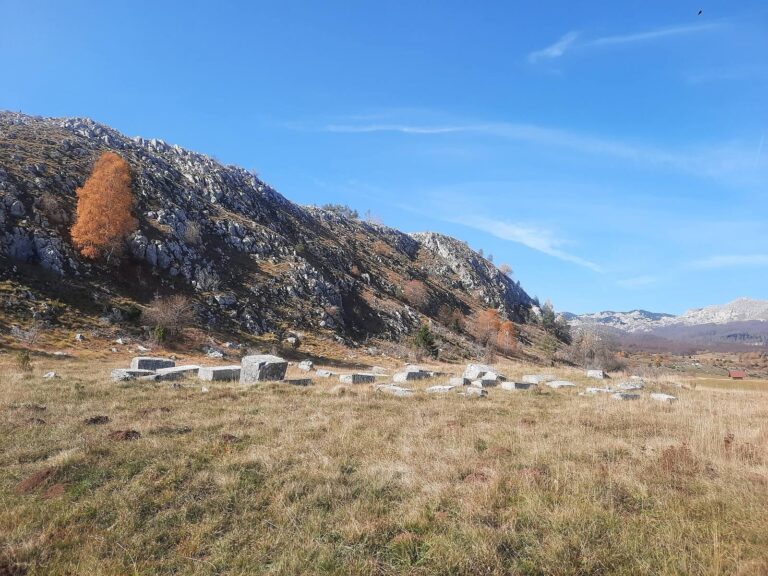
The Poljice-Dolovi necropolis is a medieval burial ground near the summer livestock settlement of Poljice on Mount Visočica in Bosnia and Herzegovina. The necropolises in this area are broadly dated to the 15th and 16th centuries. The Visočica area, within the Neretva district, became part of the Bosnian state in the mid-11th century and retained a special status until Ban Tvrtko I took power in 1353. A ban was a medieval governing title used in Bosnia and nearby lands.
In the early 15th century, the territory was divided between the King’s demesne, land held under the ruler’s direct control, and Hum, a medieval territory ruled by the nobleman Stjepan Kosača. The Neretva River formed their approximate boundary.
Necropolises and heritage status
Poljice-Dolovi and the related Poljice–Veliko jezero necropolis are both recognized as National Monuments of Bosnia and Herzegovina. On November 6, 2002, the Dolovi–Poljice cultural landscape was designated a Category 0 cultural property. Its protected area includes the Dolovi necropolis, a stone-processing workshop, and the surrounding landscape.
Remains
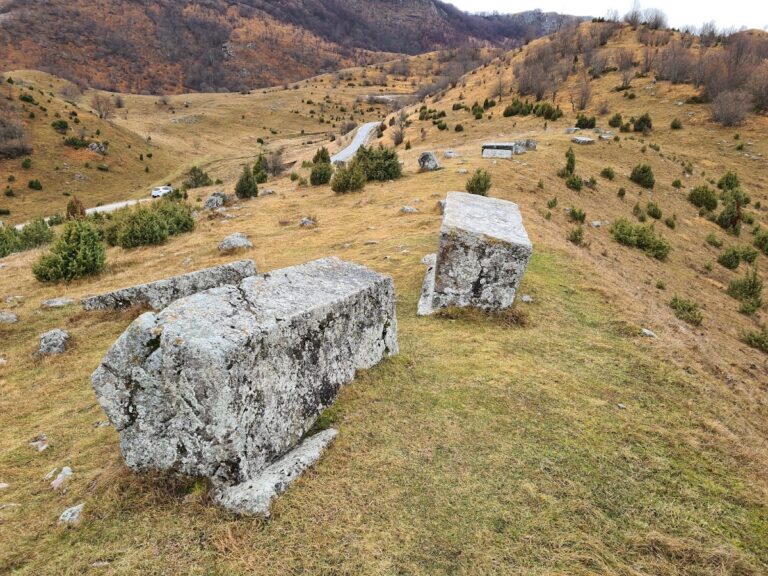
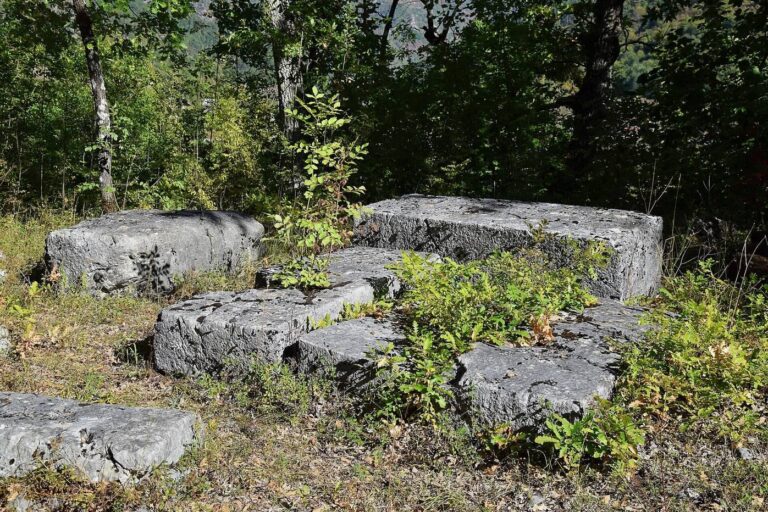
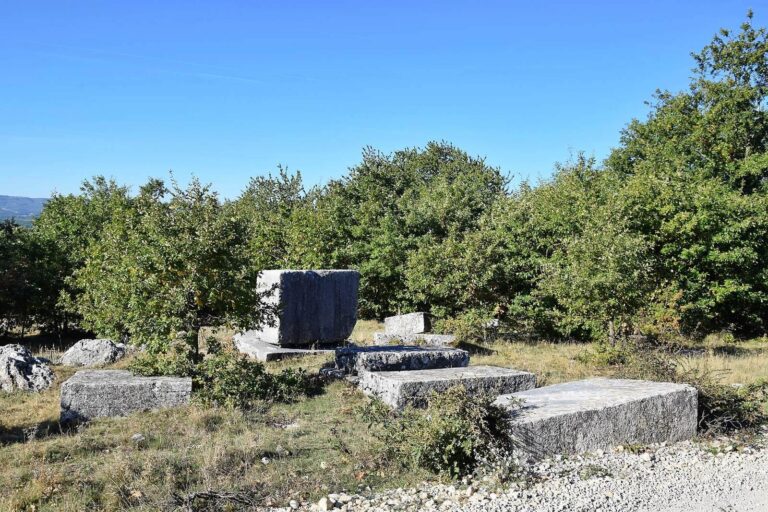
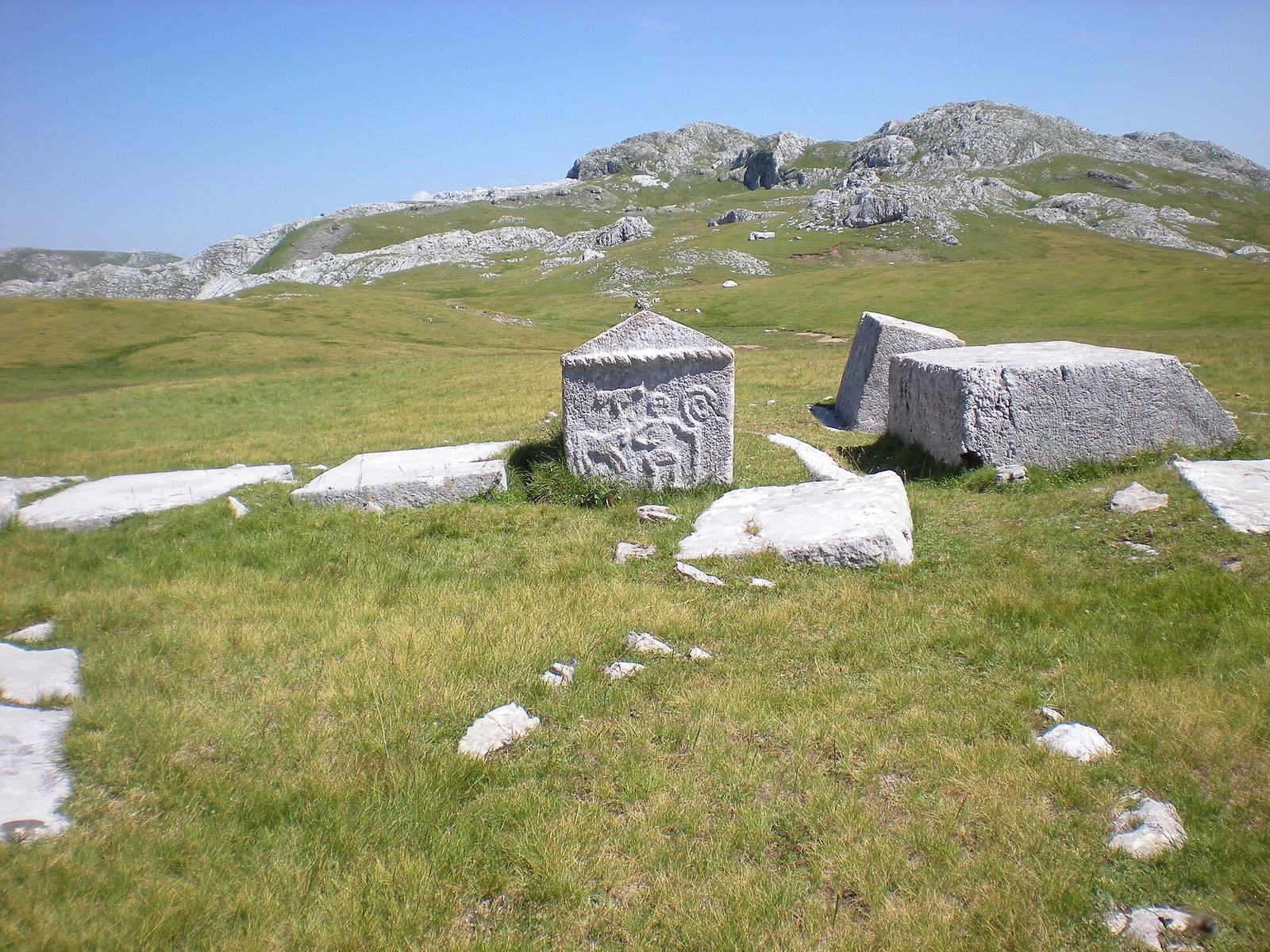
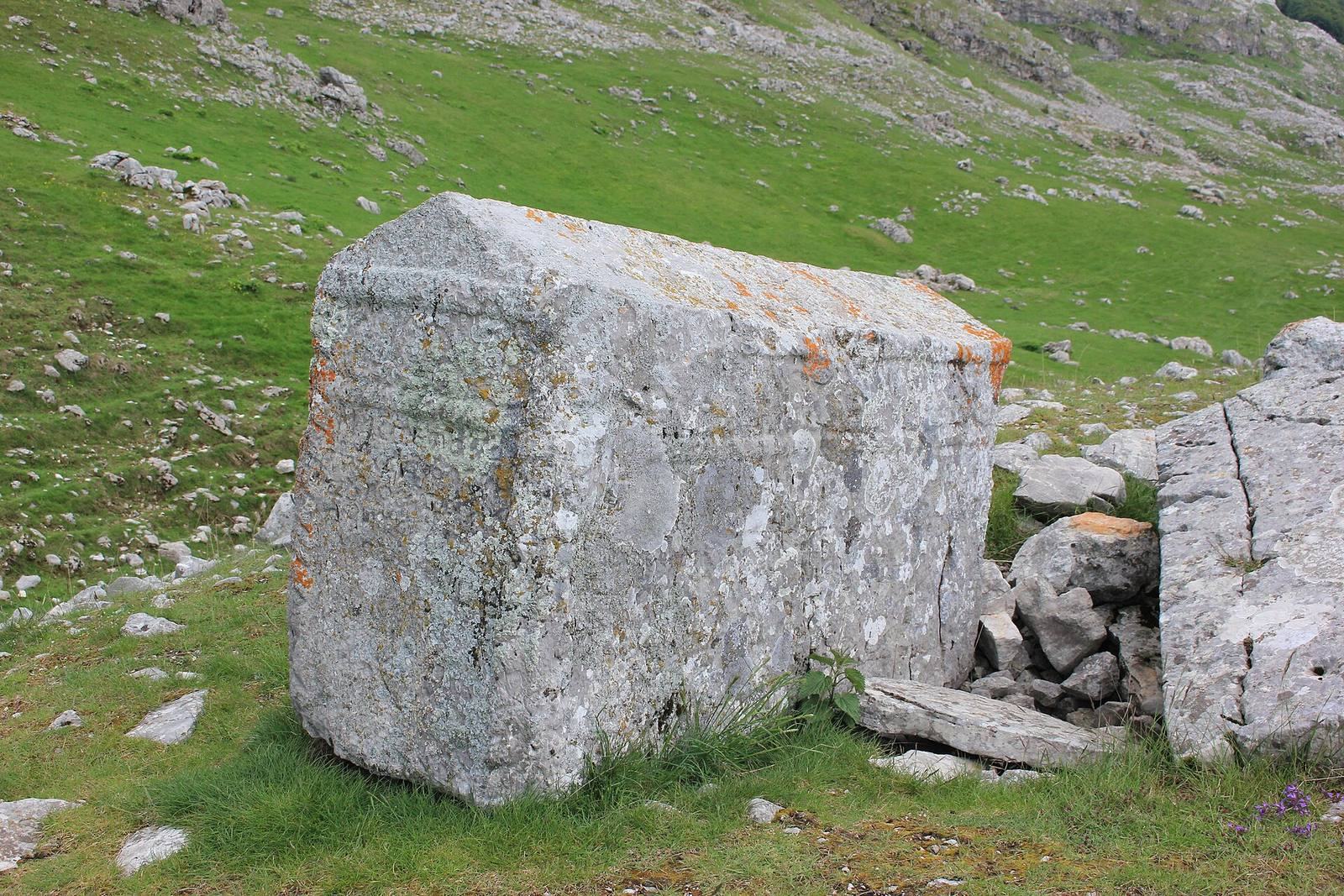
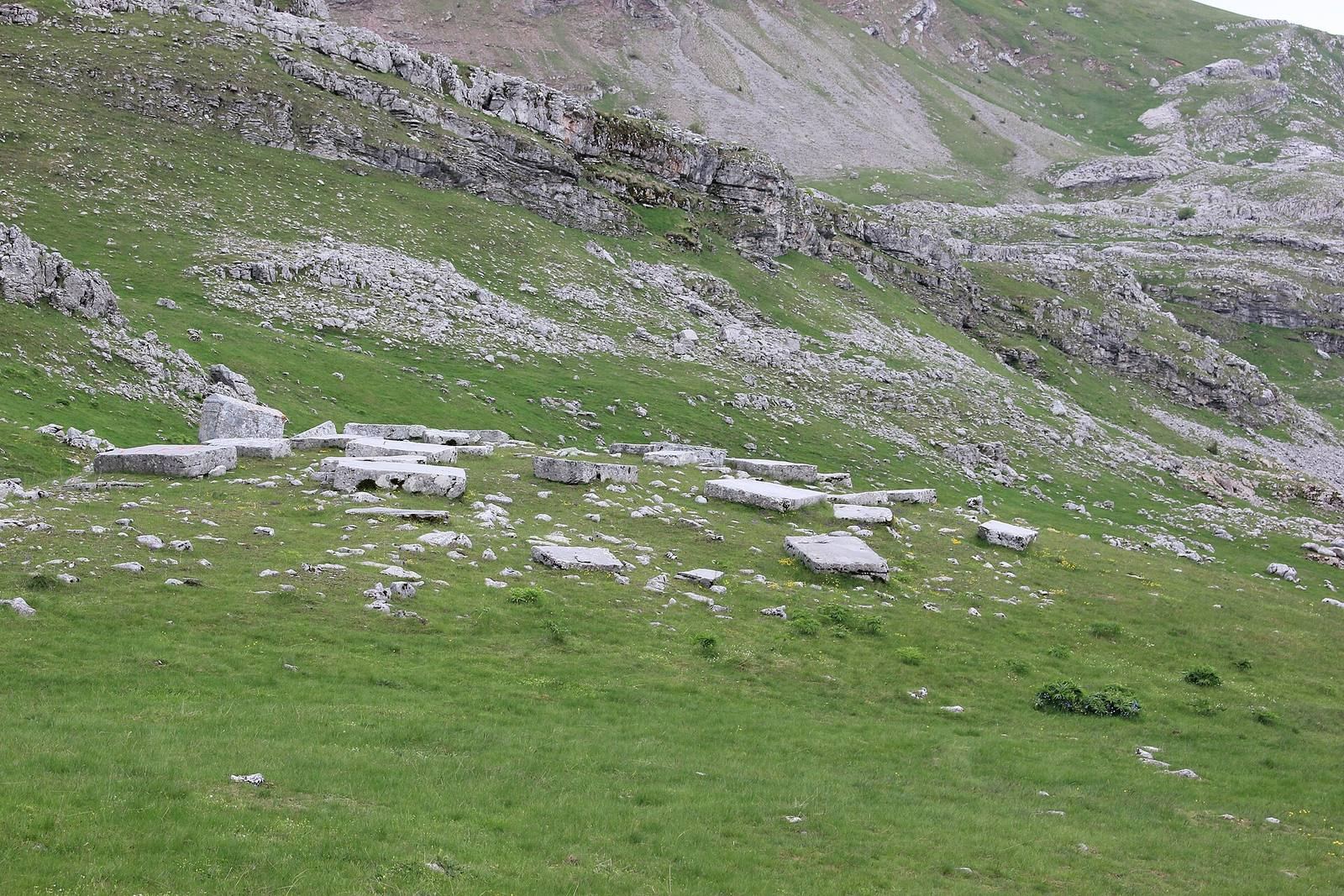
The two burial grounds lie near Poljice on Mount Visočica, about 25 km in a straight line from Konjic. Their principal monuments are stećci, monumental medieval tombstones characteristic of Bosnia and neighboring regions. The stones include slab, chest-shaped, gabled, and cross-shaped forms. Poljice–Veliko jezero lies at 1,691 m above sea level below the peak of Ljeljen, while Poljice–Dolovi is at 1,479 m on the west side of the road from Gornja Tušila to Odžaci (Bjelimići).
Poljice–Veliko jezero
This necropolis contains 49 tombstones: 33 slabs, 10 chest-shaped stones, and 6 gabled stones. The stones are well cut, though some are damaged or overturned. Eleven carry decoration, including borders of curved vine and trefoils, oblique strokes, twisted ribbons, zigzags, simple arcades, and crescents. Figural scenes include a man holding a child, a man with a staff, a horse, and a bird.
Poljice–Dolovi
Tombstones and decoration
The burial ground contains 52 stećci: 24 slabs, 22 chest-shaped stones, 2 gabled stones, and 4 cross-shaped stones. Seven are decorated. Their motifs include plain and twisted bands, vine-and-trefoil friezes, zigzags, and oblique lines, as well as hunting and circle-dance scenes. Other images show a woman with a dragon, and a woman with a horseman and dragon.
Cross-shaped stećak of Vukić Dolinović
An inscription in Bosnian Cyrillic names Vukić Dolinović and describes him as resting there and as brave. Above the inscription is a cross within a circle, with extended arms ending in circles; a semicircular arch sits above this motif, and a half-apple appears on the gable. Raised and recessed relief are combined across the stone, which dates to after 1496.
Gabled stećak of Vukosav Lupčić
A second Bosnian Cyrillic inscription opens with the Christian formula “In the name of the Father and the Son and the Holy Spirit” and names Vukosav Lupčić, also written Lupovčić. On the east side, a horseman attacks a dragon with a spear as the creature seizes a woman’s hand; part of an inscription appears above the horseman. A vine-and-trefoil frieze runs beneath the roof edges on all four sides, with a twisted ribbon below it. Several animals appear on the west side.
Stone-working landscape
A stone-working workshop once stood at Dolovi. One quarry was within 200 m of the necropolis, and another lay as far as 500 m to the northwest. Stone was cut and finished at the quarries, while the tombstones were worked and decorated in the area.