Gvozno Stećak Necropolis: A Medieval Burial Ground in Bosnia and Herzegovina
Site at a Glance
- Popularity
- Very Low
- Country
- Bosnia and Herzegovina
- Primary era
- Medieval
- Eras represented
- Medieval
- Civilizations
- Unclassified
- Site type
- Burial
- Remains
- Necropolis
On this page9 sections
History
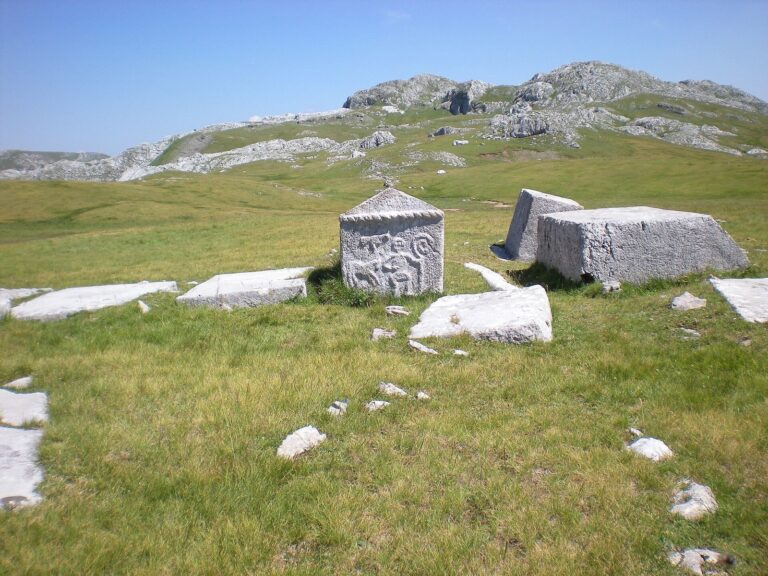
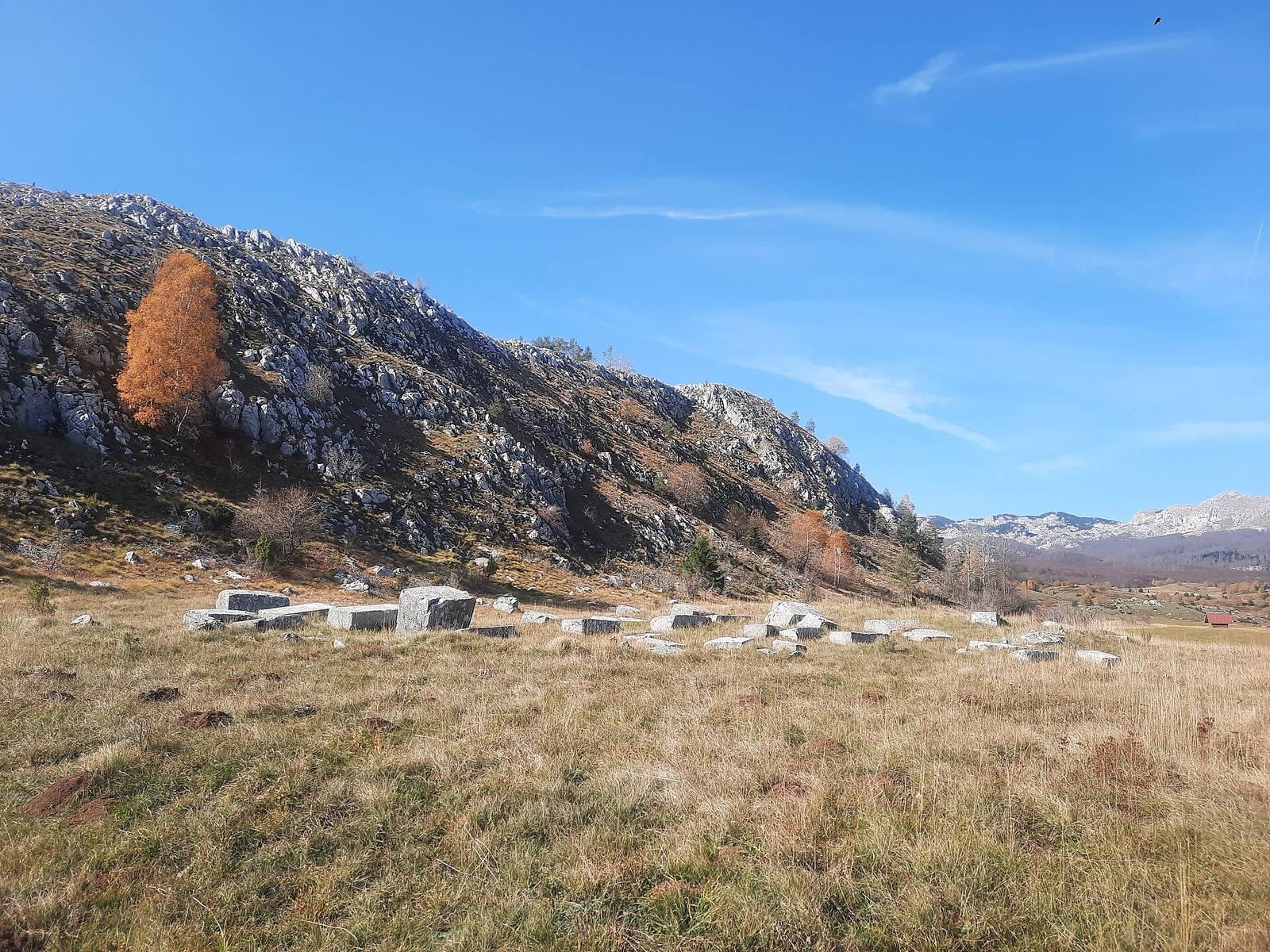
The Gvozno stećak necropolis is a medieval burial ground near Krbljine in Bosnia and Herzegovina, marked by stećci, monumental medieval tombstones characteristic of the western Balkans. In 2016, Gvozno was included in the UNESCO World Heritage listing of medieval stećak necropolises under criteria iii and vi. These criteria concern exceptional testimony to a cultural tradition or civilization, and association with events, traditions, ideas, or beliefs of outstanding universal importance. Gvozno is also a National Monument of Bosnia and Herzegovina.
Remains
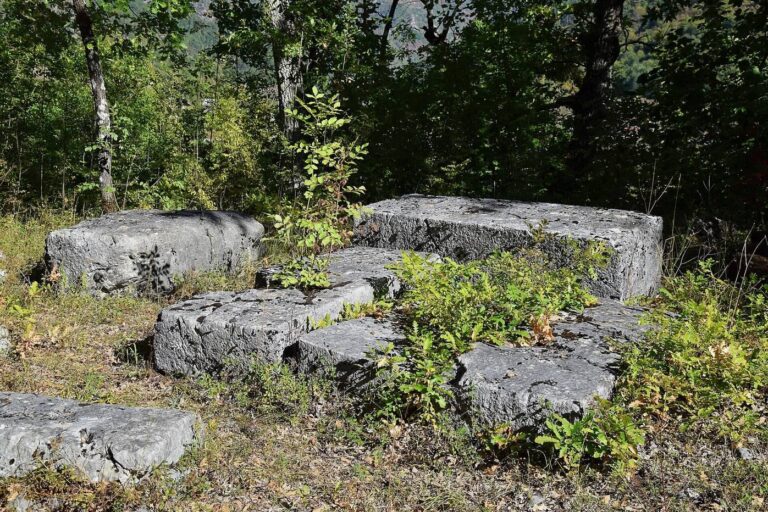
The 46-by-23-metre necropolis contains 87 monuments: four gabled tombstones, 54 chest-shaped tombstones, 27 slabs, and two cross-shaped monuments. Fourteen stones are decorated, with carved or incised human figures, animals, weapons, and geometric designs.
Setting
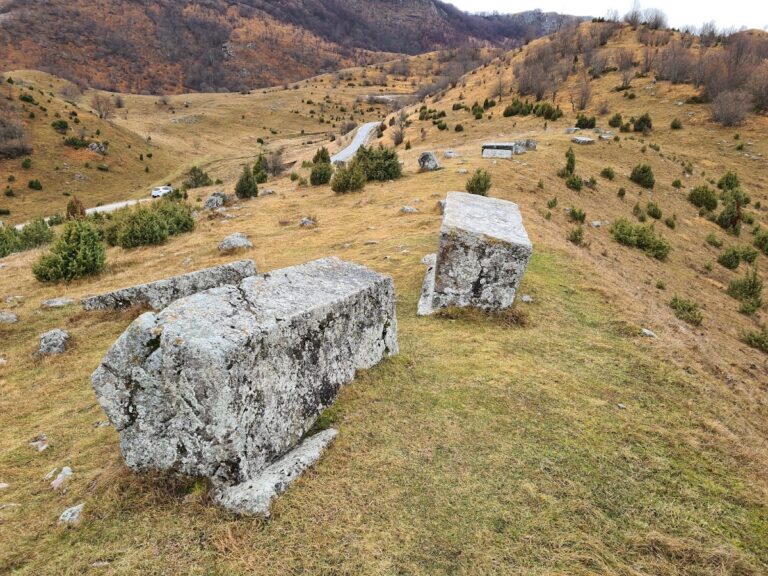
The burial ground lies in the southern part of Gvozno field, at the foot of Gradac hill. Gvozno is a small karst field, a relatively level basin in soluble rock where streams can drain underground, on Treskavica, about 11 kilometres northwest of Kalinovik. Rocky hills border the field to the south and east. Forested mountain slopes rise to the west and north, first gradually and then steeply. Springs nearby feed streams that water the field before sinking underground.
Decorated tombstones
Three numbered stones show the variety of the necropolis’s decoration. Other decorated monuments carry the same or similar motifs.
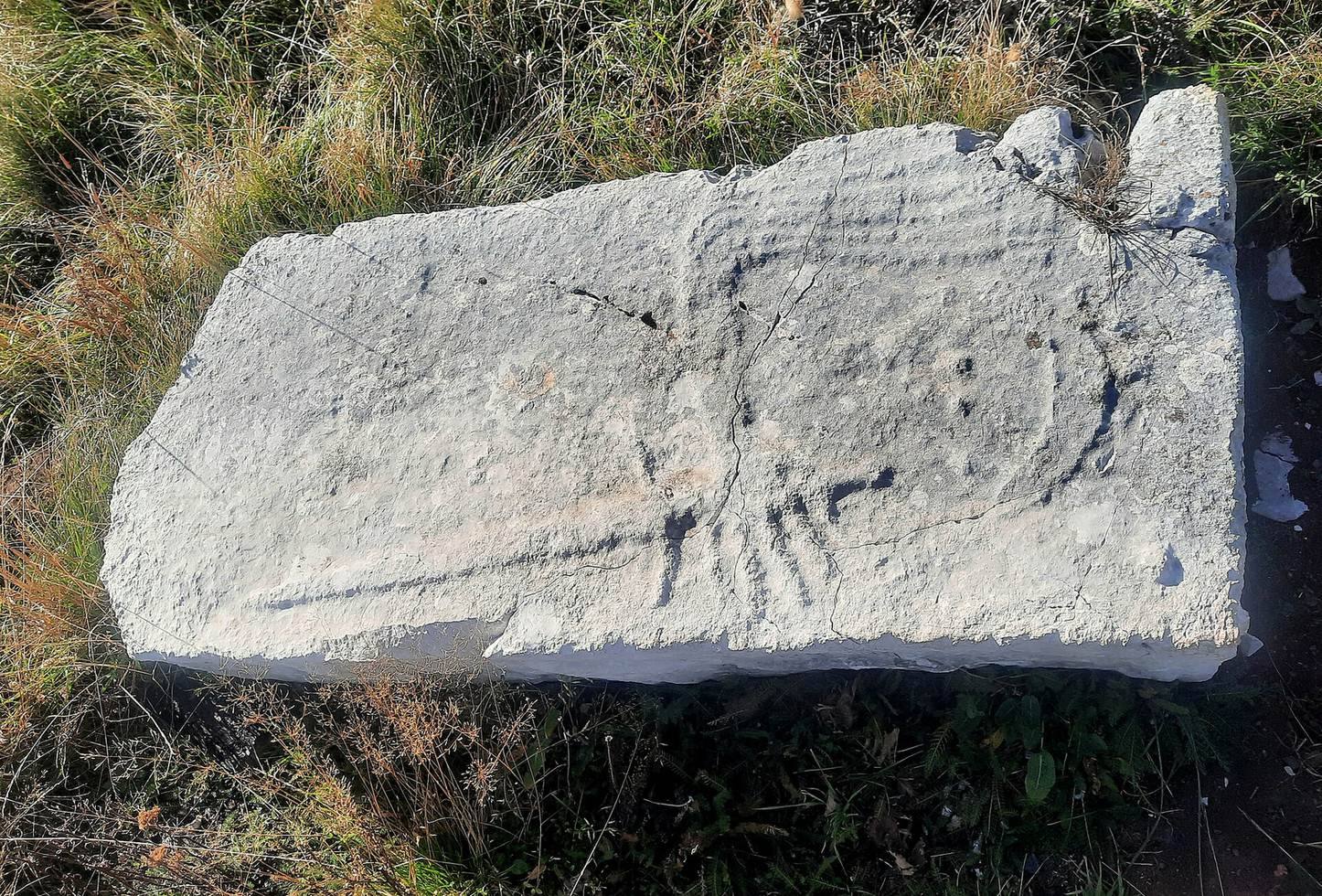
Stećak No. 3
This sunken slab measures 167 by 60 by 10 centimetres. Its upper face shows a rectangular shield and part of a long, straight sword, with the hilt above the shield and the point below. The shield bears a fantastical animal with a branching tail, used as a coat-of-arms-like emblem. Beside it, a man about as tall as the shield stands with one hand on his hip and the other on the sword and shield. His bent legs suggest movement, and his short garment widens toward its hem. Below the scene is a raised cross-rosette made of four joined rings, each enclosing two concentric rings.
Stećak No. 10
This small chest-shaped stone, set on a base, measures 105 by 54 by 33 centimetres and is probably associated with a child’s grave. Its carved decoration covers every side. On top, a rectangular shield with three circular bands sits above a sword; below the sword’s point is a crescent flanked by cross-shaped designs. Three semicircular bands appear beside the crescent on one side, while the other has a line and a pointed circle. The north face depicts two moving people, a circular band, and a horizontal object. On the south face, a horse and rider appear alongside three people holding hands in a dance. One end bears a cross whose arms terminate in circles, with a circular band beside it. On the opposite end, an upright stem forks near its top, and two spiral lines rise from its middle.
Stećak No. 42
This tall chest-shaped monument measures 163 by 67 by 54 centimetres and is decorated on its upper face and two upright sides. A raised image on top shows a bent arm holding a sword. The north side carries a hunting scene: a moving horse and rider, two animals resembling chamois, and a man with a sword facing the nearer animal. Three more animals appear below, with the middle one turned the other way. On the northwest end, three men perform a circle dance. They wear caps with pointed additions, their bent knees indicate movement, and the leader raises his free hand.
Cross-shaped monuments and graves
Stećci Nos. 86 and 87 are carefully carved cross-shaped monuments, measuring 180 and 200 centimetres in height. Both are broken, toppled, and partly buried. Some graves between the tombstones are marked only by stones edging the ground surface. A human skeleton was found 100 centimetres below the surface in one such grave.
Condition
Many of the tombstones have sunk into the ground, and a considerable number are weather-damaged. Lichens and moss pose a serious threat to the stones. Their sunken position also makes it harder to assess the full range and variety of the carved decoration.