Gokuraku-ji Temple: A Jodo-shu Buddhist Temple in Sanmu, Japan


Site at a Glance
- Rating
- 4.2
- Popularity
- Very Low
- Country
- Japan
- Primary era
- Unclassified
- External website
- Open
- Eras represented
- Unclassified
- Civilizations
- Unclassified
- Site type
- Religious
- Remains
- Temple
On this page5 sections
History
Foundation and Pure Land tradition
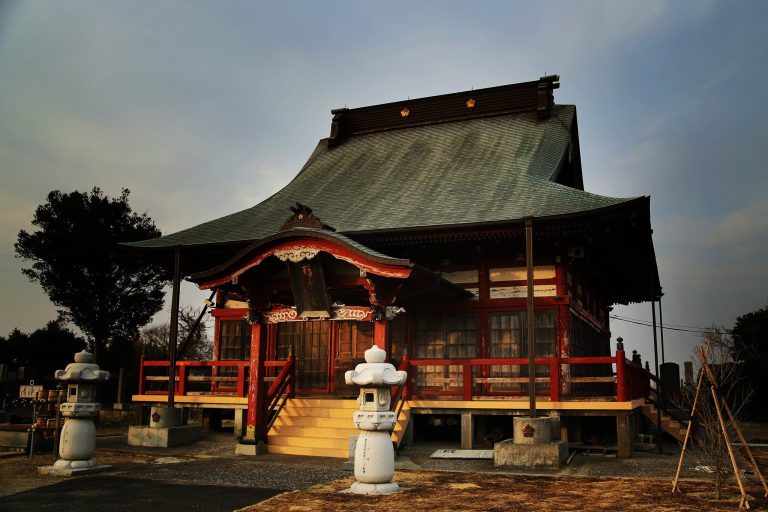
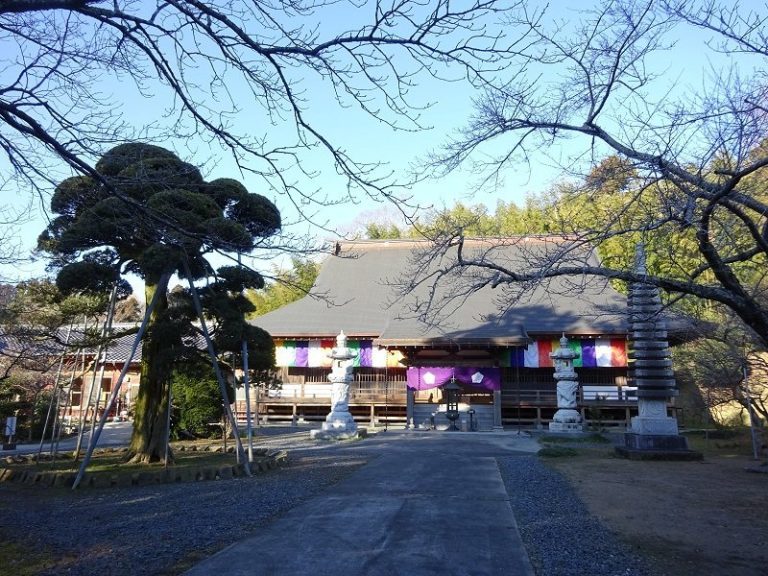
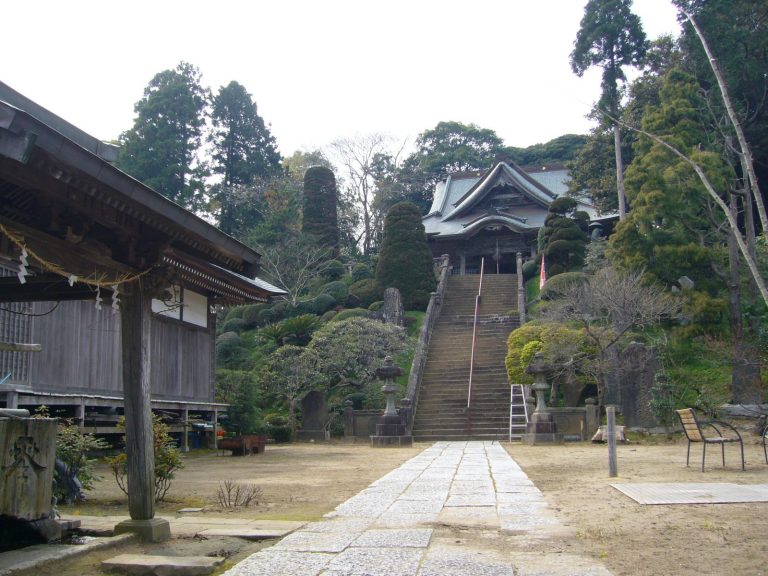
Gokuraku-ji Temple is a Jodo-shu Buddhist temple in Sanmu, Japan, founded in 1257 in the medieval period at the request of Mitsumune, a grandson of Kazusa Hirotsune. Jodo-shu is a Buddhist school centered on devotion to Amitabha Buddha and the hope of rebirth in the Pure Land. Gokuraku-ji belongs to its Chinzei branch, and its principal image is Amitabha Buddha. The temple’s formal name is Nakanezan Koshūin Gokuraku-ji.
The temple’s foundation tradition connects its origins with the upheaval surrounding Kazusa Hirotsune’s purge in 1184. His grandson Mitsumune fled to the area with the retainer Yui Hayato Kanefusa and 27 attendants. They built a temporary shelter on a small island in a river and lived there in hiding. After more than 50 years of developing the surrounding wetland, the area had become a village, and Mitsumune adopted the name Ishibashi Tango-no-kami.
Ryochu, also known as Nen’a Ryochu, was preaching in Sosa District, northeast of the site across the Kuriyama River. Traditionally regarded as the third patriarch of Jodo-shu, he was invited to the area after Mitsumune experienced a spiritually important dream. Mitsumune then built a temple for him. The tradition states that Ryochu preached for 17 days during its foundation.
Lotus flowers were in full bloom in nearby Hasunuma Pond at that time. Their appearance was said to make the landscape resemble the Pure Land, leading to the name Gokuraku-ji and giving the surrounding settlement the name Hasunuma.
Jodo-shu continuity and later institutional use
In 1259, Ryochu left the Sosa Nanjo Estate after a dispute with his patron, Shiina Hachiro Tanemitsu. Many Jodo temples later changed their affiliation to other Buddhist schools, but the temples of Hasunuma retained their Jodo identity. Since the district had no temples belonging to other schools, Hasunuma became known as an “all-Pure-Land” area.
Until the Meiji period, Gokuraku-ji had several branch temples, including Renko-ji, Renge-ji, Yakuo-ji, Chosho-ji, Shomyo-ji, Seijoin, and Toko-in. Renko-ji in southern Hasunuma and Renge-ji in Hasunuma-Tonodai remain extant.
The precinct later took on administrative and educational functions. Under the former large- and small-district system, it was used for an administrative office. In 1884, it became the village headman’s office, and after the town-and-village system was introduced, the village office was established there. A supplementary school subsequently occupied the precinct, which now accommodates Hasunuma Nursery School.
Remains
Precinct and pond setting
The physical setting of Gokuraku-ji is closely associated with Hasunuma Pond, whose lotus flowers form the central landscape element in the tradition explaining both the temple’s name and the name Hasunuma. The former temple precinct has also been reused through successive civic and educational functions. Administrative offices, a supplementary school, and the present Hasunuma Nursery School have occupied the grounds at different periods, linking the site’s religious foundation with its later public use.