Ryūbi-ji Temple: A Buddhist Temple of Sosa, Japan

Site at a Glance
- Rating
- 4.3
- Popularity
- Very Low
- Country
- Japan
- Primary era
- Medieval
- Eras represented
- Medieval
- Civilizations
- Ashikaga shogunate
- Site type
- Religious
- Remains
- Temple
On this page8 sections
History
Ryūbi-ji Temple is a Buddhist temple in Sosa, Chiba, Japan, belonging to the Chizan branch of Shingon Buddhism, an esoteric Buddhist tradition established in Japan by Kūkai. Temple tradition places its foundation in 661, during the Asuka period, the era spanning the seventh and early eighth centuries, under Empress Saimei. Its formal name is Tenjikuzan Sonren-in Ryūbi-ji, and Shakyamuni Buddha is enshrined as its principal image.
Early Foundation and Dragon Tradition
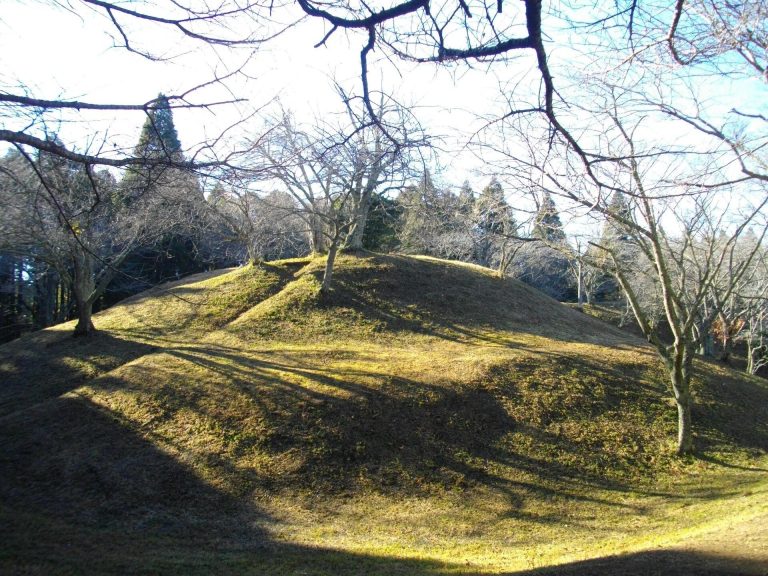
The date of foundation remains uncertain. The nearby Otera temple ruins were established in the latter seventh century, and roof tiles from the fourth quarter of that century have been found among the Ryūbi-ji ruins. These remains suggest that Ryūbi-ji was founded somewhat later than Otera, whose name recalls an ancient government-sponsored temple once associated with the area.
The temple’s surviving origin narrative was rewritten during the Meireki era, from 1655 to 1658, and an abridged version was published in 1984 by the abbot then serving at the temple. According to this tradition, a severe drought struck the country in 709, during the reign of Empress Genmei. The sovereign sent an imperial envoy to arrange a rainmaking rite, a religious ceremony intended to petition a deity or sacred power for rainfall. The monk Shakumyo served as officiant.
The story relates that a dragon deity rose from the shore of Soryo village during the ceremony. Its tail hung downward, prompting the traditional renaming of the village as Odare Soryo and later Odare. The present Odare area lies in Yokoshibahikari. The dragon then rose into the sky, where thunder divided it into three parts. Its head, belly, and tail were said to have fallen in the Hanyu, Inzai, and Hojo estates of the former Shimosa Province. Each part was enshrined at a temple, now known as Ryūkaku-ji, Ryūfuku-ji, and Ryūbi-ji.
Shakumyo is traditionally said to have renamed the temple Tenjikuzan Sonren-in Ryūbi-ji after the dragon’s tail fell at Otera. Together with the temples associated with the dragon’s head and belly, Ryūbi-ji became known as one of the Three Dragon Temples of the Kanto region.
Pilgrimage, Fire, and Reconstruction
Ryūbi-ji drew pilgrims from nearby areas and more distant places. Tradition describes it as a major temple with a complete set of seven halls. During another drought in the Tenryaku era, from 947 to 957, a monk is said to have performed a rainmaking rite there that brought rainfall.
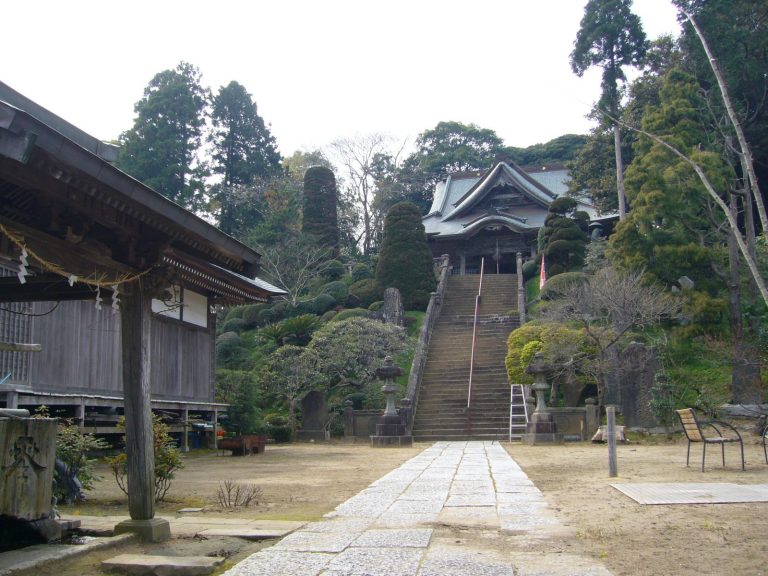
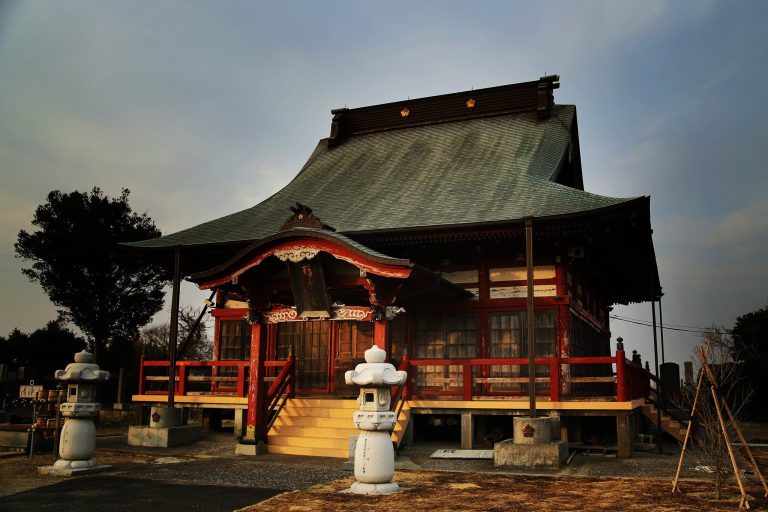
In 1370, during the Northern and Southern Courts period, the fourteenth-century era of rival imperial courts, fire destroyed most of the temple buildings. The halls raised after that disaster form the surviving temple complex today. A stone memorial tablet dated 1373 indicates that rebuilding followed soon after the fire. The tablet is designated as a tangible cultural property of Sosa City.
Another tradition places Kūkai at the mountain in 807. This association remains part of the temple’s historical identity and is also connected with a well within the grounds known as Kūkai’s Hand-Dug Well.
Remains
Ryūbi-ji stands in the area historically called Otera, where the temple complex is associated with archaeological remains from the latter seventh century. Excavated roof tiles from the fourth quarter of that century occur both at the adjacent Otera temple ruins and among the Ryūbi-ji ruins. The buildings visible today belong to the reconstruction undertaken after the fire of 1370, while the stone memorial tablet from 1373 preserves physical evidence of the rebuilding phase.
Temple Grounds and Archaeological Evidence
Surviving Temple Buildings
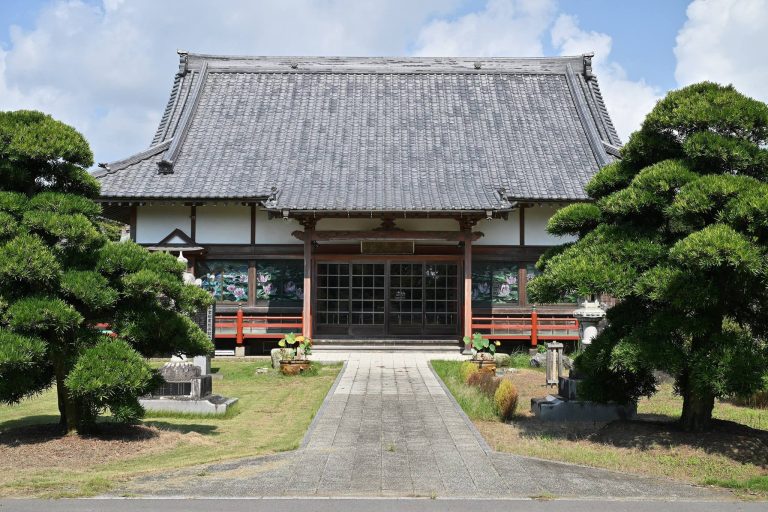
The present halls were erected after the destruction of most of the earlier complex in 1370. They represent the post-fire form of the temple, which tradition had described as a seven-hall complex. Their construction belongs to the rebuilding that followed the medieval fire.
Stone Memorial Tablet
A flat stone memorial tablet, an itabi used in medieval Japan for Buddhist memorial or devotional purposes, survives at Ryūbi-ji. Dated 1373, it stands as a surviving monument from the period immediately after the fire and helps place the temple’s reconstruction in the fourteenth century.
Kūkai’s Hand-Dug Well
Within the temple grounds is a well traditionally attributed to Kūkai’s visit in 807. Known as Kūkai’s Hand-Dug Well, its water is said to be suitable for washing the eyes.