Shogakuji-temple: A Shingon Buddhist Temple in Sammu, Japan


Site at a Glance
- Rating
- 4.2
- Popularity
- Very Low
- Country
- Japan
- Primary era
- Early Modern
- External website
- Open
- Eras represented
- Early Modern
- Civilizations
- Tokugawa
- Site type
- Religious
- Remains
- Sanctuary
On this page12 sections
History
Shogakuji-temple is a Chizan-branch temple of Shingon Buddhism in Sammu, Japan, traditionally founded in 947 as an imperial prayer temple of Emperor Murakami. Its present Shaka Hall belongs to the middle Edo period and follows a design associated with Kishu, now Wakayama Prefecture. The temple’s formal name is Mantokuzan Juraku-in Shokakuji, and it is also called Shitenson Shokakuji, or “Shokakuji of the Four Heavenly Guardians.” Shaka Nyorai, the historical Buddha Shakyamuni, is its principal deity.
Foundation and Temple Lineage
Temple tradition places Shokakuji’s establishment in the tenth century, during Emperor Murakami’s reign from 946 to 967. The temple was repaired in 1326, revived in 1500, and repaired again in 1591 with support from the Hara clan. It originally belonged to a group of branch temples connected to Entsuji in Shimoyokochi, alongside Fudoin Choshoji in present-day Naruto, Sammu. A priest who had served as Entsuji’s abbot later transferred to Shokakuji and became its abbot, linking the temple’s later history to its former parent institution.
Shokakuji’s traditions connect its principal image with major figures in Japanese Buddhist history. The former image of Shaka Nyorai was believed to have been brought from China by Kukai, the monk traditionally associated with the founding of Shingon Buddhism, after his journey to study Buddhist teachings. The present image is likewise traditionally associated with the sculptor Unkei and with the legend that gave the temple its Four Heavenly Guardians name.
Edo-Period Development
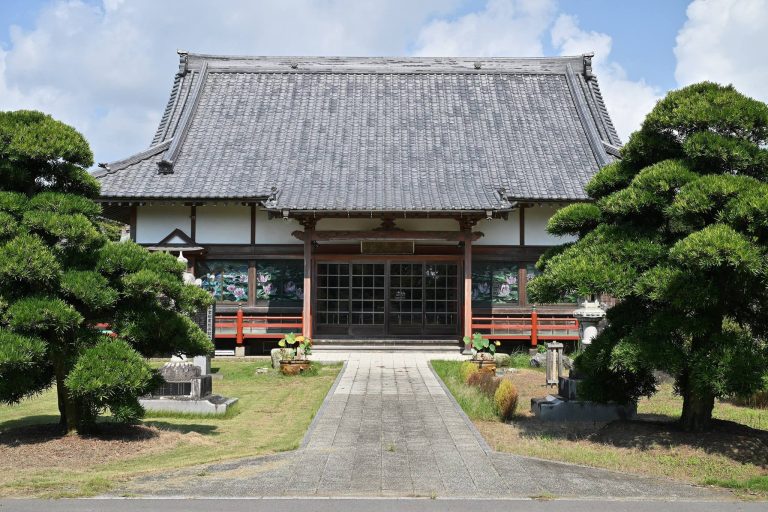
The present Shakado was built in 1695, during the Edo period, an era of samurai government that lasted from 1603 to 1868. Its construction is traditionally attributed to master carpenters from Kishu, and its regional design connection forms part of the temple’s architectural identity. During the Edo period, Shokakuji held an estate assessed at 10 koku and 2 to of rice. A koku was a historical measure of rice-based land or income, while a to was a smaller traditional volume unit.
The temple’s name is explained by a tradition involving Unkei and the Four Heavenly Kings, Buddhist guardian deities associated with the protection of the four directions. According to the legend, Unkei carved four large guardian figures while praying for national peace and the protection of the state. He then set them adrift as an offering to a dragon deity. The figures were said to have come ashore at Shitenki, in present-day Oamishirasato, and to have requested transport to Shokakuji so they could protect the image of Shaka Nyorai. They were consequently taken to the temple.
The temple also preserves the Shokakuji Engi, a historical account focused on Shokakuji and the construction of its Shakado. Ogyu Sorai wrote the record in praise of the hall. Sorai had received protection and assistance in Shimoyokochi, and composed the account for the priest who had moved from Entsuji to become Shokakuji’s abbot. In 1858, another record describes a traveling public display of the principal image at Eko-in in Ryogoku.
Damage and Preservation
The Shakado suffered severe damage during the Ione Typhoon in 1948. Major repairs followed in 1965, and the roof was completely restored in 1984 during commemorations of the 1,150th anniversary of Kukai’s death. The wooden standing statues of Ananda and Kashyapa, together with the Four Heavenly Kings, are designated tangible cultural properties of Chiba Prefecture. The Basho poetry stele is a historic site of Sammu, while the gravestone of the former Entsuji abbot is a municipal cultural property.
Remains
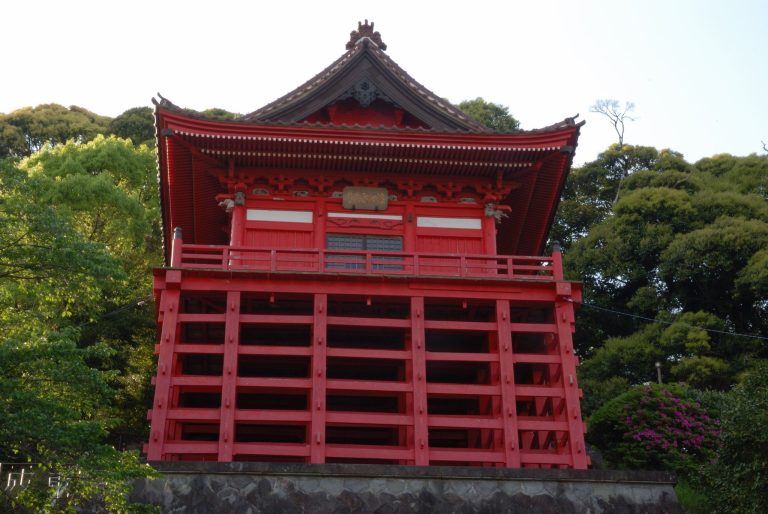
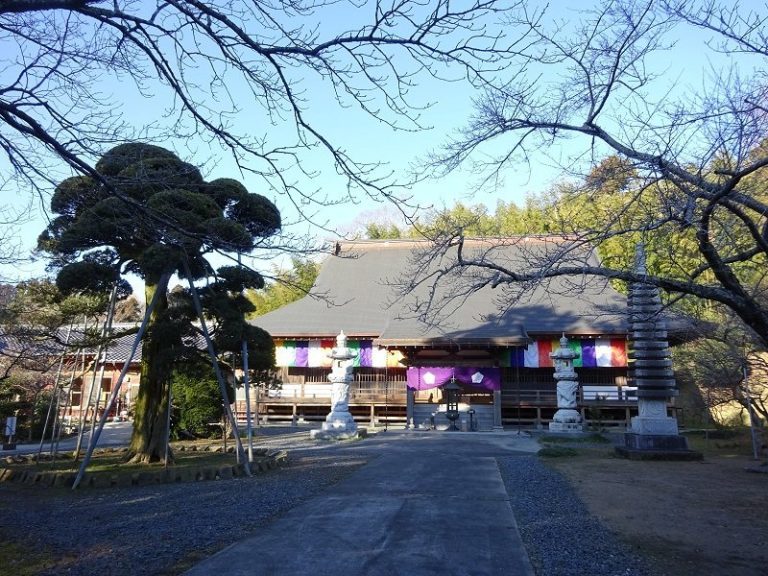
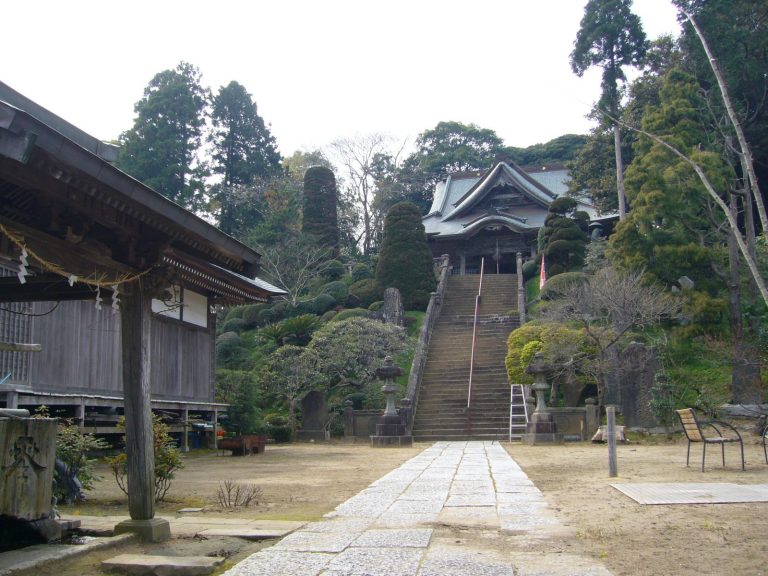
The surviving temple complex centers on the Shakado, or Shaka Hall, built in 1695 in a Kishu-associated Edo-period style. Inside, Shaka Nyorai occupies the principal position, accompanied by the standing figures of Ananda and Kashyapa. The Four Heavenly Kings are placed as guardians of the four directions, creating a sculptural arrangement organized around the temple’s central Buddhist image. The grounds also preserve the Shokakuji Engi, a stele carrying a haiku by Matsuo Basho, and the gravestone of a former abbot connected with Entsuji.
Shaka Hall and Buddhist Images
Shakado
The Shakado is the principal surviving architectural feature. Built in 1695, it embodies a design commonly associated with Kishu, now Wakayama Prefecture, and tradition attributes its construction to Kishu master carpenters. The hall enshrines the late-Kamakura-period image of Shaka Nyorai. Severe typhoon damage in 1948 led to major repairs in 1965, followed by complete roof restoration in 1984.
Four Heavenly Kings
The Four Heavenly Kings are monumental wooden sculptures from the Kamakura period, the era of samurai government from 1185 to 1333. Each figure is more than 2 meters tall and was made from joined pine blocks. Crystal eyes are incorporated into the sculptures. Their placement as guardians of the four directions relates directly to the temple’s traditional name and to the story of their supposed arrival at Shokakuji.
Ananda and Kashyapa
The standing images of Ananda and Kashyapa are each 65 centimeters high. Both are Kamakura-period works dating from the middle to late Kamakura period and made from joined cypress blocks. Ananda and Kashyapa were principal disciples of the historical Buddha, and their images stand beside Shaka Nyorai in the Shakado.
Records and Memorial Features
Shokakuji Engi
The Shokakuji Engi is preserved at the temple as a record concerned specifically with Shokakuji and the construction of its Shakado. Its association with Ogyu Sorai and with the former Entsuji abbot connects the surviving text to the temple’s Edo-period lineage and architectural history.
Basho Stele and Abbot’s Gravestone
A stele on the grounds bears a haiku by Matsuo Basho, a major poet of Japan’s early modern period known for his haiku. The grounds also contain the gravestone of the former abbot who transferred from Entsuji and later served Shokakuji, preserving a physical reminder of the temple’s institutional connection with its predecessor.