Fukakusa no Kita no Misasagi: An Imperial Mausoleum in Kyoto

Site at a Glance
- Rating
- 3.9
- Popularity
- Very Low
- Country
- Japan
- Primary era
- Early Modern
- External website
- Open
- Eras represented
- Early Modern, Modern
- Civilizations
- Japanese, Tokugawa
- Site type
- Religious
- Remains
- Tomb
On this page5 sections
History
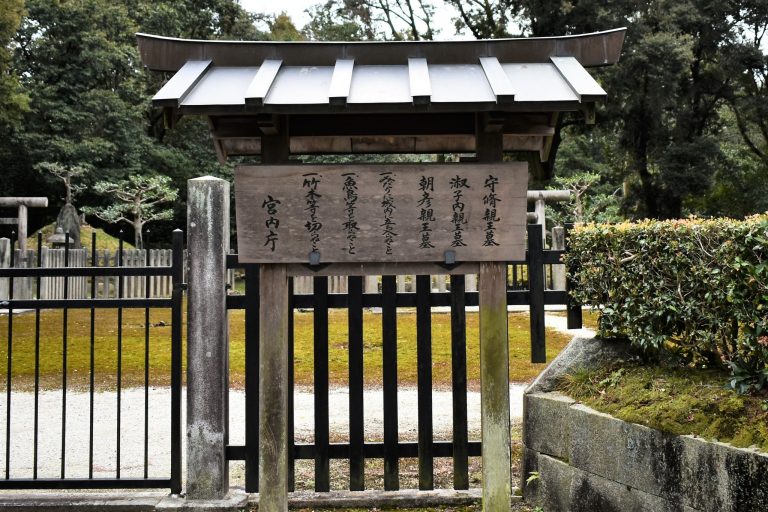
Fukakusa no Kita no Misasagi is an imperial mausoleum in Kyoto, Japan, containing the remains of 12 emperors associated with the Jimyōin branch of the medieval Japanese imperial family. It began as a Buddhist ossuary, a repository for cremated remains, established for Emperor Go-Fukakusa in the early 14th century and is also the burial place of Prince Fushimi-no-miya Yoshihito.
Foundation as a Buddhist ossuary
During his lifetime, Emperor Go-Fukakusa ordered the construction at Fukakusa of a Hokke-dō, a Buddhist hall associated with devotion to the Lotus Sutra and intended to hold cremated imperial remains. He died on July 16, 1304, and was cremated according to his instructions. His remains were temporarily placed beneath the altar of Anraku-gyōin, the Buddhist institution responsible for administering the hall.
The hall was completed and ceremonially consecrated on August 29, 1305, in the presence of Emperor Fushimi and Emperor Go-Fushimi. Go-Fukakusa’s remains were then transferred into the building. The remains of other emperors of the Jimyōin branch were subsequently interred there, establishing the mausoleum’s enduring association with that line. The Jimyōin branch was one of the two principal lines of the Japanese imperial family during the medieval period.
Destruction and rebuilding
The hall was destroyed by fire during the Sengoku period, an era of civil warfare and political fragmentation in Japan. Anraku-gyōin also declined during this period. The hall was rebuilt in 1615, when the remains of Emperor Go-Yōzei were deposited there. After that reconstruction deteriorated, the building was reconstructed again during the Genroku era, while Anraku-gyōin was revived in 1662. The 1615 rebuilding may also have involved moving the hall eastward from its former position to the site it occupies today.
During the Bunkyū restoration, the building was enlarged, and its roof form and materials were altered. In the Meiji period, the roof was changed to tile and the hall was renamed Fukakusa no Kita no Misasagi. The site was formerly known as Fukakusa Hokke-dō, Fukakusa Twelve Emperors Mausoleum, and Anraku-gyōin Hokke-dō.
The imperial burials
The mausoleum holds Emperor Go-Fukakusa, the 89th emperor, who died in 1304; Emperor Fushimi, the 92nd, who died in 1317; and Emperor Go-Fushimi, the 93rd, who died in 1336. It also contains Emperor Go-Kōgon, the fourth Northern Court emperor, who died in 1374, and Emperor Go-En’yū, the fifth Northern Court emperor, who died in 1393. The Northern Court was the imperial court that existed in Kyoto during a period of divided imperial succession.
The remaining imperial burials are those of Emperor Go-Komatsu, the 100th emperor, who died in 1433; Emperor Shōkō, the 101st, who died in 1428; Emperor Go-Tsuchimikado, the 103rd, who died in 1500; Emperor Go-Kashiwabara, the 104th, who died in 1526; Emperor Go-Nara, the 105th, who died in 1557; Emperor Ōgimachi, the 106th, who died in 1593; and Emperor Go-Yōzei, the 107th, who died in 1617.
The grave of Prince Fushimi-no-miya Yoshihito, the first son of Emperor Sukō, is also within the precinct. He died in 1416. Emperors Hanazono, Kōgon, Kōmyō, and Sukō were buried at other mausoleums, while Emperor Go-Hanazono was buried at Go-Yamakuni Mausoleum, in the same area as Yamakuni Mausoleum.
Remains
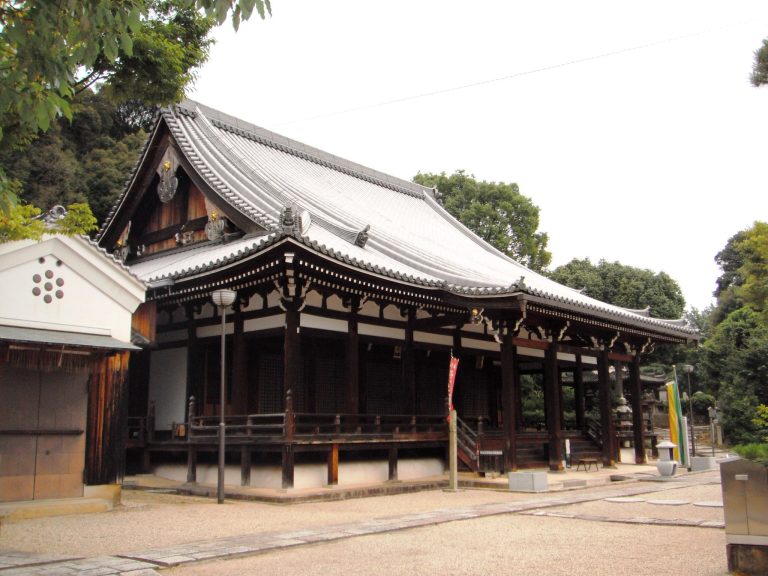
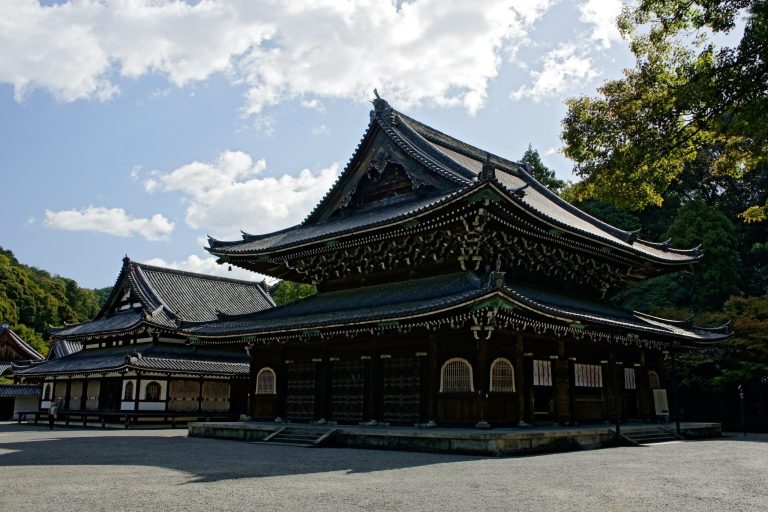
The principal surviving feature is a square hall that functions as the mausoleum’s ossuary. During the Genroku-era reconstruction, it was a small one-bay building, meaning that its square plan had one structural interval between columns on each side. It had a pyramidal roof, which rises symmetrically to a central point, covered with tiles. The building was enlarged during the Bunkyū restoration into a three-bay square structure. Its roof was then covered with wooden shingles, thin overlapping pieces of wood, and a torii, the gateway traditionally marking the entrance to a Shinto sacred precinct, was erected in front of the hall. The roof was later changed back to tile during the Meiji period.
East of the hall lies a small mound called Hanshū-in-zuka. Its interpretation remains uncertain. Yoshiomi Tanimori considered it a possible cremation site for Emperor Fushimi, while Shigesuke Ishida identified it as a possible location of the former Hanshū-dō of Shinshū-in, a hall built by Emperor Go-Fukakusa. The mound therefore preserves two proposed connections with the mausoleum’s earlier religious and funerary landscape.