Tsuki no wa no misasagi: An Imperial Mausoleum Complex in Kyoto


Site at a Glance
- Rating
- 4.5
- Popularity
- Very Low
- Country
- Japan
- Primary era
- Early Modern
- External website
- Open
- Eras represented
- Medieval, Early Modern, Modern
- Civilizations
- Japanese
- Site type
- Religious
- Remains
- Tomb
On this page14 sections
History
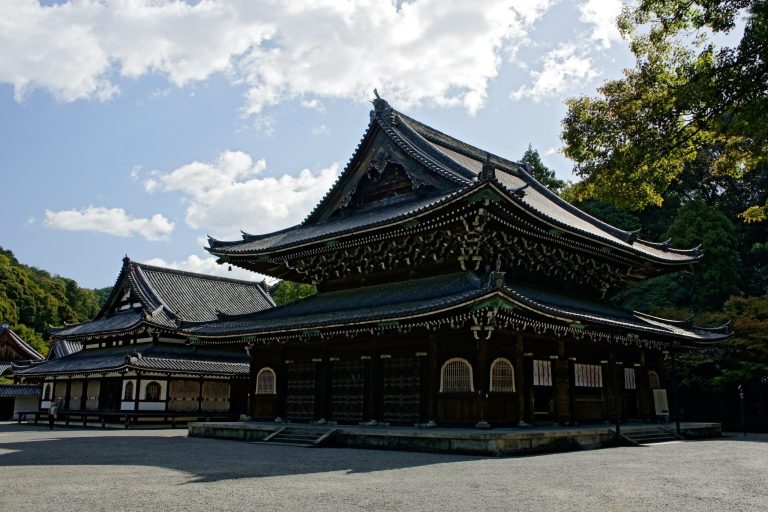
Tsuki no wa no misasagi is part of an imperial mausoleum complex at Sennyuji in Kyoto, Japan. The complex contains 25 imperial mausoleums, five ash mounds, and nine graves of Imperial Family members, including 14 emperors. Sennyuji was the Imperial Family’s hereditary Buddhist temple and bodaiji, a temple responsible for a family’s memorial and funerary rites, which made its grounds a center of imperial burial and remembrance.
Origins at Sennyuji
The name Tsuki no wa derives from Gachirin Daishi, a Buddhist monk associated with Sennyuji, and Mount Gachirin behind the temple. The mausoleum area was formerly known as the Imperial Tombs. During the Meiji-period separation of Buddhism and Shinto, a state policy that reorganized religious institutions and removed Buddhist elements from imperial rites, the area was transferred from Sennyuji to the Ministry of the Imperial Household.
Imperial burial customs had traditionally distinguished between reigning emperors, who were generally buried, and retired emperors, who were generally cremated. From around the mid-ninth century, cremation became widespread, and separate cremation mounds and ash mounds were created alongside mausoleums. During the Heian period, imperial mausoleums became increasingly connected with Buddhist temples. Temple authorities could be given responsibility for a mausoleum, while halls used to hold ashes during the period of cloistered rule could themselves come to be regarded as imperial tombs.
The thirteenth-century foundation of the mortuary complex
When Emperor Shijo died suddenly in 1242, his funeral took place at Sennyuji. He was buried there, and a new hall was built as his mortuary structure. This was the first imperial funeral and burial held at Sennyuji. Tradition attributes the choice to Shijo’s wishes, while the temple’s connection with his grandfather Kujo Michiie, its protector, and its proximity to the mausoleum of Shijo’s father, Emperor Go-Horikawa, are also regarded as reasons for the decision. A later tradition identified Shijo as the reincarnation of Shunjo, a monk of Sennyuji.
After the imperial succession divided between the Jimyoin and Daikakuji branches, rival lines of the imperial family, the Northern and Southern Courts period reshaped the political and ritual setting. The Fukakusa Hokke-do became the effective mortuary hall of the Jimyoin branch. Later emperors of that line were deposited there, and the hall developed into the Fukakusa Northern Mausoleum.
Funerals, cremation, and ash mounds
Emperor Go-Kogon, the fourth emperor of the Northern Court, had his funeral and cremation performed at Sennyuji. His remains were then placed at Fukakusa Hokke-do. His coffin was wrapped in red brocade rather than the previously customary raw silk, and monks alone conducted the funeral as a Buddhist rite. Portions of his remains were also distributed among Sennyuji and four other temples.
After Go-Kogon, Sennyuji effectively controlled imperial funerals and cremations, while placing the remains at Fukakusa Hokke-do became customary. Ash mounds were nevertheless made within the present complex for five emperors, from Emperor Go-Tsuchimikado through Emperor Go-Yozei. Imperial graves began to appear in the complex during the early modern period, beginning with Shin Joto-mon’in, who died in 1620. By the time of Emperor Go-Komyo, imperial mausoleums had again been established there, following the precedent set by Emperor Shijo.
The early modern imperial temple
From Emperor Go-Komyo through Emperor Ninko, the cremation ceremony was performed but the bodies were not actually cremated. The emperors were buried at Sennyuji, and the early modern imperial mausoleums became concentrated in this area. Sennyuji was thereby fully established as the Imperial Family’s mortuary temple, known as the Imperial Temple.
The reason for the change from cremation to burial is uncertain. A story written by Aochi Norimoto attributes it to the fishmonger Uo-ya Hachibei, although the story’s historical reliability is doubtful. Other explanations connect the change with the Edo shogunate’s promotion of Confucianism or with a return to the older practice of burying reigning emperors.
The Meiji transition
When Emperor Komei died in 1867, the separation of Buddhism and Shinto encouraged a revival of separate imperial mountain mausoleums. A proposal to place his mausoleum near Emperor Tenji’s mausoleum was rejected after opposition from Sennyuji. Nochi no tsuki no wa Higashiyama no misasagi was instead established near the complex. The dispute delayed Komei’s funeral for one month. It was conducted as a complete burial without even a cremation ceremony, bringing the early modern imperial burial system to an end.
The Imperial Household Agency maintains the complex as an imperial mausoleum and place of veneration. Named Edo-period interments at Tsuki no wa no misasagi include Emperor Go-Mizunoo, Empress Meisho, Emperor Go-Komyo, Emperor Go-Sai, Emperor Reigen, Takatsukasa Fusako, Emperor Higashiyama, Emperor Nakamikado, Emperor Sakuramachi, Emperor Momozono, Empress Go-Sakuramachi, and Emperor Go-Momozono. Prince Masahito, posthumously known as Yoko-in Daijo-tenno, is also designated there. Nochi no tsuki no wa no misasagi contains Emperor Kokaku, Empress Yoshiko, and Emperor Ninko, while Emperor Komei and Empress Dowager Eisho are interred at the nearby Nochi no tsuki no wa Higashiyama no misasagi.
Remains
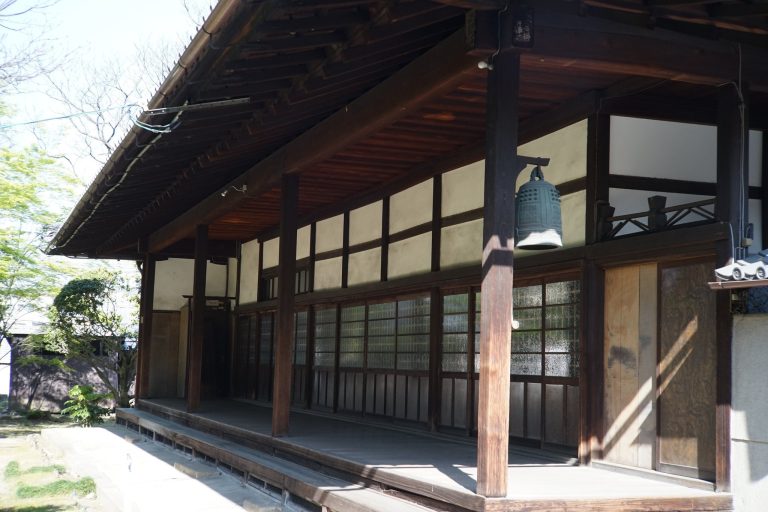
The mausoleum area lies behind Sennyuji’s Reimeiden. A transparent wall and a gate with a curved karahafu gable enclose the area, while a white-sand garden in front of the enclosure forms the worship space. The surviving monuments show how imperial mausoleums, ash mounds, and graves were arranged as related but distinct forms within the temple grounds.
Ash mounds and imperial mausoleums
Ash mounds
Four of the five ash mounds stand in a row and are planted with sacred sakaki trees. Different kinds of trees occupied the mounds in earlier periods. Emperor Go-Yozei’s ash mound has a different form, a stone nine-story pagoda. This monument may reflect an earlier period when the distinction between an imperial mausoleum and an ash mound was not clearly defined. Its design has also been interpreted as following the precedent of Emperor Shijo’s mortuary monument.
Imperial mausoleums
The imperial mausoleums are stone nine-story pagodas. Each stands on a square plot enclosed by stone fences and finished with stone paving, and some of the fences include stone gates. Together, these repeated forms express the physical organization of the principal imperial burials within the complex.
Women’s and princes’ tombs
Tombs of imperial women
The tombs of 16 women who held the title nyoin, a rank granted to certain imperial women and high-ranking consorts, and of four princes are based on either an unseamed pagoda or a hōkyō-in pagoda. An unseamed pagoda is a smooth, solid stone funerary tower, while a hōkyō-in pagoda is a Buddhist reliquary monument used as a funerary memorial. The size of a woman’s tomb reflects whether she was a principal wife, who received a mausoleum, or held a position that resulted in a grave.
The earliest form was the unseamed pagoda. Tokugawa Masako’s mausoleum was the first to use a hōkyō-in pagoda, although female imperial tombs temporarily returned to the earlier form afterward. The hōkyō-in form was later used again for Konoe Koreko’s mausoleum and then became standard for female imperial tombs. Unlike Masako’s mausoleum, the later examples lack stone fences, indicating a lower rank.
Princess Yoshiko’s tomb
Princess Yoshiko’s mausoleum alone has a seven-story pagoda. Built in 1870, it replaced an original hōkyō-in pagoda. The first arrangement had been authorized after the court requested that her tomb receive a status equivalent to Tokugawa Masako’s mausoleum.
Tombs of the princes
Three princes’ tombs were constructed in the nineteenth century. Each contains a hōkyō-in pagoda somewhat smaller than those used for the female imperial tombs. All three princes were sons of imperial empresses, a circumstance regarded as relevant to the form and treatment of their tombs.
Prince Sanehito’s tomb also takes the form of an unseamed pagoda. Its construction date is unknown, and the reason for this form is unclear.