Takao-san Yakuō-in Temple: A Shingon Buddhist Temple on Mount Takao


Site at a Glance
- Rating
- 4.4
- Popularity
- Medium
- Country
- Japan
- Primary era
- Early Modern
- External website
- Open
- Eras represented
- Early Modern, Modern
- Civilizations
- Japanese, Tokugawa
- Site type
- Religious
- Remains
- Temple
On this page19 sections
History
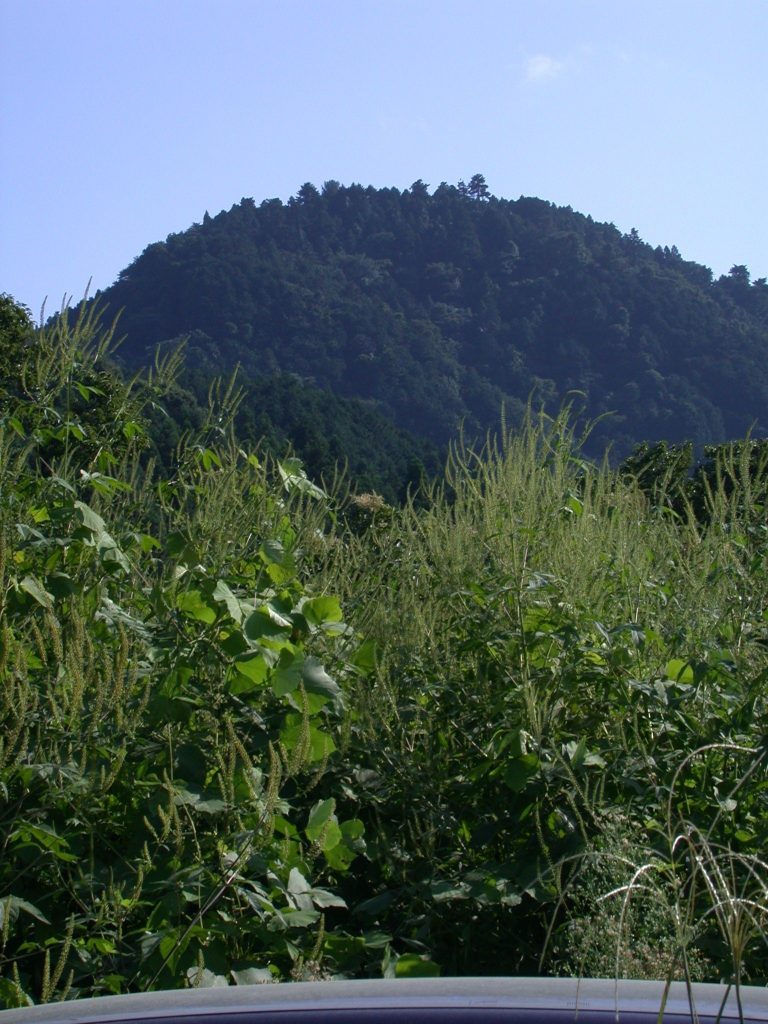
Takao-san Yakuō-in Temple is a Buddhist temple in Japan, on Mount Takao in Hachioji, Tokyo, traditionally founded in AD 744. Its formal name is Takao-san Yakuō-in Yuki-ji, and it belongs to the Chizan branch of Shingon Buddhism, one of that branch’s three major head temples in the Kanto region.
Foundation and early religious development
The temple’s foundation is traditionally linked to Emperor Shomu, an eighth-century sovereign who promoted state-supported Buddhism. He ordered the establishment of a prayer temple to protect eastern Japan, while the prominent monk Gyoki is credited with founding it. Medicine Buddha was installed as the principal image, giving the temple the name Yakuō-in.
During the Eiwa era, from AD 1375 to 1379, the monk Shungen Daitoku came from Daigoji in Kyoto, a major Shingon temple complex. He enshrined Izuna Gongen, a syncretic protective deity associated with mountain religious traditions, as the temple’s guardian. Yakuō-in then developed both as a sacred mountain connected with Izuna worship and as a training center for Shugendo, a tradition of mountain asceticism combining Buddhist, esoteric, and indigenous religious practices.
Landholding and religious traditions
Documents preserved by the temple state that Hojo Ujiteru, a sixteenth-century regional warlord and younger brother of Hojo Ujimasa, donated an estate extending across the Mount Takao area during the Sengoku period, an era of conflict among regional warlords. During the Edo period, the era of Tokugawa shogunal rule, the documents were used in an effort to have Mount Takao recognized as vermilion-seal land granted to the temple.
Medicine Buddha and Izuna Gongen remain the temple’s principal religious figures. Its annual practices include a summit sunrise festival with prayers and Buddhist chanting for safety in the coming year. At the Setsubun ceremony, participants traditionally say only “Fortune in,” rather than “Demons out.” The Fire-Walking Festival follows a series of rituals with an ascetic practice of walking across fire, believed to bring spiritual benefit.
Modern recognition and public religious practice
Participants in the Setsubun bean-throwing ceremony bow before the principal images and take part in an approximately 20-minute goma fire ritual. They are treated as practitioners, receive a goma talisman, and have their names displayed for one year.
Litigation concerning the constitutional separation of religion and state examined public officials’ participation in the Setsubun ceremony and goma prayers, together with the taxation of participation-fee income. The Tokyo High Court held that the participation did not violate the separation of religion and state and that the tax treatment was not unlawful preferential treatment. The Supreme Court declined to accept subsequent appeals in September 2017, and a separate claim was dismissed.
The temple’s principal buildings and several associated works have been recognized as Tokyo-designated tangible cultural properties. The temple and its cedar-lined approach also form part of Hachioji’s Eighty-Eight Scenic Views. Yakuō-in is associated with several regional religious circuits, including the Kanto Ninety-One Yakushi pilgrimage as stop 5, the Kanto Thirty-Six Fudo pilgrimage as stop 8, the Tama Shikoku Eighty-Eight Pilgrimage as stop 68, and the Hundred Temples of Flowers of Eastern Japan as Tokyo stop 8.
Remains
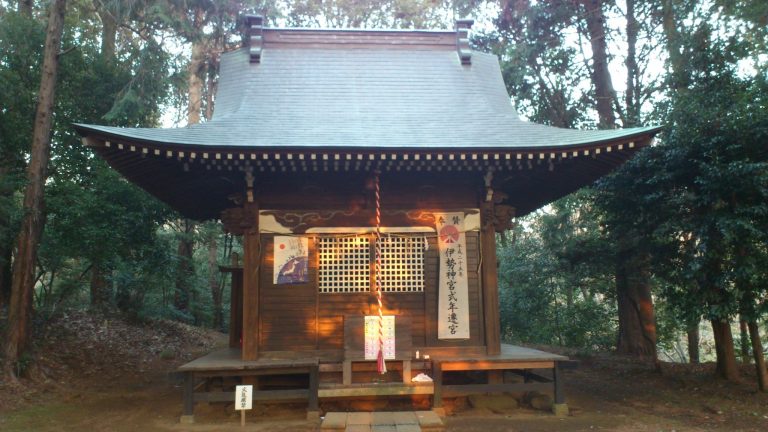
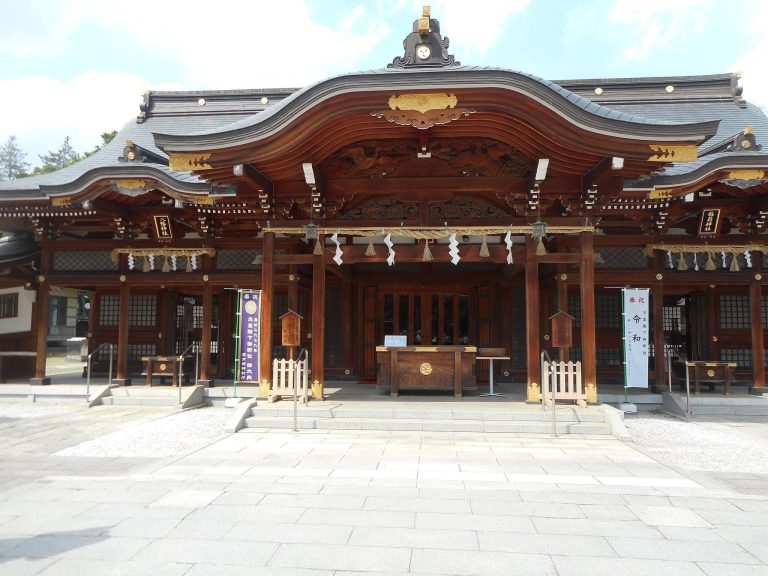
The temple complex is organized around a central hall, a shrine precinct, an upper temple area, subsidiary halls, and smaller shrines. Its buildings combine Buddhist and shrine forms, including hip-and-gable roofs, pyramidal roofs, flowing-style shrine roofs, carved exteriors, and richly polychromed decoration. The cedar-lined approach forms part of the site’s physical setting.
Central halls and shrine precinct
Great Main Hall
The Great Main Hall is the temple’s central hall and enshrines Medicine Buddha and Izuna Gongen. Erected in 1901, it has a hip-and-gable roof, an unpainted exterior with carved decoration, and a goma fire-ritual altar inside.
Main Shrine
The Main Shrine, also called the Gongen Hall, is the central shrine building dedicated to Izuna Gongen. Its main sanctuary was built in 1729, followed by the offering hall and worship hall in 1753. Major renovations took place in 1805, 1965, and 1998. The complex follows the gongen-zukuri form, in which a main sanctuary and worship hall are joined by an intervening offering hall. Its richly colored buildings stand behind a torii gate, representing a shrine within a Buddhist temple from the period before Buddhism and kami worship were separated.
The standing image of Izuna Gongen in the Main Shrine has an unusual, nonstandard Buddhist form. Its appearance reflects the distinctive religious traditions that developed around the deity at Mount Takao.
Upper temple area
Jōshinmon and Shinpen Hall
The Jōshinmon purification gate leads into the upper temple area. Immediately to its left is Shinpen Hall, which enshrines the Great Bodhisattva Shinpen, an epithet associated with En no Ozunu, the traditional founder of Shugendo. The hall has a hip-and-gable roof with a curved gable.
Hachidai Ryuo Hall and Kurikara Hall
Hachidai Ryuo Hall was erected in November 1993 for the Eight Dragon Kings. It is arranged like a water-purification pavilion, where washing coins is considered auspicious. Kurikara Hall, erected in 1997, enshrines the Kurikara Dragon King. A separate Shugyo Daishi Hall enshrines Kobo Daishi, the posthumous name of Kukai, traditionally regarded as the founder of Japanese Shingon Buddhism.
Benzaiten Cave, Aizen Hall, and Shoten Hall
Benzaiten Cave beside the main residential compound contains a shrine to Benzaiten. The site existed from earlier times and was restored in December 1926 after falling into disrepair. Aizen Hall was erected in December 1994 for Aizen Myoo and has a pyramidal roof with a curved gable. Shoten Hall, erected in September 1997 for Kangiten, also has a pyramidal roof.
Inner sanctuary and sacred images
Daishi Hall
Daishi Hall enshrines Kobo Daishi. Built during the middle of the Edo period, it is a three-bay-square building with a pyramidal roof, a projecting worship porch, and a copper-sheet roof. A historical gazetteer called it Dainichi Hall and placed it in a different location.
Okunoin Fudo Hall
Okunoin Fudo Hall is the temple’s inner sanctuary and enshrines the Immovable King, a wrathful Buddhist guardian associated with protection and overcoming obstacles. Built during the Kanei era, from AD 1624 to 1644, the hall is a three-bay-square structure with a pyramidal roof and projecting worship porch. It was repaired in 1959 and also enshrines Gyoki and Shungen.
Immovable King group
The wooden Immovable King with two attendants uses assembled wood-block construction, inset crystal eyes, and polychrome decoration. Its style displays characteristics of Kamakura Buddhist sculpture dating from before the Muromachi period. The hall received Tokyo cultural-property designation in 1953, while the wooden Immovable King group was separately designated in the sculpture category in 1962.
Smaller shrines and ritual features
Tengu Shrine and Fukutoku Inari
Tengu Shrine consists of two shrines dedicated to the Great and Small Tengu, traditionally believed to inhabit Mount Takao. Both are one-bay structures with flowing-style roofs. Fukutoku Inari is a one-bay shrine dedicated to Inari. Its flowing-style building has a curved gable and vivid polychrome decoration.
Sengen Shrine and the upper ritual ground
Sengen Shrine is dedicated to the Asama Bodhisattva and has a one-bay building with a flowing-style roof and curved gable. The upper temple area also contains an outdoor goma fire-ritual ground, a Buddhist relic tower holding relics donated by Thailand, and a statue of Izuna Gongen positioned in front of the tower.