Raigō-in Temple: A Shingon Subtemple of Sennyū-ji in Kyoto


Site at a Glance
- Rating
- 4.1
- Popularity
- Very Low
- Country
- Japan
- Primary era
- Early Modern
- External website
- Open
- Eras represented
- Early Modern
- Civilizations
- Toyotomi regime
- Site type
- Religious
- Remains
- Temple
On this page14 sections
History
Raigō-in Temple is a Buddhist temple in Kyoto, Japan, belonging to the Old Shingon tradition and the Shingon Sennyū-ji school. Formally known as Myōōzan Raigō-in, it is a subtemple of Sennyū-ji and is also called the steward temple of the Imperial Temple, a reference to Sennyū-ji. Its religious traditions connect it with Kūkai, childbirth prayers for the empress’s palace, and the history of the Ako vendetta.
Origins and Foundation
Temple tradition traces Raigō-in’s origins to 806, when Kūkai, the monk who founded the Shingon tradition, enshrined an image of Sanbō Kōjin that he had received in Tang China. Sanbō Kōjin is a Buddhist-Shinto protective deity associated with fire, kitchens, and hearths. At Raigō-in, the deity also carries a tradition of protecting childbirth.
The institution received its formal foundation in 1218. Gattō Chikyō, an elder of Sennyū-ji, organized the buildings with the support of Fujiwara no Nobufusa and established Raigō-in as a Sennyū-ji subtemple. Gattō Chikyō is regarded as the temple’s founding priest. Raigō-in also served as a place of prayer for safe childbirth for the empress’s palace.
Destruction and Revival
The temple’s buildings were destroyed by fire in 1468 during the Ōnin War, a civil conflict that caused widespread destruction in Kyoto. Raigō-in then fell into decline. It was revived in 1574 by Shunpo Meishō with assistance from Oda Nobunaga, a major military leader of Japan’s Sengoku period.
In 1597, donations from Maeda Toshiie enabled the rebuilding of the temple’s buildings. Financial support from the Tokugawa family also helped restore Raigō-in’s economic foundation and complete its revival. These interventions re-established the temple after the destruction and decline of the preceding centuries.
Raigō-in and the Ako Vendetta
Raigō-in later became associated with Ōishi Yoshio and the Ako vendetta. In 1701, Asano Naganori, lord of the Ako domain, was compelled to commit suicide after attacking Kira Yoshinaka at Edo Castle. The Asano family’s house was consequently extinguished. Ōishi, a former Asano retainer, left Ako and relied on Takugan, an elder of Sennyū-ji who also served as Raigō-in’s abbot.
Ōishi became a temple parishioner, received a certificate of temple registration, and established a residence in Yamashina. Tradition holds that he spent much of his time at Raigō-in, where he established a study. He is also said to have held tea gatherings there with former Ako retainers while secretly planning the attack on Kira’s residence. The tradition further associates him with the temple’s Shōgun Jizō image, which he is said to have used as his personal devotional image while praying for the raid’s success.
Modern Religious Tradition
Raigō-in declined again during the Meiji suppression of Buddhism, a nineteenth-century government-backed movement that separated Buddhism from state-supported Shinto and damaged or dismantled many Buddhist institutions. The temple was revived during the Taishō period. Under the abbot Genkyō, monthly tea gatherings commemorating Ōishi began at Gansui-ken, including the Ōishi memorial tea gathering held on December 14. This tradition continues as the Gansui-kai.
Raigō-in follows the Old Shingon tradition and the Sennyū-ji school, under the Myōōzan mountain designation. Amida Buddha is its principal object of worship. The temple is also the fourth station of the Senzan Seven Lucky Gods pilgrimage, where Hotei is venerated. Its wooden seated Kōjin image and five wooden standing Dharma-protector images are Important Cultural Properties, while Kōjin Hall is designated a tangible cultural property by Kyoto Prefecture.
Remains
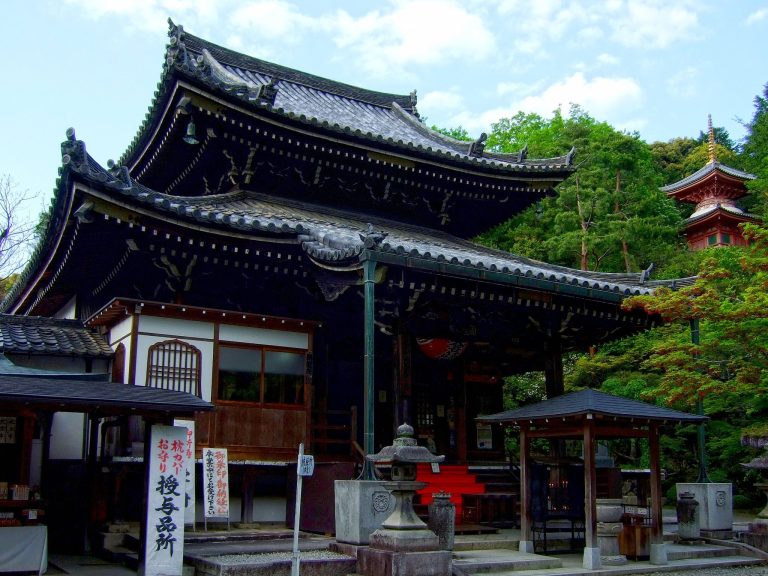
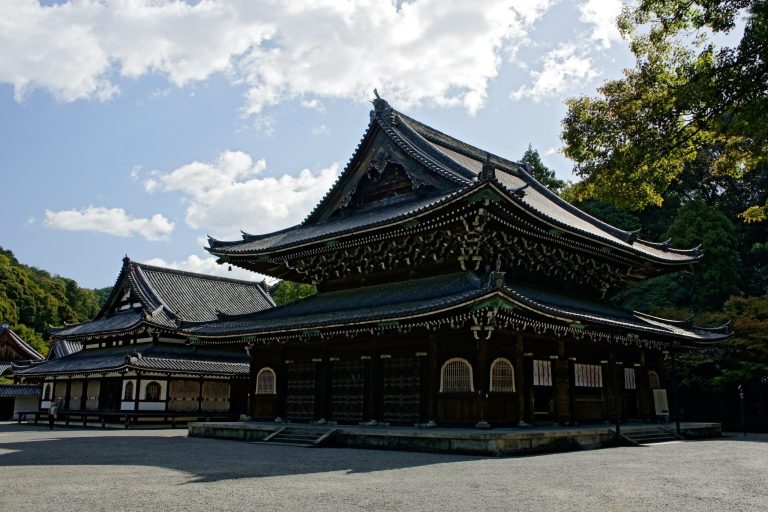
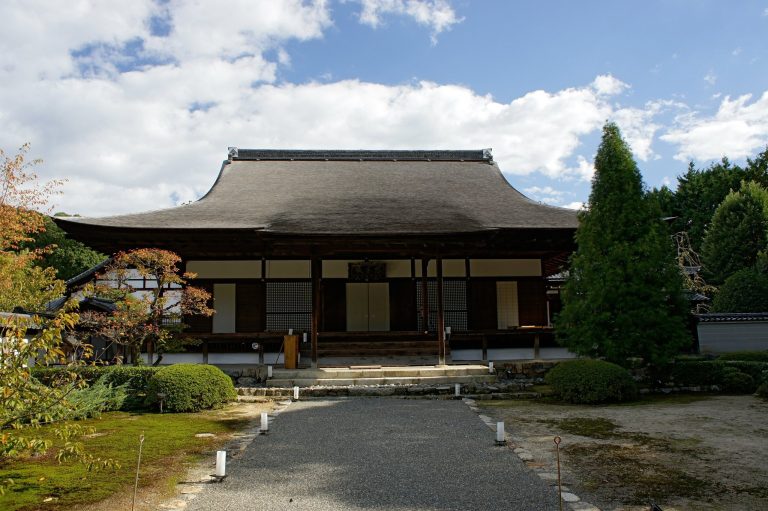
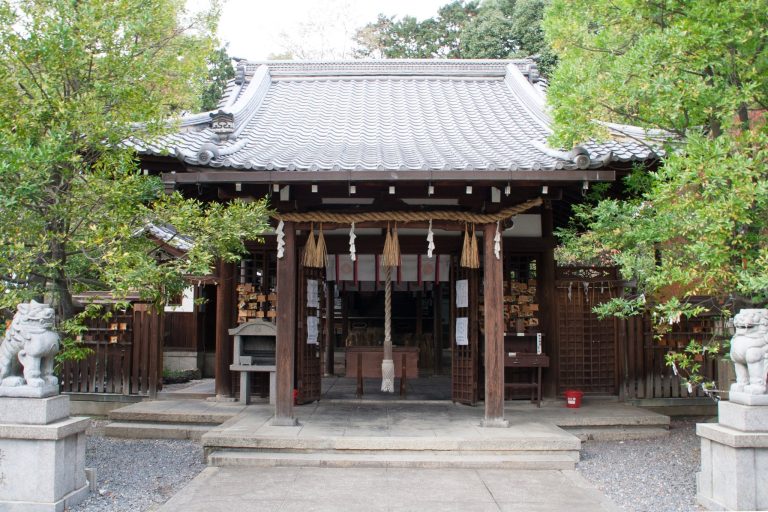
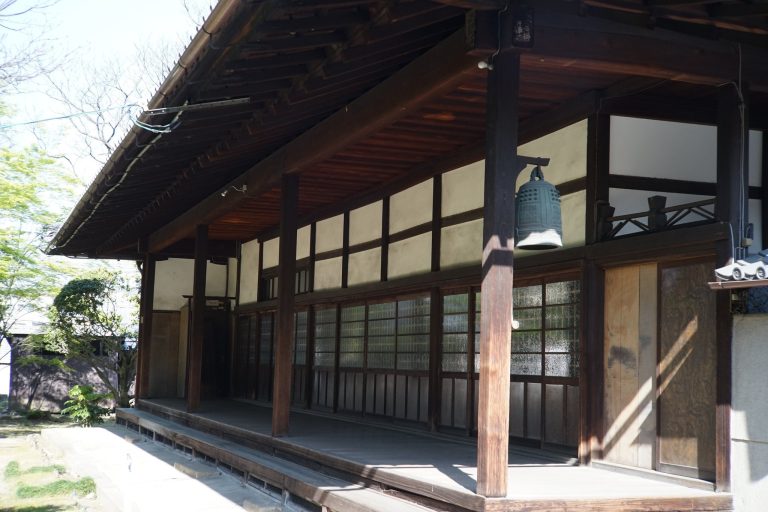
The temple compound contains the principal hall, Kōjin Hall, a tutelary shrine, priests’ quarters, a guest hall, the Gansui-ken tea house, the Gansui-tei garden, and a mountain gate. Its buildings and religious features combine spaces for Buddhist worship, the veneration of protective deities, and the tea gatherings associated with Ōishi.
Worship Buildings and Sacred Features
Principal Hall
The principal hall enshrines an image of Amida Buddha traditionally attributed to Unkei, a leading sculptor of Buddhist images during Japan’s Kamakura period. The hall also houses a Shōgun Jizō image. Jizō is a Buddhist bodhisattva associated with protection and compassion, and this representation shows him wearing armor and holding a sword in his right hand.
A seated Kannon image is also kept in the principal hall. Kannon, the bodhisattva of compassion, is traditionally regarded here as the devotional image of Emperor Reigen. An inscription on the image’s case relates that, after the death of the emperor’s beloved lady-in-waiting, he sensed her presence and found a Buddhist scripture there. Believing that the event had occurred through her faith, he commissioned the image in her memory.
Kōjin Hall
Kōjin Hall houses a wooden seated image of Sanbō Daikōjin. Tradition says that Kūkai received the image in Tang China and originally made a seated statue himself. The surviving statue, however, was produced during the Kamakura period. The image is regarded as Japan’s oldest Kōjin image.
Another tradition explains the sacred character of the site. The summit of the mountain on which the temple stands is said to have shone for seven days and seven nights, leading Kūkai to regard the place as sacred and install the Sanbō Daikōjin image there. At Raigō-in, the deity is also called Yuna Kōjin and is associated with protection during childbirth.
Dokkosui
Dokkosui is a cave-like passage that extends horizontally beneath a cliff rather than a vertical well. Water is drawn from it with a long-handled ladle. Tradition attributes the spring’s appearance to Kūkai, who is said to have excavated it with a ritual vajra.
A further tradition connects Dokkosui with the household of Emperor Reigen. The daughter of a lady-in-waiting favored by the emperor was reportedly born blind and regained her sight after washing her eyes with the spring water in response to a revelation.
Other Religious Features
The compound includes a statue of Kūkai representing him during religious training. The site also contains a tutelary shrine, priests’ quarters, a guest hall, and a mountain gate, forming the architectural setting for the temple’s religious community and ceremonies.
Tea House and Garden
Gansui-ken
Gansui-ken is the tea house associated with the commemorative gatherings for Ōishi Yoshio. It was rebuilt during the Taishō period by the master craftsman Uesaka Asajirō. Its plaque, bearing the characters for “Gansui,” is attributed to Ōishi Yoshio.
Gansui-tei
Gansui-tei is a pond-and-stream strolling garden within the compound. Together with Gansui-ken, it forms part of the physical setting connected with the temple’s continuing Gansui-kai tradition.