Fortress of Babylon: Roman Stronghold and Historic Christian Quarter in Cairo
Site at a Glance
- Rating
- 4.4
- Popularity
- Low
- Country
- Egypt
- Primary era
- Classical
- Eras represented
- Classical
- Civilizations
- Achaemenid, Roman
- Site type
- Military
- Remains
- Fort
On this page15 sections
History
Fortress of Babylon is a Roman fortress in Egypt, located in Old Cairo, whose principal surviving form dates to the reign of Emperor Diocletian around AD 300. Built during the late Roman imperial period, it occupied a strategic Nile harbor and protected routes by land and water near the boundary between Lower and Middle Egypt.
Harbor, cult center, and early traditions
Before the Roman fortress, the site was a harbor and suburb associated with Heliopolis, one of ancient Egypt’s principal religious centers. The Greeks called the harbor Nilopolis. Its ancient Egyptian name has been interpreted as “House of the Nile of Heliopolis,” while the later name Babylon has been connected either with that Egyptian expression or with the Mesopotamian city of Babylon.
The harbor stood on the eastern bank of the Nile, northeast of Memphis and near the boundary between Lower and Middle Egypt. River vessels paid tolls there as they traveled along the river. Babylon also possessed a distinct religious identity. It was regarded as a cult place of Sepa, an ancient Egyptian deity associated with the earth and underworld and represented in local tradition as a thousand-legged creature. His sanctuary, known as the “House of the Thousand-Legged One,” was linked with beliefs about an underground source of the Lower Egyptian Nile near the island of Roda.
The site was further associated with the “House of the Nile,” the “House of the Ennead,” and the “House of the Primeval Gods.” The Ennead was the group of nine deities central to Heliopolitan creation theology. Egyptian myth placed the contest between Horus and Seth at a nearby place called the Battlefield, or Cheri-aha. Strabo also wrote that a species of monkey was held sacred at Babylon in the territory of Heliopolis.
The fortress’s earliest history is surrounded by several traditions. The seventh-century bishop and chronicler John of Nikiu attributed its first foundation, around 568 BC, to Nebuchadnezzar II, the second king of the Neo-Babylonian Empire, and said that it was named after Babylon in Mesopotamia. Another tradition connected its construction with Babylonian prisoners during an uprising. Other ancient accounts associated its origin with a ruler called Sesostris or with Queen Sammu-ramat. Flavius Josephus placed it more plausibly under the successors of the Persian king Cambyses II, around 525 BC.
The canal linking the Nile with the Red Sea was later re-excavated under Darius, a major king of the Achaemenid Persian Empire who ruled from 521 to 486 BC. The canal and harbor gave Babylon continuing importance as a controlled point on the river and its connected waterways.
Roman harbor and fortress
Egypt became a Roman province in 30 BC, after Octavian, later the emperor Augustus, defeated Mark Antony and Cleopatra VII. Roman control of Egypt helped secure the grain supply on which Rome increasingly depended. During Augustus’s reign, three Roman legions were reportedly stationed in Egypt at Alexandria, Babylon, and probably Luxor, although the legion at Babylon is not securely identified.
Egypt’s military establishment changed over time. By AD 23, only two legions remained in the province, and by the middle of the second century Egypt had only Legio II Traiana Fortis. The late Roman Notitia Dignitatum, an administrative register of imperial offices and military commands, specifically placed Legio XIII Gemina at Babylon.
Emperor Trajan, who ruled from AD 98 to 117, rebuilt the disused Nile to Red Sea canal, known as the Amnis Traianus, and reportedly moved its mouth southward toward the area of present-day Old Cairo. He also established a fortified harbor there in AD 110. An earlier Persian fortress was reportedly used temporarily by the Romans, then abandoned because supplying it with drinking water proved difficult.
The present fortress was built during the reign of Diocletian, around AD 300. Diocletian ruled from AD 285 to 305, after the third-century crisis, a prolonged period of political instability, civil war, and external pressure within the Roman Empire. The enlarged installation protected the land and water approaches and incorporated the harbor and canal defenses developed during the earlier Roman phase.
Byzantine rule and the Christian bishopric
After the Western Roman Empire fell in AD 476, Babylon became part of the Byzantine Empire, the eastern continuation of Roman rule. The Sasanian king Khosrow II conquered and occupied Egypt in 619 during the conflict between the Sasanian and Byzantine empires. The Byzantine emperor Heraclius recovered the province in 629–630.
Babylon was also the seat of a Christian bishopric subordinate to Leontopolis, the metropolitan see and capital of the Roman province of Augustamnica Secunda. After the Council of Chalcedon in 451, some of Babylon’s bishops accepted the council while most rejected it. The former bishopric is now recognized as a titular see by both the Eastern Orthodox and Catholic churches. During the Byzantine period, the city also revolted against the emperor Phocas.
Conquest and the growth of Cairo
The Muslim conquest of Egypt began in 639. Amr ibn al-As, the Arab commander who led the conquest, reached Babylon after taking Pelusium and Bilbeis and after further fighting in the Nile Valley. The Byzantine garrison withdrew into the fortress, which resisted for about seven months before falling to Amr’s forces during the campaign of 640–641.
Amr’s army grew from roughly 4,000 men to about 12,000 after reinforcements arrived, allowing it to overcome the fortress’s defenses. Alexandria, then the Byzantine capital of Egypt, was captured in September 641. After the conquest, Amr ibn al-As founded the military settlement of al-Fustat beside Babylon. Al-Fustat developed from a garrison into a major medieval metropolis and commercial center, while the fortress continued to be inhabited mainly by Christians and Jews.
Later dynasties established the neighboring settlements of al-Askar, al-Qata’i, and al-Qahira. In the twelfth century, Sultan Saladin enclosed these settlements within a single wall, forming the basis of modern Cairo. From the twelfth through the fourteenth century, “Babylon” was also used as a name for Cairo, and “Babylonia” referred to the surrounding region.
Religious quarter and archaeological study
By the ninth century, the fortress and its adjoining quarter had become a center of the Christian and Jewish communities of al-Fustat. That role continued into the modern period. The area is now known as Old Cairo or Coptic Cairo and remains a major center of Cairo’s Christian-Coptic and Jewish heritage.
Excavations carried out from 2000 to 2006 revealed remains at Babylon dating from the sixth century BC through the present day, including Roman canal defenses, harbor installations, and later occupation. The surviving remains have been restored and are considered to be in very good condition. The former fortress enclosure now contains the Coptic Museum, a convent, several churches, and the Ben Ezra Synagogue.
Remains
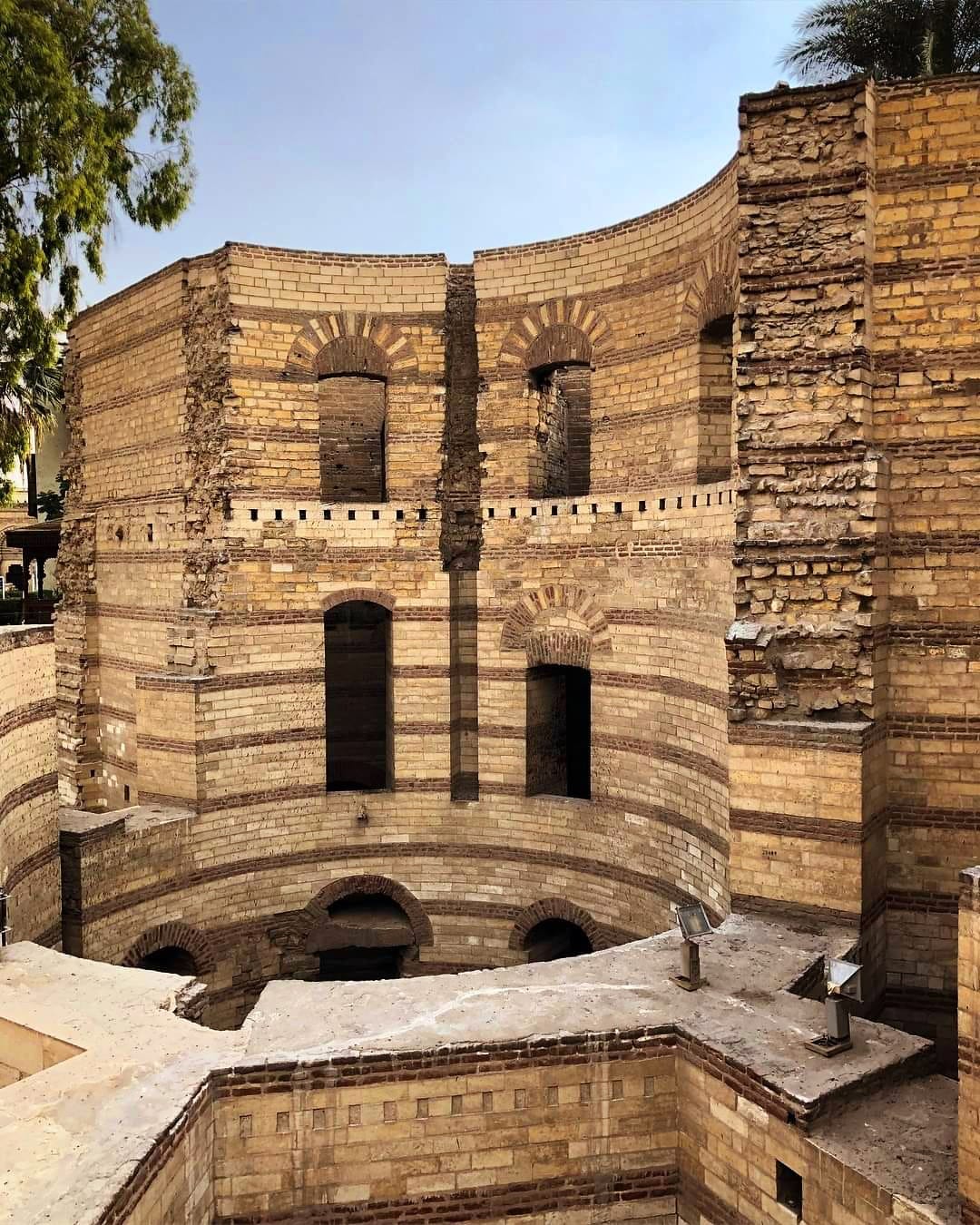
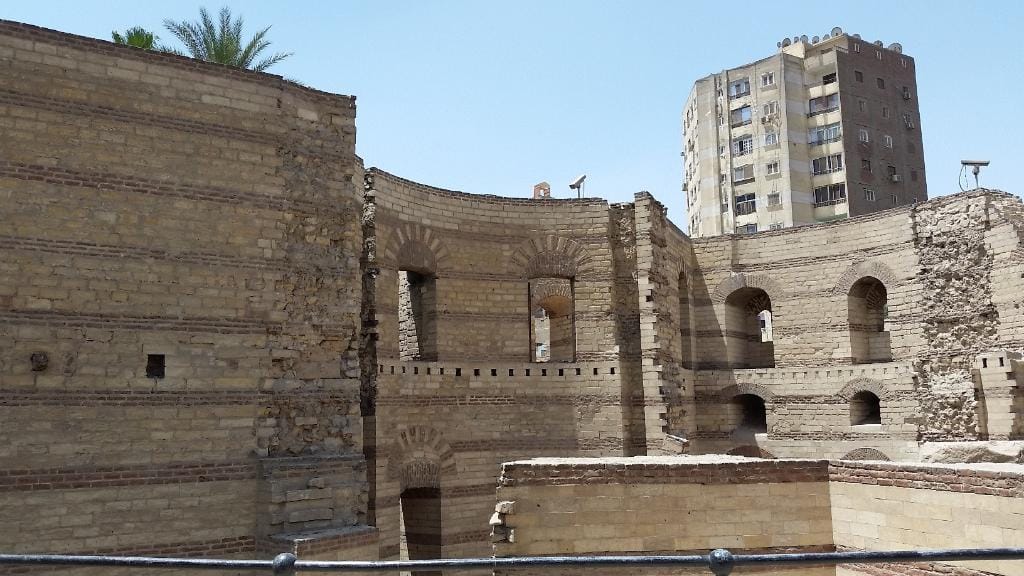
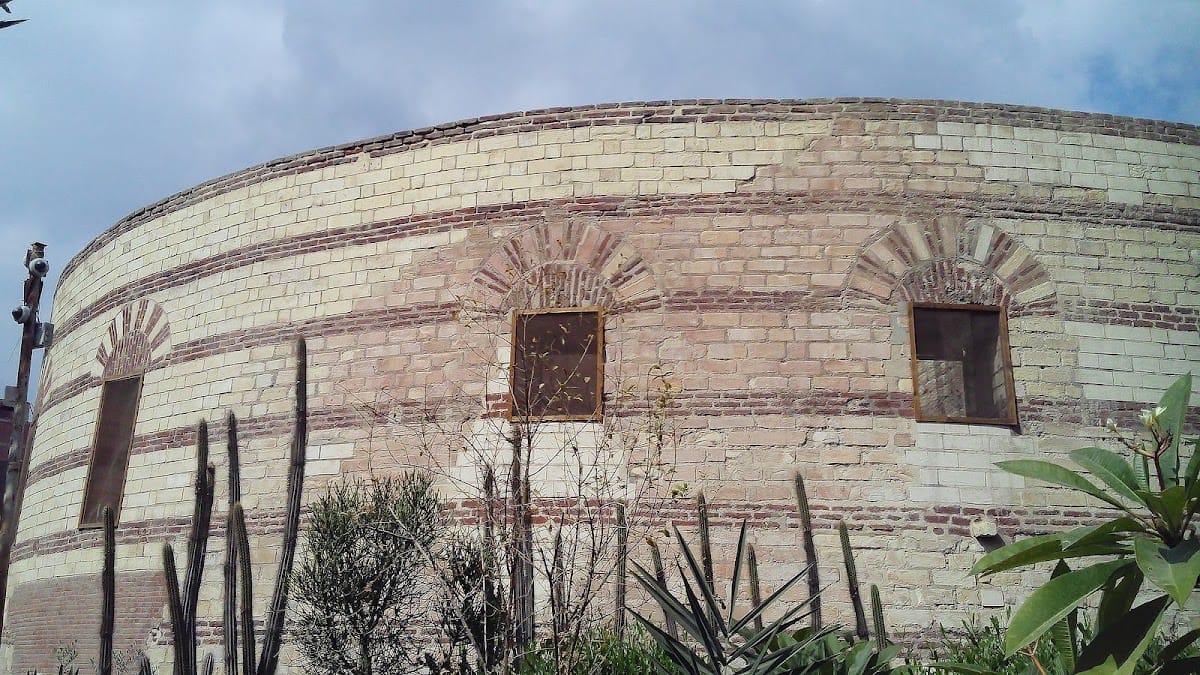
The surviving fortress occupies the eastern bank of the Nile near the mouth of the ancient canal that linked the river with the Red Sea. The Nile lay to the west and southwest, residential settlement bordered the enclosure to the north and east, and the principal Trajanic gate stood on the south. The installation was built around the canal and its fortified harbor. Its Roman construction used brick and stone, with brick courses running through the stonework in a characteristically Roman masonry technique.
Canal and harbor defenses
Canal passage
The canal passed between two massive circular towers and continued through the center of the fortress. In later centuries, a wall was constructed between the towers to block the canal. Archaeological excavations also identified substantial stone walls beside the waterway, extending the physical evidence beyond the most visible fortifications.
Trajanic harbor
The harbor and its canal defenses belong to an earlier Roman phase dating to AD 110. They formed the setting for the larger Diocletianic fortress, whose visible walls and towers principally belong to the expansion around AD 300. The Roman installation stood closer to the river than the earlier fortress traditionally associated with the Persian period. The Nile later shifted its course approximately 400 meters northward.
Walls, towers, and later buildings
Roman fortifications
Thick walls and defensive towers survive within the former fortress enclosure. Their masonry combines stone with regular brick courses, and the fortifications incorporate the canal and harbor into the wider defensive design. Archaeological remains from the sixth century BC onward extend around these visible Roman structures and include architectural traces of the associated harbor.
Churches and religious buildings
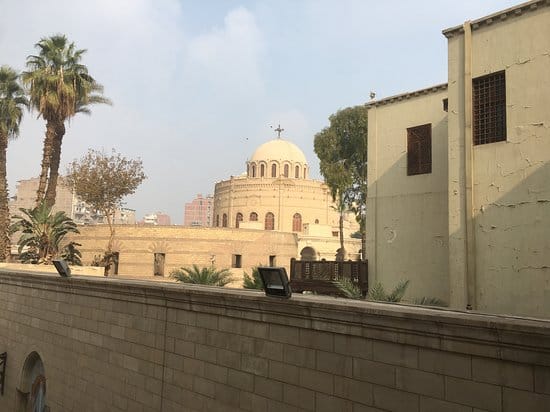
Six old Coptic churches were built against the fortification wall or incorporated into it. They include the Hanging Church and the Coptic Orthodox Church of Saint Mary. The Greek Orthodox Church of Saint George and the Saint George Convent also occupy the former fortress area. A Coptic cemetery forms part of the surrounding historic complex.
Museum and synagogue
The former enclosure also contains the Coptic Museum, the convent, and the Ben Ezra Synagogue. Together with the churches and surviving fortifications, these buildings occupy a historic complex that preserves the later religious life of the site within the Roman enclosure.
Name and surviving archaeological fabric
The fortress is also known by the Arabic name al-Qasr al-Sham’i, meaning “Palace of Candles.” The name refers to the tradition that the towers were decorated with lighted candles at the beginning of each month. The ruins are considered the oldest surviving original structure of Cairo, while excavated remains beyond the visible walls preserve evidence of the site’s long development from an ancient harbor and religious center into a Roman fortress and later urban quarter.