Falkland Palace: A Historic Royal Residence and Hunting Lodge in Scotland
Visitor Information
Google Rating: 4.6
Popularity: Medium
Official Website: www.nts.org.uk
Country: United Kingdom
Civilization: Early Modern, Medieval European, Modern
Site type: Domestic
Remains: Palace
History
Falkland Palace is located in the town of Falkland in Scotland. It was originally established by the Scottish monarchy and developed primarily under the Stewart dynasty.
The site began in the late 12th century as a royal hunting lodge situated on a small defensible hill. During the 13th century, it was expanded into a castle held by the Earls of Fife from Clan MacDuff. The surrounding woodland, known as Falkland Park, was carefully managed and enclosed by a pale, meaning a ditch combined with a fence, to contain game animals such as deer and wild boar for royal hunting pursuits.
In 1371, ownership passed through Isabella MacDuff to Robert Stewart, Earl of Menteith, who later became Duke of Albany. Falkland gained grim notoriety in 1402 when Albany imprisoned his nephew, David Stewart, Duke of Rothesay, there; Rothesay eventually died under neglect. After Albany’s fall from power, King James I inherited Falkland in 1424 and made it an important royal retreat. The site became favored by successive Stewart monarchs for falconry and hunting activities within the park.
Midway through the 15th century, James II granted Falkland Palace to his queen consort, Mary of Guelders. She played a key role in enhancing the estate by adding new stables, installing a kitchen, and improving the gardens. During this period, the term “gallery” was used here, which is the earliest known case in Britain referring to a two-room long corridor.
From the late 15th century into the early 16th century, James IV and his son James V transformed the fortress-like structure into a Renaissance-style palace. Between 1497 and 1541, they added a chapel, an imposing great hall, and garden walls. James V financed further expansion from 1537 to reflect French Renaissance influences, introducing features such as a Royal Tennis Court and a bowling alley by 1541.
James V died at Falkland in 1542. His widow, Mary of Guise, continued to reside there and maintained the hunting traditions with wild boar and deer kept in the park. Later, Mary, Queen of Scots, frequently visited Falkland during her reign, conducting notable ceremonies including Maundy Thursday foot-washing in 1562 and Easter observances in the following years.
In the late 16th century, James VI and his queen Anne of Denmark used Falkland as a royal residence and hunting lodge. James VI undertook repairs to the tennis courts and hosted diplomatic meetings onsite. Anne’s household included an African servant who died and was interred at Falkland, marking a rare record of presence at the palace. The site also saw military tension in 1592 when Francis Stewart, Earl of Bothwell, staged a five-hour failed assault attempting to seize Falkland and apprehend the royal couple.
In the early 17th century, Falkland occasionally functioned as a prison, notably holding Lord Balmerino during 1608-1609. After the Union of the Crowns in 1603, with the royal court relocating mainly to London, Falkland Palace’s prominence diminished. Although repairs were undertaken in 1617 and 1629, the palace suffered partial destruction by fire during Oliver Cromwell’s military occupation in the mid-17th century and gradually fell into ruin.
The site lay neglected until 1887, when John, the 3rd Marquis of Bute, acquired the Falkland estates and committed two decades to restoration. He engaged architects John Kinross and Robert Weir Schultz to return the palace from a dilapidated state toward its historic grandeur. Since 1952, stewardship has passed to the National Trust for Scotland, which continues preservation efforts, including maintaining the palace and gardens. Their work features restoring the gardens following Percy Cane’s 1940s design and fostering local wildlife habitats.
Remains
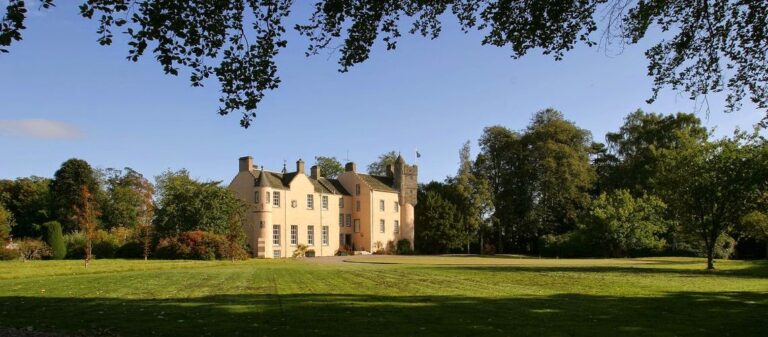
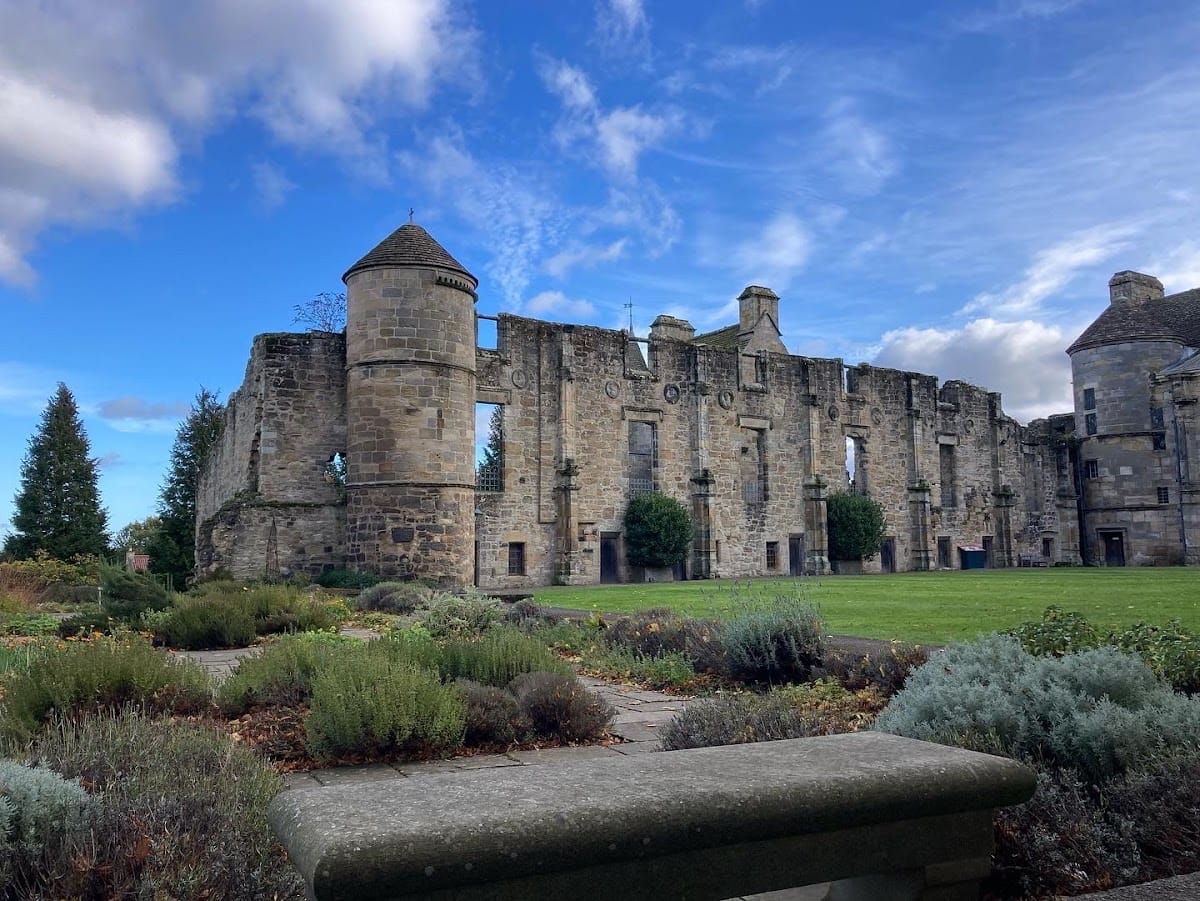
Falkland Palace is composed primarily of two main wings arranged in an ‘L’ shape, known as the South and East Quarters, enclosing a central courtyard accessed via a gatehouse tower on the west end of the South Quarter. The buildings exhibit a combination of medieval defensive elements and Renaissance architectural details reflecting their phases of construction and renovation.
The South Quarter’s exterior is built with ashlar sandstone, a finely cut and dressed stonework. At basement level, there are gunloops—narrow openings designed for firearms to be fired from within. Above these are small windows serving private lodgings. The upper level prominently features large paired windows that light the Chapel Royal; these are flanked by niches housing weathered statues and corbels carved with symbols representing the instruments of the Passion. The Chapel Royal itself is dedicated to St. Thomas the Apostle and remains an active Catholic place of worship holding regular Mass. Its ceiling dates from the time of James V and features an oak coffered design created by carpenter Richard Stewart, redecorated in preparation for King Charles I’s visit in 1633. The chapel measures approximately 24.4 by 7.5 meters and contains stained glass windows installed in the 1890s, displaying heraldic emblems. A sixteenth-century intricately carved wooden screen now separates the chapel from an antechamber. Restoration work on the chapel was carried out in the late 19th and early 20th centuries by Robert Weir Schultz, who also designed the altar, retable (a decorative screen behind the altar), and dais added in 1905.
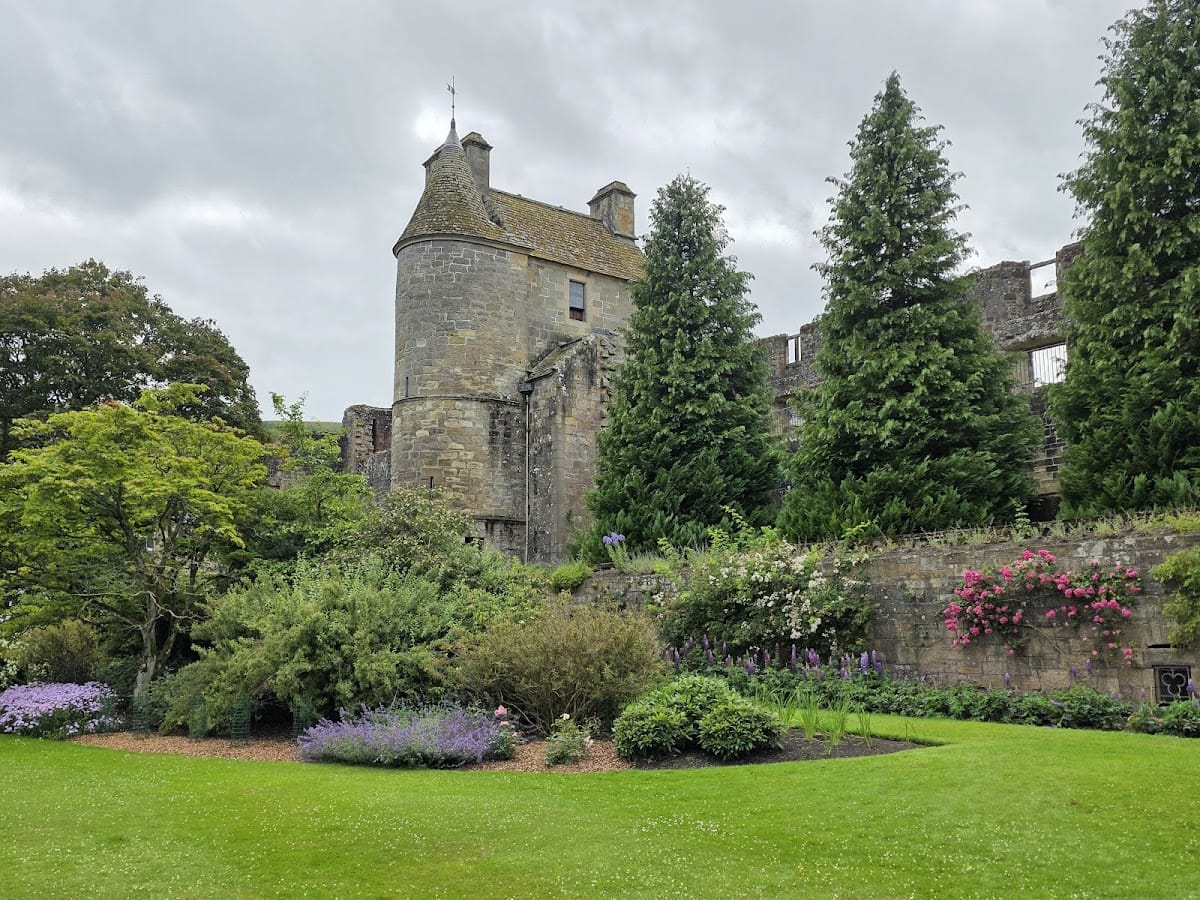
The gatehouse tower, built in 1541 by master masons John Brownhill and Henry Bawtie, stands three stories high with an arched entrance about 2.75 meters wide. Its entrance is flanked by two round towers, with the western tower containing a dungeon. Inside, the gatehouse held guard rooms and the living quarters of the castle keeper. Above the chapel is a gallery with a coffered oak ceiling, which formerly linked the royal bedrooms in the East Quarter with the chapel and the gatehouse guard rooms.
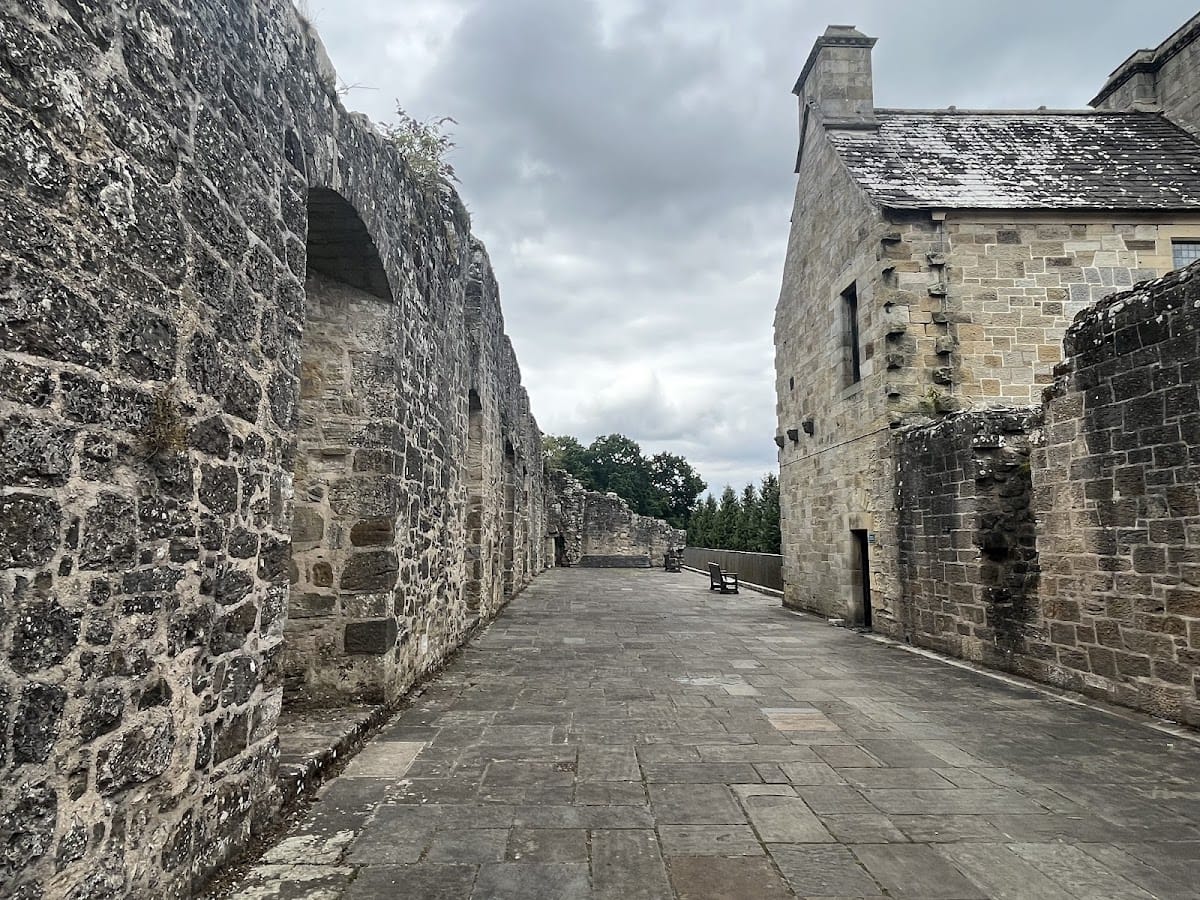
The East Quarter is partially ruined today, though the courtyard-facing facade and the centrally located access tower known as the Crosshouse have been restored extensively. The Crosshouse houses royal bedchambers that recreate sixteenth-century luxury, reconstructed in 1987 by architect W. Schomberg Scott and decorator David McClure. This part of the palace was remodeled around 1538 by mason John Merlioun. Some “back galleries” facing the garden had fallen into decay by 1615 but were repaired the following year by master of works James Murray.
The courtyard façades of both the South and East wings were carefully decorated and unified in French Renaissance style during the period 1537 to 1542. These facades include pilasters (flat, rectangular columns attached to the wall) and niches designed to hold statues bearing royal initials and medallions. Buttresses supporting the East wing date from 1537, with those on the South from 1539, possibly linked to the arrival of French mason Nicolas Roy in 1539. The architectural style reflects comparison with the French Château of Villers-Cotterêts.
Inside the palace, some surfaces show plastering and an outer lime-based coating called harling, applied by craftsmen John Kelly and John Malcolm, while French craftsman Hector Beato plastered other interior sections. The original great hall, measuring roughly 30.2 by 7.9 meters, once stood on the northern side of the courtyard but no longer survives; its foundations were exposed and accentuated by the Marquis of Bute. This area is currently a flower garden.
Beyond the medieval castle remains and on slightly lower ground lie the palace’s real tennis court, constructed by masons William Mason and Alexander Allardice, with walls finished by lime plasterer Callum. It holds the distinction of being the oldest tennis court still in use worldwide and is home to the Falkland Palace Royal Tennis Club. This feature complements the palace’s reputation as a royal leisure retreat.
The palace and outbuildings were constructed largely with locally quarried sandstone. Lime mortar was made using limestone from the nearby Lomond Hills, while harder sandstone from Kingoodie near Dundee was transported up the River Tay for specific sections. Timber was sourced regionally from St Andrews, Dundee, and Leith, including imported “Eastland boards” from northern Europe.
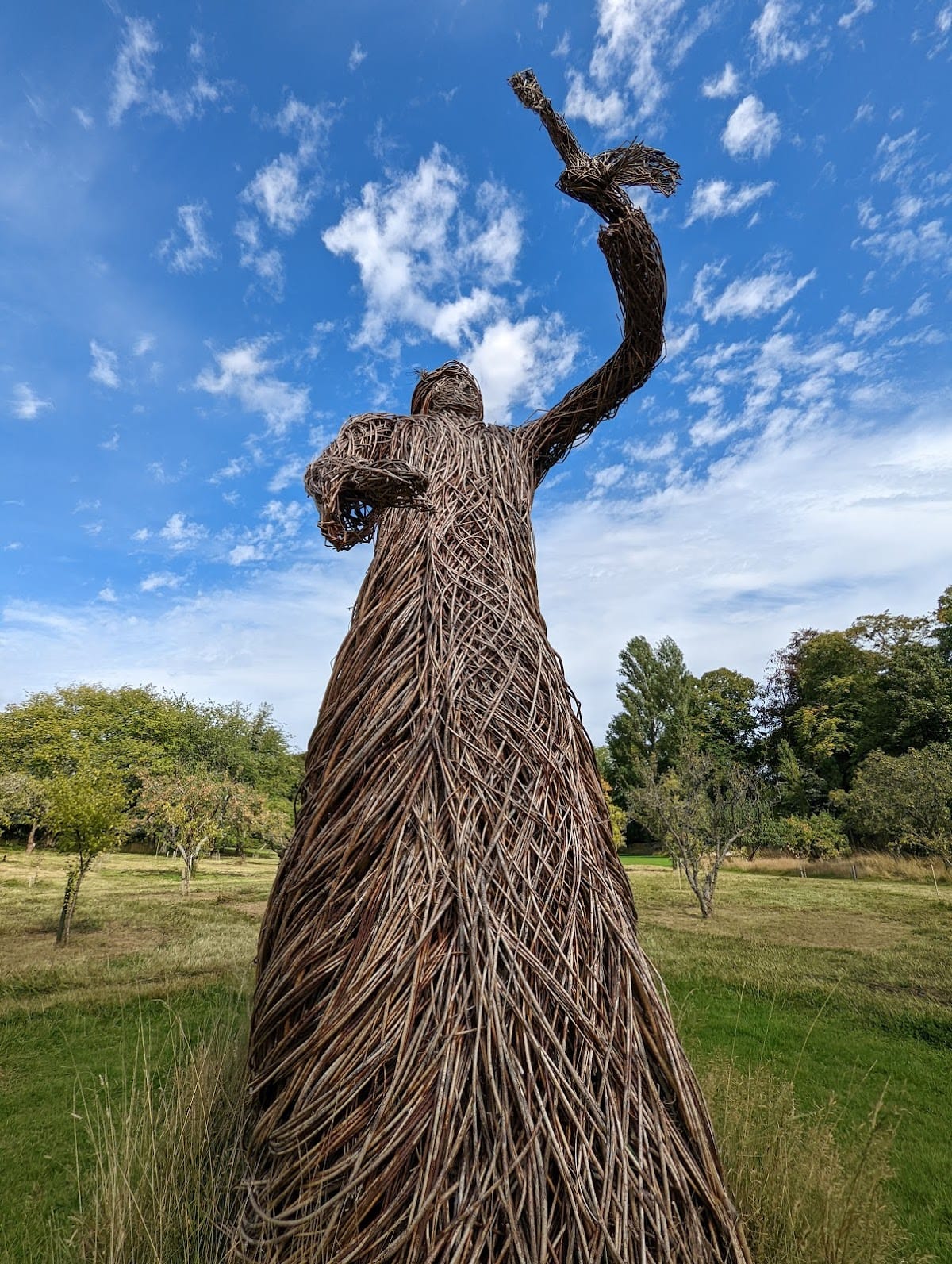
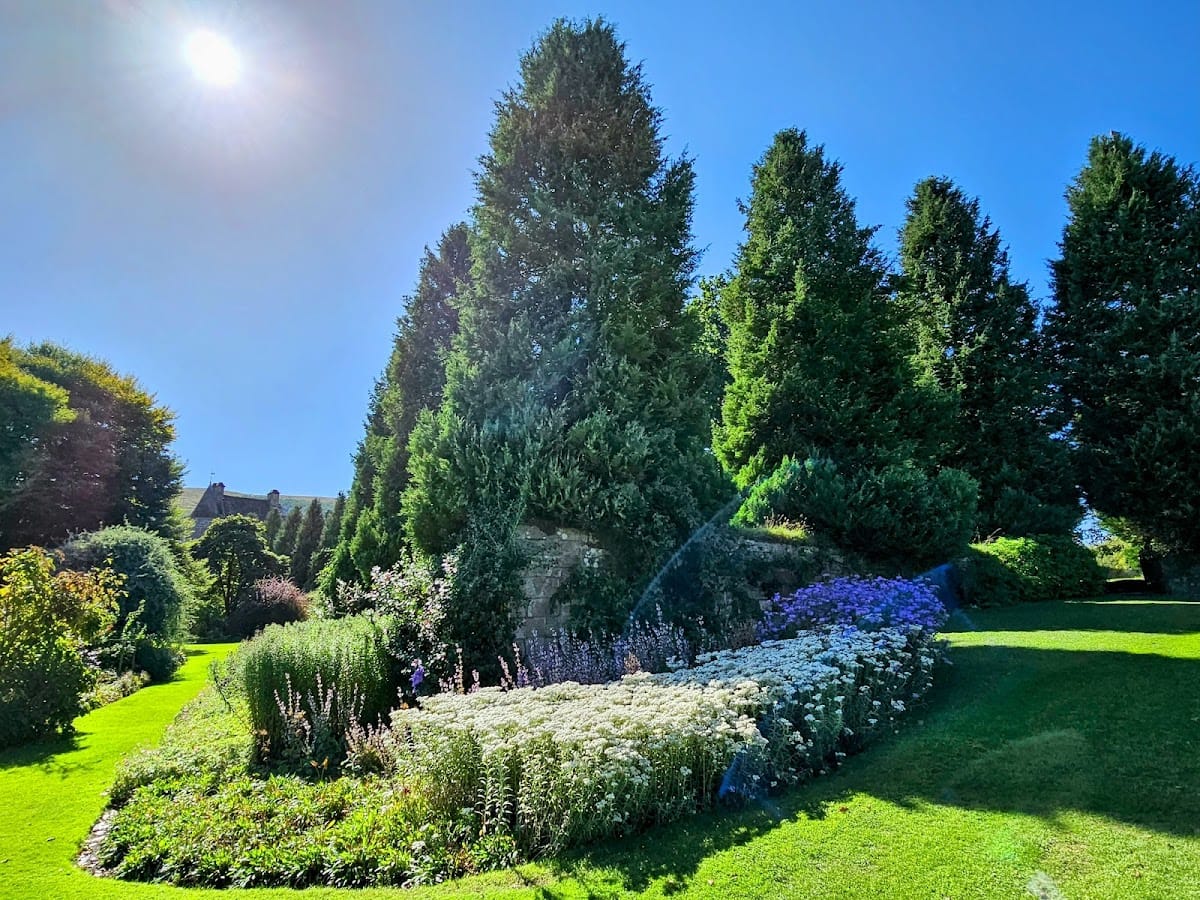
Surrounding the palace are formal gardens covering about three hectares on a sandstone ridge, showcasing layers of historic garden styles. The grounds include stables, a fish pond, a Renaissance-style garden cultivated with fruits, vegetables, and herbs, as well as a courtyard garden. Conservation efforts have reintroduced native hedges, spring bulbs, a wildflower meadow, and an orchard planted with native tree species such as hawthorn, oak, and willow. These habitats encourage biodiversity, supporting a variety of insects and bat populations.
Ongoing maintenance by the National Trust for Scotland involves repointing the palace walls with breathable lime mortar to protect the masonry. The gardens have been restored to reflect Percy Cane’s 1940s design. Archaeological and architectural conservation continues to preserve Falkland Palace as a historic and cultural landmark.
Nearby sites