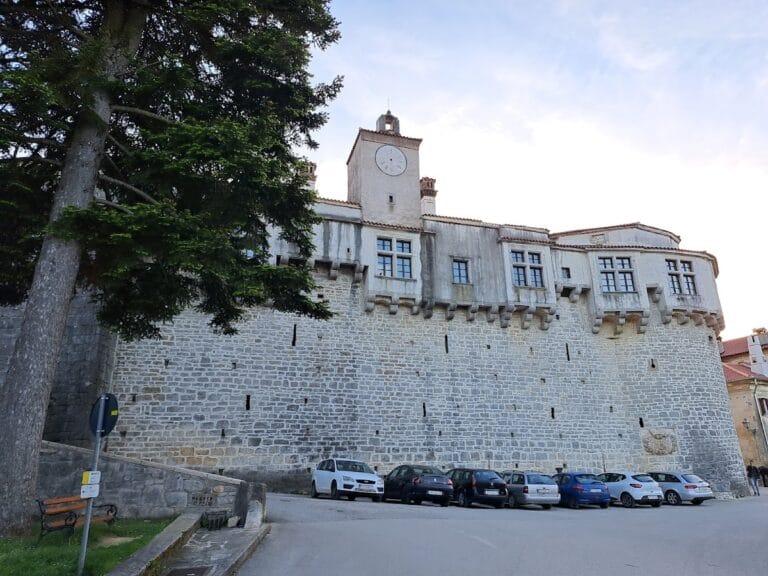
Dvorac Nova Kraljevica: A Historic Fortified Manor House in Croatia
Visitor Information
Google Rating: 4.6
Popularity: Low
Country: Croatia
Civilization: Early Modern, Modern
Site type: Military
Remains: Castle
History
Dvorac Nova Kraljevica is located in the municipality of Kraljevica, Croatia. This fortified manor house was constructed beginning in 1650 by Péter Zrínyi, a nobleman influential in both political and economic spheres of the time. Although the exact origin of the architect is not confirmed, it is likely that a Venetian chief architect oversaw the design, reflecting connections beyond the local region.
The castle was originally built in a late Renaissance style, incorporating many details characteristic of the Baroque period. It once featured rich interior furnishings that included artworks, finely carved stones, walnut doors, tiled stoves, and metal fittings, all indicating the high status of its owner. However, following the failed Zrínyi-Frangepán conspiracy, a politically charged event, the castle suffered a thorough looting, resulting in the loss of all interior decorations and valuable items.
After the death of Zrínyi Ádám, a member of the same noble family, the castle’s purpose shifted from a noble residence to a military function. It was repurposed as a barracks and later operated as a military hospital, reflecting the changing needs and control of the region over time. In 1883, the property came into the possession of the Jesuits, who undertook significant modifications by adding a second floor and altering the castle’s original layout to suit their needs.
Remains
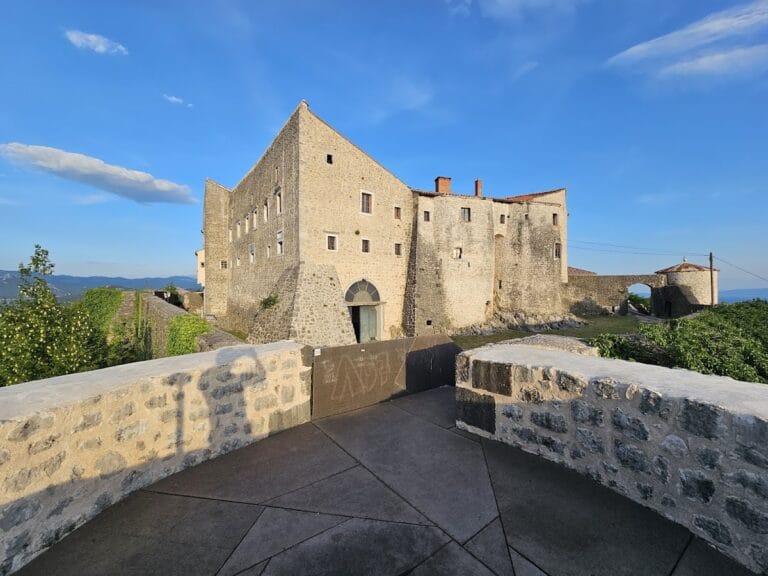
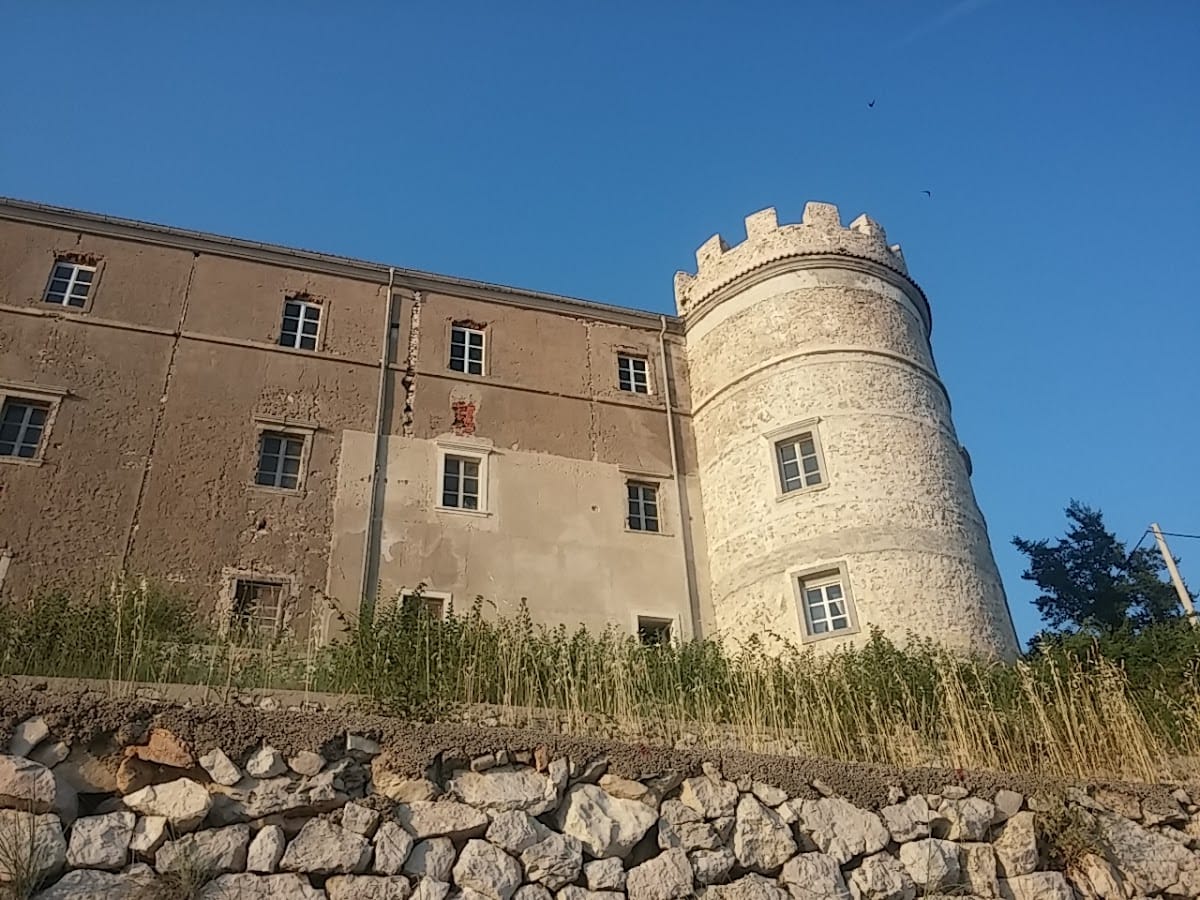
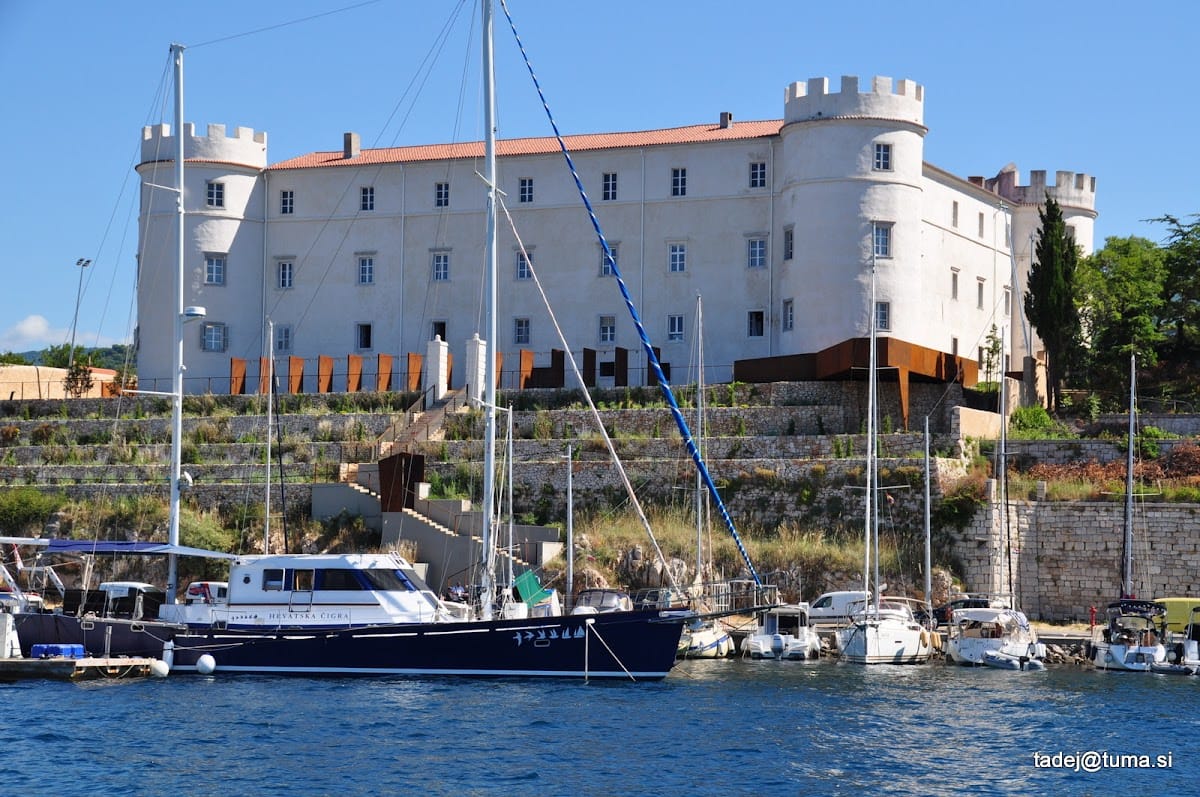
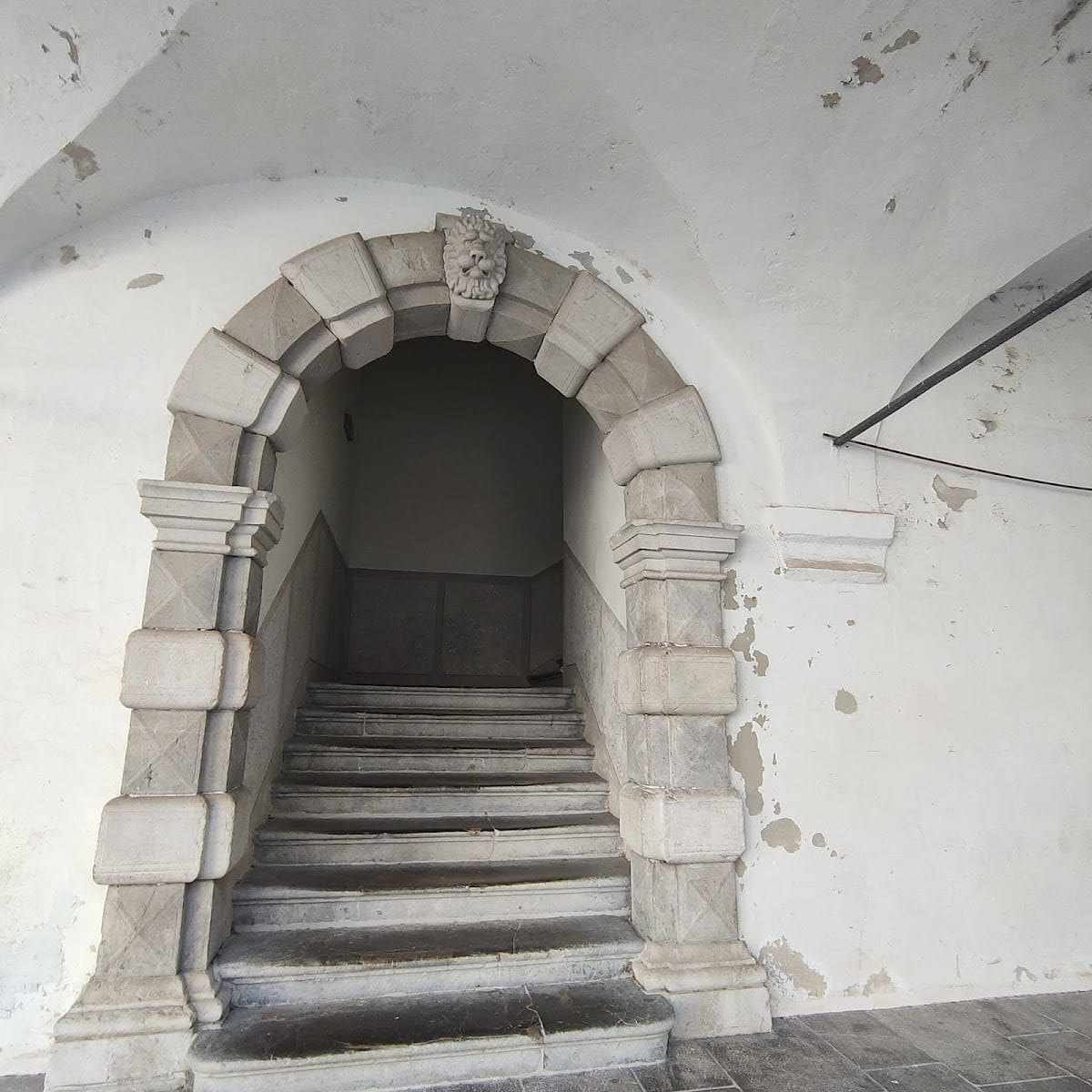
The castle is a two-story structure built on a rectangular plan, featuring four cylindrical towers positioned at each corner. These towers enclose a closed inner courtyard, creating a defensible space typical of fortified manor houses of the period. Inside, the basement was used for storage, while the ground and first floors were organized around a large central atrium, allowing light and access to the surrounding rooms.
At the center of the courtyard is a cistern adorned with the coats of arms of the two prominent families associated with the castle: the Frangepán and Zrínyi. This decorative element not only served a practical role in water collection but also symbolized the union and stature of these noble houses. Beneath the castle’s western wing, vaulted underground chambers have been identified, which likely functioned as prison cells, suggesting the site had roles related to detention or safeguarding prisoners.
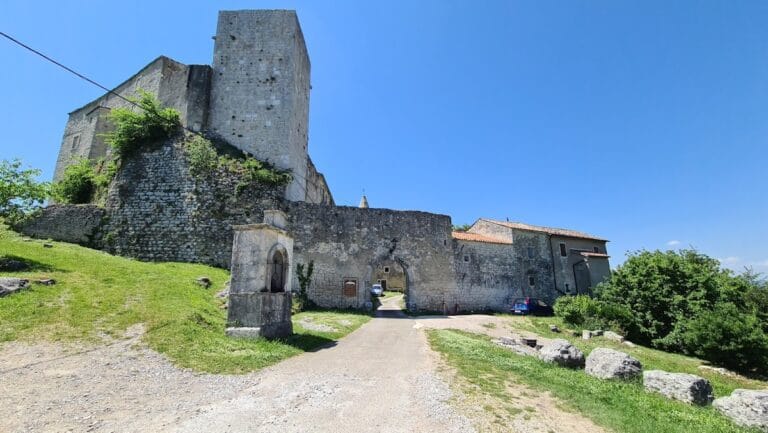
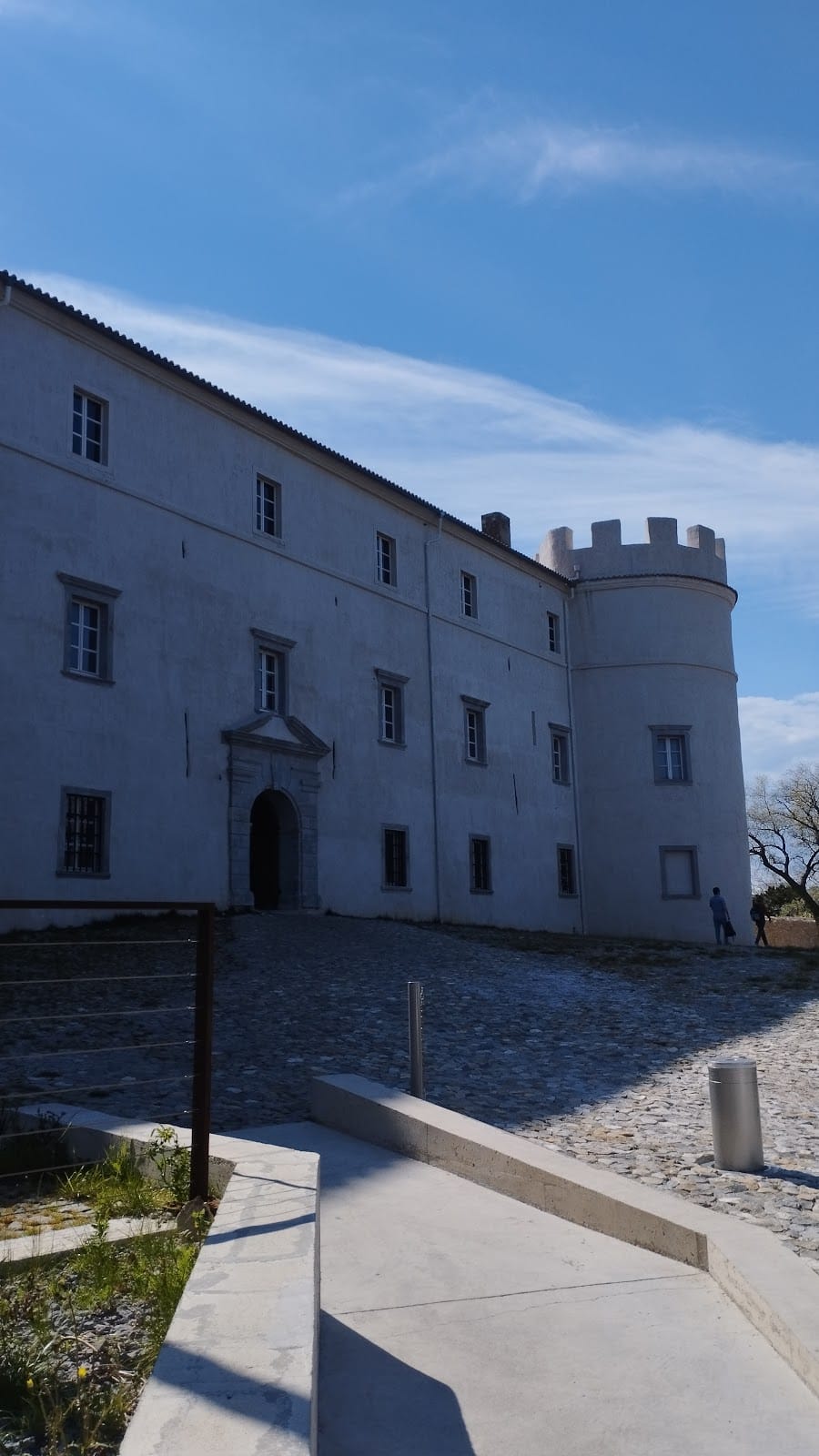
Surrounding the main building is a relatively spacious outer courtyard, enclosed by a separate wall that added an extra layer of defense and delineated the property’s bounds. The principal entrance to the castle is situated on the northeast side, although the Jesuits later introduced a small gate and forecourt facing the nearby town, indicating adaptation to new functional or community needs. These structural elements remain integral to understanding the castle’s evolution from a noble residence to a religious and military facility.
Nearby sites