Castle of Egervár: A Renaissance Castle-Palace in Hungary


Site at a Glance
- Rating
- 4.5
- Popularity
- Low
- Country
- Hungary
- Primary era
- Medieval
- External website
- Open
- Eras represented
- Medieval, Early Modern
- Civilizations
- Habsburg, Hungarian
- Site type
- Military
- Remains
- Castle
On this page9 sections
History
Castle of Egervár is a historic castle in Egervár, Hungary, whose stone rebuilding between approximately 1476 and 1490 established the basis of its Renaissance form. The building developed from a medieval fortification into a castle-palace and later served as part of Hungary’s western defensive line. It is regarded as one of Central Europe’s important Renaissance castle-architecture monuments.
Medieval origins and rebuilding
The castle was first recorded in 1288 as castrum Egerwar. At that time, Miklós, the son of Ban István, exchanged it with Palatine János. A ban was a high-ranking official who governed a frontier territory in the Hungarian and Croatian lands, while a palatine was one of the highest offices in the medieval Kingdom of Hungary and served as a leading royal official.
By 1325, the estate belonged to János and Mihály of the Geregye kindred. Members of this family later adopted the surname Egervári, linking their identity to the castle and its estate. In 1409, the sons of Ban Henrik destroyed the building. King Matthias Corvinus, the fifteenth-century king of Hungary and Croatia known for centralized rule and support for Renaissance culture, authorized its reconstruction in 1476 for László Egervári, Ban of Croatia. The rebuilding used stone and continued approximately until 1490.
Renaissance transformation
Further work in the 1540s and 1560s gave Egervár its Renaissance appearance. In 1539, Orsolya Kanizsai, the wife of Palatine Tamás Nádasdy, inherited the castle in poor condition. Ferenc Nádasdy supervised its restoration, beginning a phase in which the earlier fortified residence was progressively reshaped.
After Kanizsa fell to Ottoman forces in 1600, Egervár became part of Hungary’s western defensive line. A frontier fortress was a fortified stronghold maintained along a contested border to resist military incursions. Egervár successfully resisted an Ottoman siege in 1664, but Ottoman forces burned it later that year.
Habsburg ownership and eighteenth-century changes
Following the Wesselényi Conspiracy in 1671, the castle passed into imperial, or Habsburg, ownership. The Habsburgs were the ruling dynasty whose imperial government acquired Egervár at this stage. Between 1674 and 1676, Mátyás Radonay, abbot of Zalavár and the castle’s leaseholder, restored the damaged building. In 1676, György Széchényi, Archbishop of Kalocsa, acquired Egervár and continued the work.
In 1687, Széchényi’s nephew was appointed captain of the castles of Szentgyörgy, Egervár, and Pölöske in recognition of his services. Mihály Sidy, Egervár’s vice-captain and a member of the Sidy family, later served as a special envoy of Zala County to the Diet of Szécsény during the Rákóczi uprising. This revolt against Habsburg rule ended with the Peace of Szatmár. Sidy died in 1711.
In 1712, Egervár passed to György Széchényi’s son, Zsigmond Széchényi, who undertook extensive repairs. He demolished the already damaged northern wing, added arcaded corridors in front of the southern and western wings, and extended the castle upward by one storey. After the Peace of Szatmár, the castle’s fortified character was required to be dismantled, and the northern wing was demolished in the early eighteenth century. These changes gave the former stronghold a more castle-palace-like character.
Fire, decline, and modern restoration
A fire led to another rebuilding in 1760. By 1787, the castle had again fallen into poor condition, and parts of the building were used for grain storage. The owners no longer lived there. At the same time, draining the surrounding marshes damaged the wooden piles that supported the building.
The castle was renovated again between 1802 and 1809. In 1874, László Solymosy purchased the estate from Jenő Széchényi. After 1945, the building deteriorated once more, but restoration between 1961 and 1965 halted the decline.
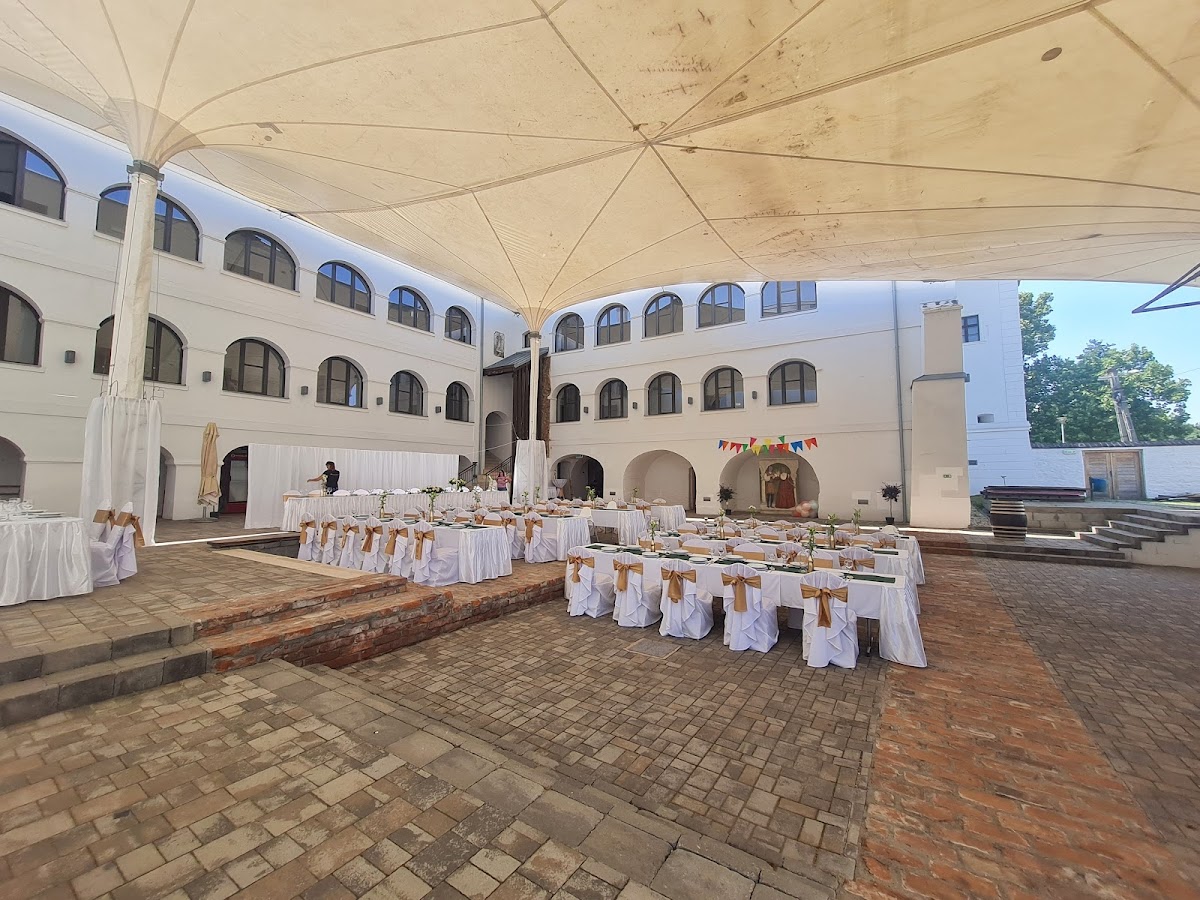
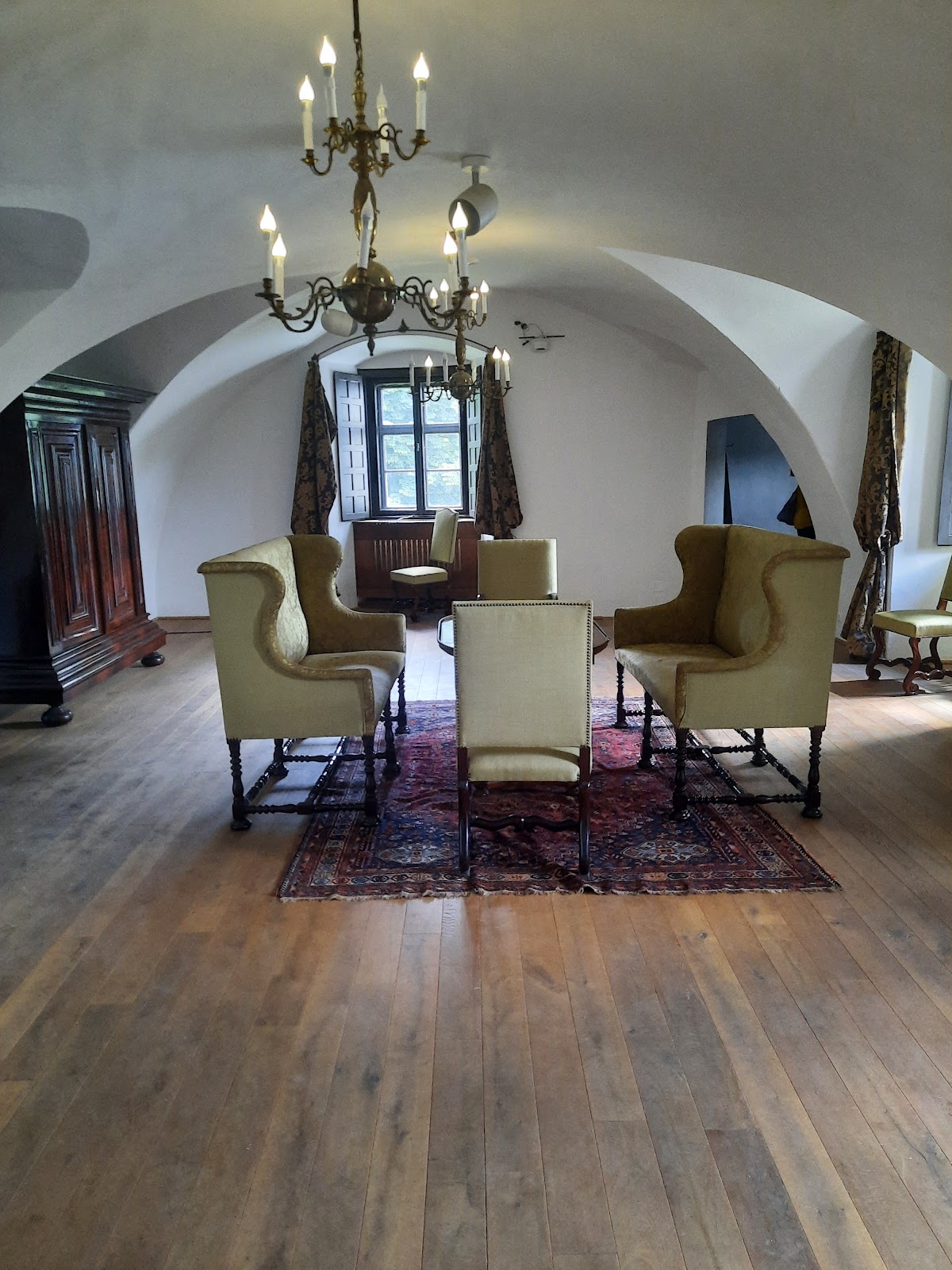
From the mid-1970s, the courtyard hosted summer theatrical performances known as the Egervár Evenings. Related infrastructure developed gradually, and a tent-covered audience area for 450 people was installed in 2000. A further restoration and development project began in 2009. It introduced a visitor centre with interactive displays, modern technology, exhibitions, smartphone and audio-guide tours, tactile replicas of period objects, and models of other late Renaissance Hungarian castle-palaces.
Archaeological investigations during the modern restoration revealed loopholes from the castle’s frontier-fortress period that had later been blocked. Their rediscovery has helped explain the use of hook guns, early firearms with a projecting hook or lug that could be braced against a support to absorb recoil. The restored castle remains a historical monument in Hungary.
Remains
Layout and construction
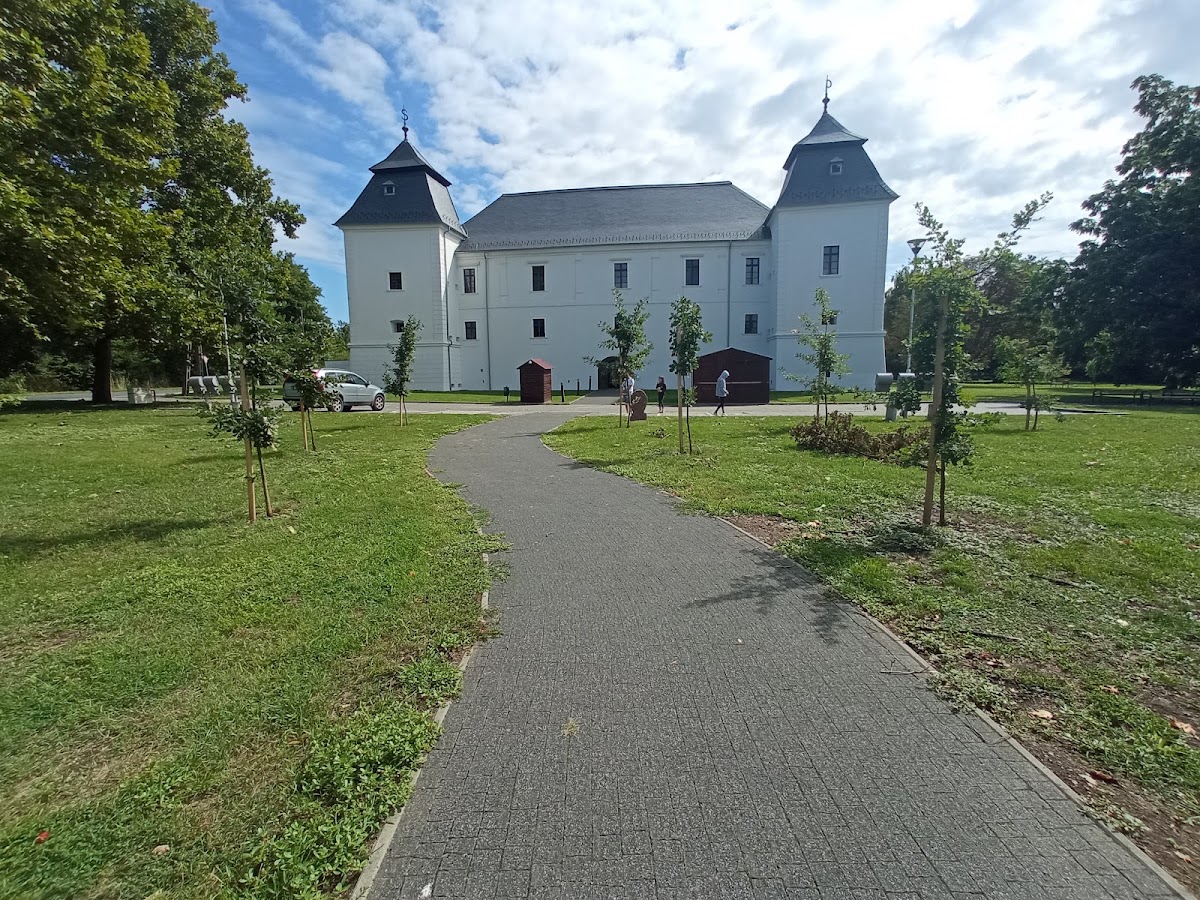
The castle is arranged on a regular quadrilateral plan, with towers or Italian-style bastions at the corners. A bastion is a projecting defensive structure designed to let defenders cover the walls and approaches with fire. Its later U-shaped arrangement resulted from the demolition of the northern wing. Stone is the principal construction material, while the foundations were supported on wooden piles. The draining of the surrounding marshes damaged these supports and contributed to the building’s later structural difficulties.
Defensive features
The castle’s walls preserve physical evidence of its military phase in the form of loopholes, narrow openings through which firearms could be used. These openings were later sealed into the walls and were exposed again during archaeological work. Their presence helps connect the surviving fabric with Egervár’s role as a frontier fortress and with the use of hook guns in its defense.
Castle-palace additions
The early eighteenth-century alterations changed the appearance of the surviving complex. The northern wing was demolished, the southern and western wings received arcaded corridors in front of them, and the building was raised by one storey. Together, these changes transformed the earlier fortified arrangement into the U-shaped castle-palace form. The courtyard also contains a tent-covered audience area accommodating 450 people, installed in 2000 in connection with the Egervár Evenings theatre programme.
During the period when the castle operated as a tourist lodging establishment, a historical exhibition occupied a room in the southeast tower. Replicas of period furniture and objects were later incorporated into the visitor displays. The castle has no park, a characteristic attributed to its original function as a fortification.