Kršan Castle: A Medieval Fortress in Croatia
Site at a Glance
- Rating
- 4.5
- Popularity
- Low
- Country
- Croatia
- Primary era
- Medieval
- Eras represented
- Medieval, Early Modern
- Civilizations
- Habsburg, Holy Roman Empire
- Site type
- Military
- Remains
- Castle
On this page10 sections
History
Kršan Castle is a medieval fortress in Kršan, Croatia, generally dated to the thirteenth century and built during the first half of that century. It served both as a defensive stronghold and as a residence for noble lords, while the settlement that grew below it later became the seat of the municipality of Kršan.
Thirteenth-century origins
The castle appears in written records in 1274 as Castrum destructum Carsach, meaning the destroyed castle of Carsach. At that time, it belonged to the Patriarchate of Aquileia, an ecclesiastical principality whose patriarchs also exercised secular authority in parts of northeastern Italy and Istria. Men of the Count of Gorizia had destroyed the fortress, and administration passed to the lords of Pazin in the same year.
The exact date of construction is unknown, although the castle is usually placed in the first half of the thirteenth century. Its early history reflects the divided and changing authority of medieval Istria. By the opening years of the fourteenth century, the castle and its lordship were in the hands of the Counts of Gorizia. Their acquisition may have followed either a feudal grant or a seizure of authority.
The lords of Pazin and the church foundation
Henrik of Pazin, a nobleman and knight of the Kerstlein family, held an important position in the area around the beginning of the fourteenth century. Before 1303, he paid for the construction of a church dedicated to John the Baptist inside the castle. In 1303, the Bishop of Pula granted Henrik the right of patronage, meaning the authority to oversee the church and nominate its clergy, together with the privileges attached to that right. Confirmations followed in 1309, 1322, and 1361.
Henrik bought the village of Olçeuih near Lake Kožljak in 1297 and is said to have acquired Kršan in 1307 as a fief from the Patriarch of Aquileia. A fief was land or a territorial right granted by a superior lord in return for allegiance and service. Henrik held only half of Kršan, while the holder of the other half is unknown. He did not use Kršan as his personal name in the surviving records.
In 1331, Countess Beatrix of Gorizia agreed with the Republic of Venice to place the castle in Venetian custody for a specified period during the siege of Kožljak. In 1338, Henrik’s nephew Karl, the son of the deceased Henrik Krotendorfer of Pazin, bought the half that had belonged to his uncle and received it as a fief from the Patriarch of Aquileia. That portion remained with Karl’s family for exactly fifty years.
Gorizian, Austrian, and later ownership
In 1388, Henrik, the son of Karl, and Nikolaus Krotendorfer surrendered their half of the castle to Duke Albert of Austria, Styria, Carinthia, and Carniola. Albert granted it to Hugo of Devin, after which the portion came under Habsburg feudal authority. The Habsburgs later became the principal feudal dynasty in the region.
Over the following centuries, the castle was associated with a succession of rulers and families. These included the Patriarchs of Aquileia, the Counts of Gorizia, the lords of Pazin, the Habsburgs, the de Fini family, the princes of Auersperg, the Rampelli family, Benvenuti dell’Argenti, Josip de Sussani, Francesco Scribani, and the Tonetti family of Plomin. The Tonetti line, including Matija Tonetti and Giovanni Tonetti, the last recorded owner, formed the final known ownership succession.
In the late fifteenth century, Andrej Kršanski was lord of the castle and captain of Pazin from 1488 to 1500. His heraldic tombstone was later moved from the former Pauline monastery beside Lake Čepić to the Church of Saint Henry in Belaj. A Pauline monastery belonged to the Order of Saint Paul the First Hermit, a Catholic religious order founded in Hungary in the thirteenth century.
Historical records and modern decline
A copy of an Istrian boundary description from 1325 was found in the castle during the mid-nineteenth century. This medieval legal record set out boundaries and related rights involving the possessions of the Patriarchate of Aquileia, the Counts of Pazin, and the Republic of Venice. Ivan Kukuljević Sakcinski published the copy in 1852, and Ante Starčević prepared it for publication.
Fire damaged the castle in 1940. The complex was then abandoned, and restoration began only after several decades. It remains abandoned and has been restored only in part. The settlement of Kršan, which developed from the castle, now carries the same name as the municipality.
Remains
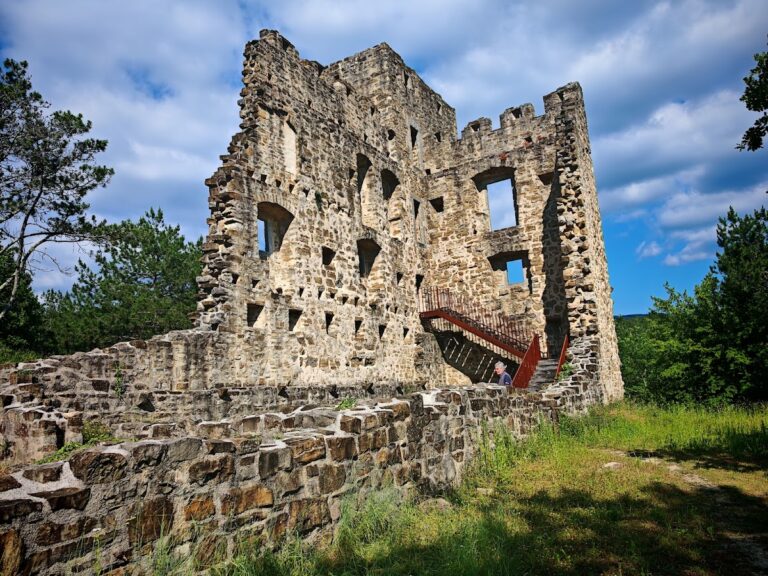
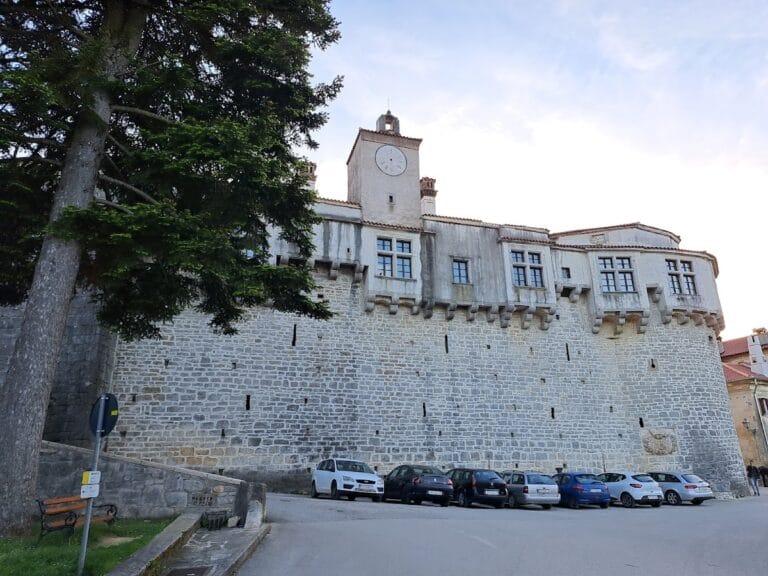
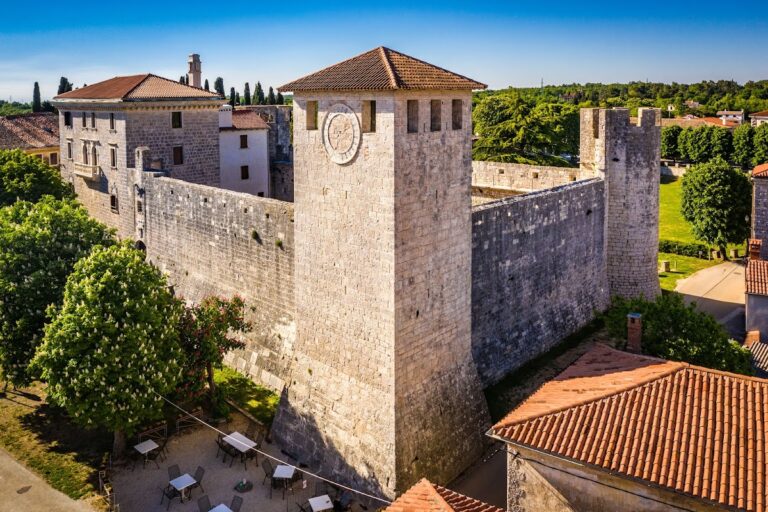
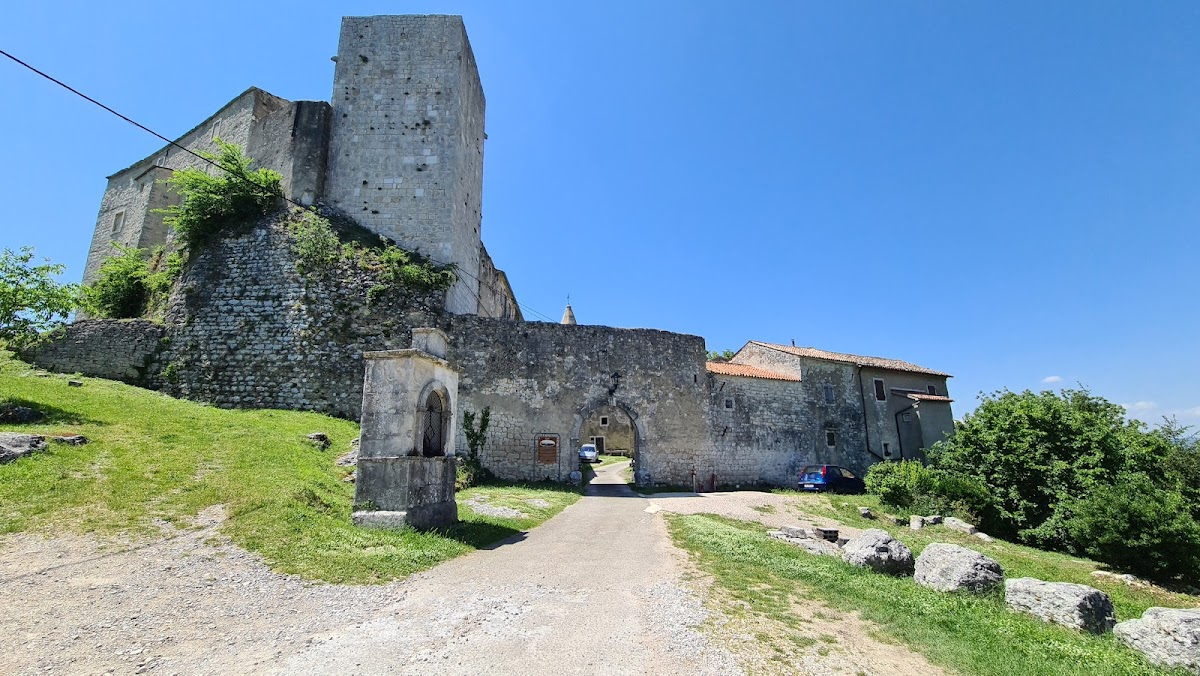
Kršan Castle occupies a hilltop or the slope of a rise southwest above the settlement, at approximately 165 metres above sea level. The surviving complex is built of stone and retains elements of the medieval hill castle, including its defensive enclosure and internal residential area. Later houses incorporated the walls of buildings that once stood within the fortress.
Fortification and courtyard
Square tower and residential walls
A square tower forms part of the surviving medieval fabric, together with defensive walls that define the fortress’s stone character. Walls belonging to the former residential buildings remain inside the enclosure and were incorporated into later houses. These remains reflect the castle’s combined military and residential functions.
Gothic gate and courtyard well
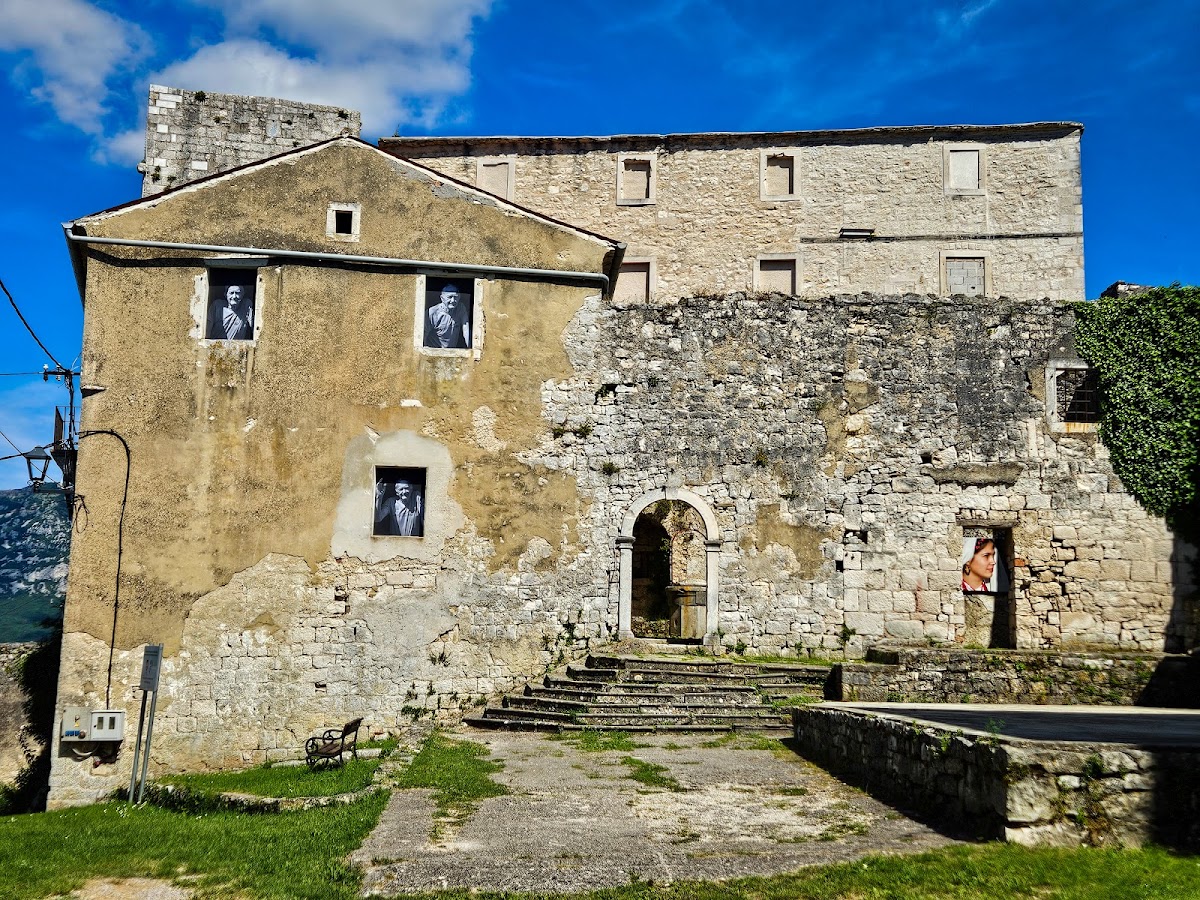
The inner courtyard preserves the rectangular stone frame of a Gothic gate dating from the fifteenth century. Gothic architecture is a medieval style often associated with pointed arches and vertically emphasized forms. The courtyard also retains the carved stone coping of a well dated 1666, a later feature within the castle complex. The fortress is partly restored, while its overall condition remains abandoned.
Church of Saint John the Baptist
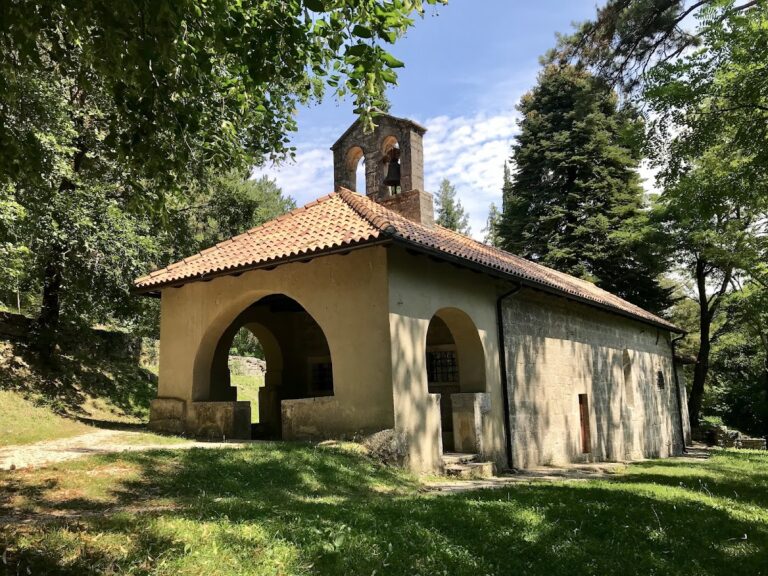
The Church of Saint John the Baptist was built inside the castle before 1303 at Henrik of Pazin’s expense. Its foundation was tied to the patronage rights granted by the Bishop of Pula in that year and confirmed several times afterward. The church belongs to the castle’s early fourteenth-century history, when religious and feudal authority were closely connected within the fortified residence.