Drochil Castle: A Historic Late 16th-Century Scottish Residence
Visitor Information
Google Rating: 4.8
Popularity: Very Low
Country: United Kingdom
Civilization: Early Modern
Site type: Military
Remains: Castle
History
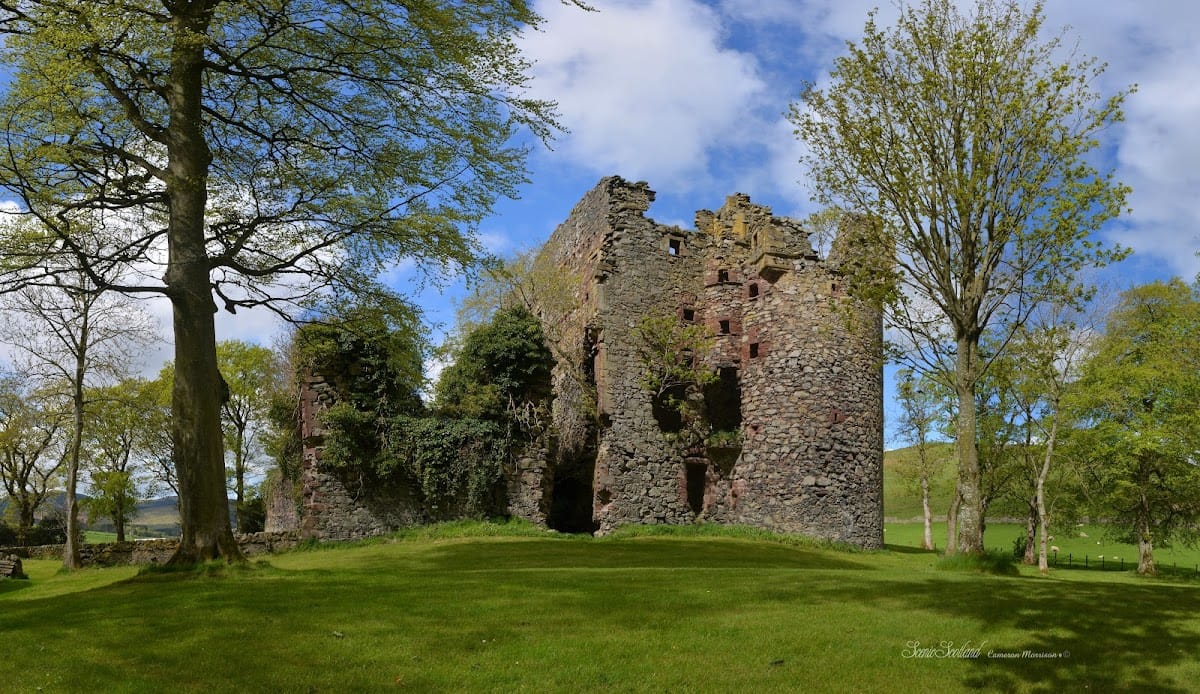
Drochil Castle is located near the village of West Linton in Scotland. It was constructed during the late 16th century by Scottish nobles as a residence reflecting their status and security needs.
Construction began in 1578 under the direction of James Douglas, the 4th Earl of Morton, who served as Regent of Scotland. At the time of his execution in 1581, ordered by King James VI, the castle was only partially built, reaching roughly halfway to completion. After Morton’s death, building work ceased entirely, leaving the castle unfinished for more than four hundred years.
By 1630, the incomplete structure was abandoned. In 1686, ownership passed to William Douglas, the 1st Duke of Queensberry, whose descendants, the Dukes of Buccleuch, have retained possession ever since. During the early 1800s, local farmers dismantled sections of the castle to recycle the stone for the construction of nearby agricultural buildings. Over time, the site has been recognized for its historic significance and is now protected as a scheduled monument and listed building.
Remains
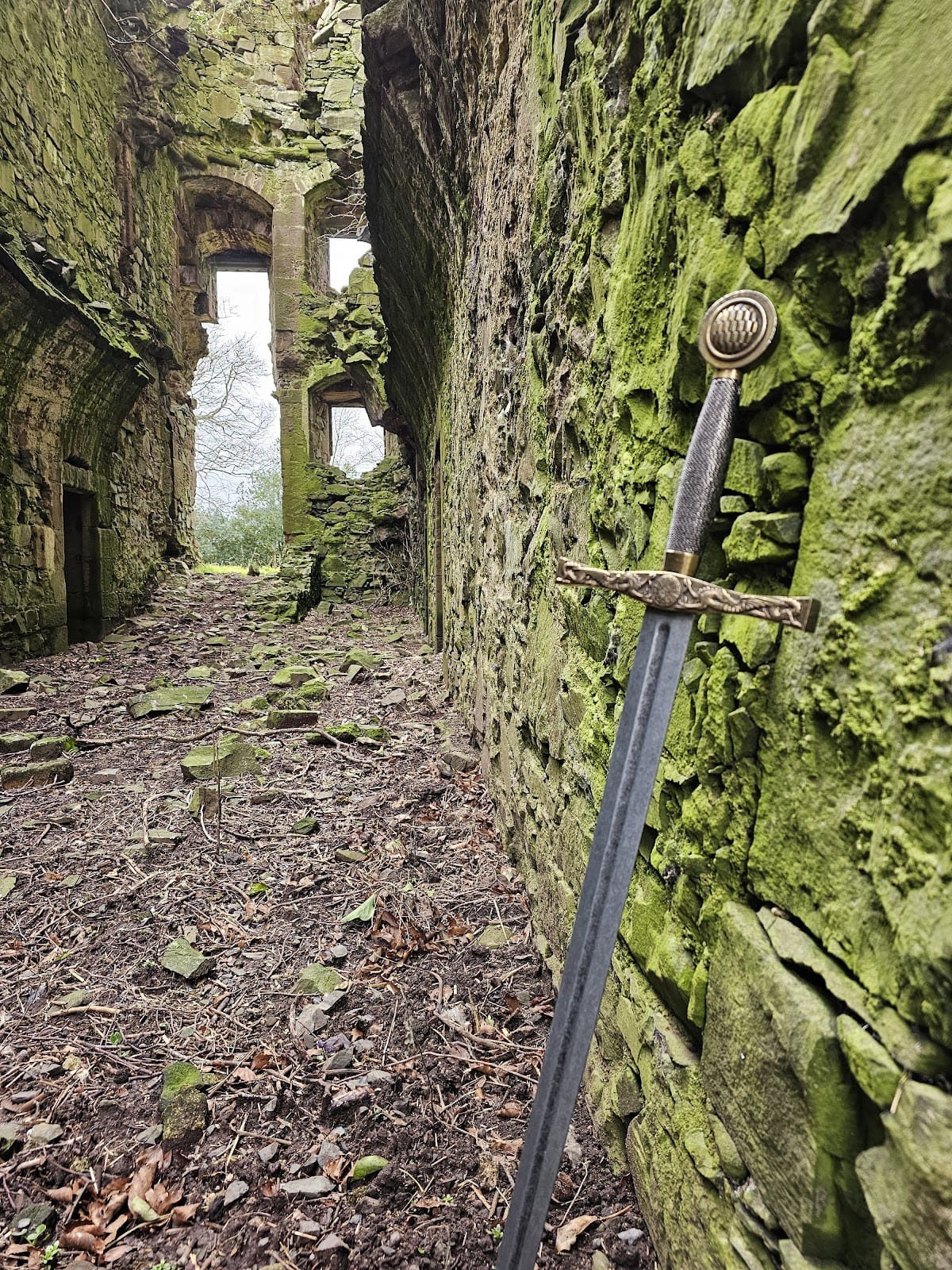
The ruins of Drochil Castle present a substantial but incomplete four-storey structure with an additional attic level, measuring approximately 25 by 21 meters. The castle’s floor plan centers around a wide, longitudinal corridor running east to west, with suites of apartments arranged along both sides. This “double-tenement” layout was designed to provide comfortable residential quarters rather than purely military defense.
At two opposite corners, the castle features round towers about 7.6 meters in diameter. Each tower contains two gunloops, narrow openings intended for firearms, indicating defensive considerations during its construction. The first floor holds a large great hall extending roughly 15 by 6.7 meters that dominated this level alongside four adjoining bedrooms, reflecting the domestic and social functions of the castle.
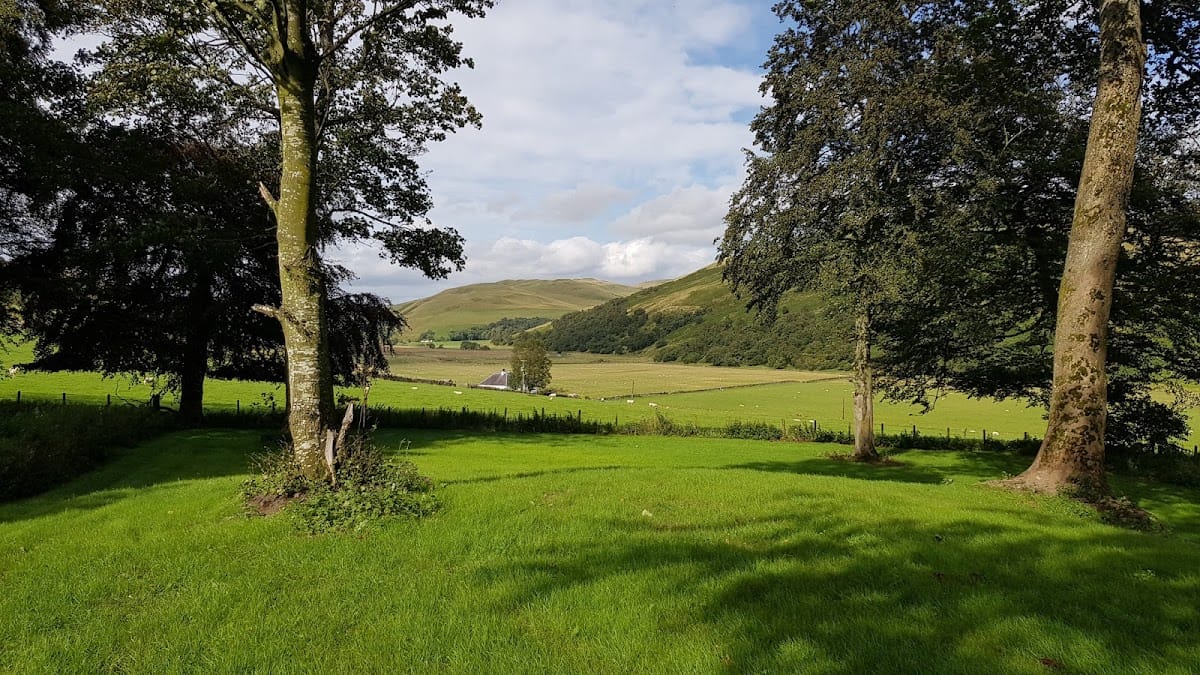
The external walls are built from locally quarried whinstone rubble, a hard igneous rock, dressed with red sandstone for structural and decorative contrast. Over the centuries, parts of the masonry were removed, particularly in the 19th century when nearby farmers took stones for reuse. Today, the castle survives in a fragile and unstable state. It stands within a small grove, set near the B7509 road and roughly 150 meters from the Lyne Water river, amidst a rural landscape dotted with several small villages.
Nearby sites