Dryhope Tower: A Scottish Peel Tower in the Yarrow Valley

Site at a Glance
- Rating
- 4.1
- Popularity
- Very Low
- Country
- United Kingdom
- Primary era
- Early Modern
- Eras represented
- Early Modern
- Civilizations
- Kingdom of Scotland
- Site type
- Military
- Remains
- Tower
On this page7 sections
History
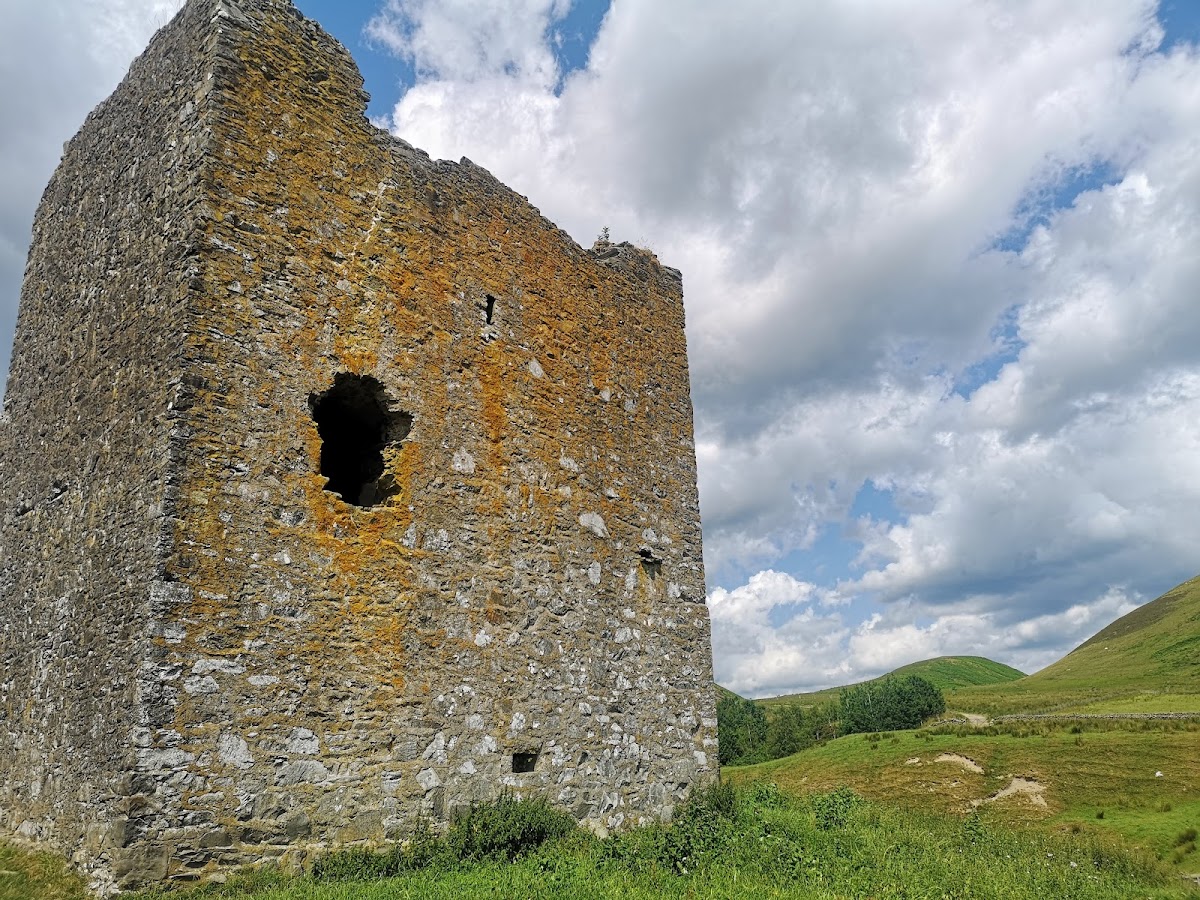
Dryhope Tower is a ruined Scottish peel tower in the United Kingdom, standing in the Yarrow Water valley at Dryhope in the Scottish Borders. Built probably in the sixteenth century, it served as a fortified residence and watchtower during periods of unrest along the Anglo-Scottish frontier. The tower defended the northeastern end of St Mary’s Loch and stood approximately midway between Moffat and Selkirk.
Construction and the Scotts of Dryhope
The tower was probably erected in response to Scottish legislation that required major landholders in the Border region to build stone-and-lime defensive enclosures. These structures protected landowners, tenants, and property during an era when armed raiding families and groups, known as Border Reivers, carried out cattle raids, feuds, and retaliatory attacks along the frontier.
Dryhope belonged to the Scotts of Dryhope. Mary Scott, a daughter of the family later remembered as the “Flower of Yarrow,” married Wat Scott of Kirkhope, a notorious Border Reiver. Through the marriage, the property passed to Wat Scott’s family, the Scotts of Harden, and Wat Scott took possession of Dryhope.
Royal punishment and later ownership
In 1592, Wat Scott fell out of favour with James VI, who had been King of Scotland since 1567, because of Scott’s association with Francis Stewart, 1st Earl of Bothwell, and his involvement in an attack on Falkland Palace. James VI raised an army and ordered the slighting, or partial destruction, of several houses belonging to his opponents. Dryhope was among the fortified properties of the Scotts of Harden affected by this action.
The tower appears to have been rebuilt by 1613. During the later seventeenth century it entered severe decay and was later acquired by the senior branch of the Scott family, the Dukes of Buccleuch, who descended from the Scotts of Harden. Dryhope Tower is now part of the Philiphaugh Estate. Stabilisation work has been carried out, and the monument is designated as a scheduled monument by Historic Environment Scotland. It was also listed as a Category B listed building in 1971.
Remains
Dryhope Tower stands within the remains of a stone barmkin, an enclosed defensive yard surrounding a tower and other buildings. The site was naturally protected on its eastern side by the Dryhope Burn and on its western side by the Kirkstead Burn. Its surviving arrangement reflects the defensive requirements imposed on Borderland landholders.
Fortified buildings
Dryhope Tower
The tower was built from locally available stone and originally rose through four storeys. The lowest two storeys had vaulted ceilings, providing strong enclosed spaces within the structure. The building now survives as a ruin, with stabilisation work undertaken to help preserve its remains.
Stone barmkin
The tower was enclosed by a stone barmkin that also contained other buildings. Borderland legislation specified an enclosure approximately 60 feet square, with walls one ell thick and six ells high. The barmkin formed the wider defensive setting for the tower and its associated structures.