Castello di Sant’Alessio Siculo: A Coastal Fortress in Sicily
Site at a Glance
- Rating
- 4.1
- Popularity
- Very Low
- Country
- Italy
- Primary era
- Medieval
- Eras represented
- Classical, Medieval, Modern
- Civilizations
- British, Byzantine, Kingdom of Sicily, Roman
- Site type
- Military
- Remains
- Castle
On this page7 sections
History
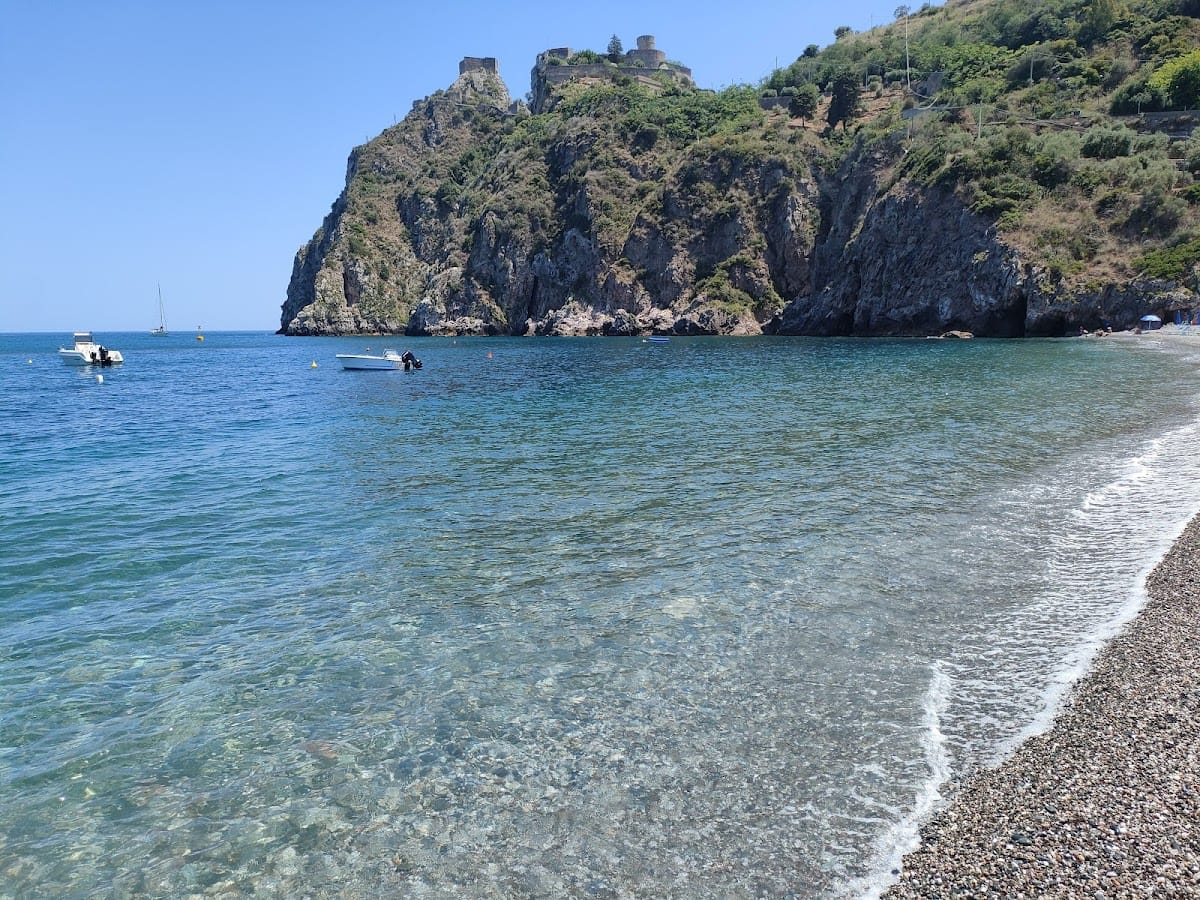
Castello di Sant’Alessio Siculo is a historic coastal fortress in Italy, built on the rocky promontory of Capo Sant’Alessio. Its position, rising above cliffs on the Ionian coast between Messina and Taormina, made it important for coastal defense. The site developed through Roman, Byzantine, Sicilian, British, and modern military phases.
Greek, Roman, and Byzantine foundations
During the Greek-Siceliot period, the promontory was called Arghennon Akron, or “Silver Cape.” It marked the boundary between the territories of Messana and Naxos until Dionysius I, the tyrant of Syracuse, unified Sicily under his rule in the fifth century BC. The Romans later called the site Promontorium and built its first fortification.
In 36 BC, during the conflict between Octavian and Sextus Pompey, the Roman commander Pompey the Great’s son reportedly used the fortification as shelter. Sextus Pompey was a political and military opponent of Octavian who operated from the Sicilian coast and disrupted Roman supplies.
The castle itself was constructed during the Byzantine period. The Byzantine Empire was the eastern Roman Empire, and its government and armies controlled parts of Sicily during the medieval period. The fortress was associated with a saint of the Greek Orthodox tradition and helped defend the coast against Arab raids during the Byzantine wars against Arab forces. Under the Emirate of Sicily, the Muslim polity that ruled much of Sicily before the Norman conquest, the promontory was known as Ad Dargah, meaning “The Stair.”
The Kingdom of Sicily and the barony
After the Kingdom of Sicily was established in the twelfth century, major structural changes gave the fortification its general present form. A donation charter issued by Roger II in 1117 refers to the promontory as Scala Sancti Alexi. Roger II was the first king of Sicily and ruled during the consolidation of the kingdom. The territory around present-day Sant’Alessio Siculo was then scarcely settled, belonged to Forza d’Agrò, and lay within the sphere of the monastery attached to the Church of Saints Peter and Paul of Agrò.
During the first half of the fifteenth century, the kings of Sicily established the Barony of the Castle of Sant’Alessio. Although the barony was enclosed within the fief of the Abbey of Saints Peter and Paul of Agrò, it had its own administration. A castellan, the official responsible for administering and defending a castle, exercised civil and criminal jurisdiction over the garrison and the residents of the nearby villages of Sant’Alessio and Santa Margherita. The monastery financed the castellan, guards, archers, and servants.
The Messinese nobleman Artale Angelica became the first castellan and relinquished the office to the Royal Court of Sicily around 1450. In 1453, King Alfonso I of Sicily assigned lordship of the castle to the Colonna-Romano family. The family retained it until 1558, when inheritance transferred it to the Furnari family.
Later lordship and military use
In 1608, Ferdinando Furnari sold the castle to Francesco Romeo da Randazzo, a protonotary, meaning a senior notarial or administrative official. His heirs received the property after his death. From 1703, lordship belonged for several generations to the Paterno-Castello dynasty, until feudalism in the Kingdom of Sicily was abolished under the Constitution of 1812.
The fortress hosted Charles V after his capture of Tunis in 1535. Charles V was the Habsburg emperor and king whose Mediterranean campaigns included that conquest. During the anti-Spanish revolt of Messina in 1676, the castle served as a food depot for the city.
At the beginning of the nineteenth century, British forces defending the Kingdom of Sicily against French attacks from Calabria restructured the fortress and added its outer circuit wall. Giovanni Impellizzeri purchased the castle in 1900. During the Second World War, German occupying forces installed two artillery batteries in underground galleries beneath the castle.
Castello di Sant’Alessio Siculo is recognized as Italian national heritage. Its buildings are partly ruinous, and access to the site is currently closed to the public.
Remains
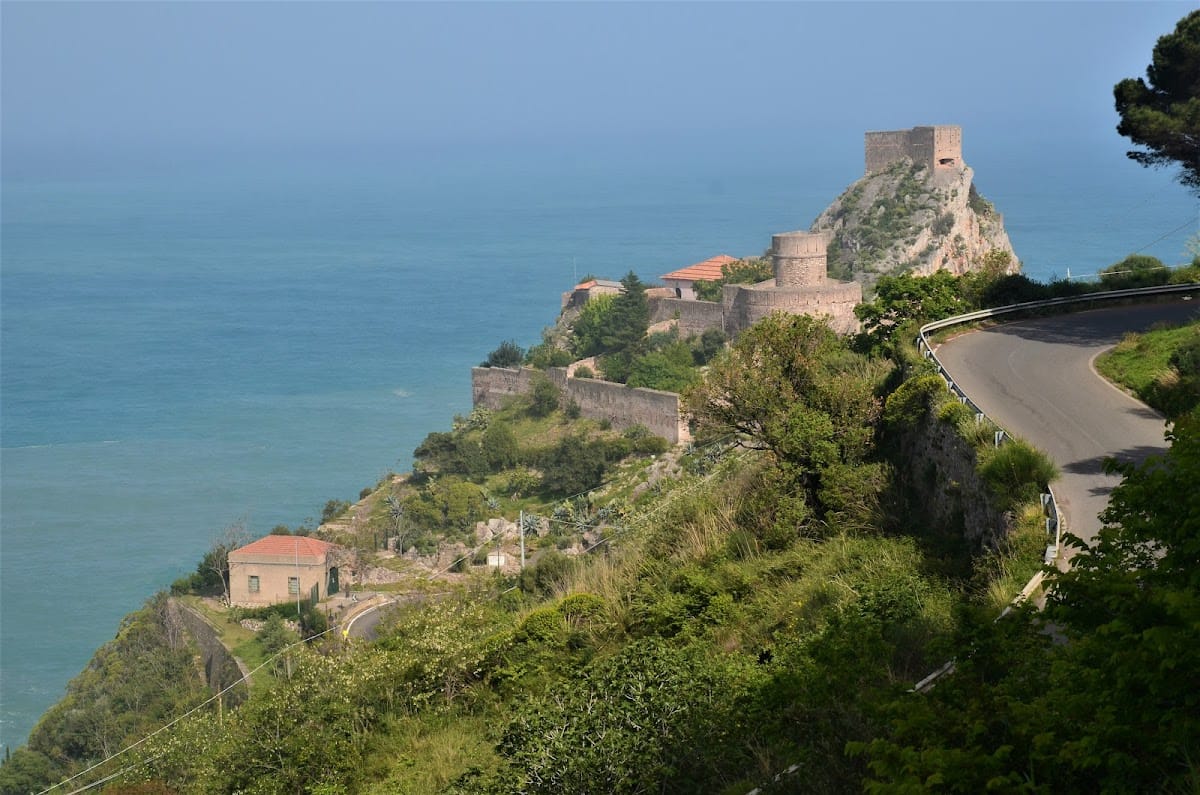
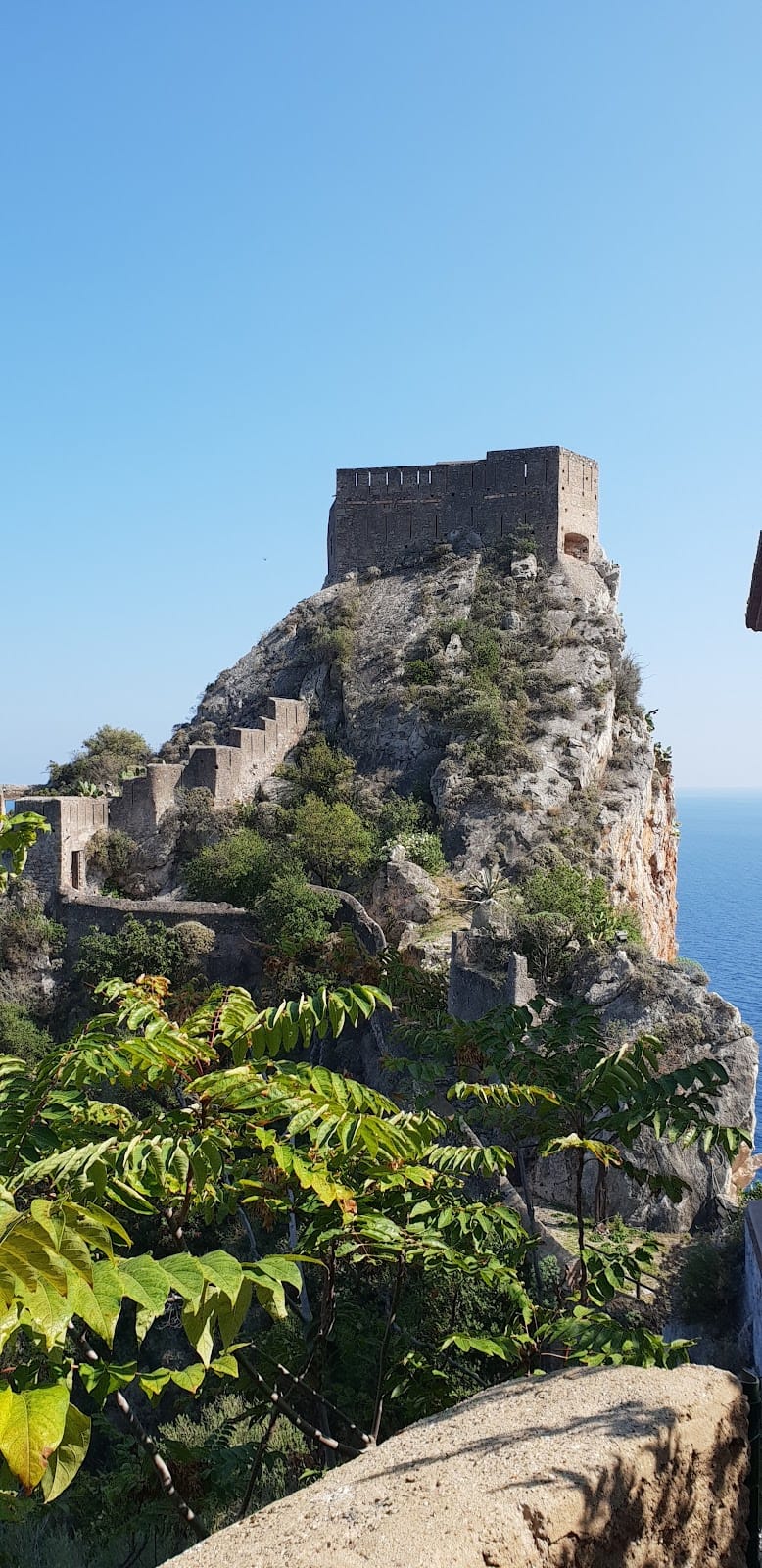
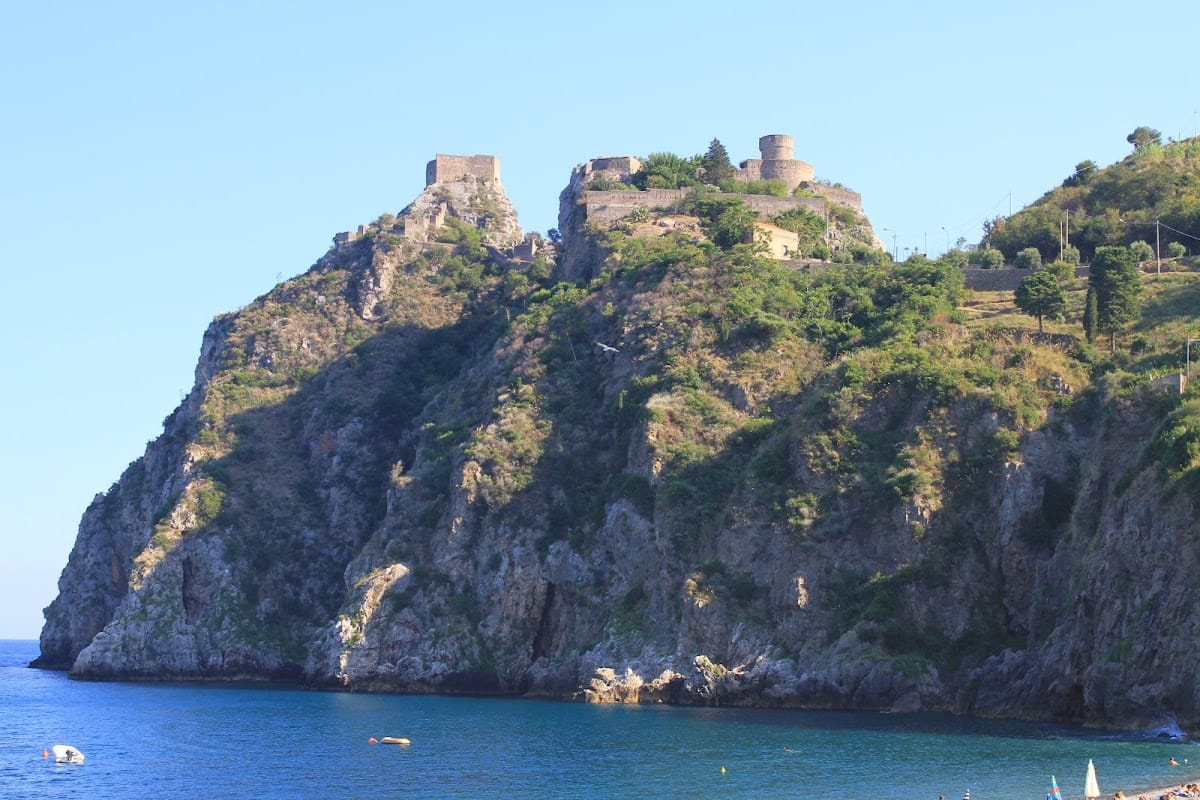
The fortification occupies the rocky ends of Capo Sant’Alessio, with two elevated peaks overlooking the sea. A curtain wall, meaning a defensive wall connecting fortified structures, joins two towers. The seaward peak carries a rectangular tower, while the inland, mountain-side peak carries a circular tower. The castle’s construction uses pebbles, mortar, and brickwork. The outer circuit wall belongs to the British restructuring of the early nineteenth century.
Towers and curtain wall
The rectangular and circular towers occupy opposite ends of the promontory and rise above the surrounding cliffs. Their different forms organize the main defensive structure, while the connecting curtain wall unites the two peaks into a single fortification. The buildings survive in a partly ruined condition, preserving the outline of the castle’s principal defensive arrangement.
Underground galleries
Two underground galleries begin in the area in front of the castle and pass beneath the fortification. They end in openings cut into the rocky walls, with one opening facing toward Messina and the other toward Taormina. The galleries later accommodated the two German artillery batteries installed during the Second World War, linking the surviving subterranean defenses to the site’s final military phase.