Chōgosonshi-ji Temple: Head Temple of Shigisan Shingon Buddhism in Japan


Site at a Glance
- Rating
- 4.5
- Popularity
- Medium
- Country
- Japan
- Primary era
- Early Modern
- External website
- Open
- Eras represented
- Early Modern
- Civilizations
- Toyotomi regime
- Site type
- Religious
- Remains
- Sanctuary
On this page17 sections
History
Chōgosonshi-ji Temple is a Buddhist temple in Japan, located on the Nara side of Mount Shigi near the southern end of the Ikoma Mountains. Traditionally founded in 587 by Prince Shōtoku, it is the head temple of Shigisan Shingon Buddhism and is also known as Shigisan-ji. Its formal name, Shigisan Kangiin Chōgokoku-sonshi-ji, reflects its association with prayers for the peace of the court, protection of the country, and the longevity of imperial descendants.
Foundation and Bishamonten Tradition
The temple’s foundation tradition begins with a manifestation of Bishamonten in 582, said to have occurred in a tiger year, month, day, and hour. Bishamonten, a Buddhist guardian deity associated with protection and martial victory, is also counted in Japan among the Seven Deities of Good Fortune. According to tradition, Prince Shōtoku carved an image of the deity and established the temple on July 3, 587. Bishamonten’s protection was then credited with Prince Shōtoku’s victory over Mononobe no Moriya.
The name Shigisan is traditionally interpreted as “the mountain to be trusted and revered.” The temple stood in a region historically close to the boundary between Yamato Province and Kawachi Province, and its religious identity developed around the worship of Bishamonten and the sacred character of Mount Shigi.
Myōren and the Heian Revival
By the tenth century, during the reign of Emperor Daigo, a hermitage dedicated to Bishamonten stood on Mount Shigi and was occupied by the ascetic monk Myōren. Myōren is presented in medieval religious tradition as a holy man associated with miraculous powers. He undertook the revival of the temple and organized its buildings around 910.
Literary traditions describe Myōren healing Emperor Daigo, but the historical record gives a different account. It states that Myōren prayed for the emperor’s recovery in 930, while Daigo died about a month later. The healing narrative nevertheless shaped the temple’s later identity. In connection with that tradition, Emperor Daigo was said to have granted the temple an imperial title associated with prayers for the court, the country, and the imperial line, giving rise to the name Chōgosonshi-ji.
The Shigisan Engi emaki, a late-Heian set of illustrated handscrolls probably produced in the twelfth century, centers on miracle stories connected with Myōren’s practice at Mount Shigi. Its middle scroll includes the account of Myōren curing Emperor Daigo. Related versions of the story appear in the medieval collections Uji Shūi Monogatari and Konjaku Monogatari.
Warfare, Destruction, and Reconstruction
During the Sengoku period, an era of prolonged political fragmentation and warfare from the fifteenth through the sixteenth centuries, Kizawa Nagamasa built Shigisan Castle on the summit of Mount Shigi. In 1577, the Battle of Shigisan Castle ended with the defeat and death of its lord, Matsunaga Hisahide, at the hands of Oda Nobunaga. The destruction that followed burned more than sixty temple halls and pagodas.
Toyotomi Hideyori rebuilt the principal hall in 1602, and the revival of the temple complex was completed in 1610. The principal hall later burned again in 1951. That same year, the temple became independent from Kōyasan Shingon Buddhism and established Shigisan Shingon Buddhism. The principal hall was rebuilt and formally rededicated in 1958.
Pilgrimage and Religious Continuity
Chōgosonshi-ji has remained a pilgrimage site throughout its history. It is associated with several pilgrimage networks, including the fourteenth site in the Shingon Buddhist Eighteen Head Temples circuit, the twentieth site on the Prince Shōtoku sacred-place circuit, and the thirtieth site on the Pilgrimage Route of Shinto and Buddhism. It also forms part of the Yamato Thirteen Buddhas, Northern Yamato Eighty-eight Sacred Places, and Yamato Seven Lucky Gods and Eight Treasures circuits.
Railway connections established in 1915 and 1930 greatly increased visitation and encouraged the development of hotels and restaurants nearby. The temple also retains features of the former syncretic relationship between Buddhism and Shinto, including torii gates within its precincts. A continuing New Year pilgrimage and the late-February Tiger Festival remain among its major religious observances. Its traditional connection with victory in battle and its tiger symbolism have also led Hanshin Tigers players and supporters to visit for prayers for victory.
Remains
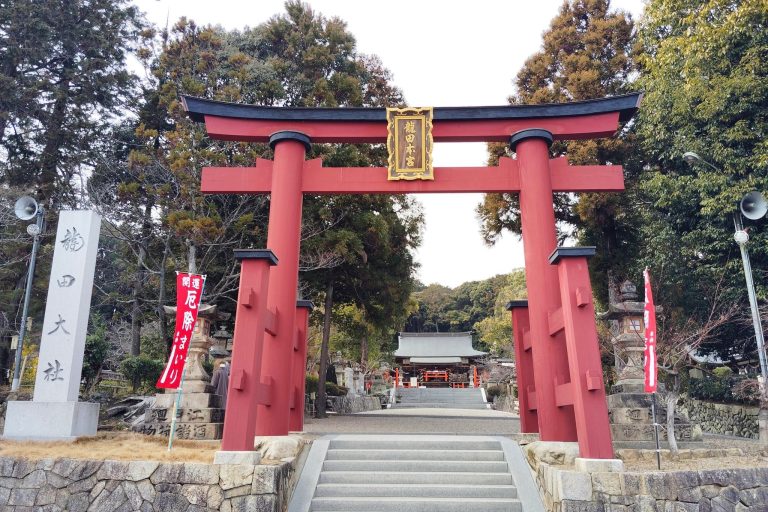
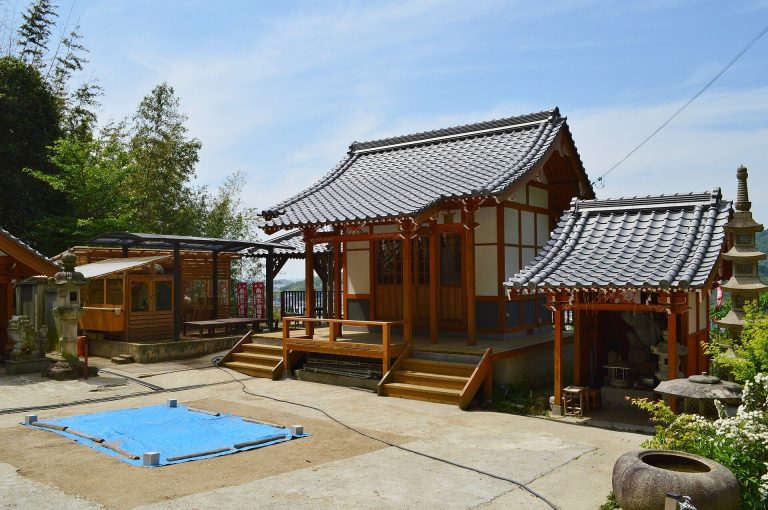
Chōgosonshi-ji occupies the slopes of Mount Shigi, where a principal hall and numerous subsidiary temple buildings are distributed across the mountainside. The precinct includes both a two-story pagoda and a three-story pagoda, while routes marked by torii connect the Buddhist complex with Shinto shrines on the mountain. The surviving arrangement presents the temple as a layered religious landscape shaped by Buddhist worship, mountain practice, and the historical interaction of Buddhism and Shinto.
Temple Buildings and Pagodas
Principal Hall
The principal hall is the central building of the temple complex and is dedicated to Bishamonten, the temple’s principal deity. The present building follows the reconstruction undertaken after the hall burned in 1951 and was formally rededicated in 1958. It forms the main focus of a group of subsidiary buildings spread across the slopes of Mount Shigi.
Pagodas
A two-story pagoda and a three-story pagoda stand within the precinct. They form part of the temple’s surviving collection of major Buddhist structures, which extends across the mountainside together with the principal hall and other buildings.
Mountain Routes and Shrines
Summit Shrine
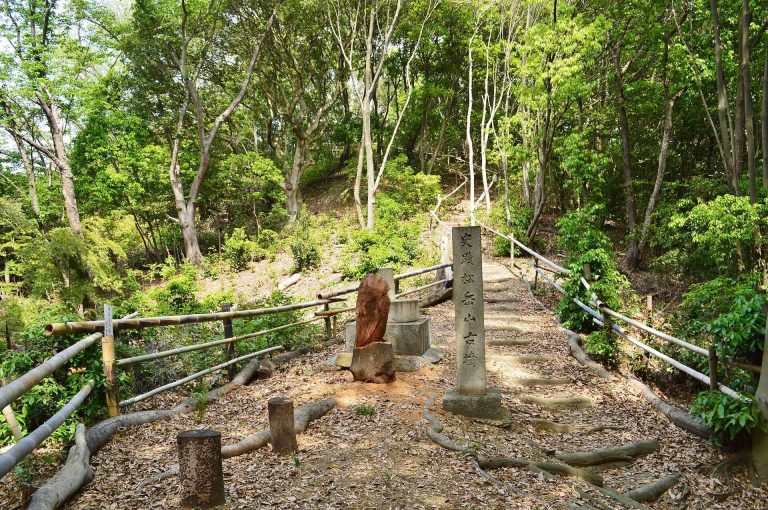
A stairway lined with torii gates leads to a Shinto shrine at the summit of Mount Shigi. The shrine venerates a dragon king. The torii mark the approach to a Shinto sacred space, while their position within the temple precinct reflects the long historical interaction between Buddhist and Shinto practices.
Additional Shrine Route
A second torii-lined route leads to another shrine. Together, these routes are associated with approximately 800 torii distributed through the temple’s mountain setting. Their presence preserves a physical expression of the religious relationships that shaped the precinct over time.
Tiger Imagery
Tiger imagery is found throughout the precinct in connection with the foundation tradition of Bishamonten’s appearance in a tiger year, month, day, and hour. Paper-mâché tigers are placed around the temple, giving material form to the story that links the deity with the temple’s origins and its traditional association with victory in battle.
Handscrolls and Temple Treasures
Shigisan Engi emaki
The Shigisan Engi emaki is a three-scroll set of painted and calligraphic paper handscrolls. An emaki combines sequential images with written narrative. The set consists of the “Yamazaki Chōja,” “Engi Kaji,” and “Amakō” scrolls, created in the late Heian period, probably in the twelfth century. Dynamic lines, expressive movement, restrained colors, and scenes of everyday life characterize the paintings.
The original handscrolls are deposited at the Nara National Museum, while a replica is displayed in the temple’s Reihokan treasure hall. One original scroll is made available for public viewing once a year. The Shigisan Engi emaki is designated a National Treasure.
Bishamonten Image
A late-Heian-period bronze standing image of Bishamonten has the characteristic form of Tobatsu Bishamonten, a type whose origins lie in the Western Regions. The image provides a surviving material connection with the deity at the center of the temple’s foundation tradition and religious identity.
Other Cultural Properties
Other holdings include two bugaku masks, a copper Shigisan-form water vessel, a gilt-bronze bowl, and weapons and military equipment. The gilt-bronze bowl and the weapons are designated Important Cultural Properties, while the masks and water vessel form part of the temple’s wider collection of religious and historical objects.