Kaizanzuka Kofun: A Sixth-Century Japanese Burial Mound
Site at a Glance
- Popularity
- Very Low
- Country
- Japan
- Primary era
- Medieval
- Eras represented
- Medieval
- Civilizations
- Yamato
- Site type
- Burial
- Remains
- Burial Mound
On this page8 sections
History
Construction and political setting
Kaizanzuka Kofun is a Japanese burial mound, or kofun, in Yao, Osaka Prefecture, Japan. Built in the later Kofun period, an era of ancient Japanese history associated with burial-mound construction, it probably dates to the middle or later sixth century. Its date is linked to Sue ware, a high-fired ceramic, in the TK209 pottery phase, a category used to date archaeological material. The mound is regarded as a representative burial place of the highest-ranking social stratum within the large Takayasu Kofun Group. It is important to understanding relations between regional clans and the Yamato polity, the early court-centered authority in Japan.
Later use and archaeological study
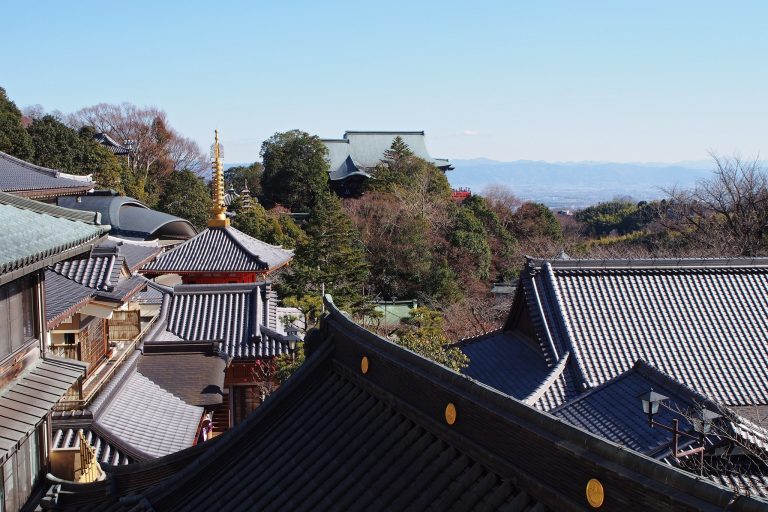
In the late eighteenth century, the summit was probably levelled and turned into a cemetery. The mound thereafter served as the burial ground for successive chief priests of Hōzōji. An 1801 illustrated guide to notable places in Kawachi described the temple grounds.
American zoologist and archaeologist Edward S. Morse surveyed the tomb in 1879 and reported on it the following year. In his discussion of nine Takayasu tombs, he gave Kaizanzuka the fullest treatment, introducing it to Western scholars as a representative Japanese stone-chamber tomb. His work helped advance the study of kofun. Yao City’s Board of Education surveyed the mound and measured its chamber in 2004, publishing a report in 2005. The site received designation as a Yao City Historic Site in 2005 and became part of the national Historic Site designation for the Takayasu Senzuka Kofun Group in 2015.
Remains
Mound and setting
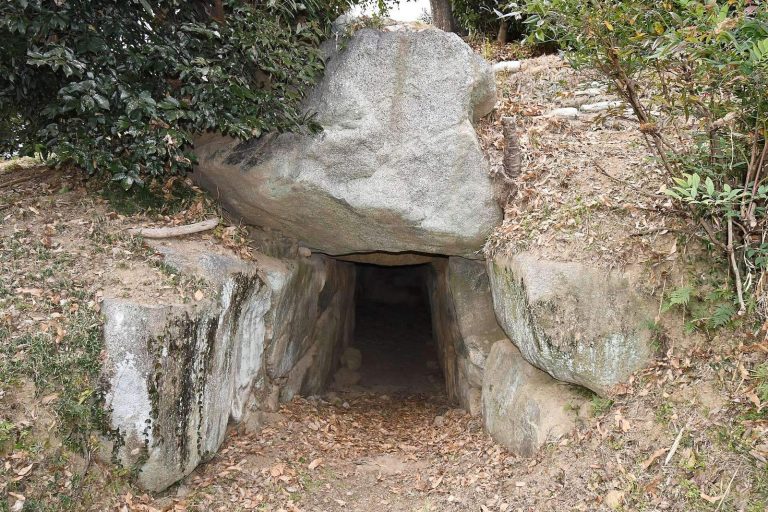
The circular mound is 30 metres in diameter and 5.8 metres high. It stands at about 137 metres above sea level on a ridge south of Matsuo Valley, along the western foothills of the Ikoma Range, overlooking the Kawachi Plain. The mound lies within Hōzōji’s grounds and belongs to the northern subgroup of the Takayasu Kofun Group. Around ten kofun are located in this area, of which four survive. The summit has been levelled, and a memorial tower to Hōzōji’s founding monk stands there.
Burial features
Stone chamber
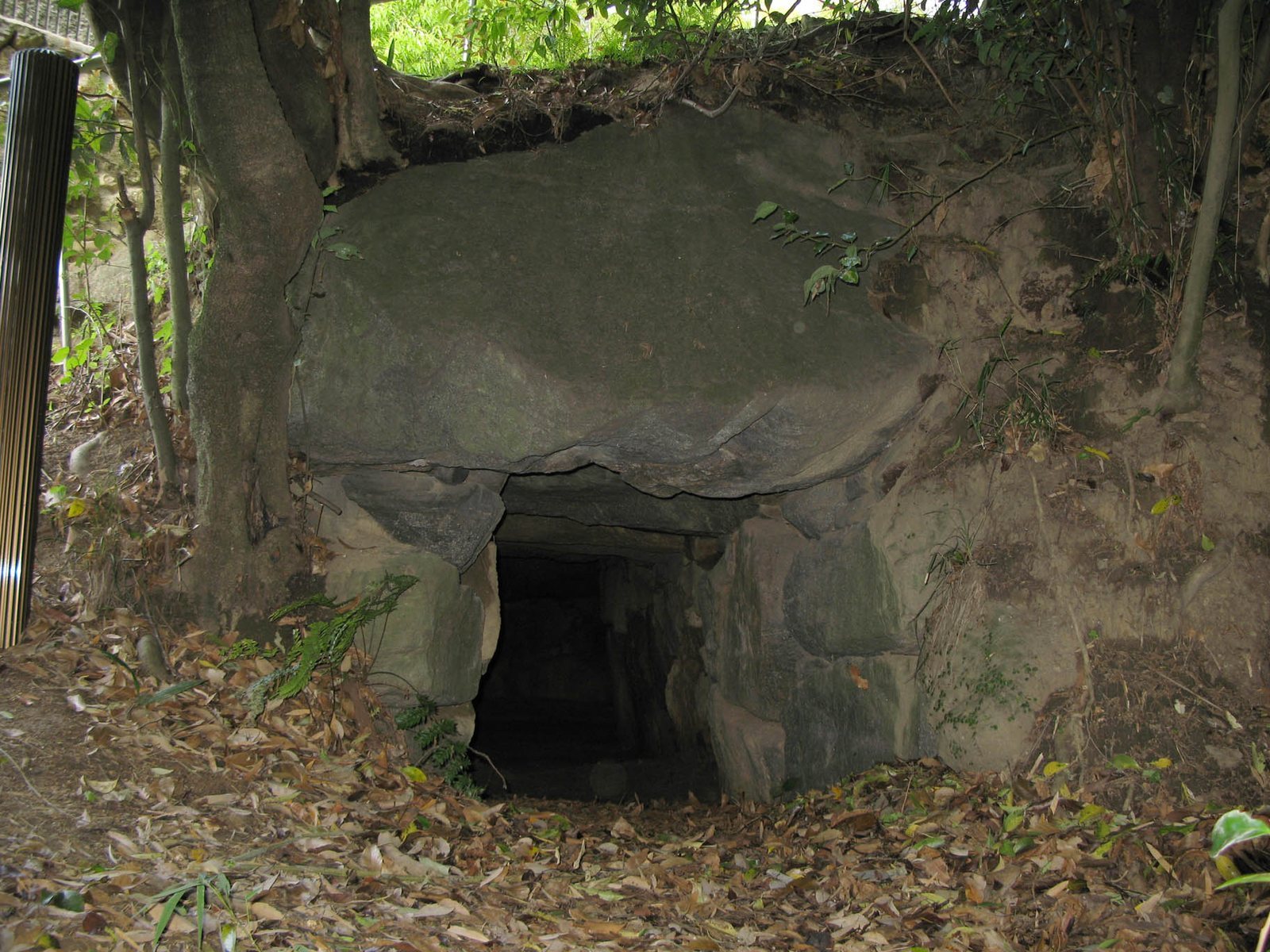
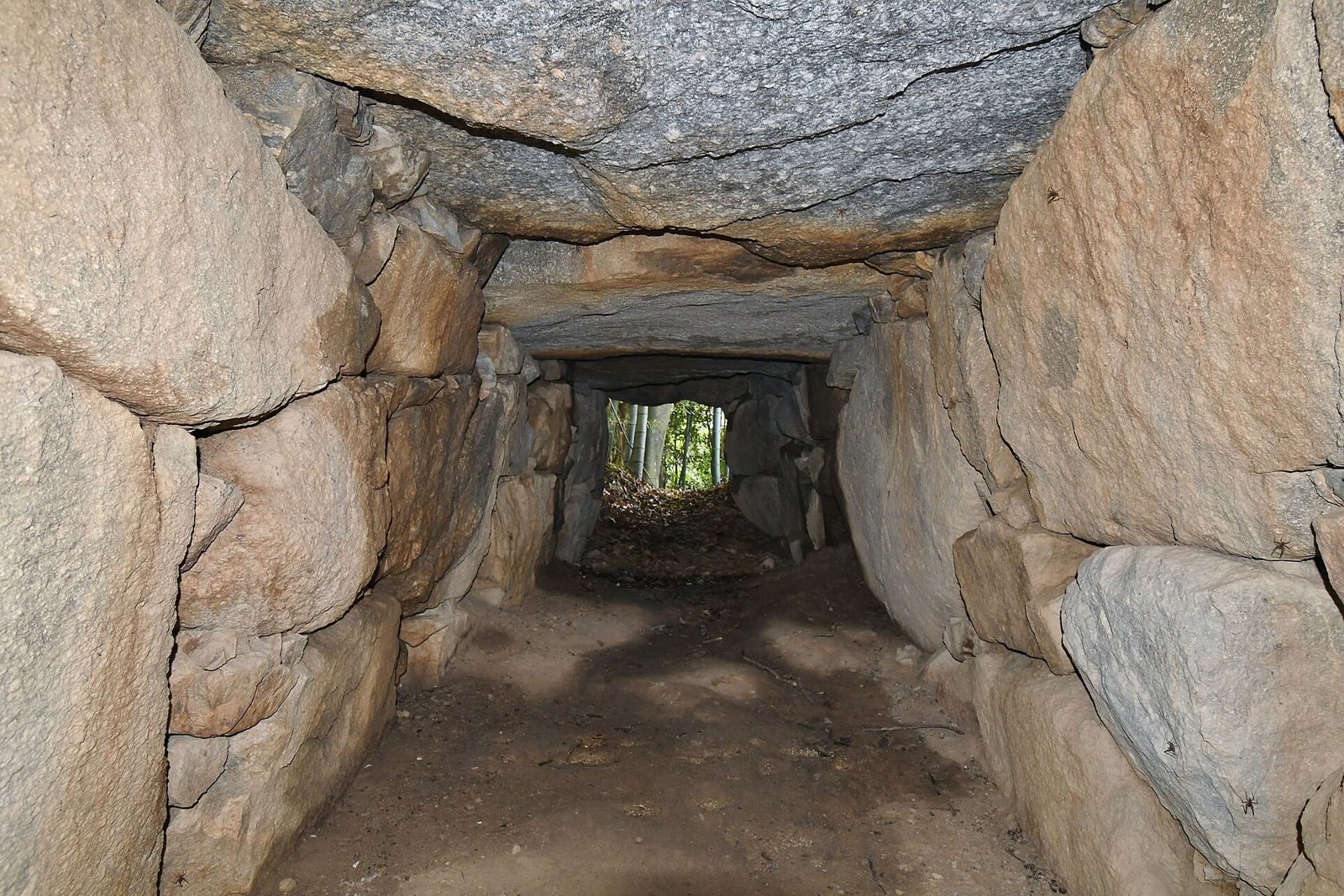
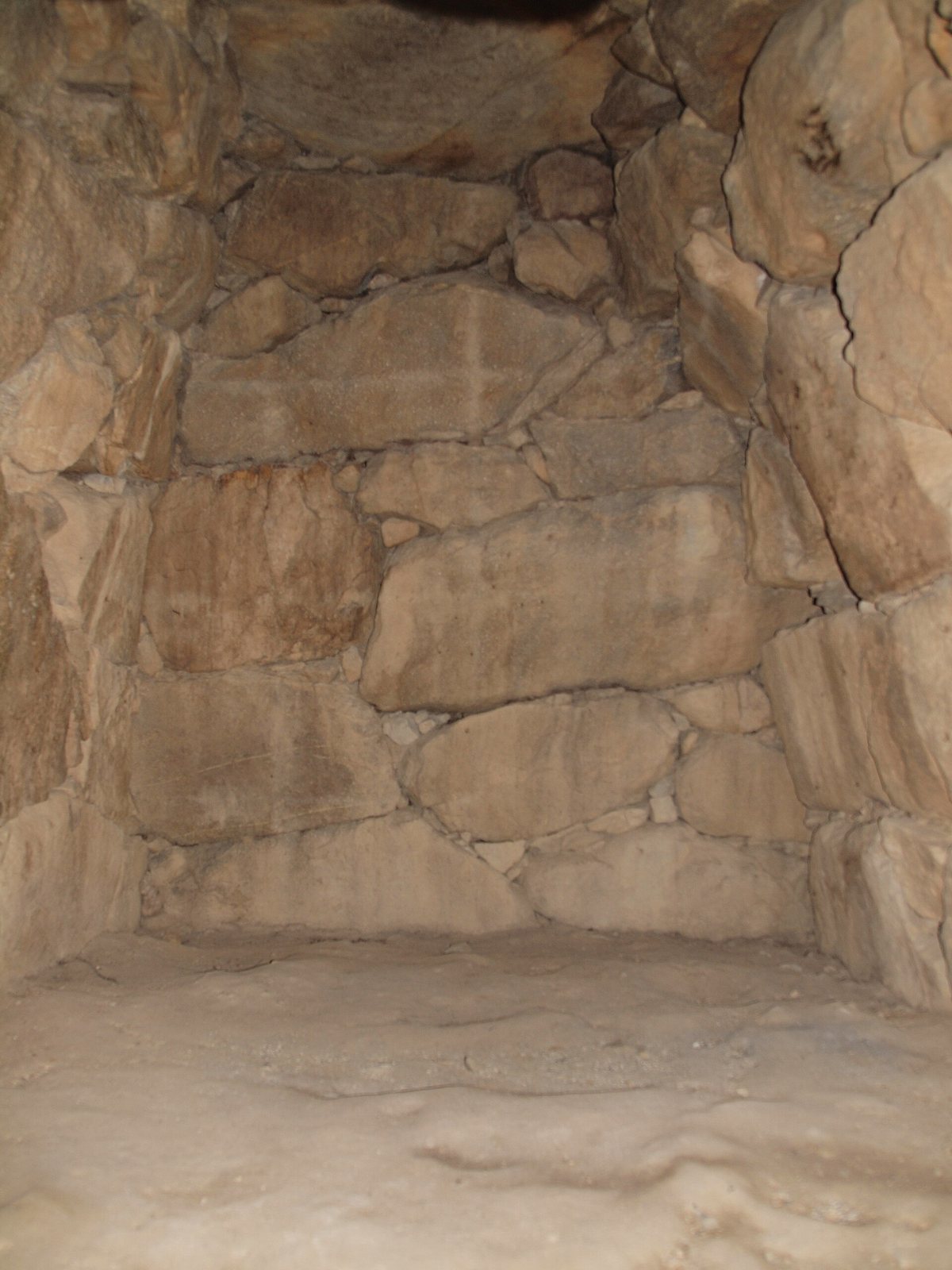
The large stone burial chamber opens to the southwest and has projecting stones on both sides of its entrance. Its total length is 13.05 metres. The nearly square main chamber has a floor area of about 15.74 square metres and measures 4.67 metres long, 3.37 metres wide, and 3.77 metres high today; its original height is estimated at about 4.2 metres. The entrance passage is 8.38 metres long and 1.5 metres wide, with a present height of 1.6 metres and an estimated original height of 1.9 metres. Morse recorded different measurements: 4.27 by 3.2 by 3.51 metres for the main chamber, and 8.53 metres long, 1.3 metres wide, and 1.6 metres high for the passage.
The chamber is built from granite, probably taken from a nearby valley stream. Its walls have five courses, or horizontal layers of stone, in the main room and two or three in the entrance passage. The western projecting stone at the entrance has two layers, while the eastern one has three. Three ceiling stones cover the main chamber and four cover the passage.
Recovered materials
Fragments of stone coffin material and Sue ware, including a cup, have been collected from inside the chamber. The coffin pieces are thought to come from a composite stone coffin and include two kinds of tuff, a rock formed from volcanic ash. One type is associated with Mount Nijō; the other is thought to be Takamuro stone from Kasai City. A piece made from Mount Nijō-associated stone was once kept in front of Hōzōji’s main hall. It is thought to have come from a burial mound within the temple grounds, but its connection to Kaizanzuka remains uncertain.