Tatsuta Shrine: A Shinto Shrine of the Wind Deities in Japan


Site at a Glance
- Rating
- 4.4
- Popularity
- Medium
- Country
- Japan
- Primary era
- Unclassified
- External website
- Open
- Eras represented
- Unclassified
- Civilizations
- Unclassified
- Site type
- Religious
- Remains
- Sanctuary
On this page9 sections
History
Tatsuta Shrine is a Shinto shrine in Japan associated with the paired wind kami Amenomihashira no Mikoto and Kuninomihashira no Mikoto. Tradition places its foundation during the reign of Emperor Sujin in the first century BC, while the shrine’s main sanctuary follows the Kasuga-zukuri style, a form with a steeply pitched roof and a projecting covered entrance. The shrine has long been connected with protection from poor harvests, epidemic disease, and the forces of wind.
Foundation tradition and early imperial worship
The foundation tradition tells that several years of poor harvests and epidemic disease led Emperor Sujin to pray personally to the heavenly and earthly kami. In a dream, Amenomihashira no Mikoto and Kuninomihashira no Mikoto instructed him to establish their worship on Mount Tatsuta. In the shrine’s religious tradition, these two deities are the Tatsuta Wind Deities. Shrine norito, formal Shinto liturgical prayers, identify Amenomihashira no Mikoto with the male kami Shinatsuhiko and Kuninomihashira no Mikoto with the female kami Shinatobe.
The earliest historical reference to Tatsuta’s wind worship dates to 10 April 675. On that date, Emperor Tenmu sent an imperial envoy to worship the wind kami at Tatsuta. The same record describes worship of Ōimi-no-Kami at Hirose, whose water deity was traditionally paired with the wind deities of Tatsuta.
Imperial recognition in the Heian period
The tenth-century Engishiki, a compilation of court regulations and ritual procedures, lists Tatsuta as two kami shrines in Heguri District of Yamato Province. The shrines were classified as Myojin-taisha, major shrines associated with powerful or especially revered kami, and received offerings during the imperial Tsukinami and Niiname rites.
During the Heian period, Tatsuta received imperial patronage and became one of the Twenty-Two Shrines, a select group that received particularly close imperial attention during the medieval period. The enshrined deities received successive court ranks: Junior Fifth Rank, Lower Grade, in 822; Junior Fifth Rank, Upper Grade, in 850; Junior Fourth Rank, Lower Grade, and Junior Third Rank in 852; and Senior Third Rank in 859. In 965, Emperor Murakami ordered imperial messengers to report important events to guardian kami at selected shrines, including Tatsuta, where imperial offerings were presented.
Modern status and continuing traditions
After the Meiji Restoration, Tatsuta was designated a Kanpei-taisha in 1871. This was the highest category in the pre-1946 system of state-supported Shinto shrines, and the shrine retained the status until 1946. In 1948 it became a Beppyo-jinja, a specially recognized shrine within the Association of Shinto Shrines.
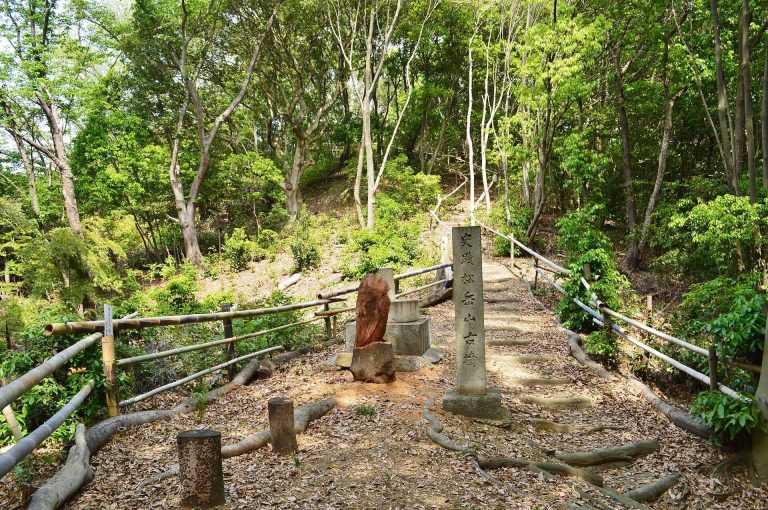
A main-sanctuary transfer ceremony took place on 2 November 1960. The following day, 3 November, an offering ceremony was held, and the Imperial Household presented funds for offerings and ritual food. In June 2020, Tatsuta Shrine, the Tatsuta Ancient Road, and Kame no Se were jointly designated as Japan Heritage.
The subsidiary Tatsuta Hime Shrine venerates Tatsuta Hime, a female kami traditionally associated with autumn. Tatsuta Hime and the shrine have been celebrated in many poems, while autumn foliage forms part of the shrine’s enduring cultural associations. Major observances include the Taki Festival on 3 April, the annual festival on 4 April, the Fūchin Grand Festival on the first Sunday of July, and the Autumn Grand Festival on the third Saturday and Sunday of October.
Remains
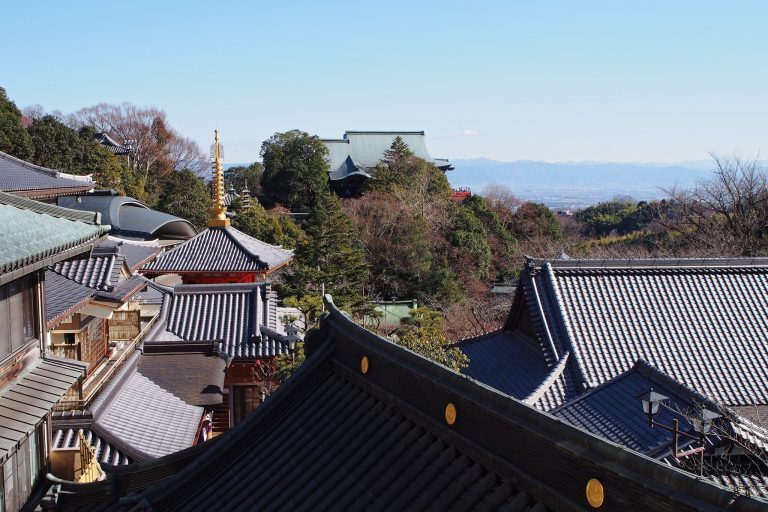
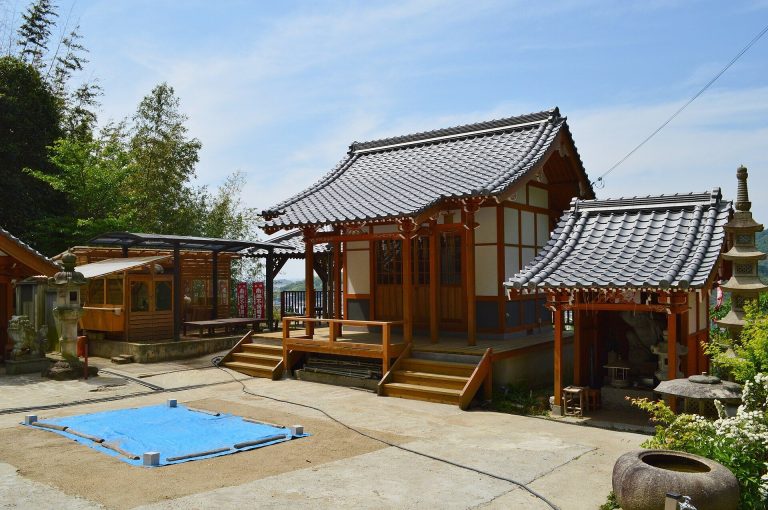
The shrine complex is entered through a torii and contains principal buildings for its two enshrined deities. Amenomihashira no Mikoto is worshipped in the building on the right, while Kuninomihashira no Mikoto is worshipped in the building on the left. The main sanctuary is built in the Kasuga-zukuri style, whose compact form includes a steep gabled roof and a covered entrance projecting from the front.
Recorded structures and precinct features
Torii and main sanctuaries
The entrance torii forms the approach to the shrine precinct. Within it, the paired principal buildings preserve the spatial distinction between the two wind kami, with Amenomihashira no Mikoto on the right and Kuninomihashira no Mikoto on the left. Their main sanctuary architecture follows Kasuga-zukuri, linking the buildings to a recognized traditional form of Shinto construction.
Tahōtō pagoda
A tahōtō, a Japanese pagoda with a square lower story and rounded upper section, once stood within the precincts. Its presence is shown in the 1791 Yamato Meisho Zue and in photographs made during the 1872 Jinshin Inspection, an early Meiji-era survey of cultural properties.
Heian-period craft object
An associated Heian-period craft object is a decorated keirō drum body bearing hōsōge, a stylized floral arabesque motif used in decorative arts. The drum body was designated an Important Cultural Property on 15 June 1995.