Myōjōrin-ji Temple: A Shingon Buddhist Temple on Mount Kinshōzan

Site at a Glance
- Rating
- 4.4
- Popularity
- Low
- Country
- Japan
- Primary era
- Early Modern
- External website
- Open
- Eras represented
- Early Modern
- Civilizations
- Tokugawa
- Site type
- Religious
- Remains
- Temple
On this page7 sections
History
Myōjōrin-ji Temple is a Shingon Buddhist temple in Japan, located near Ōgaki in Gifu Prefecture. It is traditionally said to have been founded in 686, during the reign of Empress Jitō, by En no Gyōja under an imperial command, with construction completed two years later. En no Gyōja, also known as En no Ozunu, was a semi-legendary seventh-century religious ascetic associated with the origins of Shugendō mountain practice.
Foundation and Shingon Revival
The temple temporarily declined before being revived by Kūkai in 801. Kūkai founded Shingon, a Japanese Esoteric Buddhist school centered on ritual practice, mantras, mandalas, and the attainment of Buddhahood. At the time of the revival, Myōjōrin-ji adopted the Shingon school and received imperial protection from Emperor Kanmu.
Lightning destroyed the temple in 1148. It was rebuilt afterward on a smaller scale, preserving its religious role while changing the physical extent of the complex.
Support from Local Lords
In 1609, Myōjōrin-ji was rebuilt with assistance from Tokunaga Hisamasa, lord of Takasu Domain in Mino Province. A domain was a feudal territorial polity governed by a lord under Japan’s early-modern warrior government.
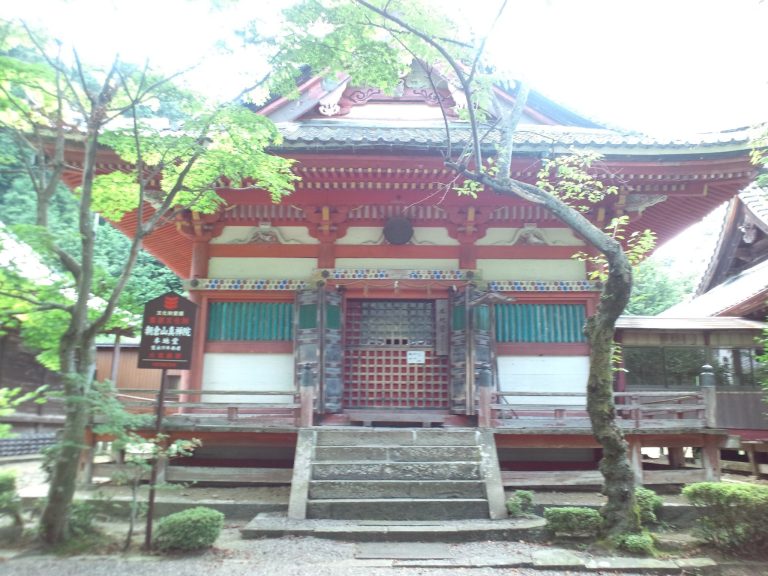
In 1657, Toda Ujinobu, lord of Ōgaki Domain, designated the temple as the Toda clan’s place of prayer. The temple subsequently flourished under this association. With assistance from Toda Ujiakira, its present main hall was rebuilt in 1863.
Religious Identity and Local Tradition
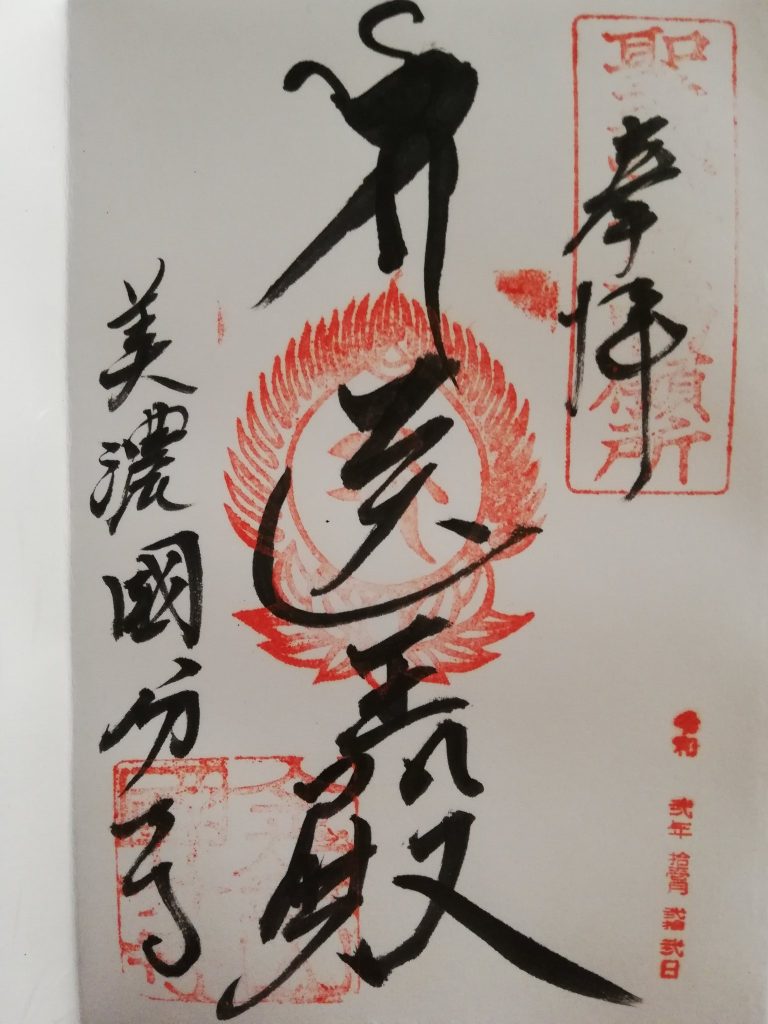
Myōjōrin-ji remains affiliated with the Shingon school and is the thirty-first site on the West Mino Thirty-Three Sacred Places pilgrimage. It is also traditionally regarded as one of Japan’s Three Great Kokūzō temples, although proposed lists differ. One version associates the group with Hōrin-ji in Kyoto and Kongōshō-ji on Mount Asama in Ise.
The temple is known locally as Akasaka Kokūzō and Kokūzō-san. Kokūzō Bosatsu is a bodhisattva associated with boundless space, memory, and wisdom, while “Kokūzō-san” is an honorific popular form of the name. In 1869, the Shinto–Buddhist Separation Ordinance caused the temple’s Zao Gongen shrine to separate and become Kinshōzan Shrine. Zao Gongen was a syncretic Buddhist-Shinto mountain deity associated with Shugendō, and the ordinance required such combined religious institutions and identities to be divided administratively.
A local tradition tells of a great serpent transformed from a woman who longed to meet Kokūzō. The serpent pursued the deity to a cave on the mountain and stopped constricting it after being promised a position above Kokūzō. It then disappeared and came to be venerated as Serpent King Gongen, the temple’s guardian deity. The tradition also connects the place where Kokūzō discarded his hat with Kasanui and the place where he drank from a natural spring with Kawama, both now within Ōgaki.
Remains
Mountain Setting and Sacred Image
Myōjōrin-ji stands near the summit of Mount Kinshōzan, whose elevation is given as 217.1 metres. The mountain’s name derives from the temple’s mountain title. The principal image is Kokūzō Bosatsu, represented by a sculpture inside a cave on Mount Kinshōzan. Tradition attributes the carving of this image to En no Gyōja.
Main Hall
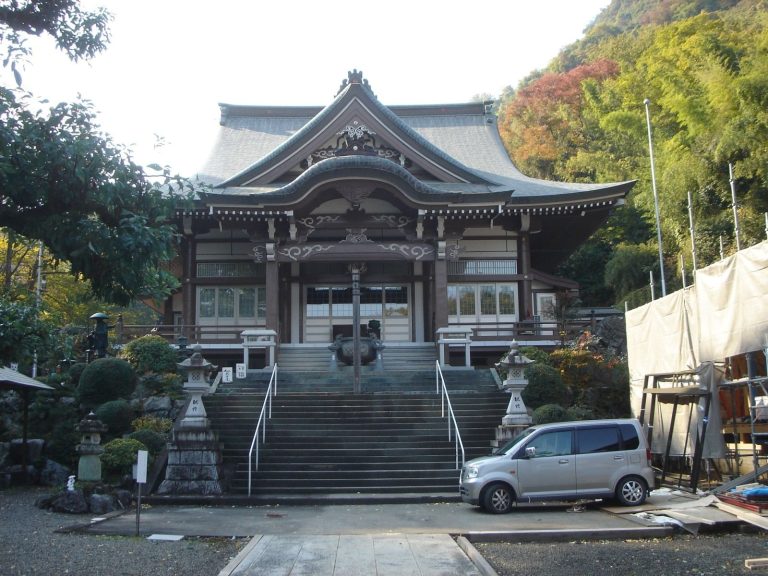
The present main hall is the building reconstructed in 1863 with assistance from Toda Ujiakira. It is listed among Ōgaki’s municipal cultural properties and forms the principal surviving building associated with the temple’s later rebuilding phase.