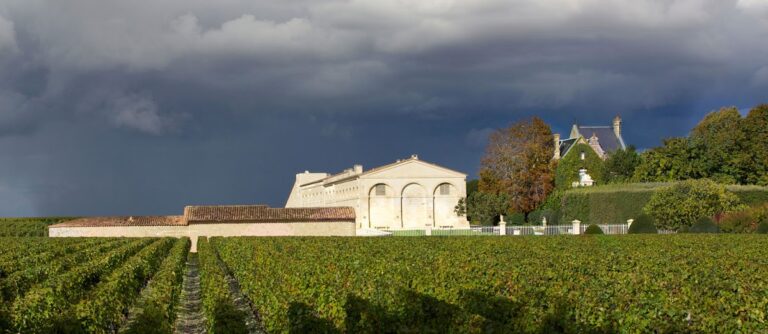
Château Laffitte Carcasset: A Historic Saint-Estèphe Wine Estate


Site at a Glance
- Rating
- 4.8
- Popularity
- Very Low
- Country
- France
- Primary era
- Early Modern
- External website
- Open
- Eras represented
- Early Modern
- Civilizations
- French
- Site type
- Economic
- Remains
- Production Complex
On this page10 sections
History
Château Laffitte Carcasset is an eighteenth-century French country wine estate in Saint-Estèphe, France, producing wine in the Saint-Estèphe AOC, a regulated designation governing a wine’s geographic origin and production rules. A vineyard already occupied the place called Carcasset in 1759, when it appeared on the Cassini maps, the detailed eighteenth-century map series of France directed by the Cassini family. The estate’s wine production dates from 1781.
Foundation and Laffitte ownership
In 1781, Jean Laffitte purchased the future estate and established its vineyards. He was an advocate at the Bordeaux court and procurator of King Louis XVI in Bordeaux. After his death in 1803, his son Jean-François inherited the property. When Jean-François died in 1810, Joseph Laffitte and his mother took over its operation. They enlarged the holding through land exchanges and purchases made in 1817 and 1823.
The Alçuet period and nineteenth-century crisis
Martin Alçuet had acquired the château by 1838, although the exact date of his purchase is unknown. The property then extended across 40 hectares and produced between 80 and 100 tonneaux of wine. A tonneau was a traditional Bordeaux measure of approximately 900 liters. In 1851, Martin Alçuet left the estate to his sons Jacques and Louis-Dominique. After Louis-Dominique died in 1864, Martin recovered a share that he intended to sell. The name Château Laffitte Carcasset appears by 1867.
Powdery mildew, a fungal disease affecting grapevines, and phylloxera, an aphid-like insect that attacks grape roots, caused successive crises. Production fell from 100 to 30 tonneaux, and the indebted estate was sold to Jean Grillet in 1898.
Twentieth-century recovery and changing names
Paul Vitrant bought the estate from Jean Grillet in 1918. By then, the vineyard had contracted to 17 hectares and was called Château Laffitte Saint-Estèphe. Production later recovered: in 1922, the vineyard covered 20 hectares and produced 60 tonneaux. The château resumed the name Laffitte Carcasset in 1929.
The estate was classified as Cru Bourgeois Supérieur in 1932. Cru Bourgeois identifies Bordeaux estates outside the classified growths system, while Supérieur and Exceptionnel indicate higher levels within that classification. In the 2025 classification, Château Laffitte Carcasset became a Cru Bourgeois Exceptionnel.
Family ownership and recent development
In 1958, the owner Meslon sold the château and the right to its mark to Viscount Pierre de Foulhiac de Padirac. After his death in 1961, his wife and their children Philippe and Aimery inherited the property. The estate remained one of the few family-owned properties in Saint-Estèphe and was managed by the viscount’s grandsons, Pierre and Foulques de Foulhiac de Padirac.
Eden Villages, owned by the Rapido group and directed by Pierre Rousseau, acquired majority control in 2017. Since then, Hubert de Boüard, an oenologist and owner of Château Angélus, and his team have advised the estate. From 2019, the new owner undertook a two-year renovation and restructuring program for the winery, buildings, and vineyard. The work was completed in June 2021.
Across its history, the estate has been known as Carcasset Jacques, Carcasset Alçuet, Carcasset Laffitte, Laffitte Carcasset Saint-Estèphe, and Laffitte Saint-Estèphe. It currently operates under Eden Villages ownership.
Remains
Estate setting and vineyard
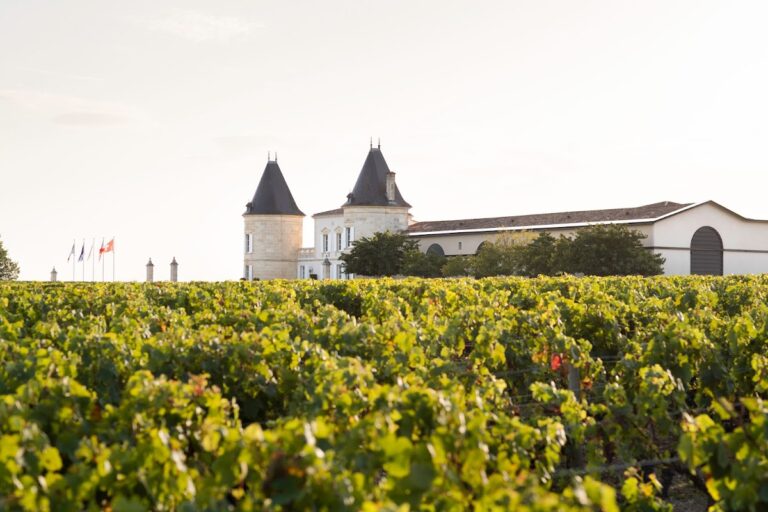
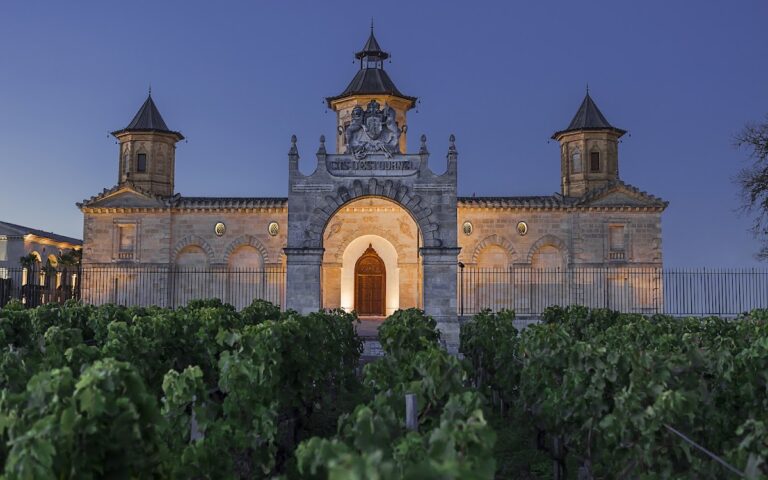
The principal building is an eighteenth-century chartreuse, a French country residence characterized by a long, relatively low main building rather than a fortified medieval castle. It stands within a château courtyard and is surrounded by the estate’s vineyards and winery buildings.
The 35-hectare vineyard lies around the château on Saint-Estèphe’s gravel plateau, over a clay-limestone base and near the Gironde estuary. The estuary’s thermal-regulating effect benefits the vines. Reasoned agricultural practices are used in cultivation, and the vines have an average age of 30 years. Plantings consist of 60 percent Cabernet Sauvignon, 35 percent Merlot, and 5 percent Cabernet Franc.
Winery and wine production
Winemaking facilities
Wine is made and aged in the winery using traditional methods alongside technological innovations, including temperature regulation. The first wine is produced at approximately 100,000 to 140,000 bottles each year and spends 12 months aging in wood, including 30 percent in new French-oak barrels.
Estate wine range
The estate’s range also includes the second wine, Le Reflet de Laffitte Carcasset, and the third cuvée, Le Corsaire de Laffitte Carcasset.
Nearby sites