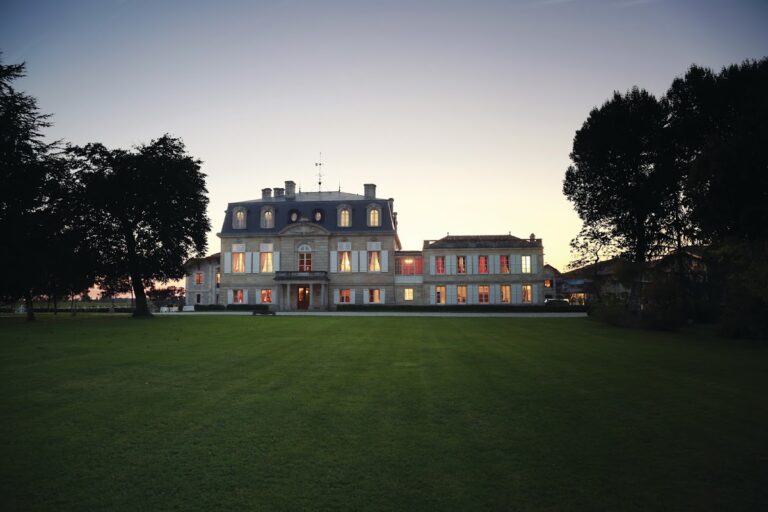
Château Lilian Ladouys: A Historic Wine Estate in Saint-Estèphe, France


Site at a Glance
- Rating
- 4.6
- Popularity
- Very Low
- Country
- France
- Primary era
- Modern
- External website
- Open
- Eras represented
- Modern
- Civilizations
- French
- Site type
- Economic
- Remains
- Production Complex
On this page6 sections
History
Château Lilian Ladouys is a historic wine estate in Saint-Estèphe, France, in the Médoc appellation on the left bank of the Gironde. Its origins date to 1564, when it was known as the Domaine de La Doys and held as a fief by Jacques de Becoyran, lord of Lafite and master of the Médoc. A fief was land held under a feudal relationship in return for service or allegiance.
From La Doys to Château Lilian Ladouys
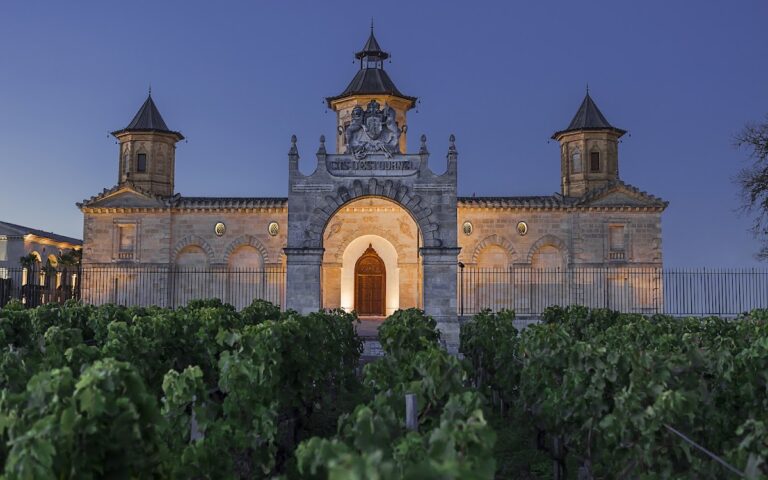
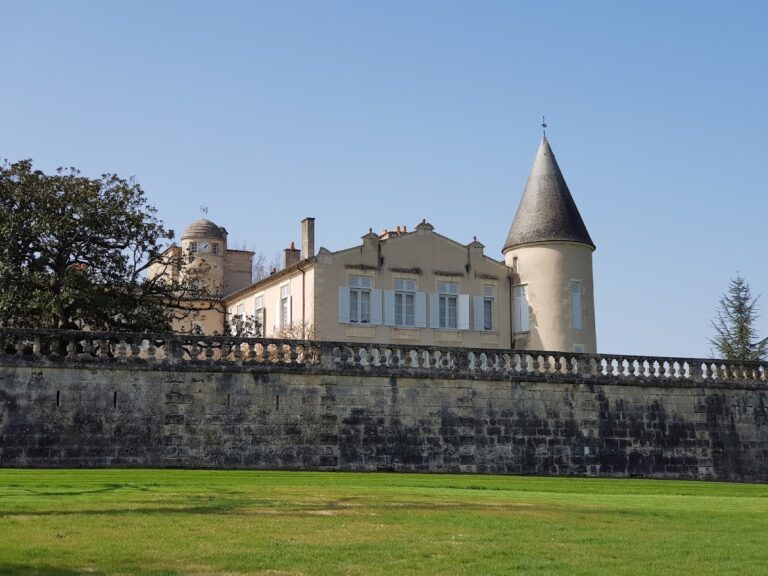
The Barre family owned the château for more than 150 years from the eighteenth century and helped shape its identity. Building works carried out during the nineteenth century gave the estate its present appearance, including two towers that frame the entrance to the château.
The estate’s reputation was established in the nineteenth and early twentieth centuries. The first edition of Cocks et Féret, a long-running reference guide to Bordeaux wines and estates, listed it among the best wines of Saint-Estèphe in 1850. In 1932, Château Lilian Ladouys received the status of Cru Bourgeois Supérieur. Cru Bourgeois is a classification for Médoc estates outside the 1855 classification.
Reorganization and expansion
The Lorenzetti family acquired Château Lilian Ladouys in 2008. Working with director Vincent Bache-Gabrielsen, the family reorganized the previously fragmented vineyard through extensive land consolidation directed toward the appellation’s best terroirs. A semi-buried vat room was installed in 2009 to improve winemaking, and Emmanuel Cruse became managing director in 2013.
In 2018, the Lorenzetti family acquired Château Clauzet and Château Tour de Pez. Their adjoining parcels expanded Château Lilian Ladouys’s vineyard to 80 hectares and altered its soil balance from approximately 67 percent gravel and 34 percent clay-limestone to 80 percent gravel and 20 percent clay-limestone. Further work followed at the winery, with designs by architect Jean-Michel Wilmotte.
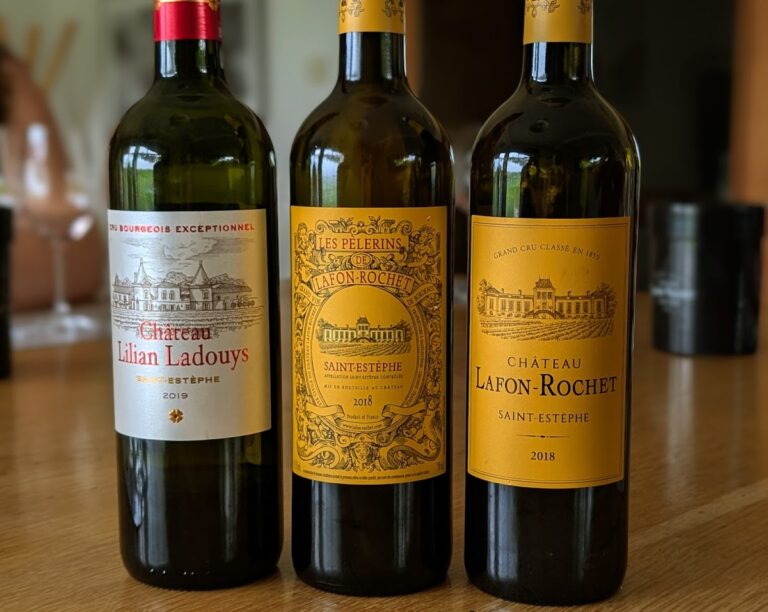
The vineyard has obtained HVE3 certification and is being converted to organic farming. HVE3 is the highest level of France’s High Environmental Value certification scheme, which assesses environmental performance in farming. In 2020, Château Lilian Ladouys received the Cru Bourgeois Exceptionnel classification, the highest category within the Cru Bourgeois system. The estate produces Château Lilian Ladouys and the Saint-Estèphe second wine La Devise de Lilian, with annual production of 450,000 bottles.
Remains
Château and vineyard
The surviving château presents the appearance created by the nineteenth-century building campaign. Two towers frame its entrance, forming the principal architectural feature described for the estate. The property also includes an 80-hectare vineyard within the Saint-Estèphe appellation. Its soils are composed of 80 percent gravelly soils and 20 percent clay-limestone soils, and the planting is divided among 50 percent Merlot, 45 percent Cabernet Sauvignon, 4 percent Petit Verdot, and 1 percent Cabernet Franc.
Winemaking facilities
The winery includes a semi-buried vat room and two-level vat rooms designed to support gravity-fed winemaking. Vinification begins with a pre-fermentation cold maceration. Extraction is carried out through délestage, a process in which fermenting wine is drawn off and then returned over the grape solids to encourage controlled extraction. The wines mature for 14 months in 400-litre casks, 225-litre Bordeaux barriques, and 228-litre Burgundy barrels.
Nearby sites