Château Calon-Ségur: A Historic Third Growth Wine Estate in France


Site at a Glance
- Rating
- 4.8
- Popularity
- Very Low
- Country
- France
- Primary era
- Early Modern
- External website
- Open
- Eras represented
- Early Modern
- Civilizations
- French
- Site type
- Economic
- Remains
- Production Complex
On this page7 sections
History
Château Calon-Ségur is a historic wine estate in France, in the Saint-Estèphe appellation of the Médoc, Bordeaux. Its vineyards have roots reaching back to the Gallo-Roman period, and its red wine was placed in the Third Growth category of the 1855 Bordeaux classification, the hierarchy established for leading Bordeaux wines.
Early ownership and the name Calon-Ségur
A substantial estate occupied the present area during the Gallo-Roman period. In 1157, it was reportedly owned by a person named de Calon, identified as a bishop of Poitiers. The site is regarded as one of the oldest places in the Médoc associated with grape harvesting, while tax records from the eighteenth century confirm vineyard activity.
The land belonged to the lord of Lesparre before passing in 1362 to the Gombaud family, a junior branch of the Lesparre family. Following the conquest of Guyenne, the historic province of southwestern France, ownership moved through the d’Albret family and later holders including Jean de Lur, Pierre de Marsan, and Gasq.
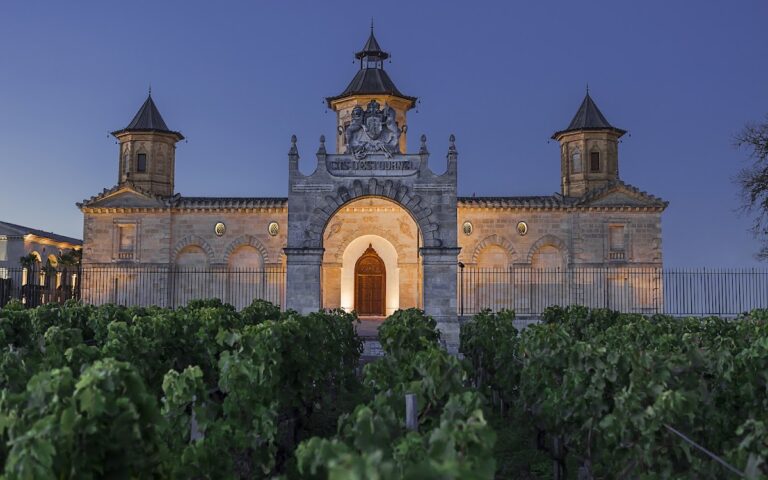
During the eighteenth century, Nicolas-Alexandre de Ségur acquired the château and estate through his marriage to Gasq’s widow. He was president of the Parliament of Bordeaux and also owned Château Lafite and Château Latour. He added “Ségur” to the name Calon. A tradition links his preference for the estate to the statement, “I make wine at Lafite and Latour, but my heart is at Calon.” The heart motif used on the wine label and in decorative elements of the estate is associated with this saying.
Nineteenth-century development and classification
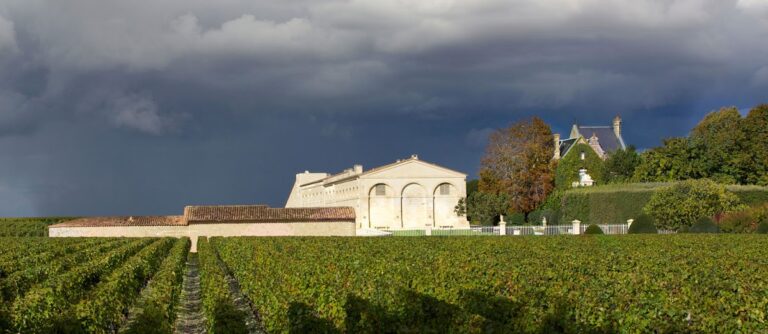
The château building that survives today was constructed during the period of de Ségur family ownership. The estate later passed by inheritance to Nicolas-Marie-Alexandre de Ségur, whose financial failure led to its sale.
After Étienne-Théodore Dumoulin died in 1806, the estate passed to his children. His son, also named Étienne-Théodore, established a new vineyard south of the original one beside the Gironde, the estuary formed by the Garonne and Dordogne rivers. Its first successful harvest came in 1815. Around 1820, he built a small estate beside it that later became Château Montrose.
The original estate was sold again in 1824 for 500,000 francs to the Letapies, a family of Médoc vineyard owners. In 1855, its wine entered the third category of the official Bordeaux classification. This category is known as Troisième Grand Cru Classé, or Third Growth.
Recovery, family ownership, and modern management
The nineteenth-century phylloxera epidemic reduced the Letapies’ interest in production. Phylloxera is an insect pest that attacks grapevine roots, and its spread devastated vineyards in Bordeaux and elsewhere in Europe. In 1894, Georges Capbern Gasqueton and his uncle Charles Hanappier acquired the estate. The Capbern-Gasqueton family then played the principal role in its recovery.
Château Calon-Ségur remained in the family throughout the twentieth century. Philippe Capbern-Gasqueton managed it from the late twentieth century and also owned or controlled several other regional estates. After his death in 1995, his widow, Denise Capbern-Gasqueton, continued the estate’s traditional approach to winemaking.
In 2006, Denise appointed Vincent Millet, formerly associated with Château Margaux, as estate manager. Following her death in 2011, her daughter Hélène de Baritault du Carpia took over management. In June 2012, the family estate was sold to Suravenir Assurances, a subsidiary of Crédit Mutuel Arkéa, for approximately 170 million euros. The transaction was described as the largest of its kind in the region at that time. Jean-François Moue, owner of Pétrus, acted as intermediary, and his company became a minority shareholder.
Jean-Pierre Denis became the company’s responsible representative for the château, while Laurent Dufau, who had worked at Château Mouton Rothschild, became director. Dufau left the position in 2020, and Vincent Millet remained responsible for winemaking.
Winemaking remained highly traditional until the beginning of the twenty-first century. The wine is generally described as powerful and full-bodied. Modern production is dominated by Cabernet Sauvignon, whereas earlier production maintained approximate parity between Cabernet Sauvignon and Merlot. The estate produces approximately 240,000 bottles annually, including the second wine Marquis de Calon Ségur and Saint-Estèphe de Calon Ségur, made from younger vines. Chapelle de Calon is also identified as an additional product.
Remains
Estate setting and vineyard layout
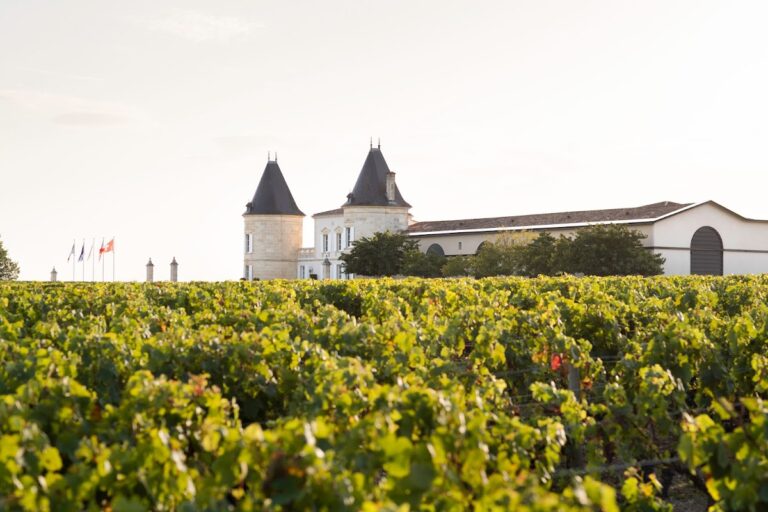
A stone wall surrounds much of the vineyard, an arrangement described as unusual in Bordeaux. The estate lies north of the centre of Saint-Estèphe and is the northernmost of the Saint-Estèphe estates included in the 1855 classification. Its vineyard occupies low-lying ground averaging about 10 metres above sea level.
The estate covers approximately 94 hectares, of which about 55 hectares are planted with vines. The planted ground is gently undulating and gravelly, with clay beneath it. The vineyard is arranged in two sections northeast and northwest of the château and divided into 40 plots with different soil types. The vines average about 40 years of age.
Planting and production features
The vineyard’s plantings consist of approximately 65 percent Cabernet Sauvignon, 20 percent Merlot, and 15 percent Cabernet Franc. Planting density rose from about 6,000 vines per hectare to approximately 10,000, while the average yield is about 35 hectolitres per hectare.
The wine is traditionally matured for an average of 24 months in oak barrels. Depending on the vintage, between 30 and 50 percent of the barrels are new. These production practices form part of the estate’s continuing winemaking character alongside its divided vineyard plots and varied soils.
Nearby sites