Château de Villars-en-Azois: A Historic French Château Reflecting Centuries of Local Heritage
Visitor Information
Google Rating: 4.8
Popularity: Very Low
Country: France
Civilization: Early Modern
Site type: Domestic
Remains: Palace
History
The Château de Villars-en-Azois is situated in the commune of Villars-en-Azois in France. The site originated under the influence of early French civilization and has evolved through several centuries.
The territory of Villars belonged originally to the historical region around Langres. Following the Roman conquest by Julius Caesar, it became part of the Lyonnaise province within the Roman Empire. After the fall of Rome, the area passed through various political entities including the Frankish kingdom ruled by Theodoric II, the Burgundian kingdom under Childebert II around 501, and eventually became integrated into the eastern Frankish kingdom called Francia Orientalis under the Carolingians. By the late 12th century, Villars-en-Azois was mentioned as part of the Châtellenie (a type of lordship) of Laferté-sur-Aube, which was under the control of the Counts of Champagne. One notable figure connected to this period was François de Bretagne, who was the brother of Anne de Bretagne, indicating the feudal ties with prominent noble families.
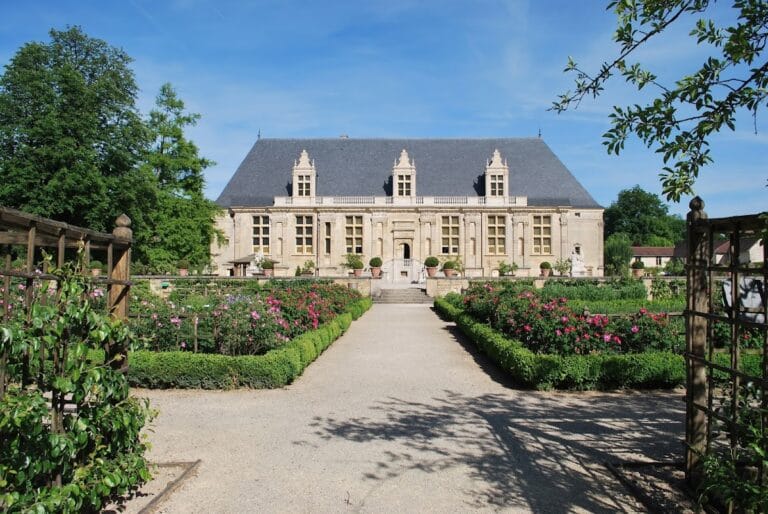
The original castle was established in the 16th century by Jean de Chastenay. This construction reflected the period’s need for fortified noble residences. By the 18th century, the old castle had deteriorated to a point deemed irreparable, leading to its partial demolition. In place of the original fortress, a new château was built between 1771 and 1780 by Jean-François Gabriel de Giey, baron de Villars-en-Azois. This new building was designed in the Louis XVI style, representative of provincial French residences of that era and constructed atop the foundations of the original castle.
By 1750, records detail a wide range of seigneurial rights held by the local lord. These included judicial authority over civil and criminal cases, a right to maintain gallows for capital punishment, and the collection of dues on various local transactions, such as baking bread in the castle’s oven. These rights reflect the feudal system’s reach into legal and economic aspects of village life at the time.
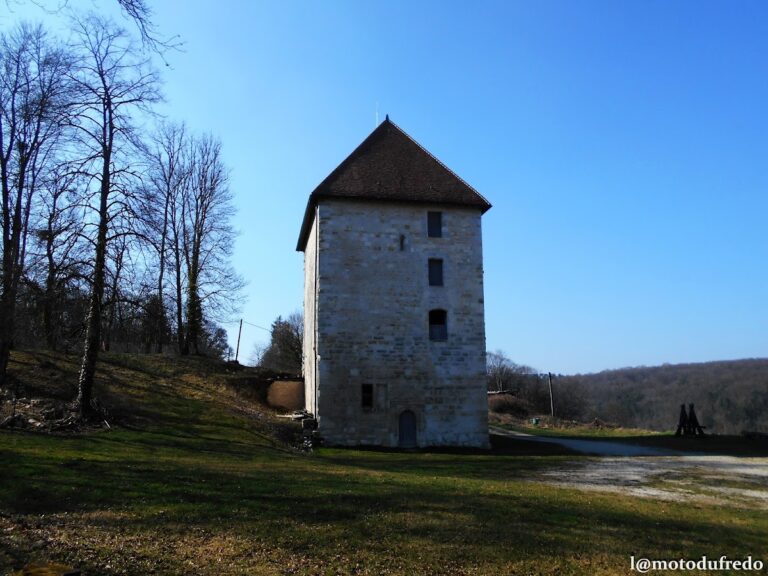
The 16th-century cylindrical tower from the initial castle remains the sole surviving structure of the original fortress. It was restored in 1935 following the efforts of Madame Thérèse Massin, baronne d’Estocquois. The château as it stands today has been officially recognized and protected as a historic monument since August 26, 1988, ensuring the preservation of this layered historical site.
Remains
The Château de Villars-en-Azois as it exists today presents a blend of architectural elements from the 16th and 18th centuries. The current building follows a regular, symmetrical layout characteristic of provincial residences built in the late 18th century. Its southern façade is notably simple, accented by two small wings topped with imperial dome-shaped roofs, while the central section culminates in a lowered triangular pediment. The main roof has a hipped design and is covered with flat tiles, all typical features of the Louis XVI architectural style.
The most ancient element on the site is a cylindrical tower dating back to the 16th century. This two-story tower has very thick walls, an indication of its defensive purpose, and is topped with a pepperpot roof—a small rounded roof resembling a pepper shaker. The tower still bears visible gunports and narrow slits originally designed for archers, pointing to its role in fortification. Inside, the ground floor houses a large fireplace decorated with armorial carvings; however, these heraldic symbols were defaced during the French Revolution, reflecting the social and political upheavals of that time. The ceiling above the fireplace area is constructed in the French style known for its exposed beams and decorative woodwork. On the tower’s upper floor, there is a bedroom space and an attic tucked beneath a roof supported by a complex timber framework.
The layout of the château once included fortifications such as walls, towers, moats, and a drawbridge connected to the original 16th-century castle, though these were largely removed or destroyed during the 18th-century reconstruction. The current grounds have repurposed some of the previous defensive structures, as the castle’s kitchen garden now occupies the site where the former moats once lay, demonstrating a shift from military function to domestic utility.
Together, these surviving features document the transformation of the site from a fortified noble residence in the Renaissance period to a more refined and elegant provincial château of the later 18th century. The restoration and preservation of the tower, along with the protection of the château itself as a historic monument, offer tangible connections to the local history and architectural heritage of Villars-en-Azois.
Nearby sites