Château de Rosières: A Historic Fortified Manor in Saint-Seine-sur-Vingeanne, France
Visitor Information
Google Rating: 4.6
Popularity: Low
Official Website: chateauderosieres.webnode.fr
Country: France
Civilization: Early Modern, Medieval European
Site type: Military
Remains: Castle
History
The Château de Rosières is located in the commune of Saint-Seine-sur-Vingeanne in modern-day France. This estate was originally established during the medieval period by the feudal lords who controlled the region.
The earliest known reference to the site dates back to the 11th century when it functioned as a rural estate, often called a “grange,” associated with a ducal fief. In the early 14th century, specifically around 1320 or 1321, Eudes IV, Duke of Burgundy, exchanged this fief with the Saint-Seine family for another property. Pierre de Saint-Seine then developed the estate, constructing the primary domain buildings until his death in 1350.
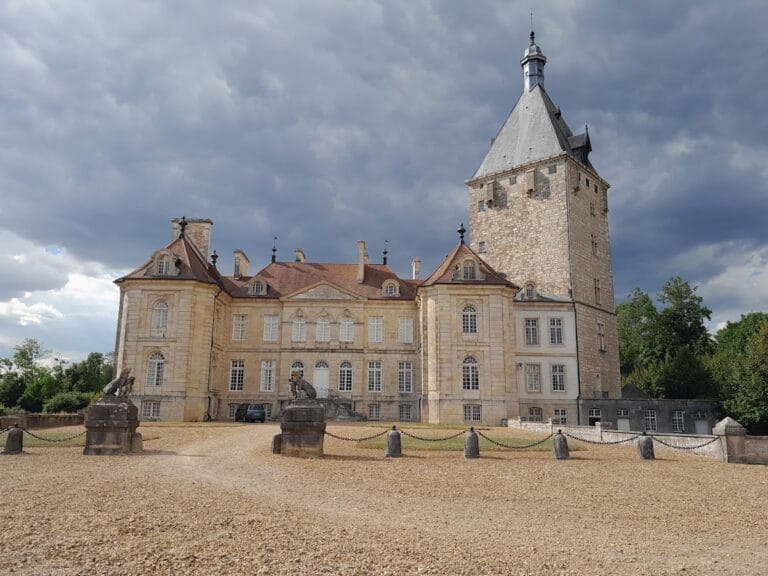
During the 15th century, the estate took on a more fortified character. With the duke’s permission, the manor was strengthened to provide protection for the local farmers, who suffered during the period’s frequent regional conflicts. The central fortified tower, or donjon, is believed to have been completed by 1445. By 1474, the site was acknowledged as a “maison forte,” or strong house, owned by Pierre and Guillaume de Saint-Seine, whose family emblems are still preserved on the building.
Ownership of the Château de Rosières shifted several times over the following centuries. In the late 17th century, specifically in 1682, the estate came into the possession of Claude Bernard-Maillard and Anne-Reine Mallot du Bousquet. This couple undertook renovations that included adding their coats of arms to ornamental window surrounds and building a classical-style pavilion close to the medieval manor.
The 18th century saw multiple changes in proprietors, from Claude Bernard in 1708 to Jean Verchère and Agnès de Richemont in 1728, followed by Jean Chanteau in 1733, and then Bénigne Le Gouz in 1752. During this era, the château ceased to serve as a seigneurial residence and was instead managed by estate administrators who oversaw the property. They maintained the building without significant alterations, thus preserving much of the late 17th-century character.
In 1980, the château entered private hands once again when acquired by the Bergerot family, who have since used the property for hospitality purposes.
Remains
The Château de Rosières is comprised of a fortified manor enclosed originally by defensive walls and surrounded by a moat. Archaeological evidence reveals a double line of ditches paired with a rampart featuring an escarpment. This rampart includes a vaulted underground passage which local tradition claims once linked the château with a nearby house in the village of Saint-Seine.
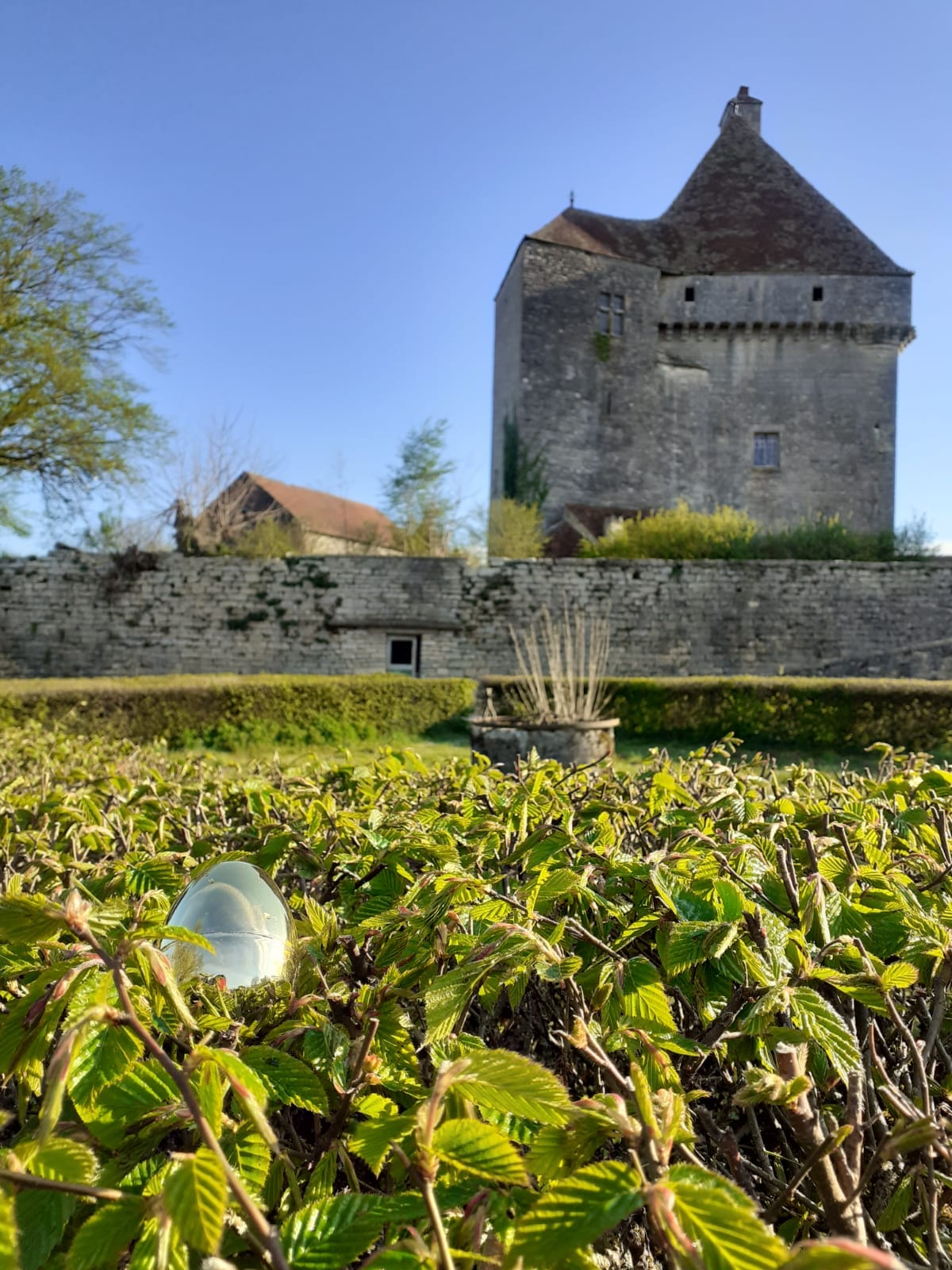
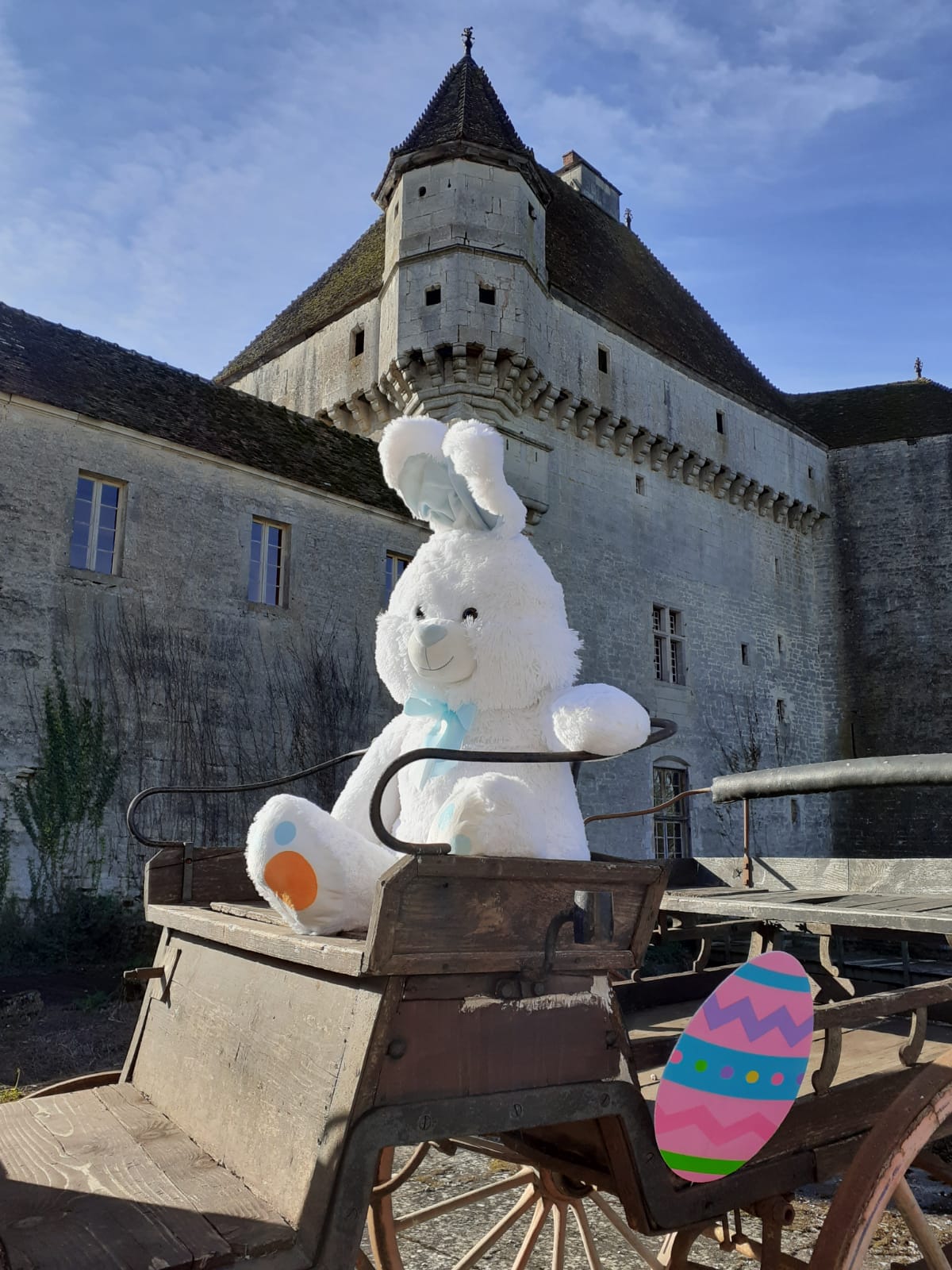
At the core of the site stands a large square donjon measuring approximately 21 meters in length and 13.5 meters wide. Constructed in the 14th and 15th centuries, its walls are remarkably thick at 1.8 meters and rise 19 meters from the base of the moat to the roof. Key medieval defensive details remain visible, such as a machicolation belt—a projecting parapet with openings for dropping objects on attackers—resting on triple-molded stone brackets. A continuous walkway, known as a chemin de ronde, encircles the tower, and corner bartizans (small overhanging turrets) are found at its edges; presently, only the northwest bartizan survives intact.
The southwest corner of the donjon is reinforced by an additional quadrangular tower dating from the 14th century. Earlier records and 17th-century pavilion frescoes show this tower once had a four-sided roof topped with a lantern structure, which no longer exists. The main donjon is capped by a steep four-sided pavilion roof supported by an original oak timber frame. Above this, the attic space is unusually tall at 12 meters, containing a large central chimney with six flues that likely served multiple fireplaces below.
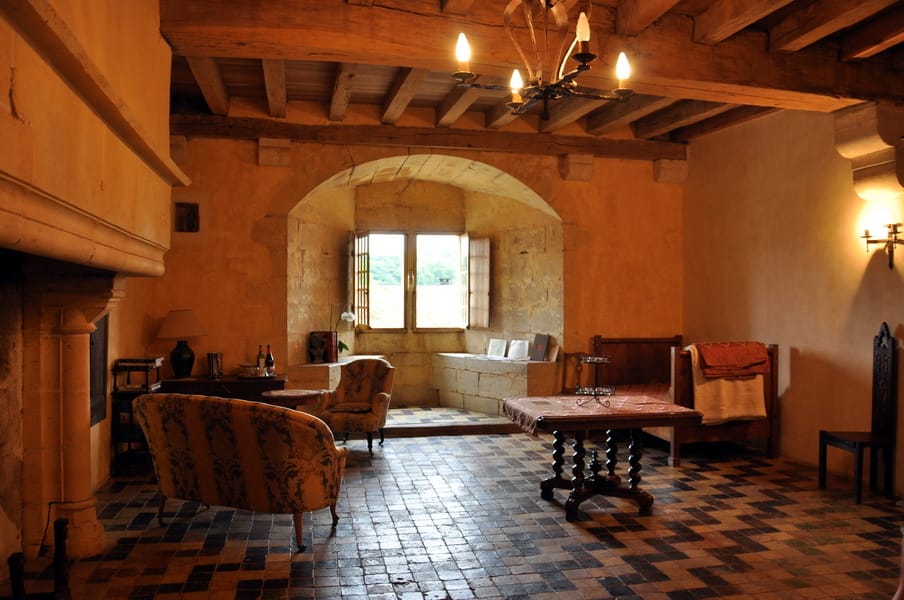
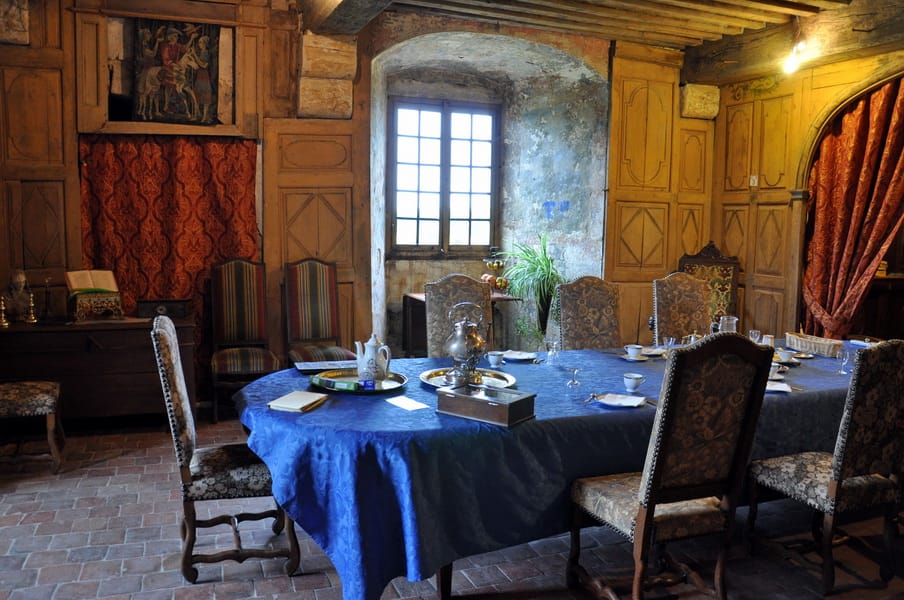
Inside, the château contains a spacious reception hall originating from the 15th century, featuring a large fireplace and decorated in part with 17th-century painted windows and ceiling panels. The kitchen is notable for its vaulted ceiling and wrought-iron suspension rings, alongside several monumental fireplaces and an original spiral staircase providing access between floors.
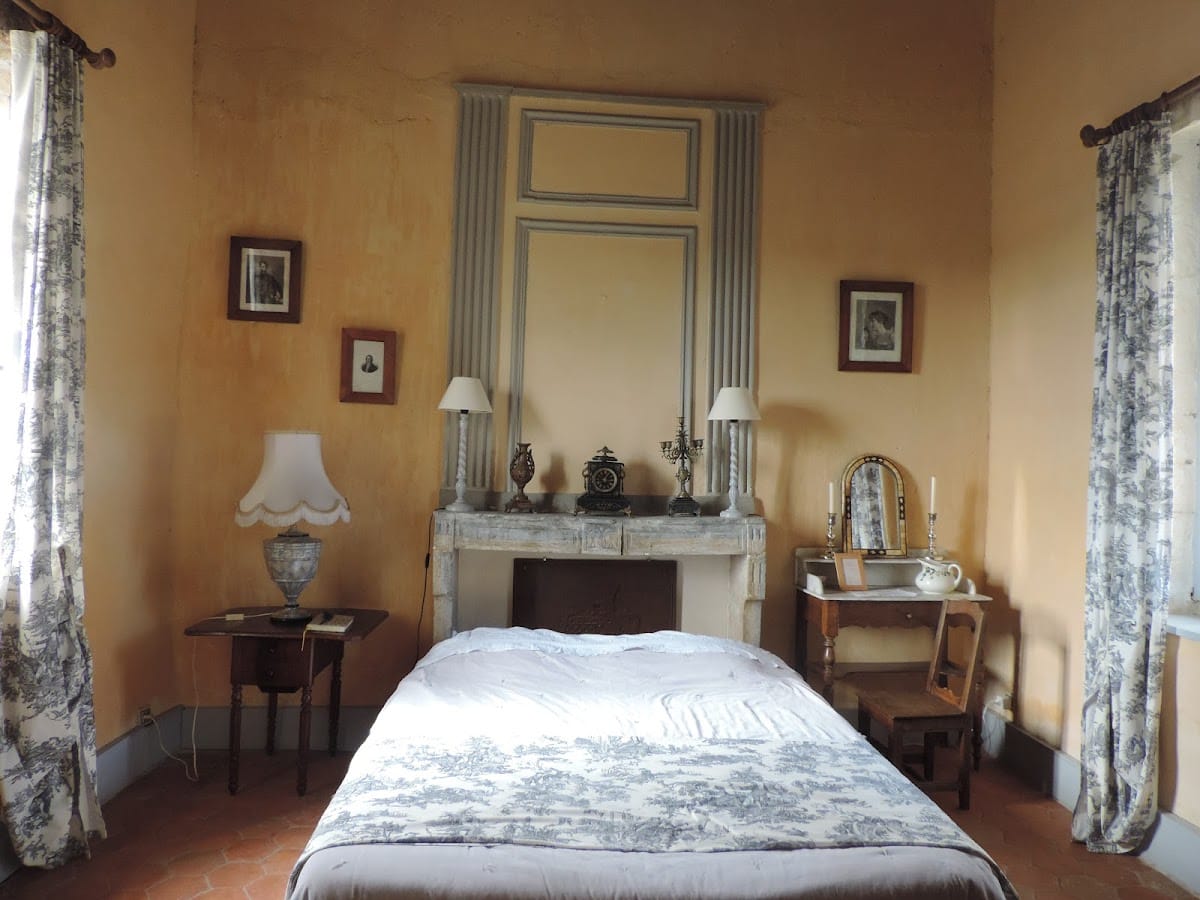
Several guest chambers within the château are distinguished by their historical character. One, known as the “dukes’ room,” was remodeled in the 17th century and includes an alcove with a basket-handle arch and painted coats of arms. Two other rooms date to the 15th century—one is adorned with multicolored glazed floor tiles and a double door framed with simple towel-fold moldings, while the other presents a fireplace surrounded by Saint-Seine family heraldry and features 17th-century window seating. The oldest sleeping quarters occupy the 14th-century flanking tower above, with a mullioned window and oak beam ceiling.
Within this flanking tower lies a so-called “prison” room, identified by four iron rings embedded in its vaulted ceiling and two narrow arrow slits, suggesting a small, secure holding space.
The estate also includes several additional structures. Among these are a freestanding dovecote lined internally with nesting boxes, a fortified gatehouse from the 15th century topped with a pavilion roof and originally approached by a drawbridge, and a chapel dedicated to Saint George, which stands beside the priest’s residence. Various farm buildings once rented to tenants remain part of the property.
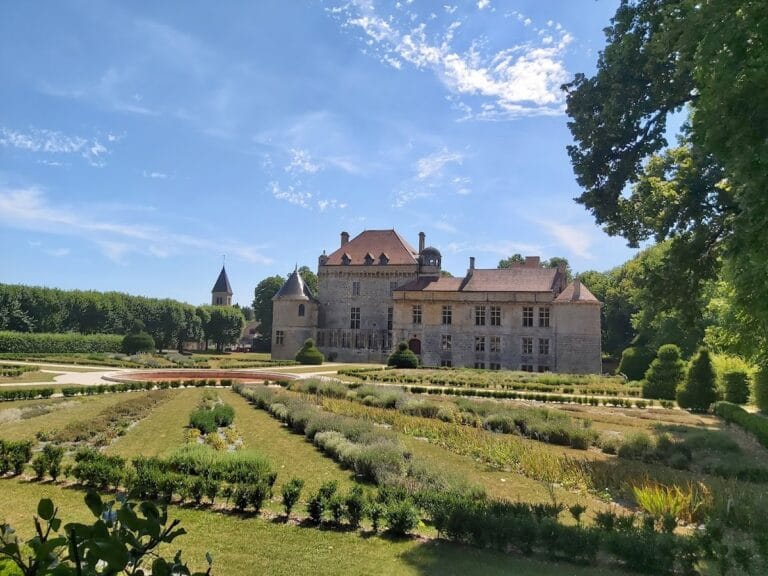
The 17th-century pavilion constructed by the Maillard-Bousquet couple serves as a decorative element, featuring frescoes that depict the château during that period alongside their family coats of arms. Surrounding the buildings are gardens laid out to complement the historic estate.
Nearby sites