Château de Marines: A Renaissance Château in France
Visitor Information
Google Rating: 4.5
Popularity: Very Low
Country: France
Civilization: Early Modern
Site type: Domestic
Remains: Palace
History
The Château de Marines is located in the municipality of Marines in modern-day France. It was built by the French civilization in the early years of the 16th century.
Its construction began around 1521 under Adrien Thiercelin de Brosse, who was granted the rights to high justice and notarial authority in Marines by King François I. This royal favor came as recognition for Thiercelin de Brosse’s distinguished military service during the 1515 campaign against Swiss forces. Over time, Thiercelin de Brosse gained prominence, later helping complete the Château de Blois and expanding the Palais du Luxembourg during the reign of Marie de Médicis. He also served as chancellor for King Henri IV.
During the turbulent French Wars of Religion, the château found itself at the center of factional conflicts between Catholic and Protestant forces. A notable event occurred in August 1589 when King Henri IV stayed at the château amid his military efforts to secure the crown. While there, he authored a letter that remains preserved in France’s National Library.
After Henri IV converted to Catholicism in 1593, the de Brosse family experienced a decline in status and finances. By 1603, they sold the estate to Nicolas Brûlart de Sillery, who became chancellor to Henri IV three years later. Brûlart de Sillery established an Oratorian religious convent adjacent to the local church, connecting the house and its grounds to this religious institution until the beginning of the 20th century.
In 1659, the château changed hands again, bought by the Marquis de Créquy, a high-ranking noble who served as lieutenant-general and marshal under King Louis XIV. During his ownership, the famous landscape architect André Le Nôtre designed the formal French gardens surrounding the château, while architect Jacques Lemercier constructed a mortuary chapel attached to the nearby church. The marquis lived there until his death in 1687, and his family maintained the property until 1714.
In the 18th century, ownership passed to Thomas Rivié, an official with connections to Louvois, the French Secretary of State for War under Louis XIV. Later, the estate belonged to the Gouy d’Arsy family, who held it throughout the 19th century until 1889. From then on, Madame Paul Batardy acquired the property, and it remains with her descendants today.
In the late 19th century, the renowned painter Paul Cézanne visited the château and created a painting depicting its view. The château’s historic painted ceilings in three first-floor rooms received recognition as protected monuments in 1984. Furthermore, the park surrounding the property was officially classified as a protected site in 1974, highlighting its cultural significance.
Remains
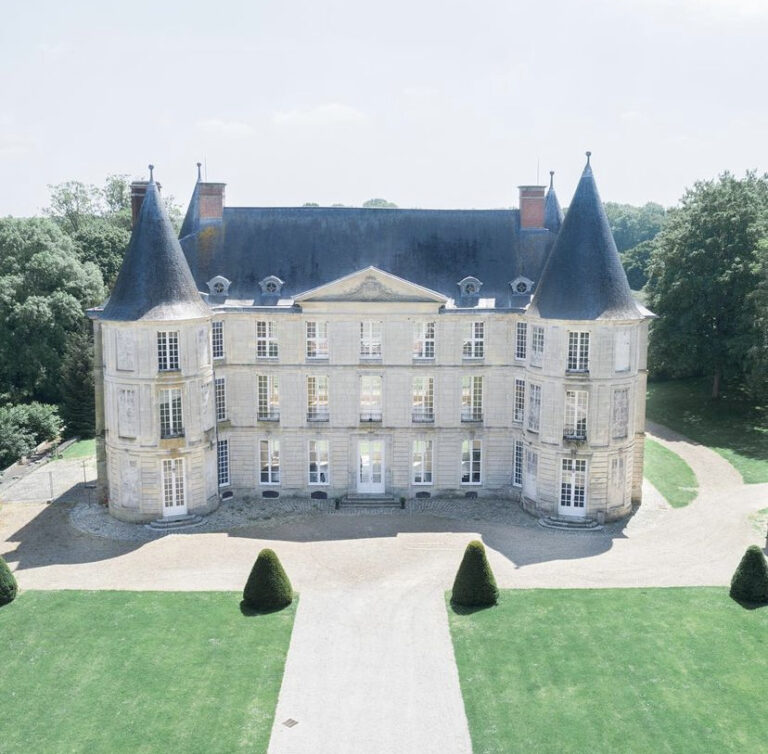
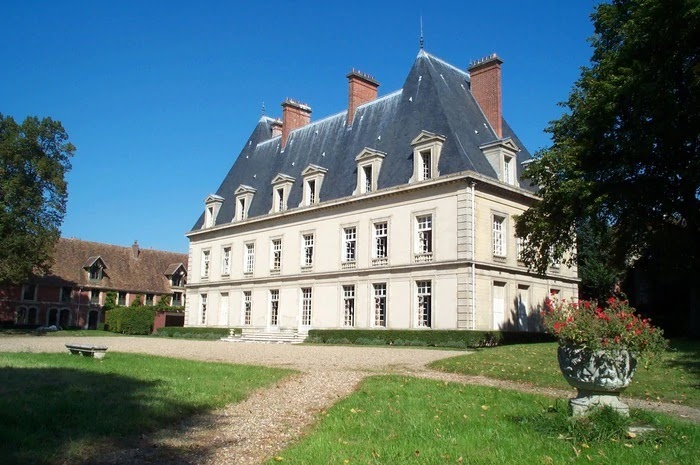
The Château de Marines retains much of its original Renaissance architectural character, reflecting the style and construction methods of the early 16th century. The main building has undergone few significant alterations since its initial construction, preserving its historical fabric.
Originally, a small turret served as the chamber of Justice, where seigneurial judicial functions were carried out. This included the administration of law and the public punishment of convicted individuals, who were brought directly from this room to the place of execution or penance. This turret was located along the Place Peyron, but it has since been removed.
The château’s original mansard roofs have been altered, replaced by windows, suggesting some modification to the upper floors to adapt to changing needs or tastes.
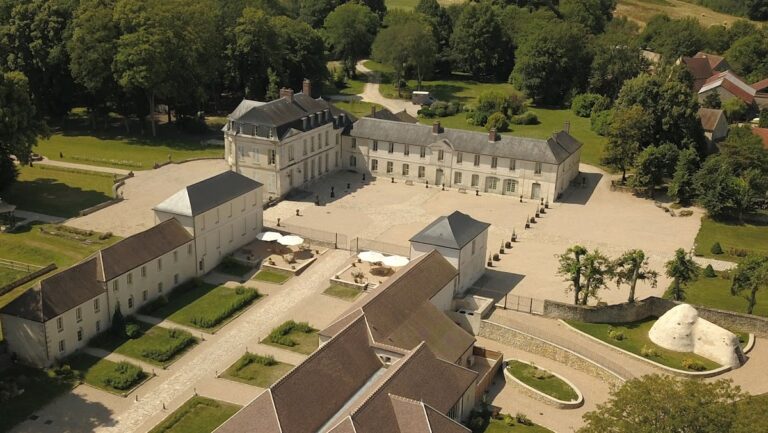
Encircling the main structure is a formal French garden designed in the 17th century by André Le Nôtre, celebrated for his mastery in landscape architecture. This garden reflects the symmetrical and geometric style typical of the period, framing the château within a carefully planned natural setting.
Attached to the local church on the estate grounds is a mortuary chapel commissioned by the Marquis de Créquy. Built by Jacques Lemercier, a prominent architect of the time, the chapel exemplifies 17th-century ecclesiastical architecture connected to noble patronage of religious sites.
Inside the château, three first-floor rooms feature painted ceilings of artistic and historical significance. These ceilings have garnered official protection as historic monuments, acknowledging their cultural value and the craftsmanship involved.
The estate’s park has been classified as a protected site, reinforcing efforts to preserve both the built and landscaped environments as part of the château’s enduring heritage.
Nearby sites