Château de La Villaumaire: A Historic Estate in Huismes, France
Visitor Information
Google Rating: 4.8
Popularity: Very Low
Official Website: www.chateaudelavillaumaire.fr
Country: France
Civilization: Early Modern, Medieval European, Modern
Site type: Domestic
Remains: Palace
History
The Château de La Villaumaire stands in the town of Huismes in France. Its foundations date back to the Gallo-Roman period, upon which the main structure was built predominantly during the 15th century. The name of the château originates from the Latin term “Villa Majoris,” meaning “main farm,” indicating its early role as an important agricultural estate.
During the late 5th and early 6th centuries, the site is said to have housed the governors of the Véron district, who administered the area under the rule of the Merovingian kings. By the early 10th century, this domain was granted by King Charles the Simple to the Church chapter of Tours. This donation was formally confirmed nearly two centuries later by King Louis VII in 1157, firmly establishing ecclesiastical ownership.
In 1215, the Archbishop of Tours assigned judicial authority over Huismes to an ecclesiastical magistrate known as the “Maire.” This official held court at the château, maintaining it as church property for almost five centuries. The first private owner noted in historical documents was Martin Péquineau, Master of the Royal Artillery under King Charles VII. He is recorded as lord of La Villaumaire in his 1448 marriage contract. His family held the estate until 1648.
In the 16th century, the château caught the attention of the writer François Rabelais. He references the site and weaves its associations with literary figures and characters linked to the region into his works, highlighting its cultural connections during the Renaissance.
Following Péquineau’s ownership, the château passed to Maurice d’Aubéry in 1648 and remained with his family until 1811. Subsequent proprietors included the Gault de la Galmandière family (1811–1821), the Levesque des Varannes family (1821–1881), the Bois de Mouzilly family (1881–1903), and Nicolas Liébault (1903–1923). In 1923, the property was acquired by the princess de la Trémoïlle.
Throughout the 19th and early 20th centuries, the château underwent notable changes. The building’s façades were reoriented, and additions such as entrance pavilions and a clock tower were introduced. The princess de la Trémoïlle led extensive interior renovations in 1923, replacing earlier troubadour-style decorative elements with designs reflecting the 17th and 18th centuries.
After a period of neglect lasting nearly four decades following 1959, the château entered a new phase of restoration under the Vitali family, who purchased the site and began conservation efforts supported by a fundraising campaign launched in October 2019.
Remains
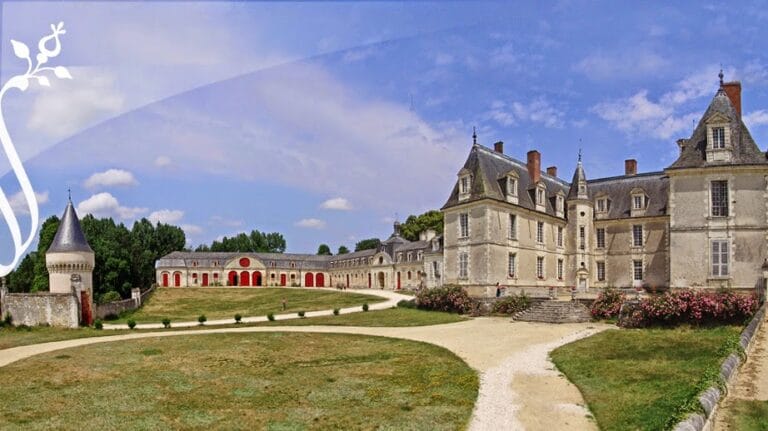
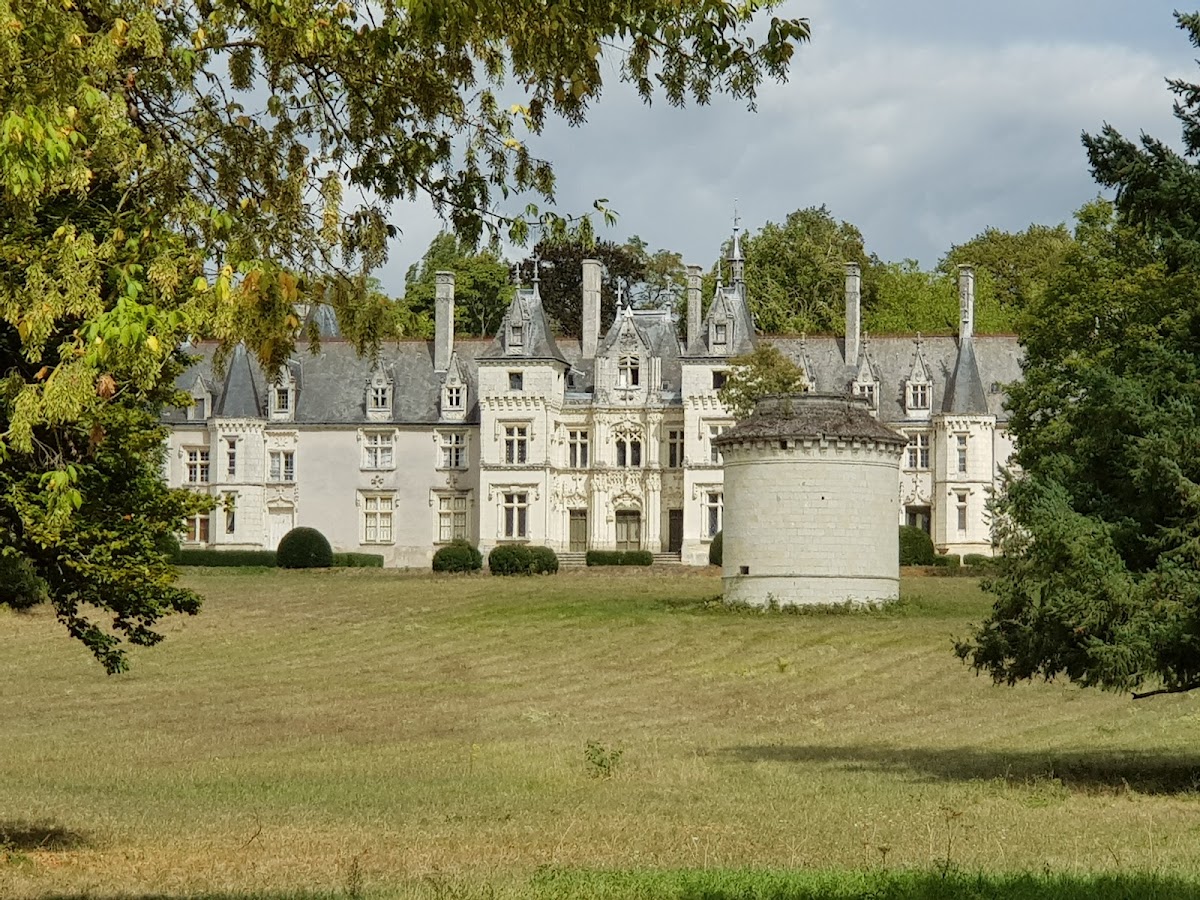
The Château de La Villaumaire is composed of a lengthy main building flanked by towers and capped at either end by distinct pavilions. Its original main façade faced north towards the Château d’Ussé, anchoring it as the primary entrance during its earlier centuries. This north side also features a clock tower added in the 19th-century modifications. At that time, the original outbuildings situated around the château were removed, and the surrounding ground level was raised to suit the new layout.
In the 1800s, the principal entrance was shifted to the south façade, which overlooks a gently sloping hill facing south. The reorienting included the construction of two pavilion towers framing a new entrance staircase, enhancing the château’s prominence along this sunny hillside.
The most ancient section is found in the west wing, which was significantly remodeled at the turn of the 20th century. This remodeling saw the removal of older towers and the addition of two pavilions framing a 17th-century gallery. These changes reflect evolving architectural tastes while preserving elements that link the building to its earlier history.
Inside, major renovations carried out in 1923 by the princess de la Trémoïlle transformed the interior spaces. Many small rooms decorated in the troubadour style—a 19th-century romantic medieval revival—were replaced by more expansive salons decorated in the fashion of the 17th and 18th centuries, aligning with the interior aesthetic preferences of the time.
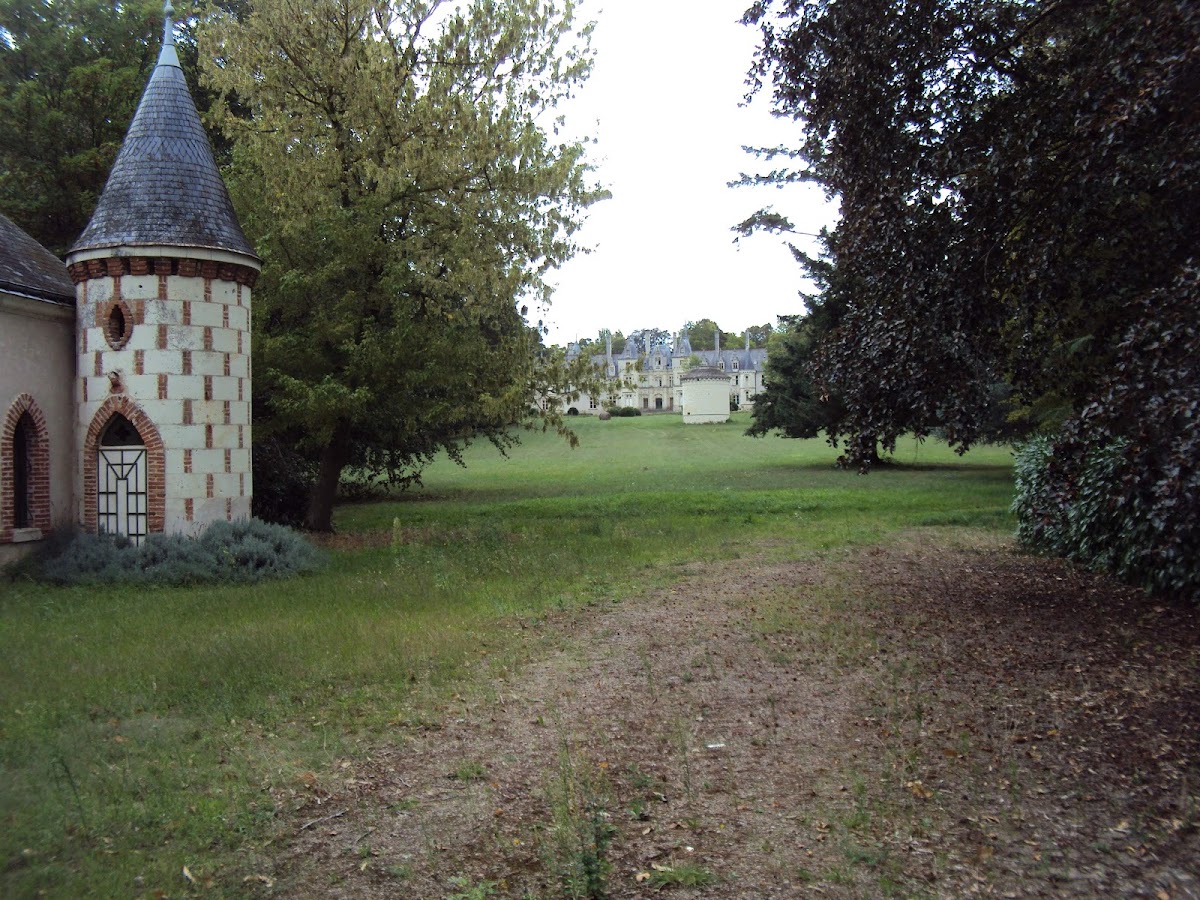
Situated midway up a hill, the château benefits from the natural incline to emphasize its stature after the southern façade became the primary front. This positioning combines the site’s strategic location with the changes introduced over centuries to adapt its form and function.
Together, these architectural features and layers of construction reveal a complex history of adaptation and use, marking La Villaumaire as a site of continuous occupation and transformation from Roman times through the modern era.
Nearby sites